Silves
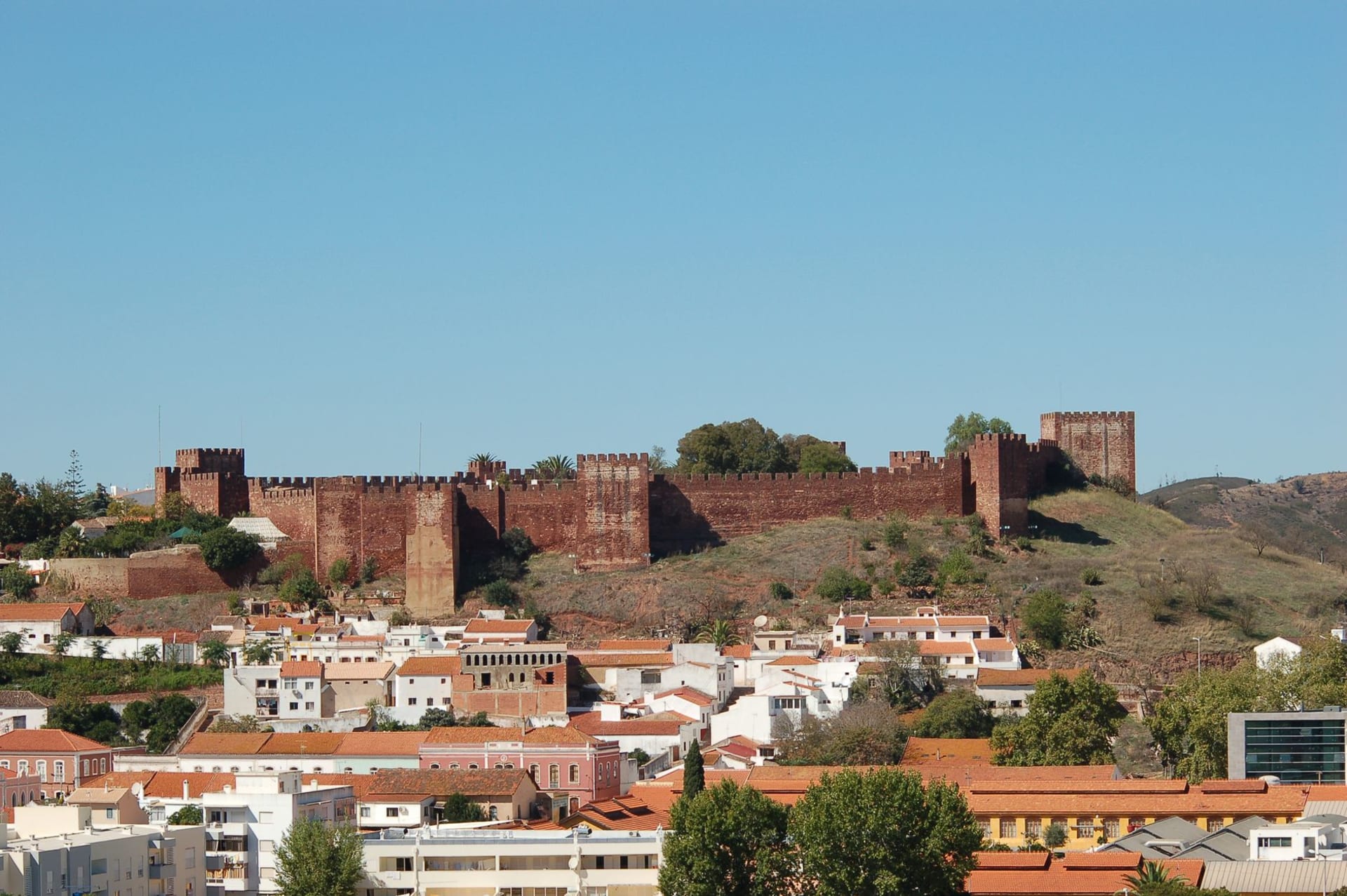
"The castle walls at Silves are the color of dried blood and they are the most beautiful walls I have seen in Europe."
I drove to Silves from Lagos on a morning when the coast was already crowded and the beach parking was full by nine, and within twenty minutes of turning inland the landscape completely changed. The orange and almond groves started, and then the red earth, and then Silves appeared on its hill — the castle walls rising in that specific shade of deep red sandstone that you don’t see anywhere else in Portugal, the old medina stacked below it, the Arade river looping through the valley floor. The air smelled of cut grass and something warm and resinous I couldn’t identify. After the Atlantic wind of the coast, the inland stillness felt almost tropical.

The castle of Silves is one of the best-preserved Moorish fortifications in Portugal, and unlike many fortress-monuments, it still reads as a castle rather than a ruin. The walls are enormous — they held the capital of the Moorish kingdom of al-Gharb, which preceded and outlasted several Christian reconquests, and you feel the weight of that history in the sheer mass of the stone. Inside the walls, the cisterns are still intact, and you can walk down into them — cool, dim, smelling of old water and centuries of stone. From the battlements you see the whole valley: orange groves in every direction, a couple of white church towers, the river silver in the distance. The city below the castle has a proper Moorish medina layout — streets that wind and narrow and open unexpectedly onto small squares — and the cathedral, built directly atop the site of the great mosque after the 1242 reconquest, has that hybrid quality that certain buildings get when they are rebuilt from sacred to sacred without quite losing either soul.

The town has not been overrun, which still surprises me. There are tourists in summer but they tend to be Portuguese tourists, which changes the texture of a place considerably. The restaurants on the riverside strip serve the local speciality — cataplana, a copper vessel of clams and pork and chouriço — and the versions here in Silves are better than the ones I’ve eaten on the coast, which always seem to be aimed at what British tourists expect cataplana to be rather than what it is. I bought medronho — the local arbutus berry brandy — at a tiny shop near the castle gate. The shopkeeper, an older woman in a housecoat, poured me a tasting shot without being asked. It tasted like fire and strawberries.
When to go: Spring is extraordinary — the orange blossom in March and April makes the whole valley smell like a perfumery. Fall is equally good, with the harvest underway and the light turning golden on the red stone. Avoid July and August middays when the inland heat becomes serious; come for dinner instead when the town cools and the castle lights up.