Europe
Algarve
"I stood at the cliff edge at Ponta da Piedade and forgot every beach I'd ever seen before."
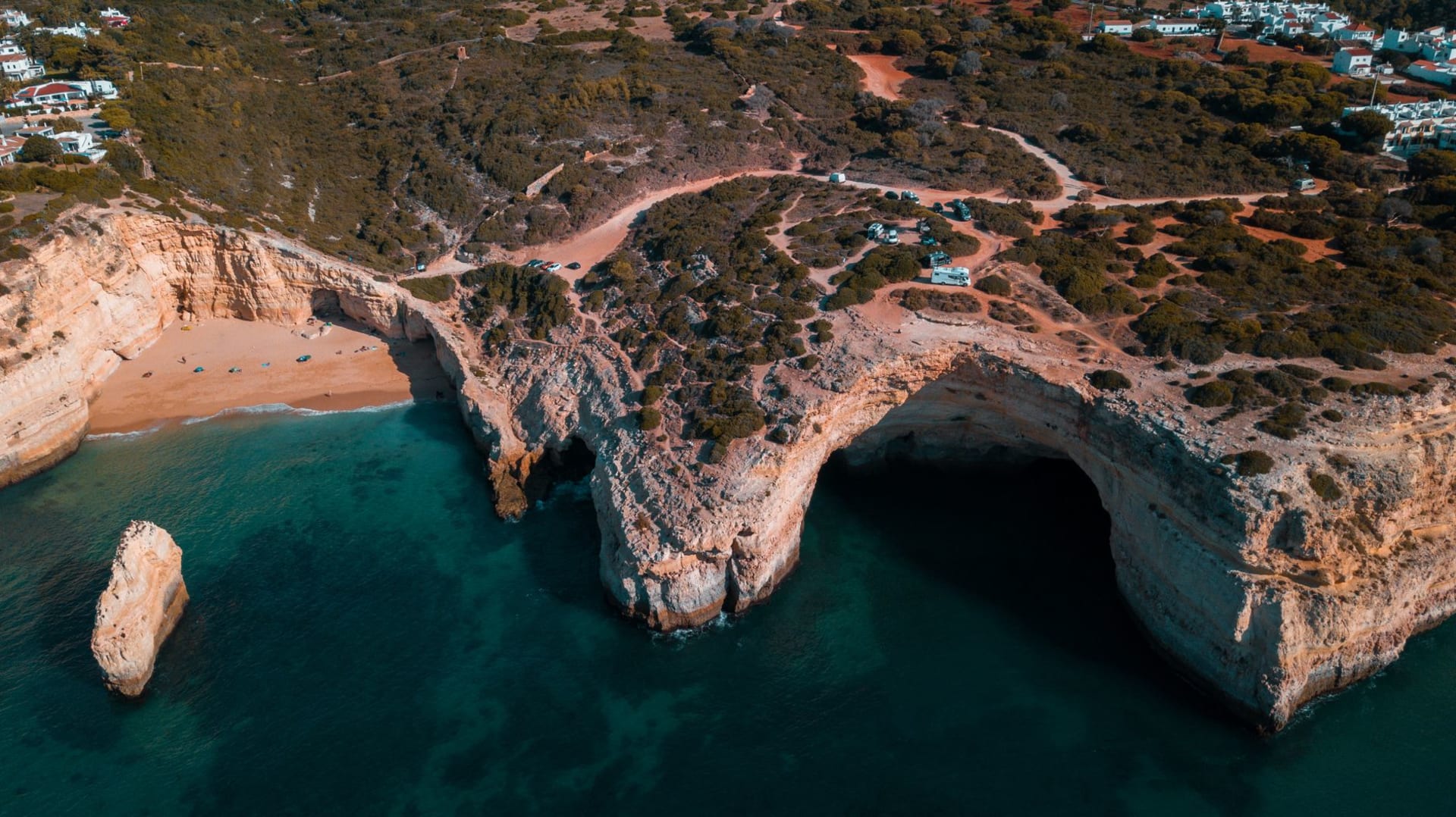
I drove into Lagos from Seville with my windows down and no particular plan, and within twenty minutes I was standing barefoot on Praia Dona Ana wondering how this place had not completely broken the internet yet. The cliffs here are not the dramatic grey walls of Ireland or the white chalk of Normandy — they’re warm ochre and terracotta, striated like layered cake, riddled with arches and grottos that the Atlantic has been patiently carving for millennia. You rent a kayak, slip through a narrow opening in the rock face, and suddenly you’re inside a cathedral the size of a parking garage, light filtering down through a hole in the ceiling, the water the color of a swimming pool in a dream.
The western Algarve around Lagos and Sagres is what I keep coming back to in my head. Most people plant themselves in Albufeira or Vilamoura — which is fine if a golf resort and a British pub are what you’re after — but the real character of the coast reveals itself the further west you go. Sagres sits on a promontory at the southwestern tip of Europe, and the wind there is not romantic wind, it is biblical wind, the kind that justifies the old sailors’ terror of the edge of the known world. The fort at Cabo de São Vicente closes at six, but if you’re there at five-thirty with the light going horizontal and orange, you’ll understand why the Portuguese once believed their country was where civilization ended and the ocean began. I ate a grilled dourada at a plastic table in Sagres town for nine euros and it was better than half the fish I’ve paid forty for in Mexico City.
The towns themselves reward slow walking. Lagos has a proper old quarter — cobblestones, whitewashed walls, wrought-iron balconies — that is genuinely ancient rather than theme-parked. In the mornings before the beach crowds arrive, the Mercado Municipal on the waterfront sells figs, local cheese, and smoked sausage that the vendors will slice for you to taste. I bought a wedge of Alentejo cheese and ate half of it leaning against a fountain. Nobody bothered me. That is the other thing about the Algarve: even in summer, if you move a kilometer off the main drag, you can find silence.
When to go: May to mid-June or September to October. July and August are crowded and expensive, the beaches packed by ten in the morning. Late September is the sweet spot — water temperature peaks, crowds thin, the light turns amber, and you can get a cliffside table for dinner without a reservation.
What most guides get wrong: They send you east to Albufeira and call it the Algarve. The real coast is west — Lagos, Luz, Sagres, the wild Vicentine Coast where no development is allowed and the Atlantic comes in raw. Do not book a resort. Rent a small car, find a guesthouse in Lagos old town, and spend a week driving the coast road west. The Algarve most people visit is a footnote.