
Portalegre
"Every other Alentejo town bakes. Portalegre has the nerve to be actually cool."
I drove north to Portalegre on a day when Évora was forty degrees, and the temperature dropped almost ten degrees in the final twenty kilometers as the road climbed into the Serra de São Mamede. The landscape changed as sharply as the air: the flat cork-oak plains giving way to schist ridges covered in chestnut trees, the bleached sky deepening to something closer to blue, the quality of the light becoming softer and more northern. Portalegre sits on the slopes of the serra at around six hundred meters, and it has the particular temperament of a town that has always occupied a border position — between the hot plain and the cool mountains, between Portugal and Spain eight kilometers to the east, between the industrial past and the quiet present.
The city made its money on tapestries and wool, and the legacy of that manufacturing heritage is visible in the architecture — merchants’ houses with Baroque facades, a cathedral rebuilt with the profits of the silk trade, the old cork factory buildings that now house galleries and cafés. The Fábrica de Tapeçarias de Portalegre, founded in the eighteenth century and still operating, is one of the stranger things you can visit in Portugal: a workshop where skilled artisans work on enormous looms producing tapestries based on designs by Portuguese painters — José de Almada Negreiros, in particular — with a density of thread that gives them the quality of oil paintings. The factory tours are irregular, but the showroom is always open, and the work on the walls makes you stop and look in the way that very good textiles sometimes make you stop and look.
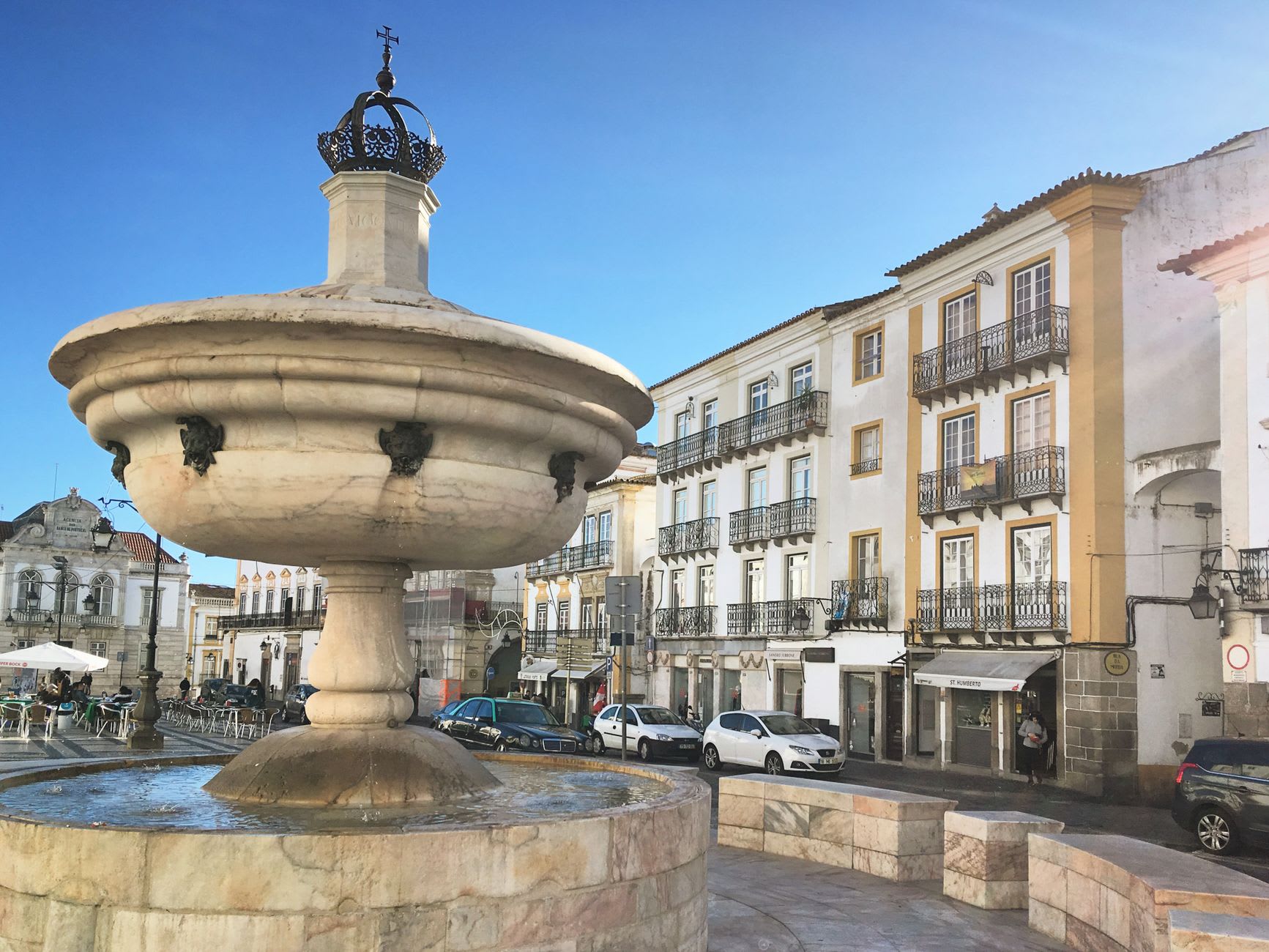
The old town rises steeply above the main avenues, and walking it requires some willingness to climb. The streets up toward the castle are narrow and worn smooth, the houses painted in the white-and-yellow palette that marks northern Alentejo, and there are Manueline doorways and carved window surrounds of a quality that would draw a crowd in Lisbon but here go unnoticed because they have simply always been there. I stopped to photograph one portal for about five minutes and the only person who passed was an elderly man with a bag of groceries who smiled at me with the patient indulgence of someone watching a tourist take a long time to appreciate something obvious.

The food in Portalegre leans toward the mountain end of the Alentejo spectrum: game, chouriço from local pigs, a sheep’s cheese that is tangier and more herbal than the lowland versions. I had lunch at a place near the cathedral where they were serving cabrito assado, roasted kid goat, with bread and potatoes and a glass of wine from the Serra de São Mamede. The meat was pulled from the bone without ceremony, the kind of lunch that makes you want to sit for a long time afterward in a chair by a window.
When to go: May through June and September through October are ideal, avoiding summer heat from the plains and winter cold from the serra. The annual festival Portalegre em Jazz in November draws a small, committed crowd and transforms the cafés for a week.