Europe
Alentejo
"The place in Portugal where you finally stop rushing and actually taste things."
I arrived in Évora on a Tuesday afternoon in late September, when the harvest dust was still hanging in the air and every café terrace smelled of grilled pork and red wine. I had come from Lisbon in under two hours by train, which is not far at all, and yet the Alentejo felt like a different country — slower, browner, heavier with heat and history. The cork oaks stood along the roadsides with their trunks freshly stripped to a raw amber, as if the landscape itself was shedding its skin.
The Alentejo is the largest region in Portugal and one of the least visited, which is exactly why it rewards the people who actually go. Évora is the obvious anchor — a UNESCO-listed walled city where a Roman temple stands in the middle of town like it simply forgot to leave, and where the bones of five thousand monks are literally built into the walls of a chapel off the main square. That chapel alone would justify the trip. But Évora is also a place to eat seriously: black pork from the Alentejano pigs that roam freely eating acorns, migas made from yesterday’s bread, a dense sheep’s cheese called queijo de serpa that you will think about for weeks after. The wine — deep, tannic, southern — comes from grapes grown in soil so dry it looks like it should produce nothing at all.
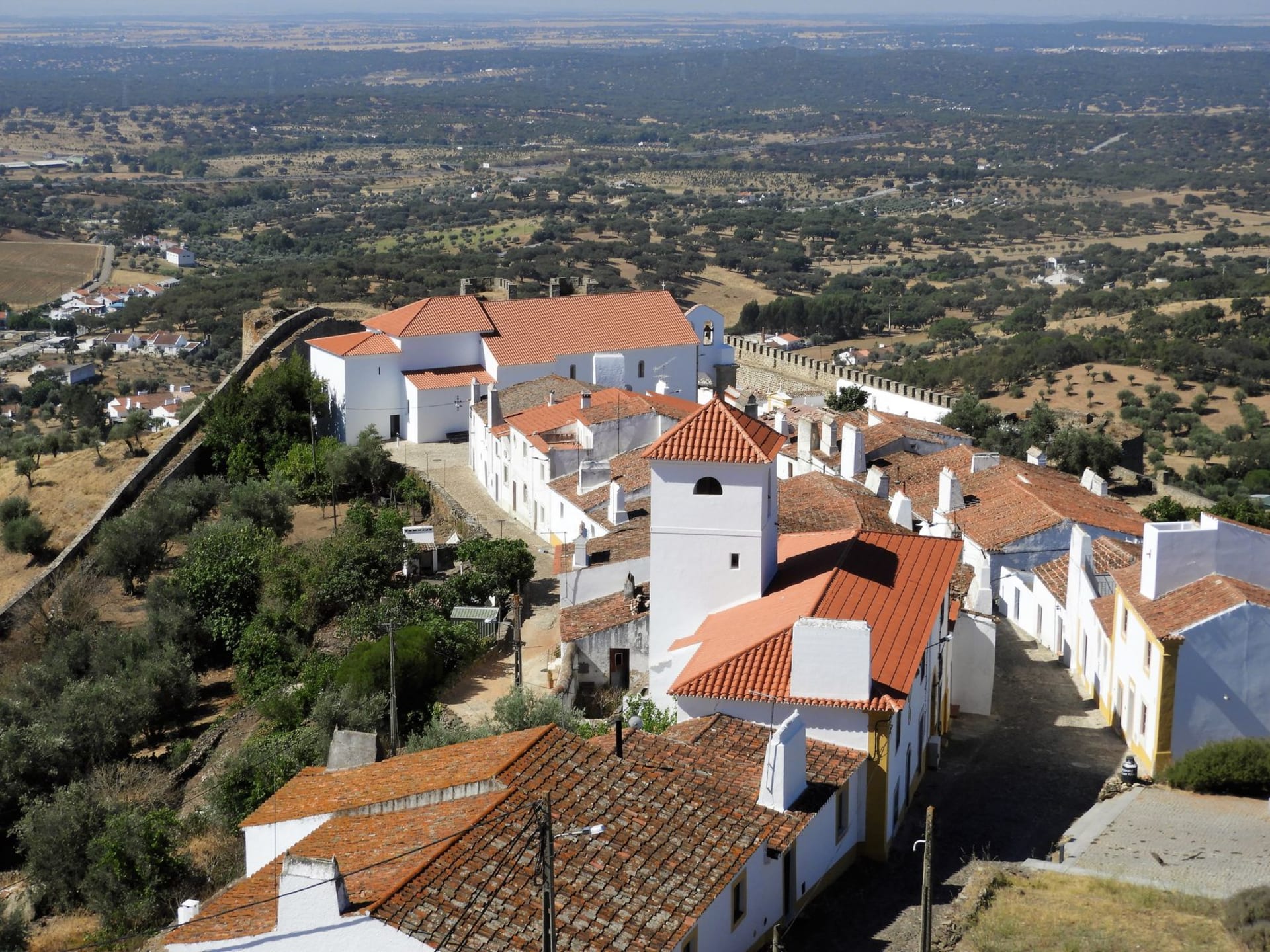
Beyond Évora, the region opens up into something harder to define. Monsaraz, a perfectly preserved medieval village perched above the Alqueva reservoir, where you can stand on the walls at dusk and watch the water go the color of copper. The marble towns of Estremoz and Vila Viçosa, where the stone is so abundant they pave the streets with it. The Cromeleque dos Almendres, a megalithic stone circle older than Stonehenge sitting in the middle of an olive grove with no fence, no ticket booth, no one else around when I visited on a weekday morning. Just the stones and the light and the sound of wind moving through the trees.
When to go: March to May for wildflowers and green hills, or September to October for harvest season, lower temperatures, and the wine. Avoid July and August — the heat is genuine, touching 40°C, and the region offers almost no shade.
What most guides get wrong: They treat the Alentejo as a day trip from Lisbon or a single night in Évora. This is a region that requires at least three or four days and a car. The best things here — the unmarked megalithic sites, the village restaurants with no menus, the vineyards that will let you taste if you just show up — are not on any itinerary. Slow down. Drive the back roads. The Alentejo will meet you halfway.