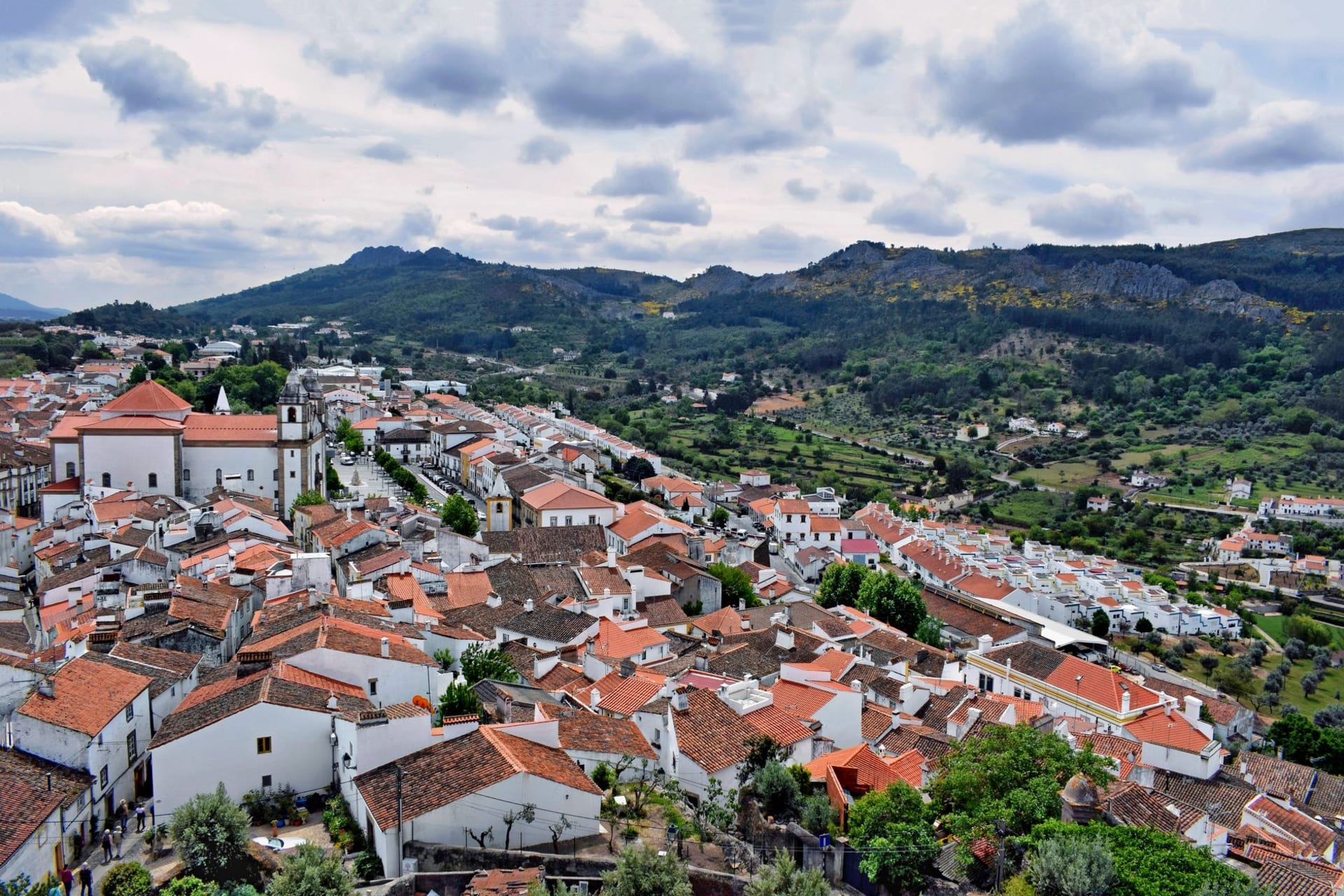
Marvão
"From up here you can see the next country, and not much reason to leave this one."
You see Marvão long before you reach it, which is rather the point — it was built to be seen, and to see. The village sits on a granite spur nearly nine hundred metres up in the Serra de São Mamede, the last gasp of high ground before the Alentejo flattens out toward Spain, and the road up coils through cork oaks and chestnut woods in a way that makes the arrival feel earned. We came in late afternoon, and the low sun was turning the whitewashed houses the colour of weak tea. The whole place fits inside its medieval walls with room to spare for perhaps a few hundred residents and a great many cats.
The Walls and the View Beyond Them
The first thing anyone does in Marvão is walk the ramparts, and they are right to. The walls run the full circuit of the crag, and at the western end the castle anchors everything, a stark thirteenth-century pile of granite with a cistern, a keep, and a wind that nearly took Lia’s hat into Spain. Because that is what you see from up there: Spain, or at least the long brown reach of Extremadura, and behind you the green corduroy of the Alentejo, dotted with the pale shapes of distant villages. The writer José Saramago said that from Marvão you can see the whole land, and standing on the keep with the swifts knifing past below us, I understood it as plain fact rather than flourish.
Inside the walls, the village is almost absurdly intact. Granite lanes barely wide enough for a donkey, Manueline doorways, window boxes spilling geraniums, a tiny main square with a church and a stone cross. There is no clutter of souvenir shops, no coach park disgorging crowds. We met more cats than tourists. A woman swept her step and nodded; an old man in a flat cap watched us pass without much interest. It is a real place that happens to be beautiful, not a beautiful place pretending to be real.

Chestnuts, Stews, and the Roman Town Below
We stayed the night, which I recommend, because the day-trippers leave by six and the village becomes entirely yours. Dinner was at a small place off the square: a thick Alentejan stew of pork and clams, açorda heavy with garlic and coriander and bread, and a jug of red that the owner poured without asking whether we wanted more. In autumn the surrounding hills give chestnuts, and the village throws a festival for them every November — roasting them in the lanes, washing them down with jeropiga, a sweet fortified must that goes to your head faster than you expect.

Down the mountain lies Ammaia, the ruins of a genuine Roman town with a small museum, mosaics, and the bases of forum columns standing in a field of wildflowers. We had it entirely to ourselves on a Tuesday morning, which felt like a small theft from the rest of the world.
When to go: Spring for wildflowers across the serra, or November for the chestnut festival and the first wood smoke in the air. Summer days can be fierce on the exposed crag; the evenings up here are always cool.