Estremoz
"In Estremoz, even the puddles look like they have veins of white marble running through them."
I drove into Estremoz on a Saturday morning and found the main square already in full market mode — women in aprons selling pottery figurines from folding tables, men with plastic crates of oranges, a cheese seller with rounds of queijo stacked like small wheels of pale stone. The smell was rosemary and something faintly animal and the cold mineral air off the marble. Estremoz sits in the triangle of marble towns that includes Vila Viçosa and Borba, and here the stone is so present it becomes atmospheric, something you breathe in along with everything else.
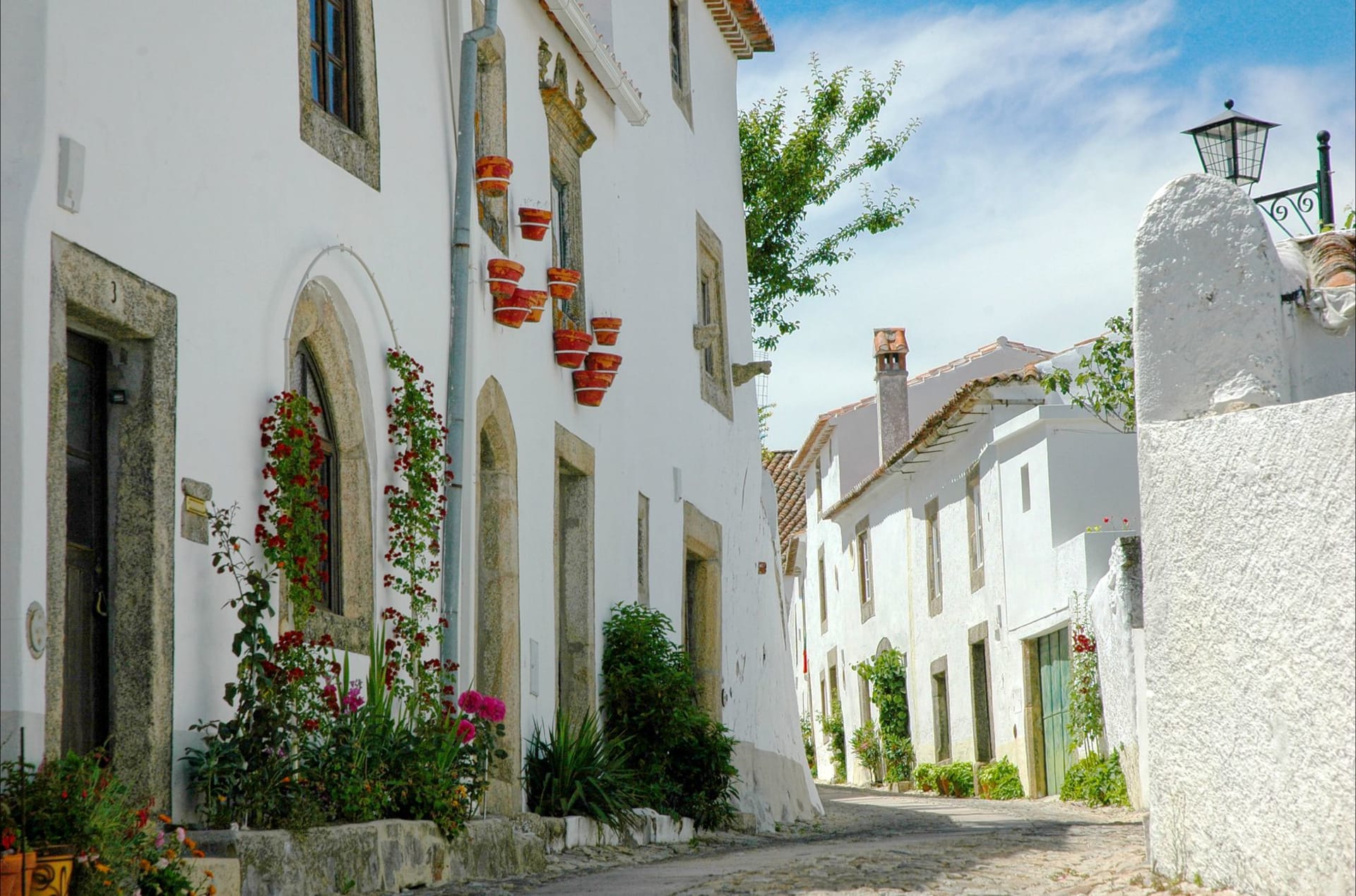
The town divides itself clearly between the lower commercial quarters and the walled upper town, which sits on its own small hill above the main square. I walked up through the gate after the market and found the upper town almost deserted — a warren of lanes between whitewashed houses with the usual blue and yellow Alentejo borders, a pousada installed in a former royal palace, and at the very top, the donjon tower built by King Dinis in the thirteenth century. The marble is everywhere up here: paving stones, doorsteps, church facades, the low walls along the lanes. It starts to feel less like a decorative choice and more like a fact of geology, as if the entire hill is simply marble that has been convinced to hold a town’s shape.

The pottery is the thing that Estremoz does better than anywhere else in the Alentejo. The local tradition of clay figures — bullfighters, farmers, brides, saints, and an entire bestiary of farm animals — has been practiced here for centuries, and the best pieces have a direct, slightly awkward quality that makes them feel genuinely handmade rather than artisanally handmade, which is a different thing. At the market I spent twenty minutes deciding between a small ceramic donkey and a figure of a woman carrying a water jug on her head. I bought the woman. She now sits on a shelf in my house in Mexico and periodically reminds me of a Saturday morning smelling of rosemary and orange rind.

There is also the honey. Alentejo rosemary honey has a specific mineral flavor that I associate entirely with Estremoz, though you can find it across the region — something floral and dry and slightly resinous, good on the local cheese and better still on a slab of bread with a cup of bica coffee on a cold morning at a café table outside the market. I ate three of these in sequence and was not embarrassed about it.
When to go: Saturday mornings, obviously, for the market, which runs year-round and is best from September through May before the summer heat makes the square uncomfortable. Spring is the most beautiful season, when the surrounding almond and orange groves are in blossom.