A short, violent drop where the Athabasca River forces its entire volume through a narrow quartzite gorge just south of Jasper townsite, loud enough to feel before you see it.
Athabasca Falls doesn’t drop far — maybe twenty-four metres, nothing compared to the giants you’d find elsewhere in Canada — and I almost undersold it in my head before I got out of the car. Then I heard it. The sound reaches the parking lot before the view does, a continuous low roar that has less to do with height and everything to do with volume: the entire Athabasca River, one of the larger rivers draining the Columbia Icefield, gets forced through a gorge barely a few metres wide here, cut into a hard band of quartzite that has resisted erosion far better than the softer rock around it.
Walking the short paved trail toward the falls, the mist hits you well before the railing does, and the noise becomes something closer to a physical pressure than a sound. The river doesn’t fall so much as detonate through the gap, throwing spray twenty metres into the surrounding spruce forest, and on a sunny afternoon that spray throws a rainbow directly across the gorge that shifts position as you move along the viewing platforms. I stood at the main overlook for a long while just watching the water find new paths through the old dry channels the gorge has abandoned over centuries as it slowly cuts itself a new course.
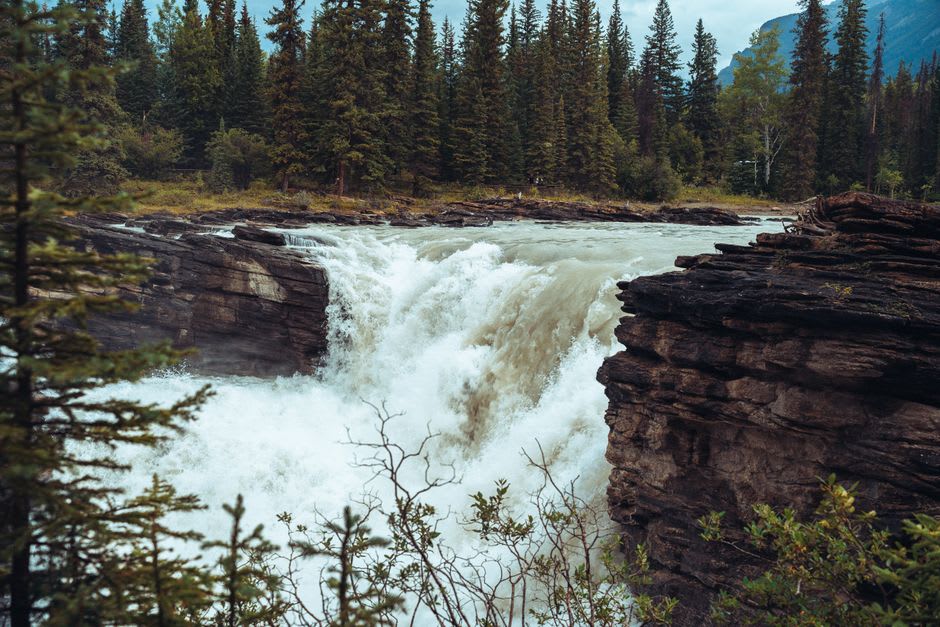
What most people miss, rushing straight to the main viewpoint, is the network of old potholes and abandoned channels carved into the rock just downstream, smooth curved basins where the river used to run before it found its current, narrower route. You can walk out onto the exposed quartzite and look down into these dry, polished bowls, some of them metres deep, and get a very physical sense of how much rock a determined river can hollow out given a few thousand years and no reason to hurry.
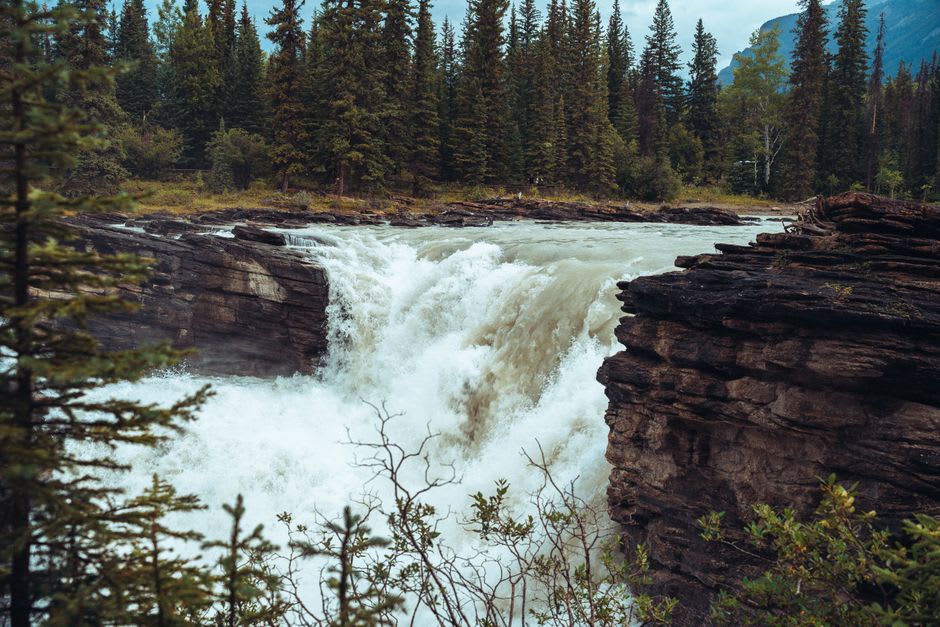
When to go: Late spring through early summer for maximum water volume from snowmelt, when the roar and the spray are both at their most dramatic. It’s an easy stop directly on the Icefields Parkway, so it fits naturally into a Jasper-to-Banff drive at any time the road is open.
Keep exploring
More from Alberta
 alberta
 Banff
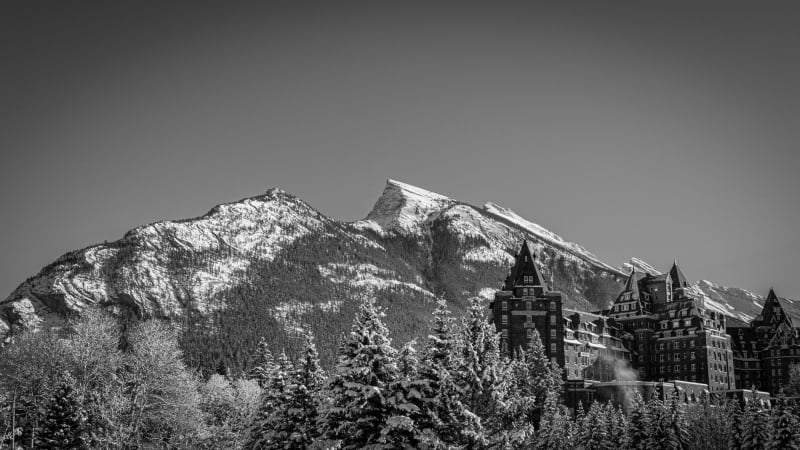
A mountain town so perfectly placed inside its national park that even the gas station has a glacier for a backdrop.
Explore alberta
 Bragg Creek
A small foothills hamlet west of Calgary where the prairie gives its first hint of mountains, threaded with quiet trails along the Elbow River and a handful of galleries and log-cabin shops.
Explore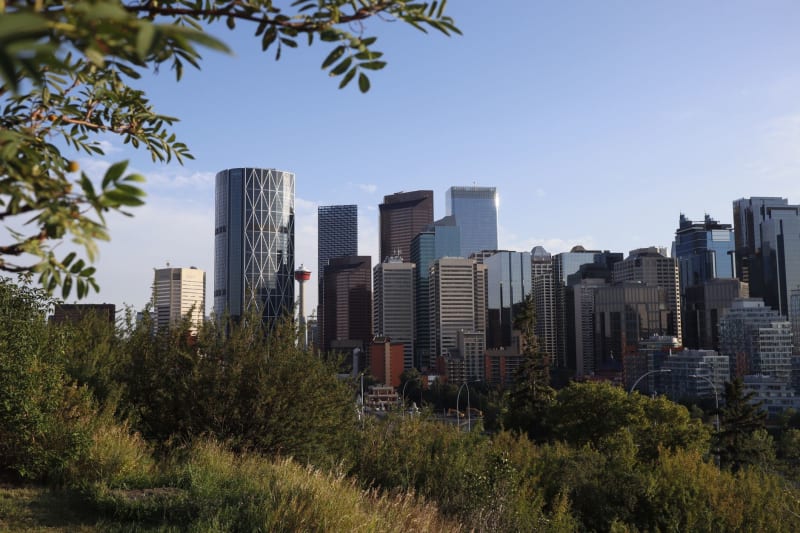 alberta
 Calgary
A proper western city that lives at the hinge between the Rockies and the prairies, and feeds itself on beef that makes everywhere else seem approximate.
Explore alberta
 Canmore
A former coal-mining town at the mouth of the Bow Valley that has quietly become the Rockies' most livable base camp, twenty minutes from Banff without Banff's crowds.
Explore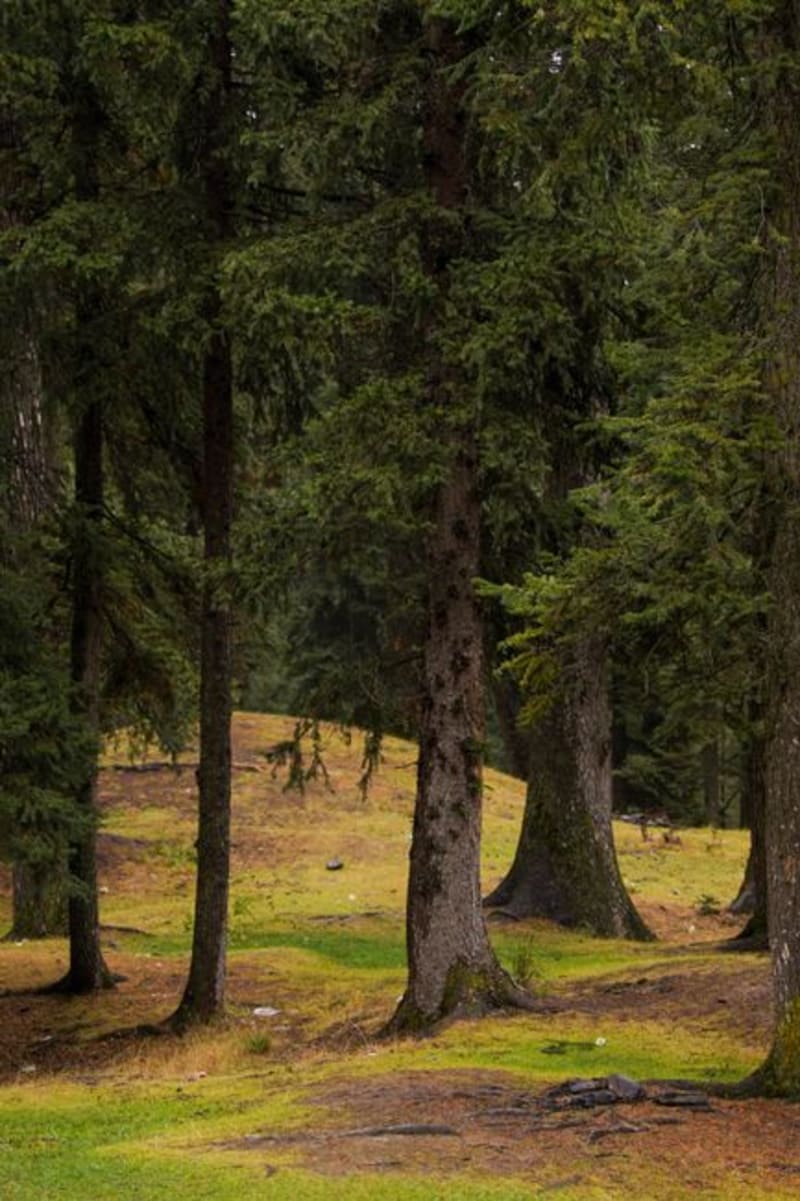 alberta
 Cypress Hills
A forested plateau rising eight hundred metres above the surrounding prairie on the Alberta-Saskatchewan border, cool and pine-scented in a province otherwise defined by open sky.
Explore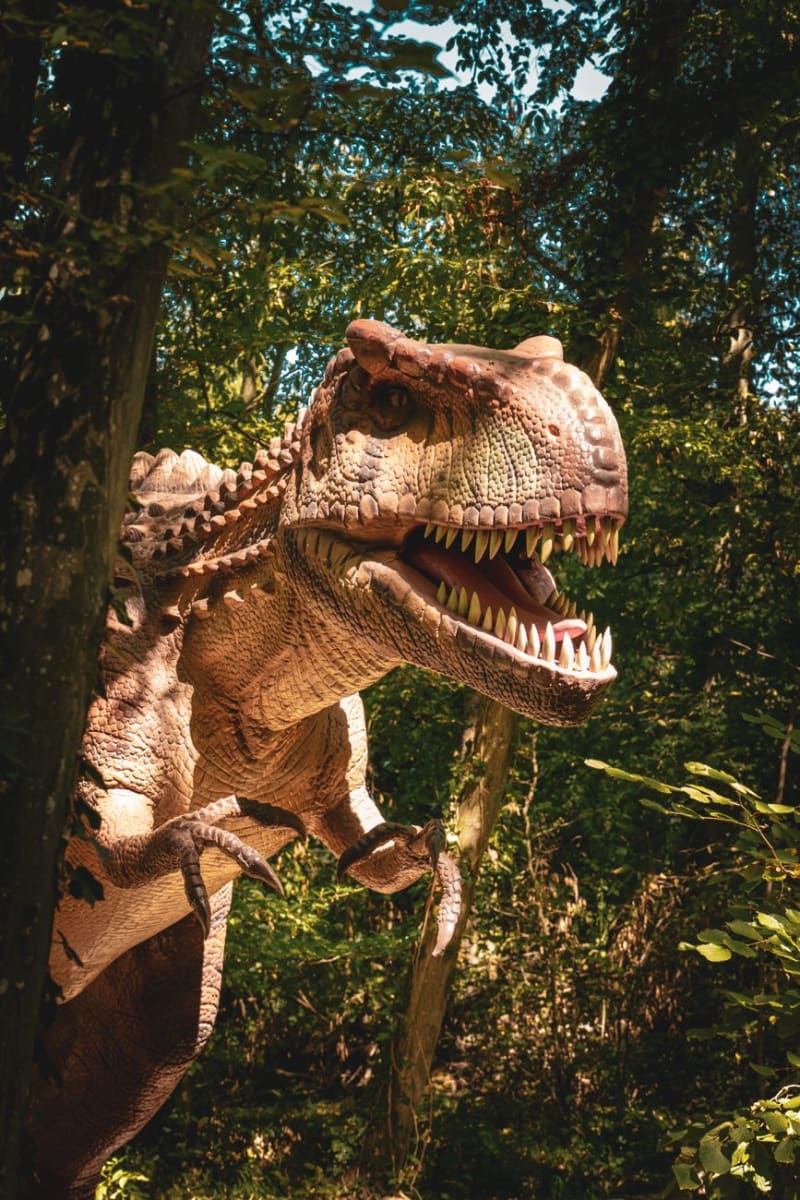 alberta
 Dinosaur Provincial Park
A UNESCO badlands where the prairie suddenly drops away into a moonscape of eroded hoodoos that has yielded more dinosaur species than almost anywhere on Earth.
Explore