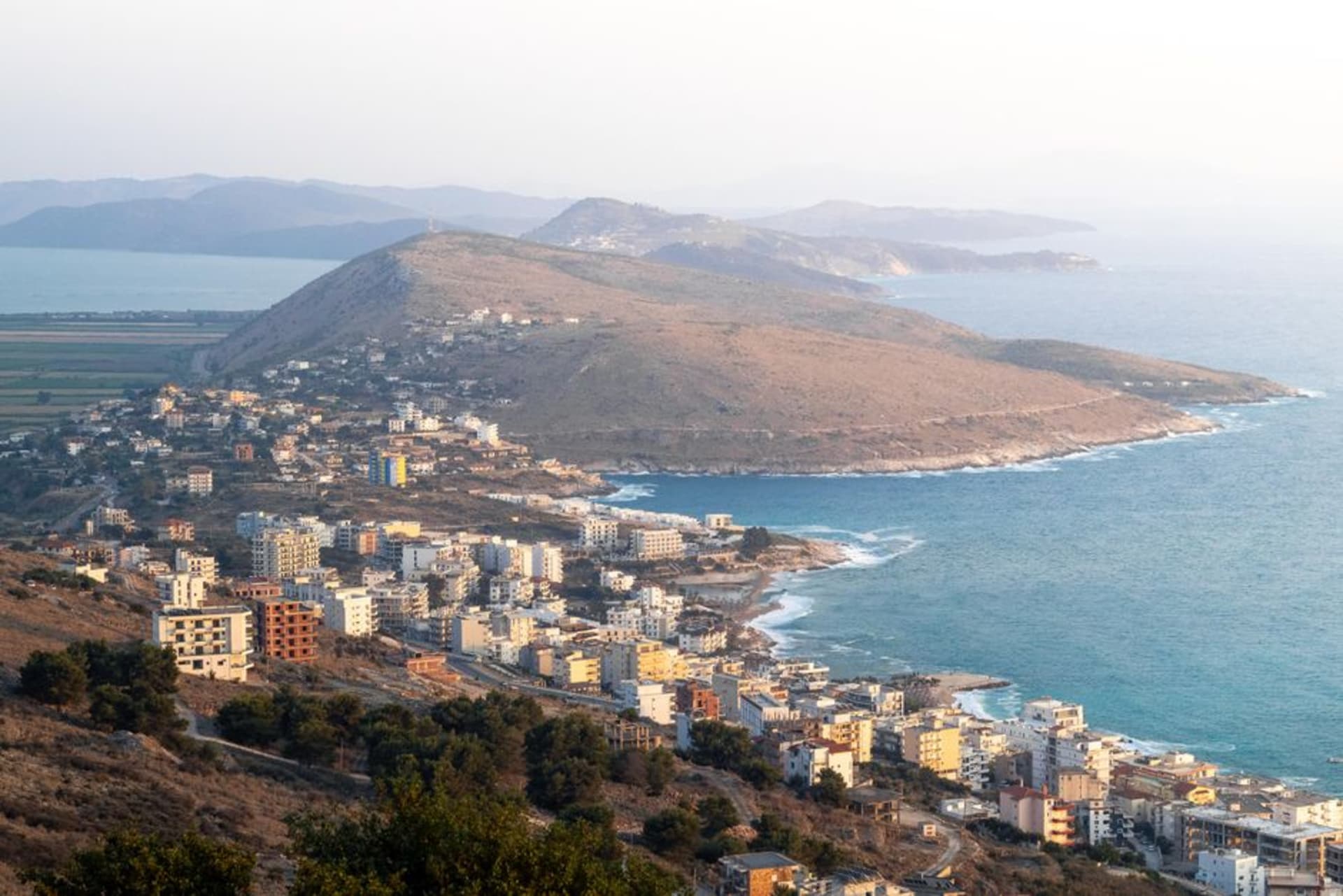
Himarë
"A harbor town that hasn't finished deciding what it wants to become, and I hope it takes its time."
A Riviera town where a Greek-speaking old quarter climbs a hill above a working harbor, and the beaches on either side stay half-empty long past what the water deserves.
Himarë confused my sense of direction before it did anything else — I’d expected one town and found three, stacked along the coast road: the modern strip by the harbor, thick with new construction and half-built hotels; Spile beach just north, a proper stretch of pebble and cypress trees; and up on the hill behind everything, Himarë e Vjetër, the old quarter, where the street signs are as likely to be in Greek as Albanian and stone houses with red-tile roofs spill down the slope in a way that looks more like a Peloponnese village than anything I associated with Albania before I got there. This is one of the historically Greek-speaking communities along the coast, and the layered identity is part of what makes it interesting rather than a footnote.
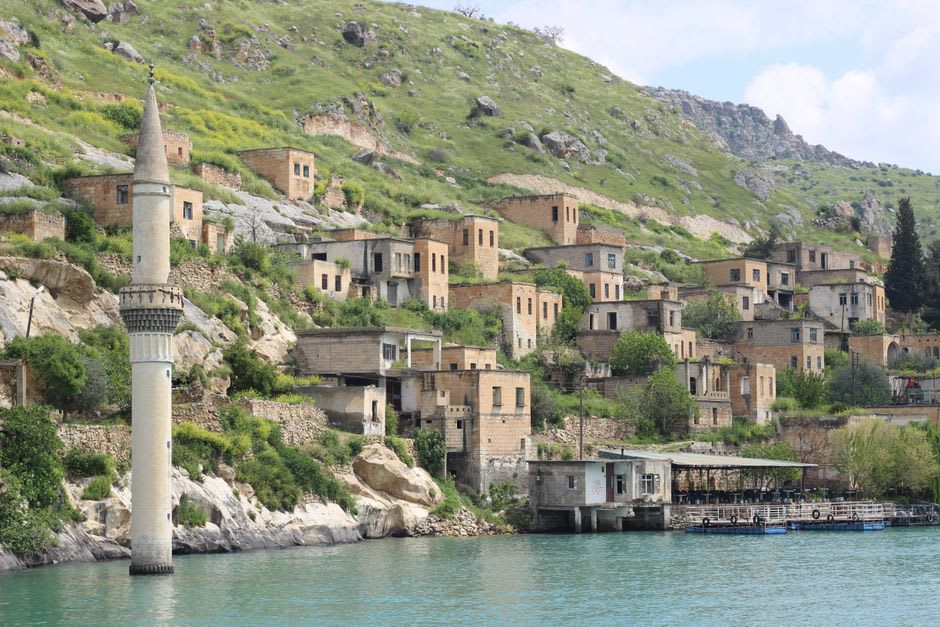
I climbed up to the old quarter one evening as the construction noise from the harbor faded behind me, and found an elderly man sitting outside a closed church with a transistor radio playing what I’m fairly sure was Greek rebetiko, utterly unbothered by my presence. The ruined Basilica of Himarë sits up there too, half-swallowed by fig trees, and from the highest terraces you can see the whole curve of coast down toward Dhërmi in one direction and the port in the other. Down at sea level, the harbor does a brisk trade in fresh fish, and I ate grilled sardines at a place with plastic chairs and a view that restaurants three times the price elsewhere would kill for.
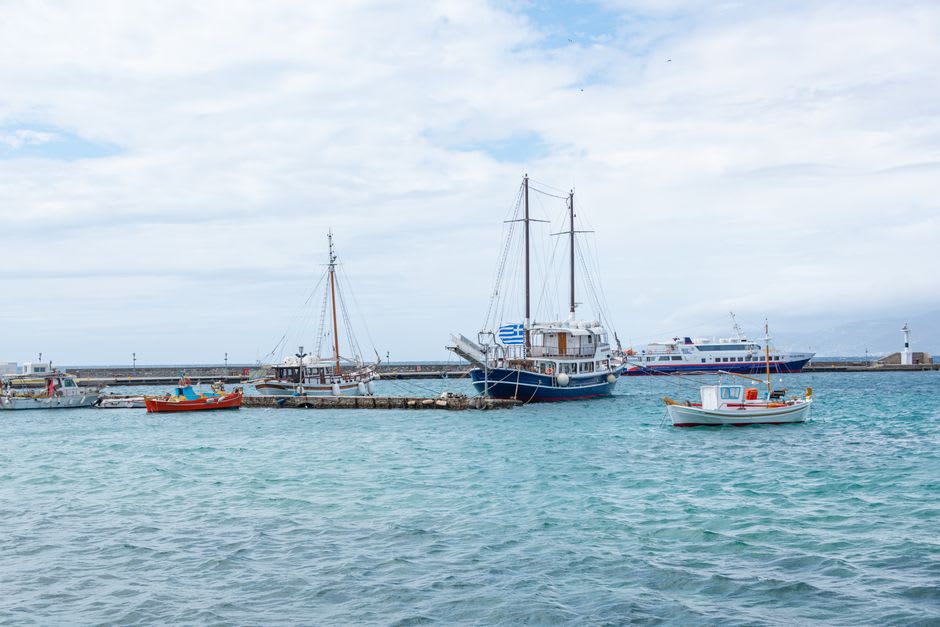
What I liked most was how unresolved it all felt — a town caught between its Riviera-boom future and its Greek-Albanian fishing-village past, cranes and church bells within earshot of each other. Give it five more years and it will probably look completely different.
When to go: Late May through June, or September, when the beaches are warm enough to swim and the coast road hasn’t yet clogged with the peak-summer traffic that can turn a twenty-minute drive into two hours.