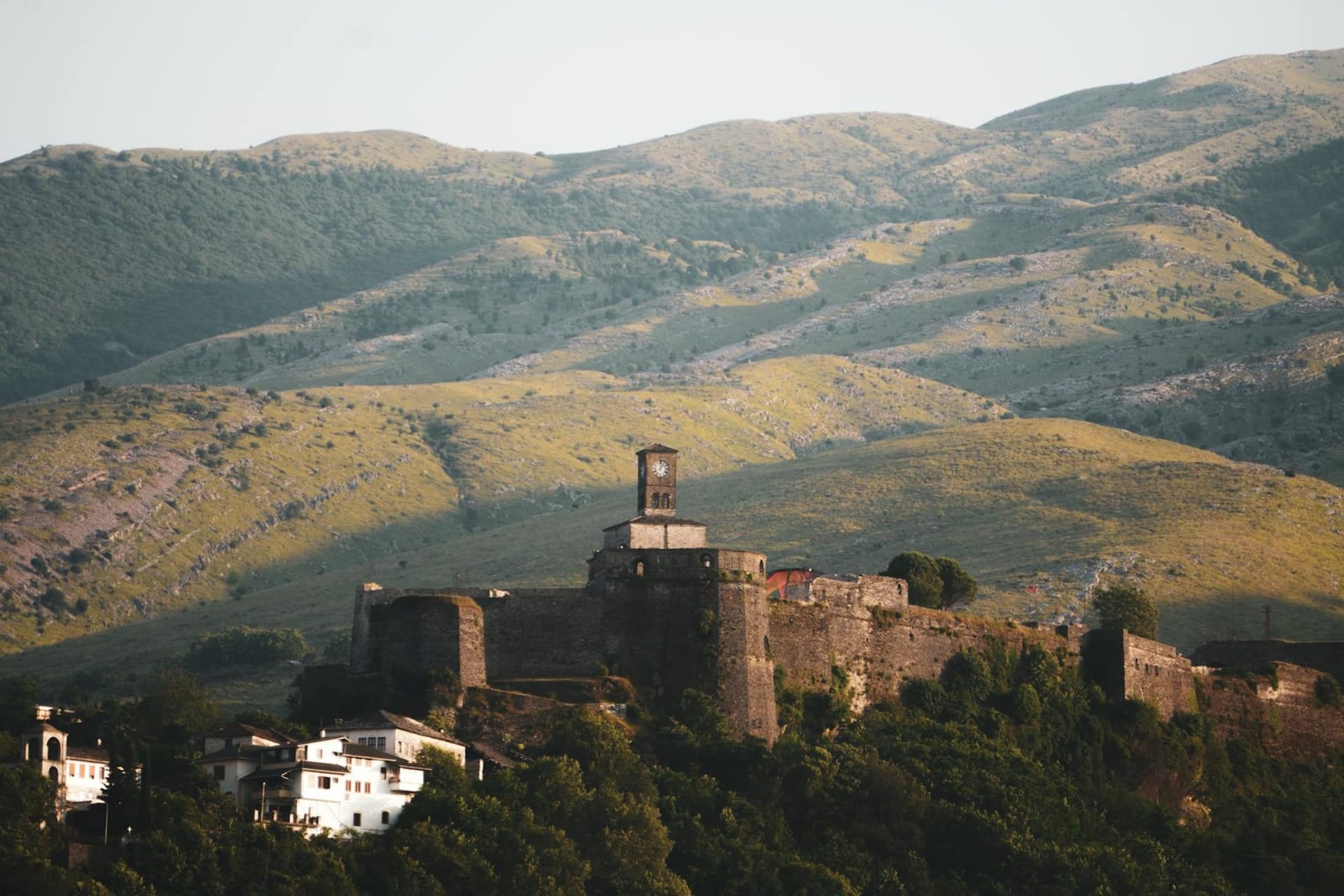
A silver-roofed mountain city of stone towers and a castle that watches over it like a patient patriarch — Enver Hoxha's birthplace.
There is a particular quality of light in Gjirokaster that I was not prepared for. Not the golden hour light travel photographers chase, but a cooler, more considered kind — the way afternoon sun strikes silver-grey slate and throws the whole hillside into something close to pewter. The city does not glow. It gleams, dully and proudly, like old cutlery.
We arrived from Berat on a local furgon that smelled of diesel and someone’s roasted peppers, and when the valley opened up and the stone towers came into view above the Drinos River, Lia put her hand on my arm without saying anything. Some places announce themselves that way.
The Old Bazaar and the Weight of Cobblestone
The bazaar district — the old çarshia — is the kind of place where you learn quickly to watch your ankles. The cobblestones here are not decorative; they are the original skin of a city that never saw fit to pave over its own bones. I found a stall near the clock tower selling byrek me spinaq still warm from the pan, wrapped in paper that immediately went translucent with butter. I ate it standing up, grease on my fingers, watching a man carry an inexplicably large refrigerator uphill on his back, which struck me as the most accurate metaphor for Albanian resilience I had encountered.
The tower houses that line the upper streets — kule, they are called — are built inward, fortress-like, their windows narrow and their stone walls half a meter thick. Entire family histories are compressed into those walls.
The Castle That Watches Everything
Kala e Gjirokastrës sits above the city like something that has long ago stopped being surprised by anything below it. Walking up through the Palorto neighborhood, past houses that seem to be slowly being swallowed back into the hillside, I came around a bend and found the castle’s south wall looming so close and so vertical that I actually stepped back.
Inside, the surprise was total and strange: a captured American U-2 spy plane, parked in a vaulted Ottoman prison hall like a piece of modernist sculpture dropped into the wrong century. No context, no explanation beyond a small faded placard. Lia laughed for a full minute. I took a photograph of the shadow it cast on the stone floor and said nothing. Sometimes Albania just does this to you.
Below, in the courtyard where the National Folklore Festival is held every five years, the silence was the kind that has absorbed too many things to give anything back.
Eating and Staying Late
Dinner at a restaurant tucked into a stone kule on Rruga Ismail Kadare — the city named a street after its most famous novelist, which tells you something — meant lamb offal cooked with wild herbs and a carafe of local wine that tasted of somewhere colder than Mexico, somewhere I had almost forgotten I missed.
When to go: Late April through early June for mild temperatures, fewer crowds, and the surrounding hills still green before the summer heat bleaches them. September is equally good and carries the golden-light warmth the slate rooftops deserve.