Durrës
"Durrës is where Rome, Byzantium, and the Albanian summer all share the same street."
Albania's second city hides a Roman amphitheater in its city center beneath Byzantine mosaics — then turns toward the Adriatic with its beach promenade.
Nobody warned me the amphitheater would just be there — tucked between a socialist-era apartment block and a side street off Rruga Dëshmorët e Kombit, without fanfare, without fencing, with barely a sign. Second century AD, capable of seating fifteen thousand people, and I nearly walked past it looking for a cafe.
What the Ground Holds
Durrës was Epidamnos to the Greeks, Dyrrachium to the Romans, a city that has been swallowed and rebuilt so many times that history leaks up through the pavement. The amphitheater sits in a depression below street level — you descend into it like entering a basement — and inside the vaulted corridors, Byzantine Christians converted gladiatorial chambers into a chapel. The mosaics are still there: fragments of saints, tesserae of gold and turquoise, painted over the blood sport of an earlier empire. I spent an hour in that half-dark, touching nothing, understanding that Albania compresses centuries the way other countries compress kilometers.
Lia found the Orthodox icons before I did. She has a habit of walking ahead and then waiting with this expression that means: you need to see this.
The Promenade at Dusk
By late afternoon the city pivots entirely toward the sea. The Lungomare stretches south from the old port, and in summer it fills with the specific energy of Albanian beach culture — families in plastic chairs, boys on motorbikes, the smell of grilled corn and sunscreen drifting together. I ate fish soup at a waterfront restaurant near the port: a clay pot of broth the color of saffron, dense with mussels and sea bream, bread brought without asking. The waiter spoke no French and my Albanian was limited to faleminderit and mirëmëngjes, but the soup needed no translation.
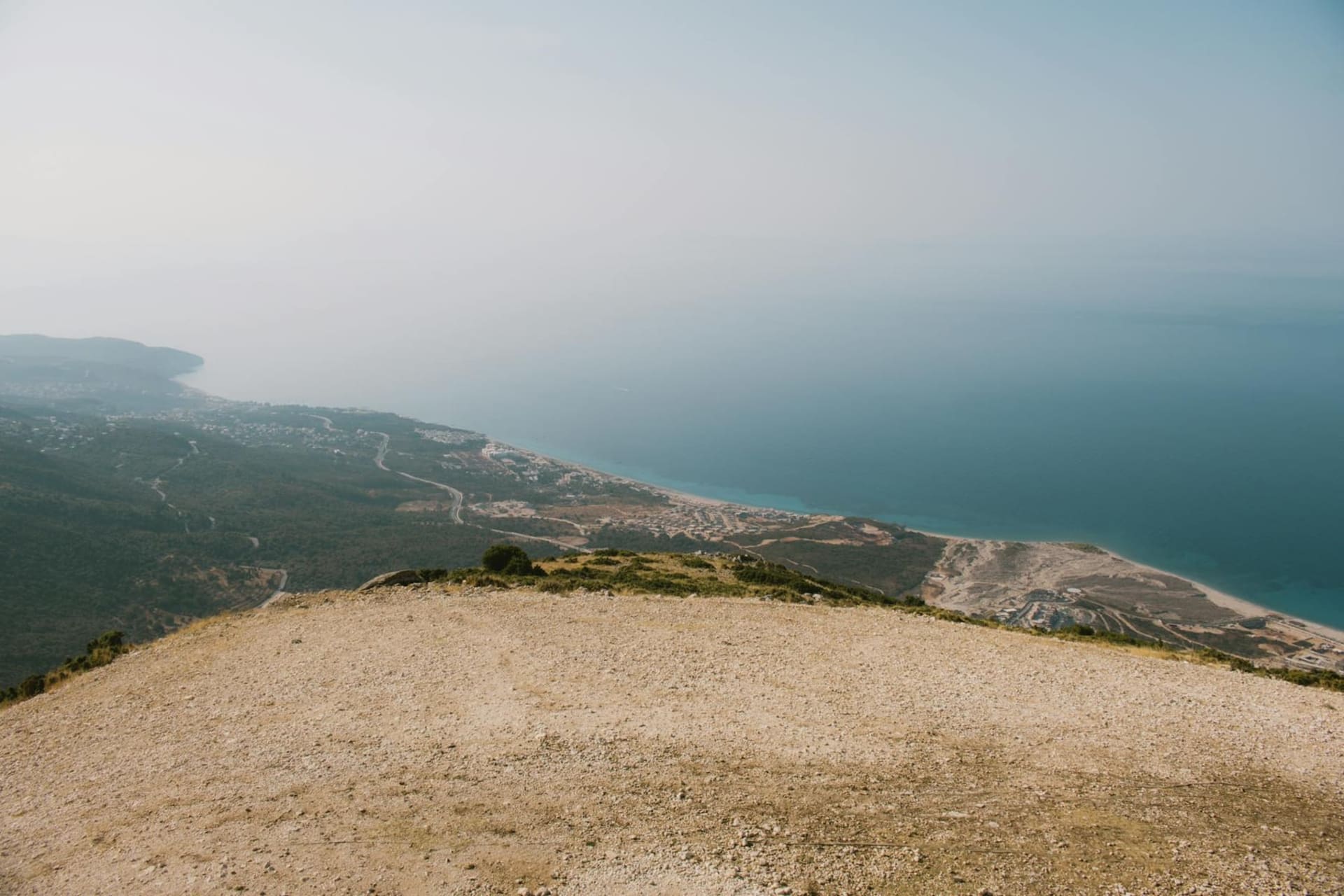
The light here in the late evening is particular — the Adriatic turns a flat, pewter silver before the sun goes down, and the mountains behind the city hold the last orange for a long time.
The Unexpected Neighborhood
The discovery that genuinely surprised me was the old quarter behind the bazaar, past the Fatih Mosque, where the streets narrow and the concrete gives way to older stone. A woman was selling dried figs from a cart near the Byzantine city walls. Not a market stall — a cart, a single item, a price that seemed more like a suggestion than a fact. I bought a paper bag full and we ate them walking back toward the amphitheater in the dark, which felt like the right way to end a day in a city where everything refuses to stay in its century.
When to go: May and early June offer warm weather, empty beaches, and the city before the Albanian summer diaspora returns from Italy and Greece — which transforms Durrës into something louder and more festive, but considerably more crowded. September is a quieter second choice.