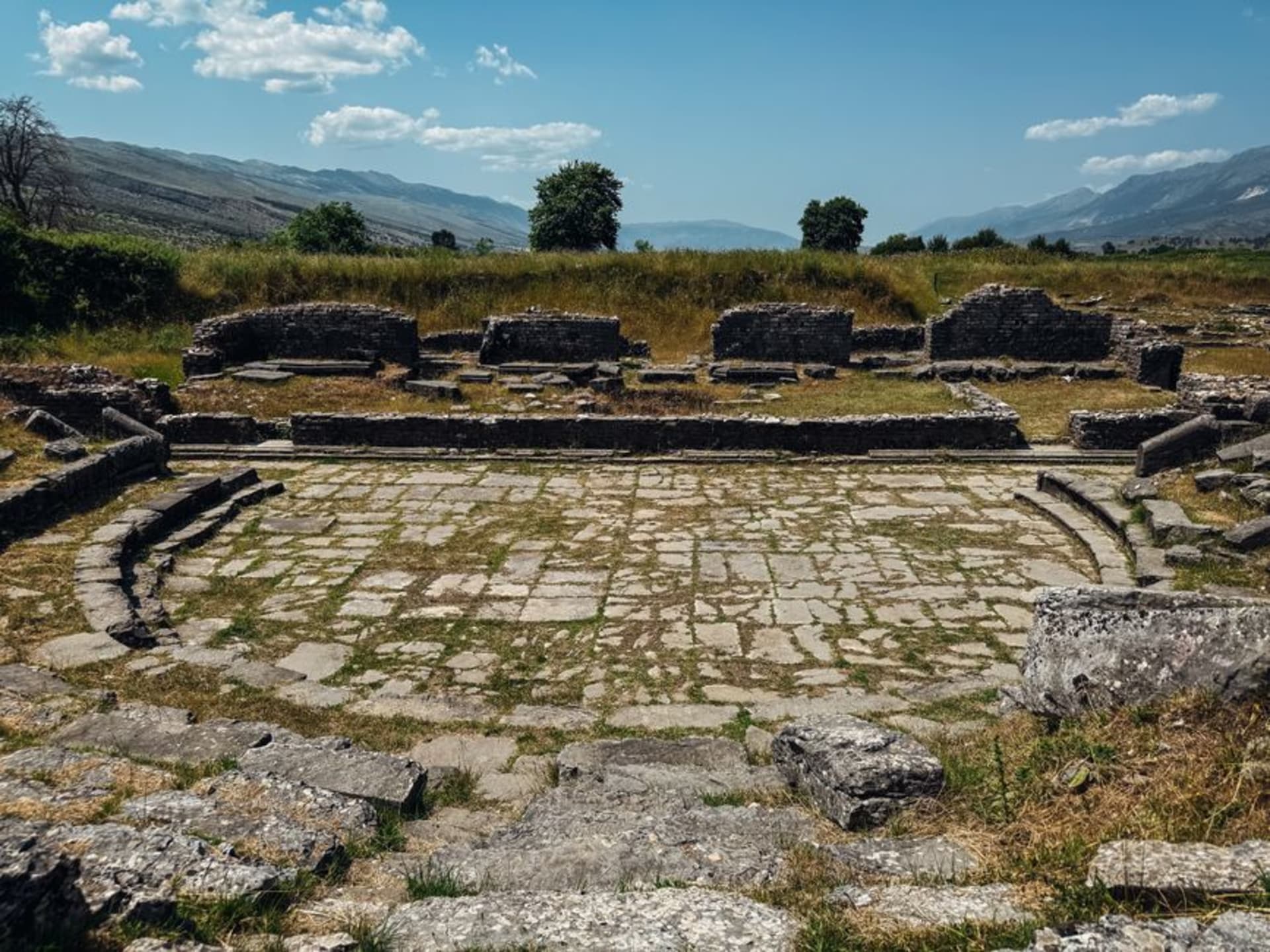
Butrint
"Two and a half thousand years of history, and I had the theater almost to myself."
A UNESCO archaeological park near Sarandë where Greek, Roman, Byzantine, and Venetian ruins sit half-submerged in a lagoon full of birdlife.
Butrint sits on a small peninsula between a lagoon and the Vivari Channel, about twenty minutes south of Sarandë, and it’s the kind of site that keeps unfolding as you walk it — you think you’ve seen the ruin, and then the path bends and there’s another one, centuries removed from the last, half-swallowed by forest. I went with almost no expectations, treating it as an add-on to a beach day, and ended up staying until the site closed.
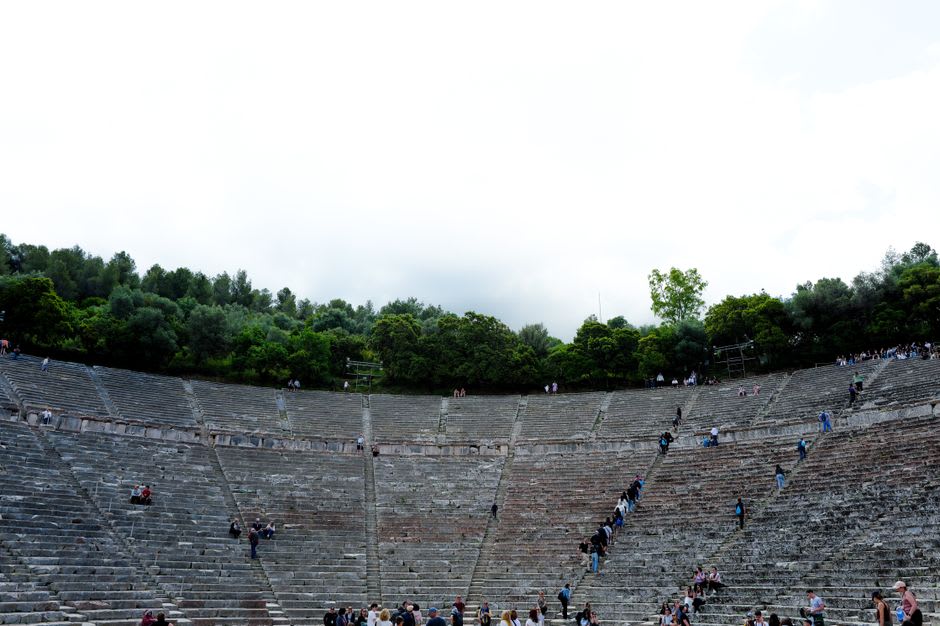
The layers here are the whole point: a Greek theater carved into the hillside, still used for performances; a Roman forum and public baths with mosaic floors buried and preserved under protective sand; a sixth-century baptistry with a mosaic floor so intricate it’s kept covered except for scheduled viewings; the shell of a Venetian fortress on the hilltop above everything, looking straight out over the Corfu strait. Butrint changed hands so many times — Greek colony, Roman city, Byzantine bishopric, Venetian outpost, Ottoman territory — that walking through it feels less like visiting one ruin than flipping through a stack of them, loosely shuffled together by two millennia of forest growth. Storks nest on the ruined towers in spring, and the lagoon itself is a genuine wetland reserve, thick with herons and cormorants that don’t seem remotely bothered by the tourists.
I ended the visit at the small café by the entrance, eating a slice of byrek and watching a heron stalk the shallows exactly the way it probably has for a very long time, long before any of the empires that built what’s behind me had arrived or left.
When to go: Spring is ideal — wildflowers, migratory birds in the lagoon, and cooler temperatures for the walk between sites, which has little shade. Avoid the midday heat of July and August if you can.