Skagway
"Skagway is a town that got rich on a lie and never quite stopped performing it — and somehow that makes it more honest, not less."
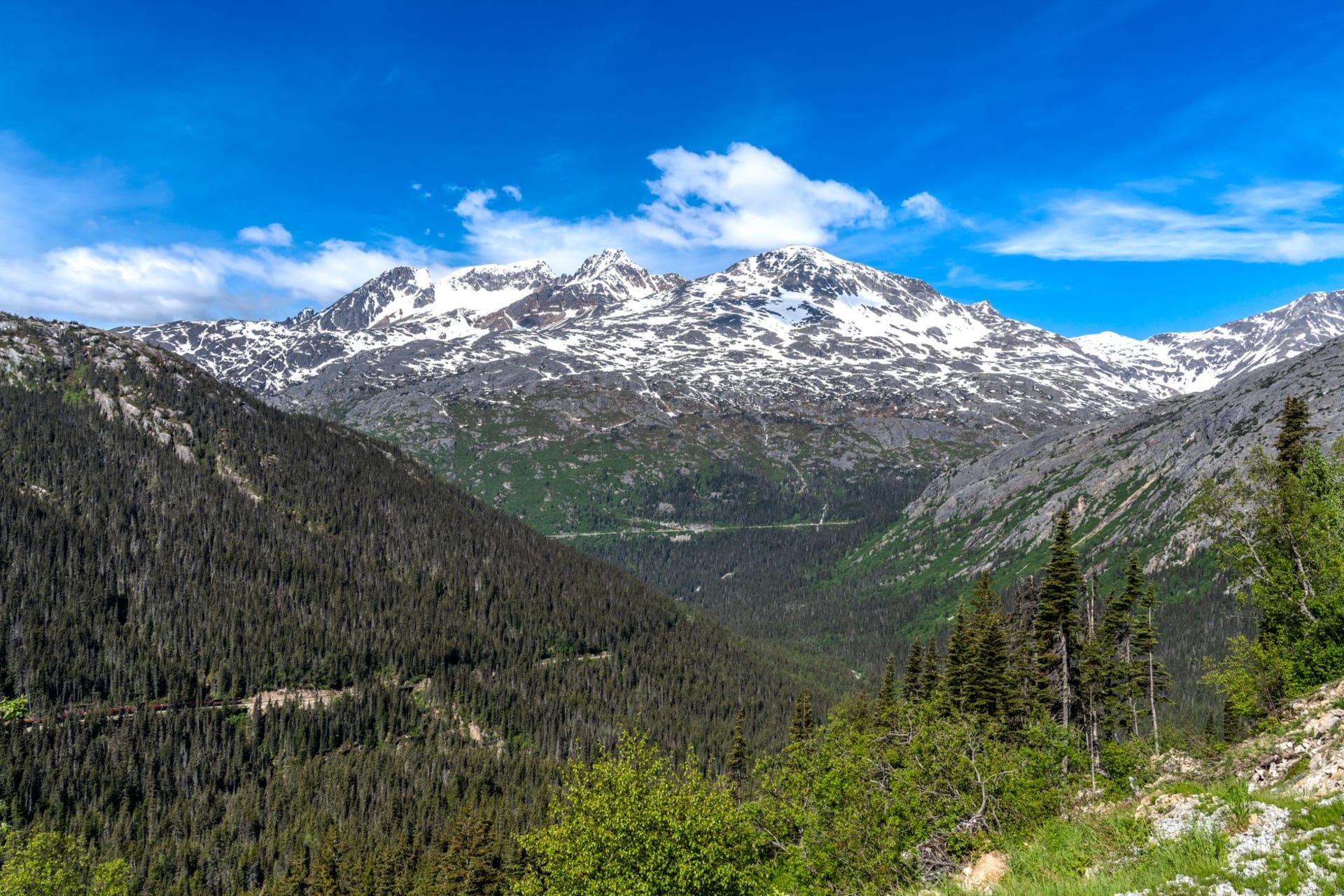
I arrived in Skagway by road, which is the wrong way to do it and exactly why I liked it. Most people come off the cruise ships that crowd the dock, but Lia and I drove down from the Yukon on the South Klondike Highway, dropping out of alpine tundra through a pass that was still holding snow in June, and the town appeared suddenly at the bottom of a fjord like something left at the bottom of a drawer. Skagway exists because in 1897 it was the gateway to the Klondike gold fields, the place where tens of thousands of would-be miners landed and started walking toward the Chilkoot Pass. Most of them found nothing. The town found a fortune selling them shovels.
A boomtown that refused to die
Broadway, the main street, is a stretch of restored false-front buildings — saloons, outfitters, a brothel museum — held together by the National Park Service as the Klondike Gold Rush National Historical Park. It should feel like a film set, and on a day with four ships in port it nearly does, with the sidewalks shoulder-to-shoulder and jewellery shops occupying half the historic storefronts. But go out at seven in the morning, before the gangplanks drop, and the place is genuinely beautiful: low light on weathered clapboard, the smell of woodsmoke, a raven working the empty street with the confidence of a landlord.

I spent an hour in the small park museum reading the actual ledgers and letters, and what stays with me is the sheer scale of the misjudgement. Men sold their houses, said goodbye to their families, and came north to haul a literal ton of supplies — the Canadian authorities required it — over a mountain pass in winter. The photographs of the Chilkoot, a single black line of men strung up an ice staircase, are among the most famous images in American history, and standing in the town they walked through gives them a weight that a textbook never could.
The railway and the pass
The thing not to miss is the White Pass and Yukon Route railway. It’s a narrow-gauge line built in 1898 in a frenzy of corporate desperation, and it climbs nearly 3,000 feet out of Skagway on grades and curves that seem genuinely ill-advised, clinging to cliff faces above a gorge with a river somewhere far below. Lia is not fond of heights and spent a good portion of the trip looking firmly at the floor of the carriage. I spent it with my head out the window, which the conductor tolerated with the patience of a man who has seen worse.

We ended the day at a bar on Broadway that has been pouring drinks, in one form or another, since the rush. The bartender was a seasonal worker from Montana who’d been coming up for eight summers and clearly had no intention of stopping. Skagway empties out in winter to a few hundred residents and a great deal of snow, and there’s something about that — the performance for the ships, then the long quiet — that feels true to the place. It got rich on people passing through. It still does.
When to go
May through September is the only practical window; the railway and most of the town shut down in winter. June and July are busiest and warmest. Come early or late in the day to have Broadway to yourself, and consider hiking even a short stretch of the Chilkoot Trail to understand what the photographs are about.