Americas
Alaska
"Alaska doesn't impress you — it simply makes everything else feel small."
I landed in Anchorage in late May, which meant the light was already doing strange things — golden at ten in the evening, never quite dark, the sky cycling through shades of copper and rose while people walked their dogs like it was four in the afternoon. That first disorientation is Alaska’s opening move. Nothing about it operates on the schedule you arrived with.
The scale is the thing nobody warns you about properly. I’d seen photographs of Denali from the park road, that great white mass dominating the horizon, and I thought I understood what I was looking at. I didn’t. The mountain is so large that your brain refuses to process it as a single object — it reads as sky, as background, as something that can’t possibly be as close as it is. I stood at the Eielson Visitor Center with my jaw actually open, which has never happened to me before and felt embarrassing until I noticed everyone else doing the same thing. We drove to Talkeetna for a rest stop and ate reindeer sausage from a stand near the railway depot — dense, smoky, slightly gamey — while floatplanes buzzed overhead on their way to drop climbers at base camp. That combination of the mundane and the extraordinary is pure Alaska.
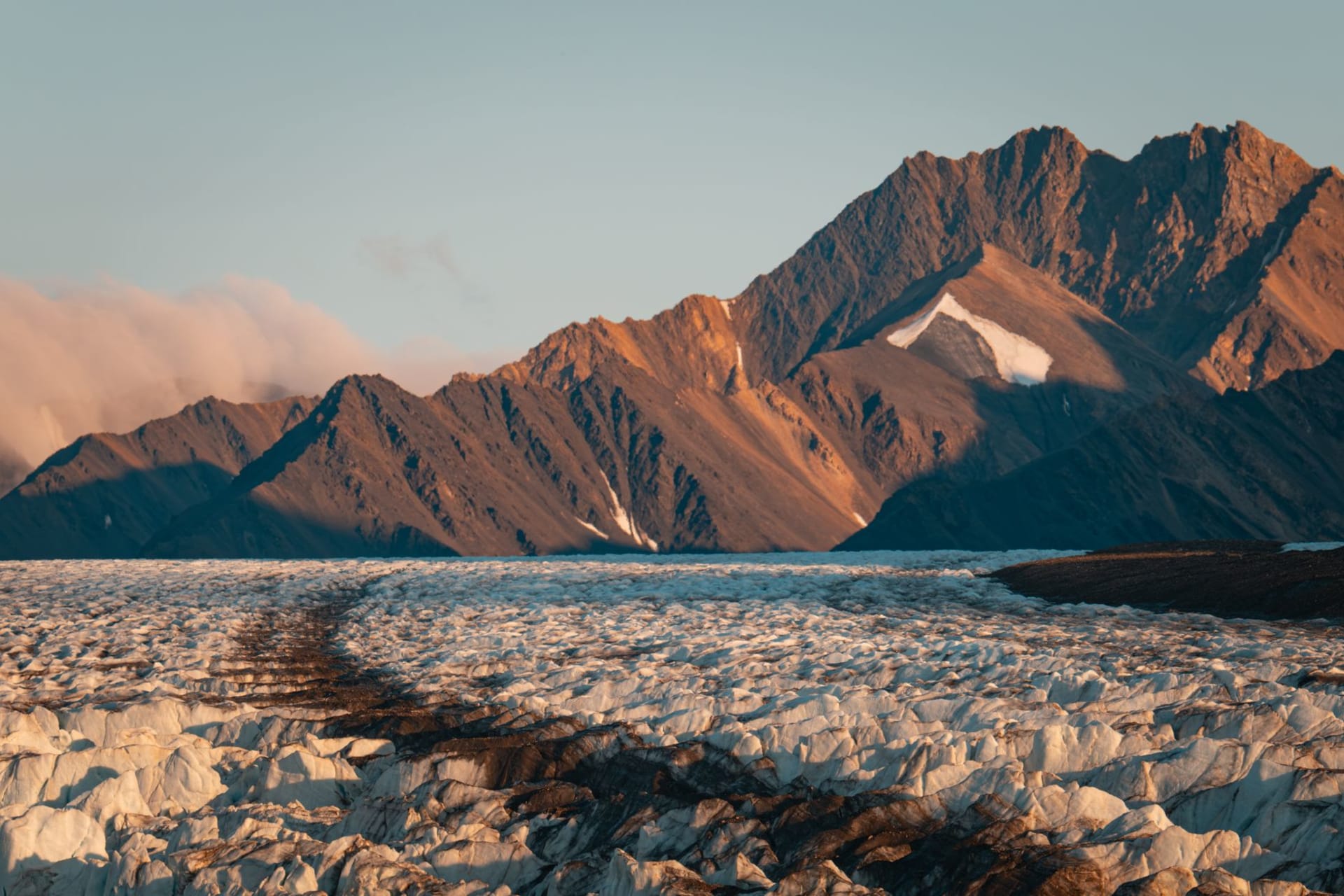
The coastline is a different story altogether. I took the ferry through the Inside Passage from Bellingham to Juneau, three days of watching glaciers calve into grey-green water, bald eagles perched on every dead spruce, orca fins cutting through the channel without ceremony. Juneau itself is a small city reachable only by sea or air — no road connects it to the rest of Alaska — and there’s something philosophically freeing about that. The town has good coffee, a surprisingly decent dining scene, and the Mendenhall Glacier sitting at its edge like an uninvited guest who’s been there long enough to feel permanent. Kayaking in Tracy Arm Fjord among floating ice, the silence broken only by the groaning of the glacier and the occasional thunderclap of a calving, is one of those experiences I’m still processing.
When to go: Late May through early September for the interior — Denali is best in June and early July when the mountain is most likely to be visible. June offers the midnight sun in full force. Southeast Alaska (Juneau, Sitka, Ketchikan) is accessible and green all summer but prepare for rain regardless of month. September brings the first autumn colors and fewer crowds. Avoid winter unless you’re specifically chasing the northern lights — February and March offer good aurora viewing around Fairbanks, but the cold is genuinely extreme.
What most guides get wrong: They push the cruise ship experience as the default Alaska, which gives you a version of the state seen from a floating hotel — beautiful but controlled. The real Alaska requires either your own vehicle, a floatplane, or the ferry system. The distances between things are enormous, and the places that stay with you are almost always the ones you had to work slightly harder to reach. Also: Fairbanks is criminally underrated. It’s ugly in the way frontier towns are ugly, completely practical, and it sits at the edge of genuinely wild country that most visitors never see.