
Kenai Fjords National Park
"The glacier calves and the sound arrives two seconds later, as if even the noise needs time to believe what just happened."
I took the day boat from Seward at seven in the morning, in a light fog that the captain said would burn off by eight. It did not burn off by eight. We motored south through Resurrection Bay in grey softness, the water absolutely flat, the mountains disappearing into cloud above the treeline, and there was something about that murkiness that suited the destination — as though Kenai Fjords required you to arrive without expectations and wait to be shown what it wanted to show you. The fog did eventually lift, somewhere out near the mouth of the bay, and what it revealed was a coastline made entirely of catastrophe — jagged rock, hanging glaciers, waterfalls dropping free for hundreds of metres, cliffs cut by the sea into overhangs and caves.
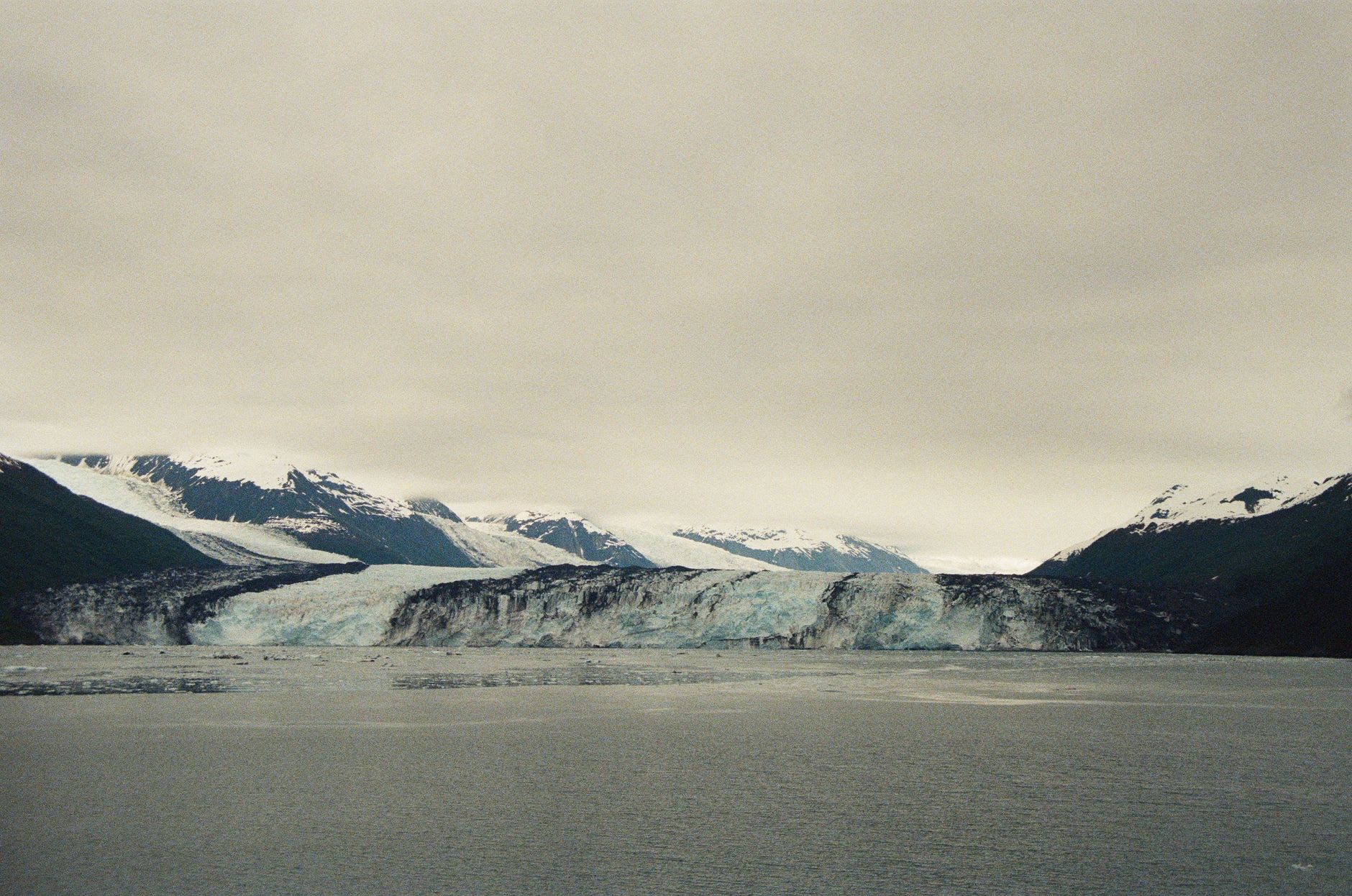
The Harding Icefield sits above this coastline, invisible from the water but immense — one of the largest ice fields in the United States, feeding dozens of glaciers that flow down toward the sea like fingers. The tidewater glaciers are the ones that reach the ocean and calve directly into it, and watching one calve from a hundred metres away is a lesson in the relationship between scale and time. A section of ice the size of a small building breaks free slowly — you can see the fracture line, hear the first crack, watch the tower lean — and then it falls in seconds and the sound arrives after, and the wave that follows rocks the boat in a rhythm that keeps going for a while, diminishing. A humpback whale surfaced near us thirty seconds later, indifferent, blowing.
The wildlife in the fjords is almost excessive in its generosity. I counted — genuinely counted — forty-three puffins on the water in one sweep of binoculars near the Chiswell Islands, tufted puffins with their ridiculous yellow eyebrows, floating in groups and diving without ceremony. Steller sea lions hauled out on rocks, Dall’s porpoises raced the bow for ten minutes, and once, briefly, a pod of orcas — three of them, dorsal fins the height of a man — crossed in front of us heading west, and the whole boat went silent the way boats do when something genuinely wild reminds you of your actual position.
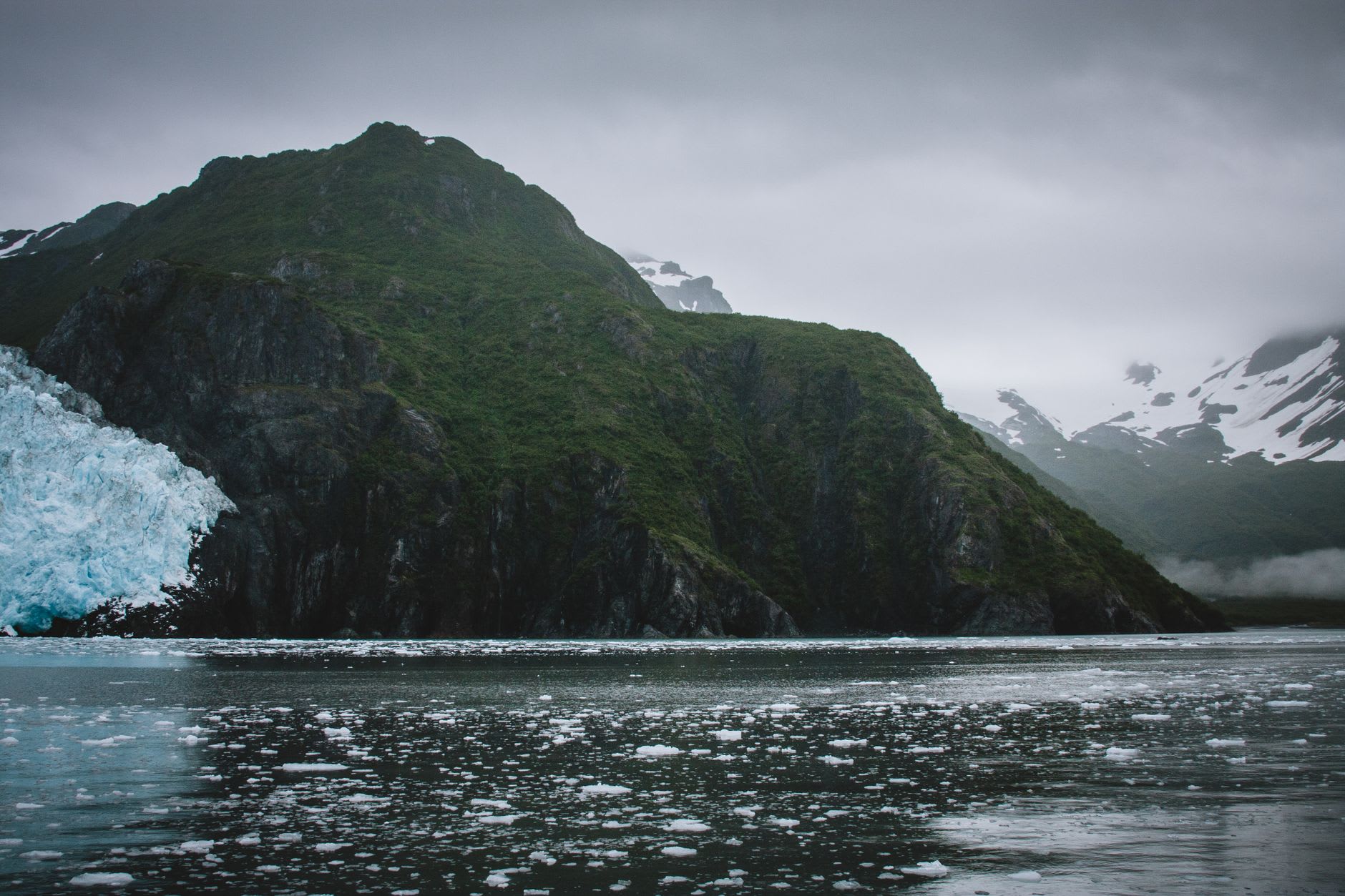
Exit Glacier, accessible by road just outside Seward, gives you the icefield on foot. The hike to the Harding Icefield overlook is a genuine climb — nearly 600 metres gain through alder and spruce and then onto alpine meadow and finally ice — but the reward is a view over a white expanse so vast and featureless it makes you understand why cartographers used to write “here be monsters.” The glacier’s edge is marked with annual stakes showing the retreat; the most recent decades crowd together near the current ice margin like a series of small arguments about loss.
When to go: Mid-May through September for the boats; they run daily in summer and the seas are most cooperative in June and July. Exit Glacier is accessible year-round by road. The icefield hike opens when the snow clears, usually late June, and closes with the first serious snowfall in September.