There are places you visit and places you move through without quite deciding to, and Lemland was the second kind until it quietly became the first. I was cycling south from Mariehamn with no particular itinerary, following a coast road that kept revealing new water — small bays, sheltered inlets, the occasional larger lake — when the road crested a low hill and Lemland church appeared in the middle distance: a medieval stone tower above a flat green field, surrounded by a low stone wall and a scattering of old graves with carved headstones tilted by centuries of frost. I stopped, propped the bike against the wall, and went in.
The church at Lemland was built in the thirteenth century and expanded in the fourteenth, which makes it roughly contemporaneous with Kastelholm Castle. Inside it is cool and dim and smells of old stone and the particular damp that accumulates in thick walls over eight hundred years. The vaulted ceiling carries frescoes painted in the fifteenth century — hunting scenes and saints and biblical episodes that the congregation watched from these same wooden pews for two hundred years before the Reformation changed what you were supposed to look at. The colors have faded to the gentle opacity of things that have survived by accident, and the figures have that compressed medieval expressiveness that makes them look more emotionally true than anatomically correct.

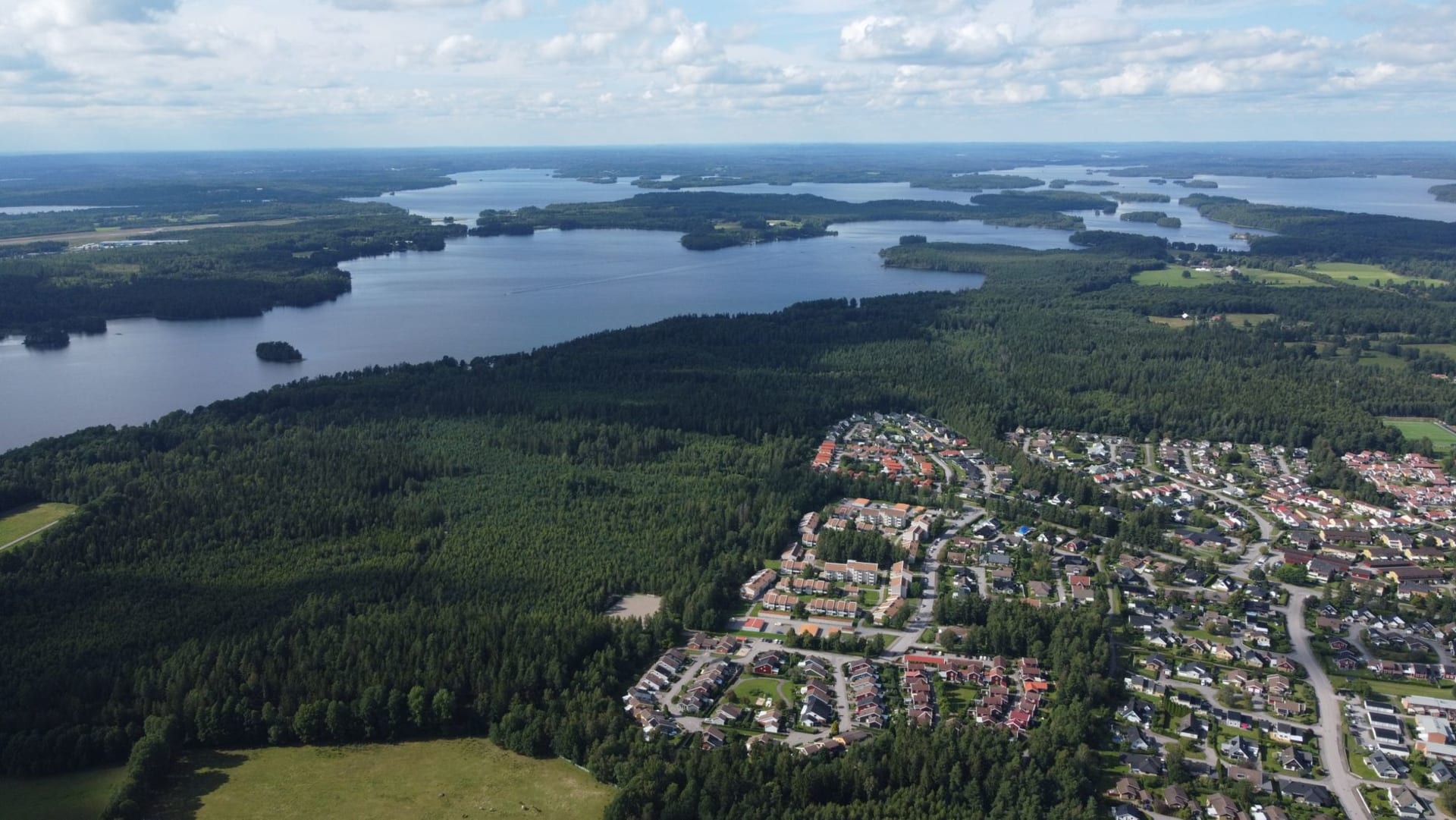
Lemland itself is a municipality of farms and water, connected to the main island by road rather than ferry, and this accessibility gives it a different quality from the outer islands — people actually live and work here year-round, and the rhythm of the place is agricultural rather than seasonal. The farms produce the traditional Ålandic mix: cattle and pigs on the inland land, fishing boats pulled up at the shore. I stopped at a roadside stand where an elderly man was selling cucumbers from his kitchen garden for a price that seemed like something from a different decade, and we conducted a brief transaction in Swedish that exhausted my Swedish entirely and apparently amused him enormously.
The cycling here is what you come for if you’re not here for the church. Lemland’s roads are flat and quiet and well-signed, threading through a landscape of fields and birch groves and small lakes, and the southern tip of the municipality reaches down to the water in a way that keeps providing bay views you didn’t expect. The Lemland loop — a route that takes in the church, the coast, the nature reserve at Herrö, and comes back through the farms — runs about thirty-five kilometers and takes a comfortable half-day. I did it in summer light that lasted until after nine, which means finishing the loop and sitting somewhere by the water with a beer as the sun finally tilted toward the horizon.

The nature reserve at Herrö, at the southernmost tip, is Lemland’s genuine surprise: a peninsula of meadow and juniper scrub that extends into a brackish bay, important for breeding waders and — in late spring — spectacular for orchids. I walked the path out to the point in late June and counted six species of wild orchid within a hundred meters of the path, including dense-flowered orchid growing from cracks in the limestone pavement at the headland. For a place without a marketing department, Herrö is remarkable.
When to go: Late May through June for the orchids at Herrö and the freesia-like scent of the hay meadows just before cutting. July and August are excellent for cycling and swimming in the sheltered coves. The church is open to visitors from May to September; outside those months the door is locked but the graveyard and exterior are worth the detour regardless.