Europe
Åland Archipelago
"I lost count of the islands somewhere around the third ferry crossing, and I stopped caring."
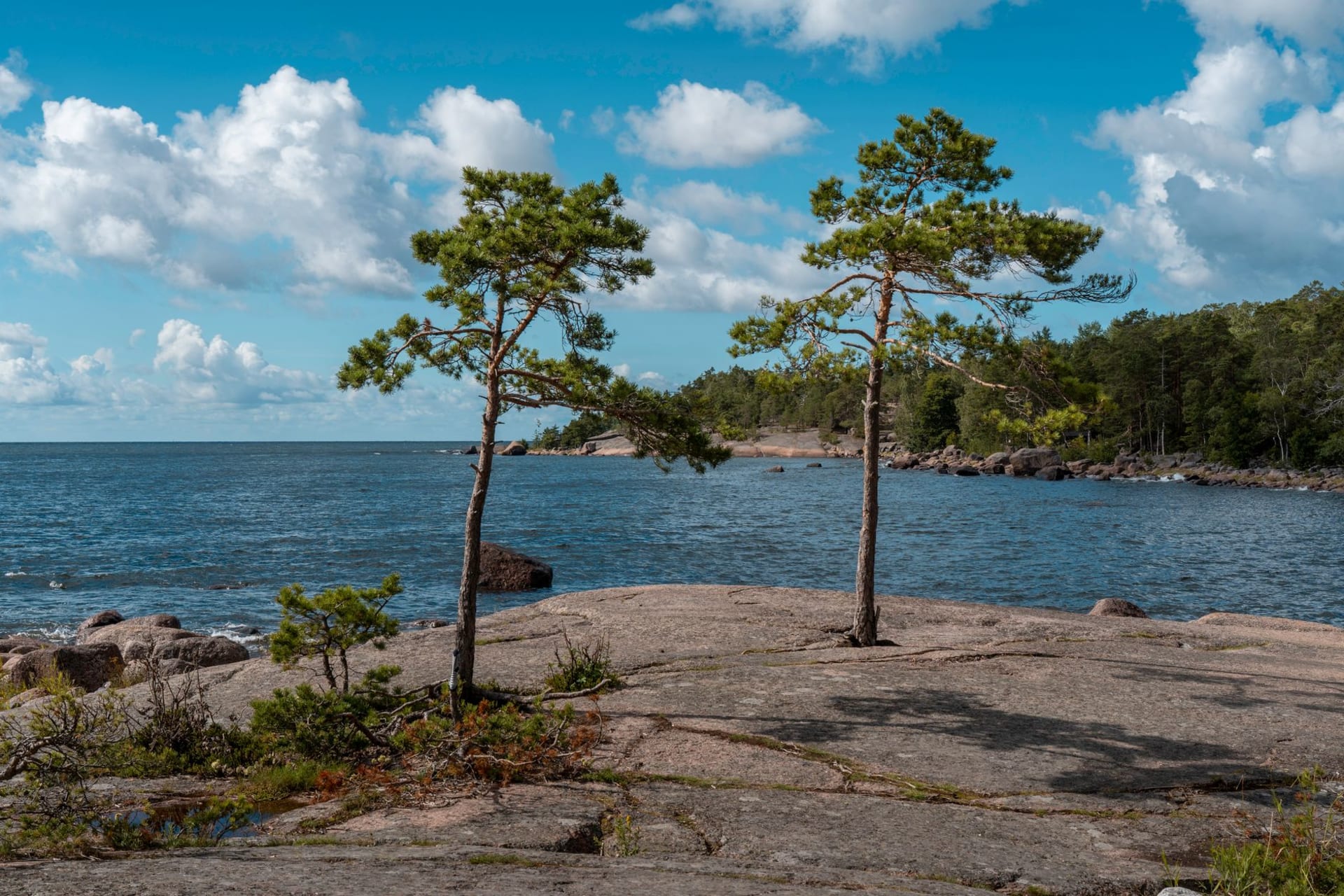
I arrived by overnight ferry from Stockholm, waking as the ship threaded through a passage so narrow I could have touched the pine trees on either side from the deck railing. The Baltic was slate-grey that morning, the islands flat and low and endless, each one a variation on the same theme: granite smoothed by ten thousand years of ice, a handful of wind-bent pines, maybe a red boathouse at the water’s edge. By the time the ferry docked in Mariehamn I had counted perhaps two hundred islands and given up. There are six thousand five hundred of them. You learn to stop counting.
Åland sits in a strange political position — an autonomous Swedish-speaking archipelago that belongs to Finland but is demilitarized under international law, still selling duty-free on ferries because it technically counts as leaving Finnish territory. None of that matters much once you’re on a bicycle on the main island, following a coast road past meadows of wild orchids and stopping at a red painted farmhouse where a woman sells fresh fish from a cooler on her porch. The food here is Baltic in the most straightforward sense: herring pickled seven different ways, new potatoes with dill, local lamb that tastes of salt air and heather. In Mariehamn I ate a proper smörgåsbord at the Arkipelag hotel’s terrace overlooking the western harbor — a meal that needed no explaining and no menu translation.
The real Åland is not the main island but the outer archipelago, reached by a network of free cable ferries and small passenger boats. Kökar, the southernmost inhabited cluster, sits far enough out that the water changes color from green to deep blue and the ferry crossings take the better part of a day. Out there the islands are stripped bare, almost treeless, the granite exposed and orange-lichened, and the only sound is wind and eider ducks. I spent two nights in a converted fishing cottage on Föglö and understood why people with boats come back here every summer for thirty years. The place has the quality of somewhere that has been left alone.
When to go: June through August is the window — long Nordic days, the sea warm enough to swim from the rocks, wild roses blooming along every path. July is peak season and the main island gets busy, but the outer islands absorb visitors without showing the strain. May is extraordinary for birdwatchers: the archipelago sits on a major migration route and the spring movement through Kökar and Jurmo is one of the best in the Baltic. September quietens everything down and the light turns golden in a way that makes every photograph look accidental.
What most guides get wrong: They treat Åland as a stopover between Stockholm and Turku — a footnote on the overnight ferry itinerary — and miss that it demands at least a week to make sense of. The main island is pleasant but unremarkable; the archipelago’s character lives in the outer islands, where you need to commit to ferry schedules and accept that plans will change with the wind. Rent a bicycle for the inner islands, a kayak for the passages between them, and book the outer ferries in advance. The duty-free angle is a distraction. Come for the granite and the silence.