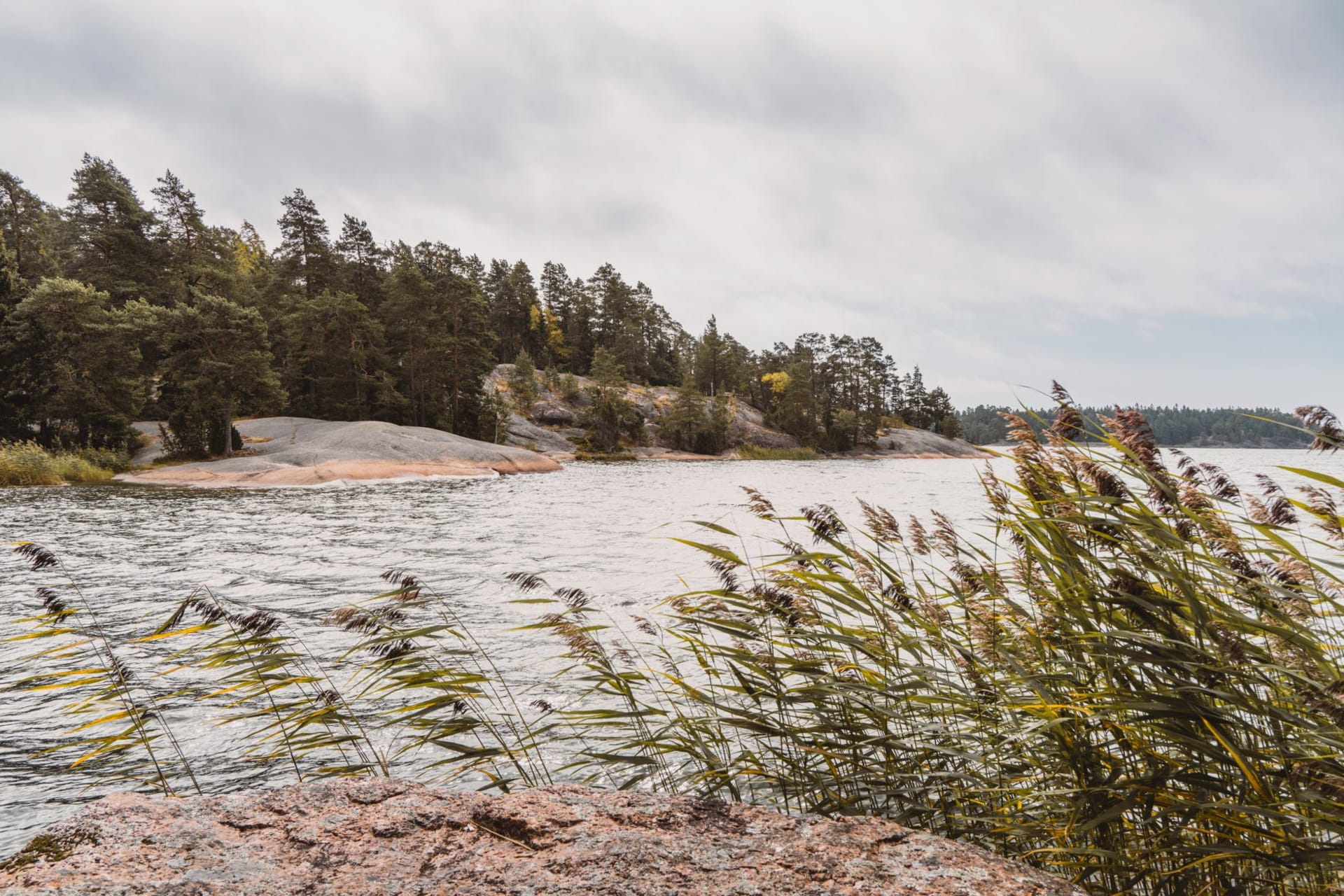
I came to Bomarsund expecting a castle and found a graveyard of one instead. That sounds bleaker than it felt. On the eastern edge of Sund, where the land breaks into the channels that thread the rest of Åland together, the Russians spent decades in the early nineteenth century building an enormous fortress meant to anchor the empire’s western flank. It was never finished. In 1854, during the Crimean War, an Anglo-French fleet sailed up these calm waters and reduced the whole project to rubble in a few days. What you walk through now is the rubble.
Walking the Broken Walls
Lia and I rented bikes in Mariehamn and took the ferry-and-bridge route east, and the approach is half the pleasure — flat roads, red barns, the Baltic glinting between the trees. Then suddenly the ground is littered with cut granite, great curved sections of the main fort lying where the bombardment dropped them. You can climb on most of it. Nobody stops you. I sat inside a collapsed gun casemate and ran my hand over the pink stone, still scarred black in places, and tried to imagine the noise of it. Out here, where the loudest thing was a pair of arguing terns, that was difficult.
The smaller defensive towers fared better. Brännklint and the Notvik tower still stand in fragments on the hills above, and the walk up to them rewards you with the view the Russian gunners would have had: a tangle of low islands, pale water, sky doing most of the work. There is a modest visitor centre that opened a few years back, all timber and good intentions, and it does the honest thing of explaining how badly the whole enterprise went rather than dressing it up as glory.
The Russian Town That Vanished
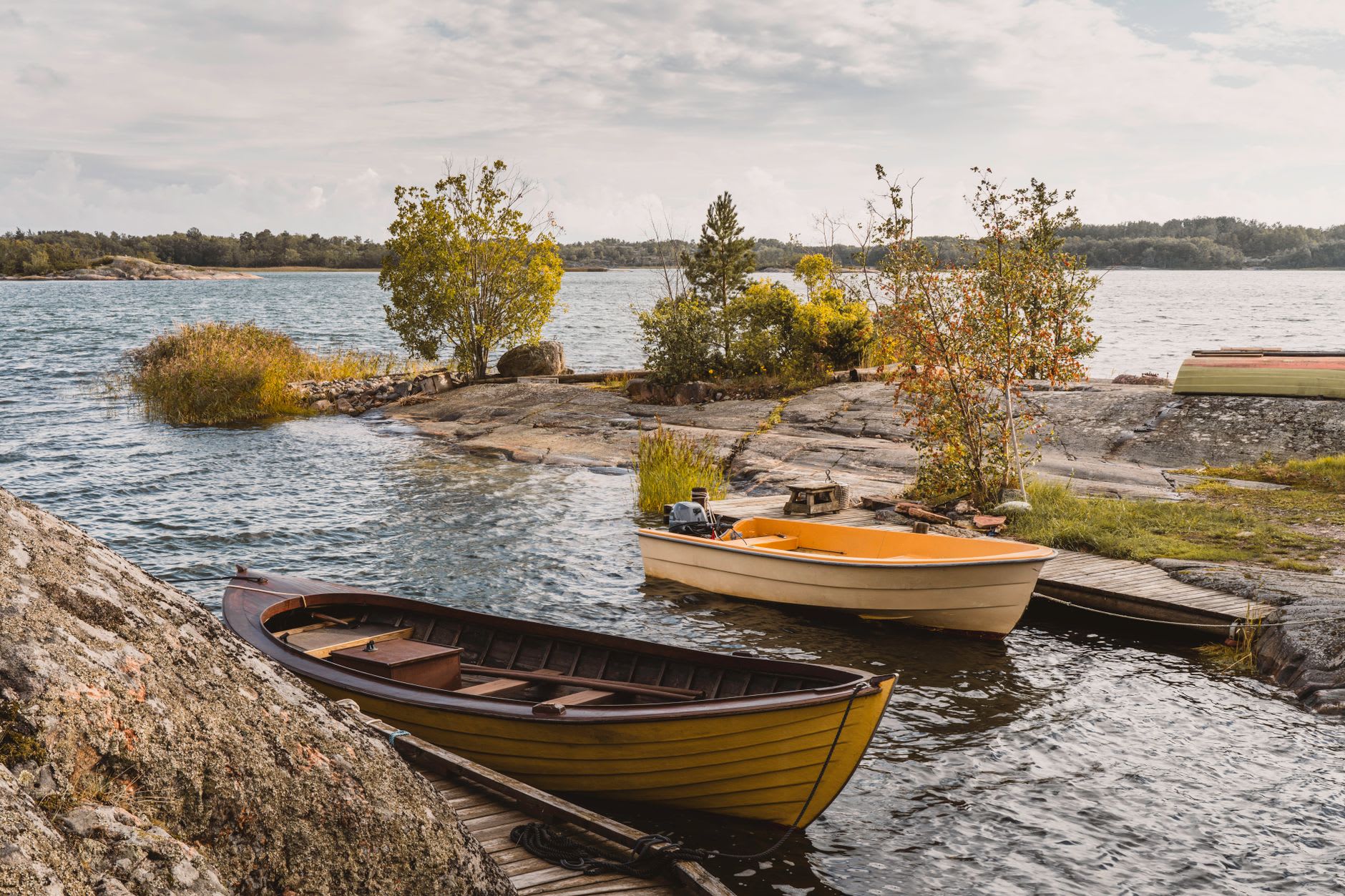
What got under my skin was not the fort but the town. Skarpans, the garrison settlement, once held shops, a hospital, an Orthodox chapel, hundreds of people living their ordinary lives beside the cannon. After 1854 it was simply abandoned, and now it is outlines in the grass — rectangles of foundation stone, a few cellar pits, an information board where a street corner used to be. Lia walked the grid of it slowly, reading each marker, and said it felt sadder than the broken fort. The fort was built to be destroyed, in a sense. The town was just where people lived until the empire decided it shouldn’t be there anymore.

We ate our packed lunch sitting on a warm slab of fortress wall, watching a Finnish family let their kids scramble over the same stones. A jar of pickled herring, dark rye bread, coffee from a thermos. The herring out here tastes of the sea in a way it never does inland.
When to go: June through August, when the visitor centre is open and the meadows around the ruins are full of wildflowers and slanting northern light. Come on a weekday and you may well have an entire collapsed empire to yourself.