
Barcelona After Dark — The City That Never Calls Last Orders
The Hour of Vermouth
There is an hour in Barcelona — roughly seven to nine in the evening, though no one checks — when the city shifts registers. The beach crowd dries off and drifts inland. The shops on the Passeig de Gràcia pull their metal shutters down with a clatter that echoes off the modernisme facades. And in the bars of Poble-sec, a neighbourhood that climbs the hill below Montjuïc in a grid of narrow streets lined with faded shutters and overflowing terraces, the vermut hour begins.
I have been coming to Poble-sec for years, drawn initially by a friend’s recommendation and kept here by the particular quality of evening light that filters between the buildings and turns the terrace at Bar Calders into something close to a stage set. The vermouth here is served from the tap — dark, bitter, sweet, poured over ice with a slice of orange and a fat green olive — and the plate of chips that arrives unasked is proof that some traditions need no innovation, only repetition. The crowd is local. The language is Catalan. The dog under the next table is asleep. The evening has not begun; it is being prepared, with the seriousness and the patience that Barcelona applies to all pleasures worth having.
Vermouth in Barcelona is not a drink. It is a transition — the hinge between the day and the night, the moment when the rhythm downshifts from walking speed to sitting speed, and the city begins to assemble the evening from its component parts: food, friends, noise, warmth, the conviction that nothing important can happen before ten and that everything worth doing will happen after midnight. I learned this my first visit and I have never unlearned it. In Mexico, where I live now, the rhythms are similar — dinner is late, the night stretches, the urgency of Northern European scheduling feels like a rumour — but Barcelona does it with a particular intensity, a Mediterranean insistence that pleasure is not a reward for work but a parallel obligation.

The Gothic Quarter at Midnight
There are two Gothic Quarters. The first belongs to the daytime — tourist groups following umbrellas, buskers on the Ramblas, the queue outside the cathedral. The second belongs to the night, and it is incomparably better.
I walked into the Barri Gòtic at midnight on a Thursday in June, and the transformation was complete. The tourist shops were shuttered. The narrow lanes, freed from the press of daytime crowds, revealed their medieval proportions — alleys so narrow you could hear conversations from windows three storeys above, squares so small they held a single café table and a single streetlight and the echo of your own footsteps on stone that has been walked smooth by six centuries of feet. The Plaça del Pi was empty except for a man playing classical guitar under the church window, the sound bouncing off the stone walls in a natural reverb that no concert hall could improve.
I found a bar on a lane I had never noticed in daylight — a low-ceilinged room with stone walls and a zinc counter and a bartender who poured gin-tonics with the precision of a chemist. There were eight people inside and none of them were tourists. The music was Tom Waits. The gin was from a distillery in the Empordà. The tonic was from a bottle I did not recognize, hand-delivered, the bartender explained, by a man who makes it in his garage in Gràcia and sells it only to bars he likes. This is the Barcelona that the travel blogs miss — not the spectacular Barcelona of Gaudí and the Ramblas, but the quiet, nocturnal Barcelona that operates in the spaces between the landmarks and reveals itself only to people who are willing to walk past the last tourist and keep going.
El Born at 2am
If the Gothic Quarter at midnight is intimate, El Born at two in the morning is electric. The Passeig del Born — a wide avenue lined with plane trees and bar terraces — is where Barcelona’s night coheres. The restaurants have served their last tables but the bars are at full capacity, the noise spilling into the street and mixing with the conversations of people standing in clusters with glasses in their hands, smoking and laughing and conducting the elaborate social choreography that is a Barcelona Saturday night.
I ended up at a mezcal bar on a side street off the Passeig — drawn in, I admit, by professional curiosity, since I live in the country that makes the stuff. The bartender was Mexican, from Oaxaca, and we talked for an hour about the differences between espadín and tobalá and the particular madness of moving from Mexico to Barcelona to open a bar that serves the thing you left behind. He poured me a joven from a small producer in Miahuatlán that I had never tasted, and it was extraordinary — smoky and floral and slightly sweet, with a finish that lasted the entire walk back to my hotel through streets that were still, at three-thirty in the morning, far from empty.
This is the thing about Barcelona at night: the city does not wind down. It redistributes. The energy moves from the restaurants to the bars to the terraces to the streets, and at each stage the crowd thins slightly but the quality of the conversation improves, as though the city is distilling its social life with each passing hour, concentrating it, until what remains at four in the morning is the essential — the friends who stayed, the bartender who pours one more, the guitarist in the corner who has been playing since midnight and shows no sign of stopping.
The After-Hours
The professional night — the clubs, the DJ sets, the dance floors — begins when other cities are closing. Razzmatazz, in the Poblenou industrial quarter, is five rooms under one roof, each with a different sound, the crowd migrating between them like particles in an accelerator. Sala Apolo, in Poble-sec, occupies a former music hall from the 1940s, its balcony and its chandeliers lending a grandeur to nights that are otherwise cheerfully chaotic. But the places I remember best are smaller and harder to find — a rooftop in the Raval where a friend of a friend was playing ambient electronic music to thirty people sitting on cushions under the stars, the Sagrada Família lit up in the distance like a beacon from a future that Gaudí imagined but never saw.
I am French. I come from a country that takes pleasure seriously. But Barcelona taught me something about night that Paris, for all its beauty, has not: that a city’s truest self emerges not at the monuments or in the museums but in the hours after midnight, when the pretence drops and the performances end and what remains is the city as its residents experience it — warm, loud, generous, unfinished, and completely unwilling to call last orders.
Morning After
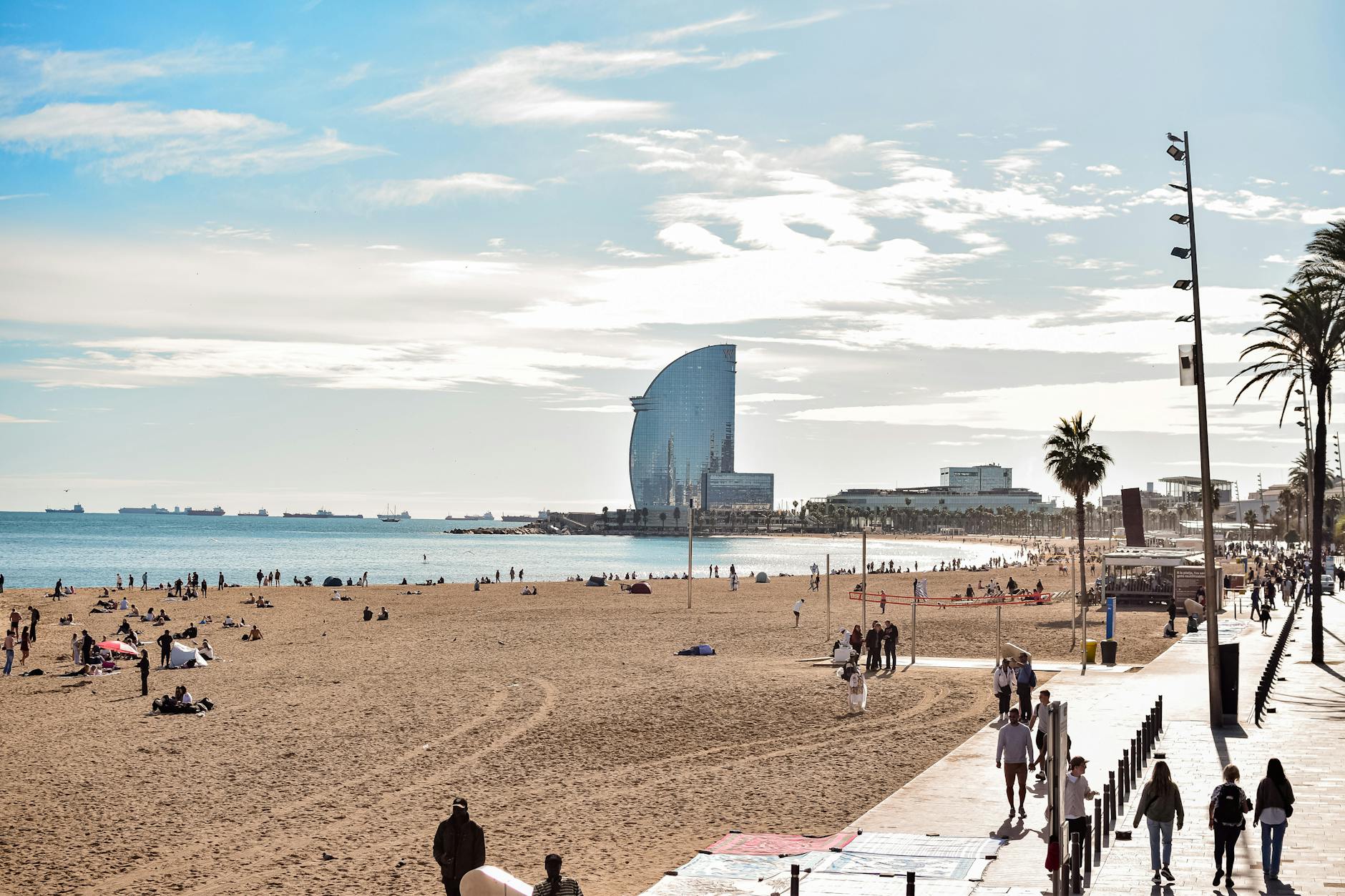
The morning after a Barcelona night has its own ritual. You wake at ten — maybe eleven — and the light through the shutters is already Mediterranean-bright, the kind of light that forgives everything. You walk to a café in your neighbourhood and order a café con leche and a croissant and you sit at a table on the pavement and you watch the city reassemble itself. The street cleaners have been and gone. The shop owners are pulling up their shutters. The tourists are already moving toward the Ramblas. And Barcelona — the night city, the city of vermouth and gin-tonics and flamenco guitar at three in the morning — has folded itself away and become the day city again, as though nothing happened.
But you know it did. The night is still in your muscles, in the slight deafness from the music, in the taste of mezcal at the back of your throat, in the memory of walking through the Gothic Quarter at a hour when the stones gave back the heat of the day and the sky above the narrow lane held exactly four stars. You will go to the Sagrada Família today. You will eat pa amb tomàquet at a market counter. You will swim at Barceloneta and dry off on the sand. But tonight — tonight you will do it all again, because Barcelona asked you to and you have never been good at saying no to a city that knows what it wants.
Travel with intention
Curated guides, quiet destinations, and stories worth reading — delivered when we have something worth sharing.
No spam. Unsubscribe anytime.