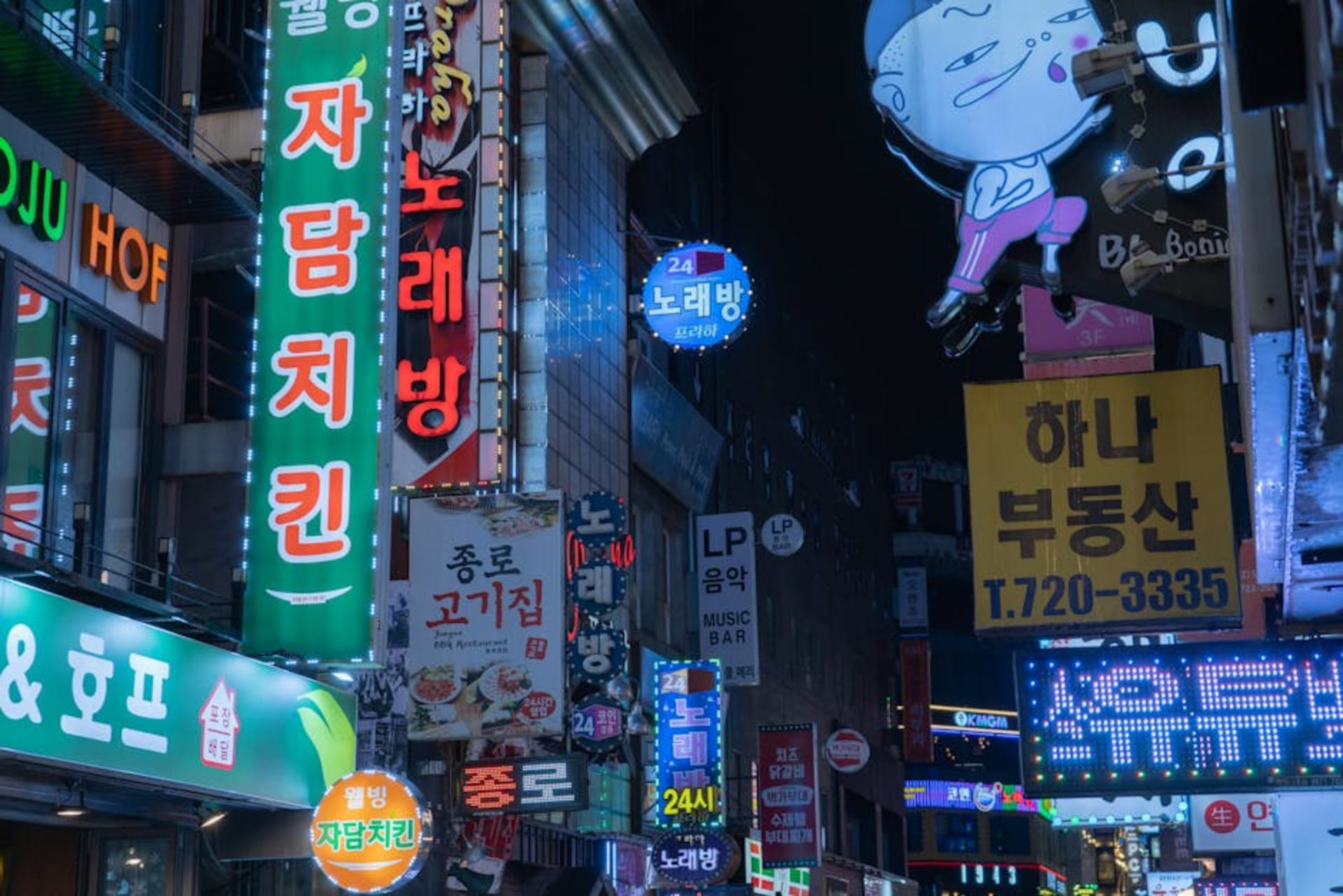
Seoul After Dark — Five Nights in a City That Never Stops Eating
The First Night
I had been in Seoul for six hours and I was already in trouble. The kind of trouble that starts with a wrong turn near Jongno 3-ga station and ends with you sitting cross-legged on the floor of a pojangmacha — one of those orange-tented street bars that line the alleys of central Seoul like luminous cocoons — eating odeng (fish cake on sticks in a hot broth), drinking soju from a green bottle, and having a conversation with a retired Korean teacher named Mr Park who spoke excellent French because he had lived in Lyon for three years in the 1980s and who insisted, with the quiet authority of someone who has strong opinions about food, that I was eating the wrong thing and should try the dak-bal instead.
Dak-bal is chicken feet. Spicy chicken feet, marinated in gochugaru and garlic and sesame, grilled until the skin is crispy and the cartilage is tender. I ate them with my fingers because Mr Park said chopsticks were for cowards. He was joking, I think. The chicken feet were extraordinary. The soju was cold. The tent glowed orange against the November night. And Seoul, which had been a concept until that moment — a name on a map, a city I had read about — became a place. A specific place, with a specific flavour, and a specific man telling me about his years in Lyon while handing me napkins for the sauce on my chin.
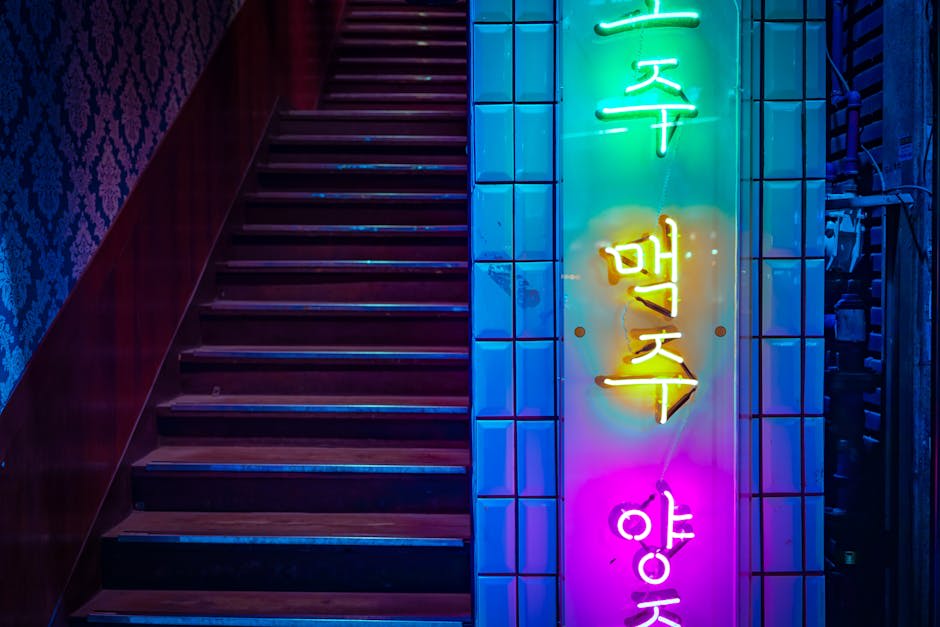
This is what Seoul does to you. It does not welcome you — it ambushes you. It pulls you into alleys you did not know existed and feeds you things you cannot pronounce and introduces you to people whose stories you will carry home like souvenirs that weigh nothing and mean everything. I had come for five nights. By the end of the first, I was already rearranging the itinerary to stay longer.
Mapo-gu — Where the Smoke Is
The second night belonged to Korean barbecue, and Korean barbecue in Seoul belongs to Mapo-gu.
I went with Jihye, a Korean food writer I had connected with through a mutual friend in Mexico City, which is the kind of sentence that only makes sense in the age of Instagram. She took me to a place in Mangwon whose name I wrote down phonetically and have since lost, but whose pork belly I will remember until I am too old to remember anything. The setup was simple: a charcoal grill built into the table, a ventilation hood above, and a constellation of banchan — pickled radish, kimchi, perilla leaves, garlic cloves, green chillies, ssamjang — that arrived before the meat and constituted a meal in themselves.
The samgyeopsal — thick-cut pork belly — went on the grill in long strips. Jihye managed the cooking with the practised authority of someone who considers an overcooked piece of pork a moral failure. She turned each strip at exactly the right moment, cut it into pieces with scissors (scissors — this is not optional in Korean barbecue; it is essential), and placed each piece on a perilla leaf with a slice of garlic and a dab of ssamjang. I wrapped it, ate it, and made a sound I am not proud of. She laughed. The table next to us laughed. The ajumma running the restaurant brought us an extra plate of something I did not recognise, pointed at the grill, and said something in Korean that Jihye translated as “this one, you grill longer.”
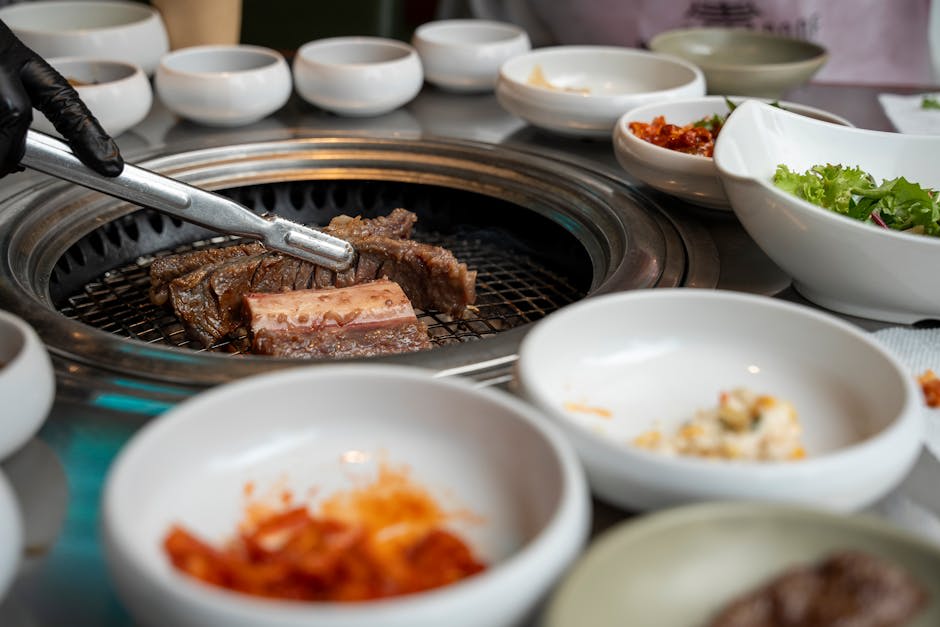
After the pork belly: dwaeji galbi (marinated pork ribs), then a bowl of doenjang-jjigae to finish — the fermented soybean stew that Koreans eat at the end of a barbecue meal the way the French eat cheese after dinner, as a palate closer and a digestive and a statement of cultural identity. The bill was thirty-two thousand won for two people. Less than what I would pay for a mediocre steak in Paris. I said this to Jihye. She said, “This is why Koreans think the rest of the world is confused about food.” I did not argue.
Jongno at Midnight
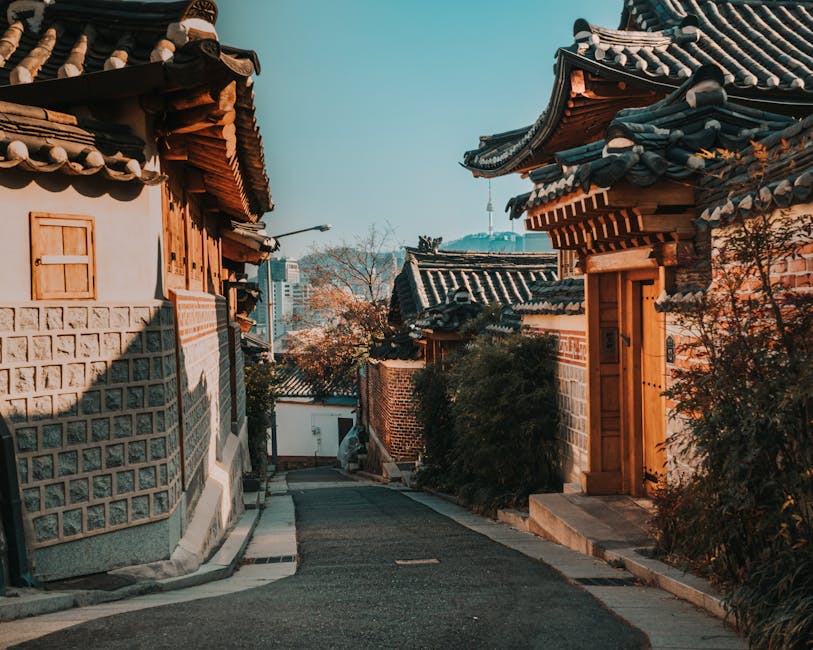
Jongno-gu is old Seoul. The neighbourhood wraps around the palaces and the traditional markets and the alleyways where the city has been eating and drinking and arguing for six centuries. During the day it is historical. At night it is something else entirely.
I walked from Jongno 3-ga station into a labyrinth of narrow lanes that the guidebooks call Ikseon-dong — a cluster of renovated hanok buildings that now house cocktail bars, wine shops, and restaurants that serve Korean food with the confidence of a cuisine that knows it has nothing to prove. But Ikseon-dong is the surface. The real Jongno is the lanes behind it — the pojangmachas, the small hofs (Korean beer halls), the grilled-fish restaurants where smoke pours from open doorways and the tables are full at eleven on a Wednesday.
I found a place that served jokbal — braised pig’s trotters, sliced thin, the meat tender and the skin glossy with the braising liquid. The owner, a woman in her sixties, served each plate with a precision that suggested this was not casual cooking but a discipline. The jokbal came with raw garlic, salted shrimp paste, and pickled radish, and the combination — rich, salty, sharp, crunchy — was one of those flavour arrangements that makes you wonder why every country has not figured this out. I ate slowly. I ordered soju. The television in the corner showed a Korean drama that everyone in the restaurant seemed to be following, and at a key moment the entire room gasped in unison, and I gasped too, not because I understood the plot but because Seoul makes you a participant whether you have earned the right or not.
Gwangjang Market — The Cathedral of Street Food
The fourth night started with a plan — dinner at a restaurant Jihye had recommended near Euljiro — and ended, as all good nights in Seoul end, at Gwangjang Market.
Gwangjang is the oldest continuously running market in Korea, and its food stalls, clustered in the centre of the ground floor, constitute what I am prepared to call the greatest concentration of street food on the planet. This is not hyperbole. I have eaten at Jemaa el-Fna in Marrakech, at the night markets of Taipei, at the puestos of Oaxaca. Gwangjang is in that league and possibly at the top of it.
The bindaetteok — mung bean pancakes, thick and crispy, fried in oil on flat griddles by women who have been making them for longer than I have been alive — are the headline act. You sit on a plastic stool at a counter, and the ajumma slaps a pancake in front of you with a confidence that does not invite negotiation, and you eat it with soy sauce and raw onion slices, and it is golden and crunchy and savoury and so good that you order a second one before you have finished the first. The mayak gimbap — tiny rice rolls wrapped in seaweed, dipped in mustard and sesame oil — are the supporting act, and they are called “drug gimbap” because they are addictive in a way that food should not legally be allowed to be.
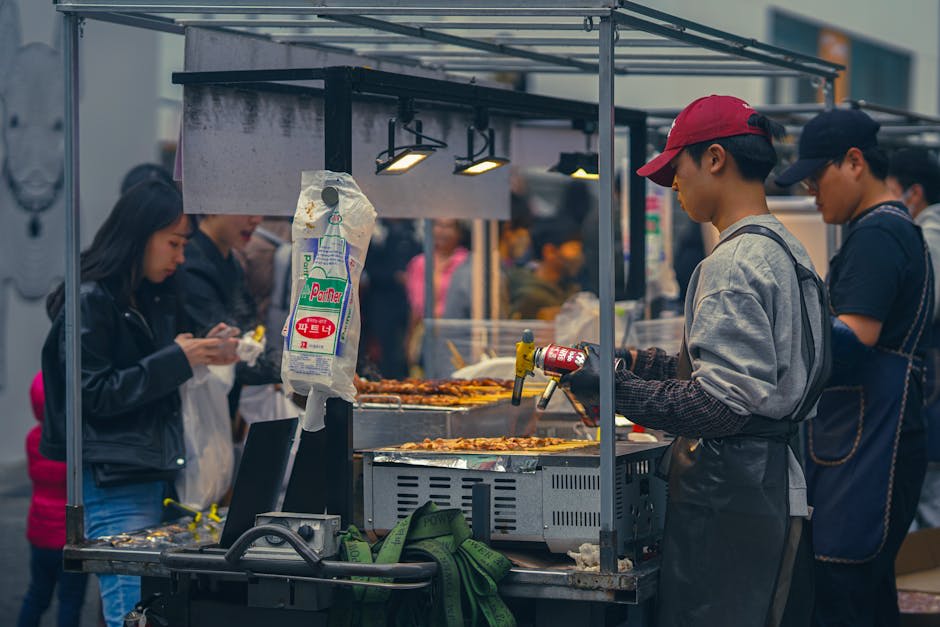
I moved from stall to stall for two hours: yukhoe (Korean beef tartare, raw and seasoned with sesame oil and pear), sundae (blood sausage, stuffed with glass noodles and served sliced with salt), tteokbokki in a sauce so red it looked like a warning. At one stall, a grandmother making kalguksu — hand-cut knife noodles in a clear broth — waved me over, pointed at the only empty stool, and served me a bowl without asking what I wanted. The noodles were thick and chewy, the broth was anchovy-deep and clean, and the grandmother watched me eat with the particular satisfaction of someone who knows exactly what she has made and does not need a compliment to confirm it. I gave her one anyway. She waved it off and started cutting more noodles.
The Last Night — Namsan and the View
The fifth night I went up Namsan. Not to Namsan Tower, though I ended up there, but to the mountain itself — the small peak in the centre of Seoul that the city wraps around like a river around a stone.
I walked from Myeongdong, climbing the stone stairs through a forest that felt impossible in a city of ten million, the traffic noise fading with each step until the only sounds were my breathing and the crunch of gravel and the occasional rustle of something moving in the trees. The city appeared through gaps in the canopy — fragments of neon and glass, the river in the distance, the mountains beyond — and each glimpse was a reminder that Seoul is not just a city but a landscape, shaped by geology as much as by ambition.
At the top, the tower. The observation deck. The view.
Seoul at night from Namsan is one of the great urban views on earth, and I say this as someone who has stood on the Eiffel Tower and the Empire State Building and the rooftops of Istanbul. The city stretches to every horizon in a grid of light — the Han River cutting through it like a dark ribbon, the bridges lit up in blues and greens, the apartment blocks of Gangnam glowing in ordered rows, the older neighbourhoods of Jongno and Myeongdong shimmering with the particular chaos of neon that refuses to be organised. It is beautiful and overwhelming and strangely intimate, because from this height the city that has been ambushing you all week becomes something you can see whole, something you can hold in your vision if not in your understanding.
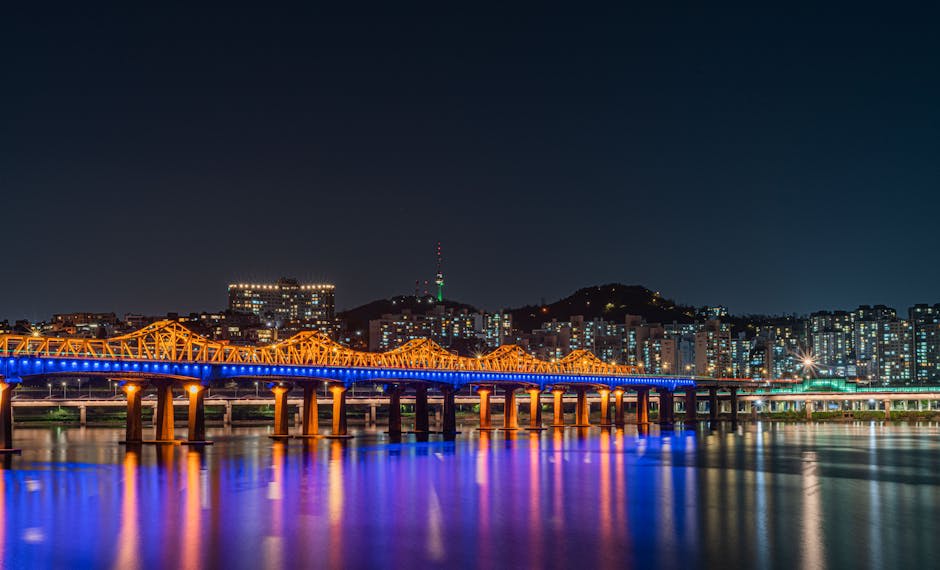
I stood at the railing for a long time. I thought about Mr Park and his chicken feet. I thought about Jihye cutting pork belly with scissors. I thought about the grandmother at Gwangjang Market and her knife noodles and her refusal to accept compliments. I thought about the pojangmacha glowing orange in the November night and the soju and the conversations and the particular warmth that Seoul offers — not the warmth of a city that tries to be welcoming, but the warmth of a city that is so busy being itself that it accidentally includes you.
Five nights. More meals than I can count. One city that I arrived at as a visitor and left as an addict. I will go back. The only question is when.
A Note on Getting Around
Seoul’s metro is one of the best in the world — clean, punctual, extensive, and navigable even without Korean thanks to English signage and the Naver Map app, which is more reliable than Google Maps in Korea. Buy a T-money card at any convenience store and load it with cash. The buses are excellent but harder to navigate without Korean. Taxis are cheap by European standards, and the basic ones (silver and orange) are metered and honest. For restaurants, screenshot the Korean name and address — many taxi drivers do not read English, and showing them a Korean address on your phone is the difference between arriving and circling.
Travel with intention
Curated guides, quiet destinations, and stories worth reading — delivered when we have something worth sharing.
No spam. Unsubscribe anytime.