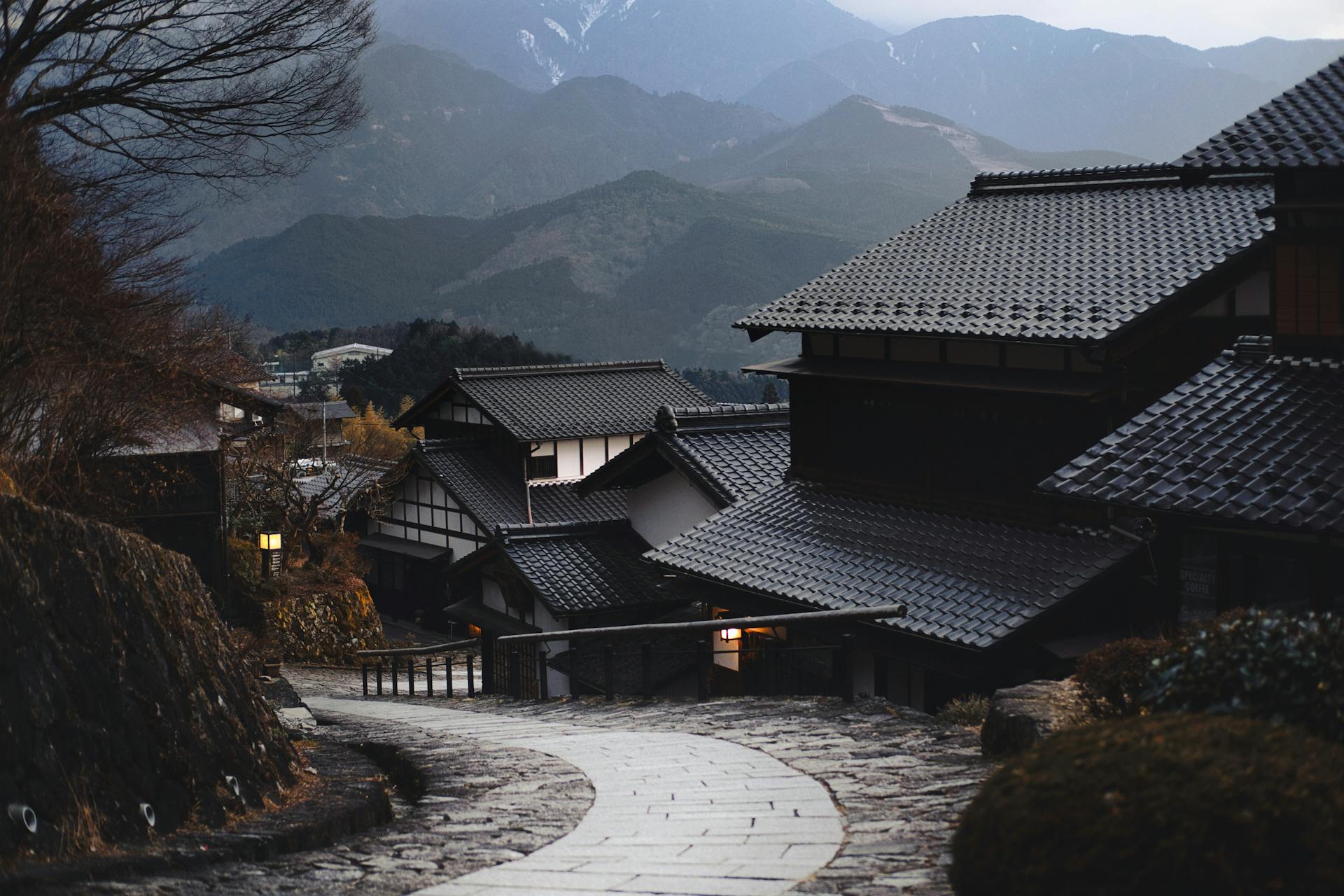
20 Days in Japan With the Person I Love — Tokyo, Fuji, Kyoto, Osaka
Why Twenty Days
Everyone told me Japan needed a week. Two, if you are ambitious. My response was to book twenty days, because I have learned — after years of traveling too fast through too many countries — that the right amount of time in a place is always more than you think, and the wrong amount of time is whatever makes you feel like you are checking boxes. Japan is not a checklist. Japan is a frequency you have to tune into, and the tuning takes days, not hours.
Lia and I landed at Narita on September 18, 2025, with two backpacks, a vague plan, and the kind of nervous excitement that only comes when you are about to spend three weeks in a country where you cannot read the menus, the toilets have more buttons than a cockpit, and the cultural expectations around politeness are so refined that blowing your nose in public is considered ruder than public drinking. I had been wanting to come here for years. Lia had been wanting to come here since she was fourteen and fell in love with Studio Ghibli. We were both ready.
What follows is the full story — every city, every meal I remember, every moment that made me stop and think this is why I travel. It is not a guidebook. It is what actually happened.
Part One: Tokyo (Days 1–8)
Day 1 — Asakusa: The Soft Landing
We cleared immigration at Narita in a haze of jetlag and fluorescent light, bought our Suica cards at the ticket office — the woman behind the counter bowed, I bowed back, and for the next twenty days this would be the rhythm — and boarded the Keisei Sky Access Express to Asakusa. Fifty-eight minutes of rice paddies giving way to suburbs giving way to the low-rise sprawl of eastern Tokyo, and then we were there.
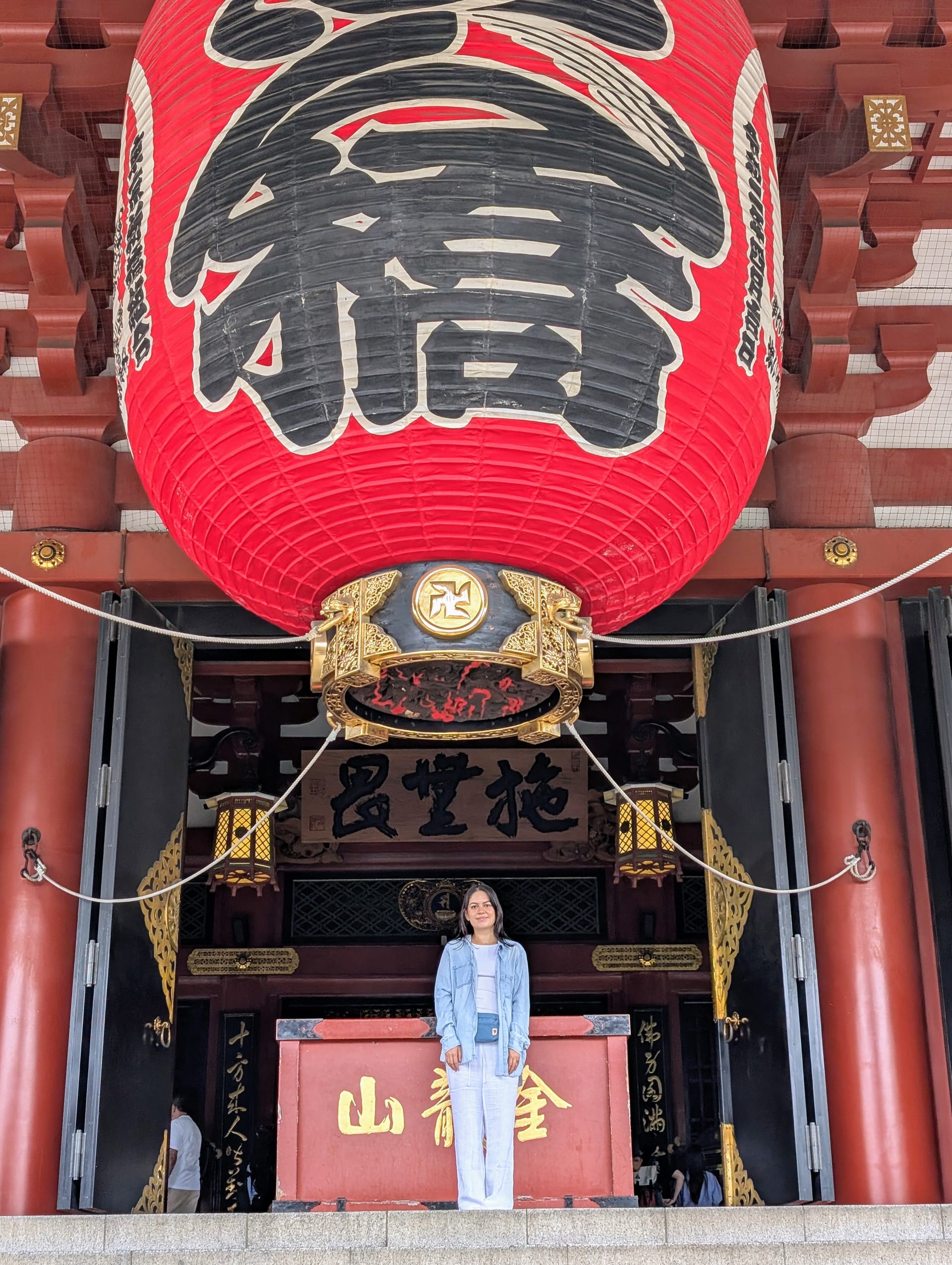
Our hotel was a small place near the Kaminarimon gate, and we dropped our bags and went straight out, because the best cure for jetlag is refusing to acknowledge it. Senso-ji was five minutes away. The approach through the Nakamise-dori shopping street was a corridor of colour and noise — stalls selling rice crackers, wooden combs, tourist tat, and taiyaki, the fish-shaped cakes with sweet filling that would become our default walking snack for the next three weeks. The temple itself, at the end of the corridor, was bigger and more beautiful than I had expected: the red pagoda, the incense smoke curling from the bronze urn, the sound of coins being thrown into offering boxes. Lia lit an incense stick and waved the smoke toward herself for good health. I did the same. An old woman beside us nodded approvingly. We were in Japan.
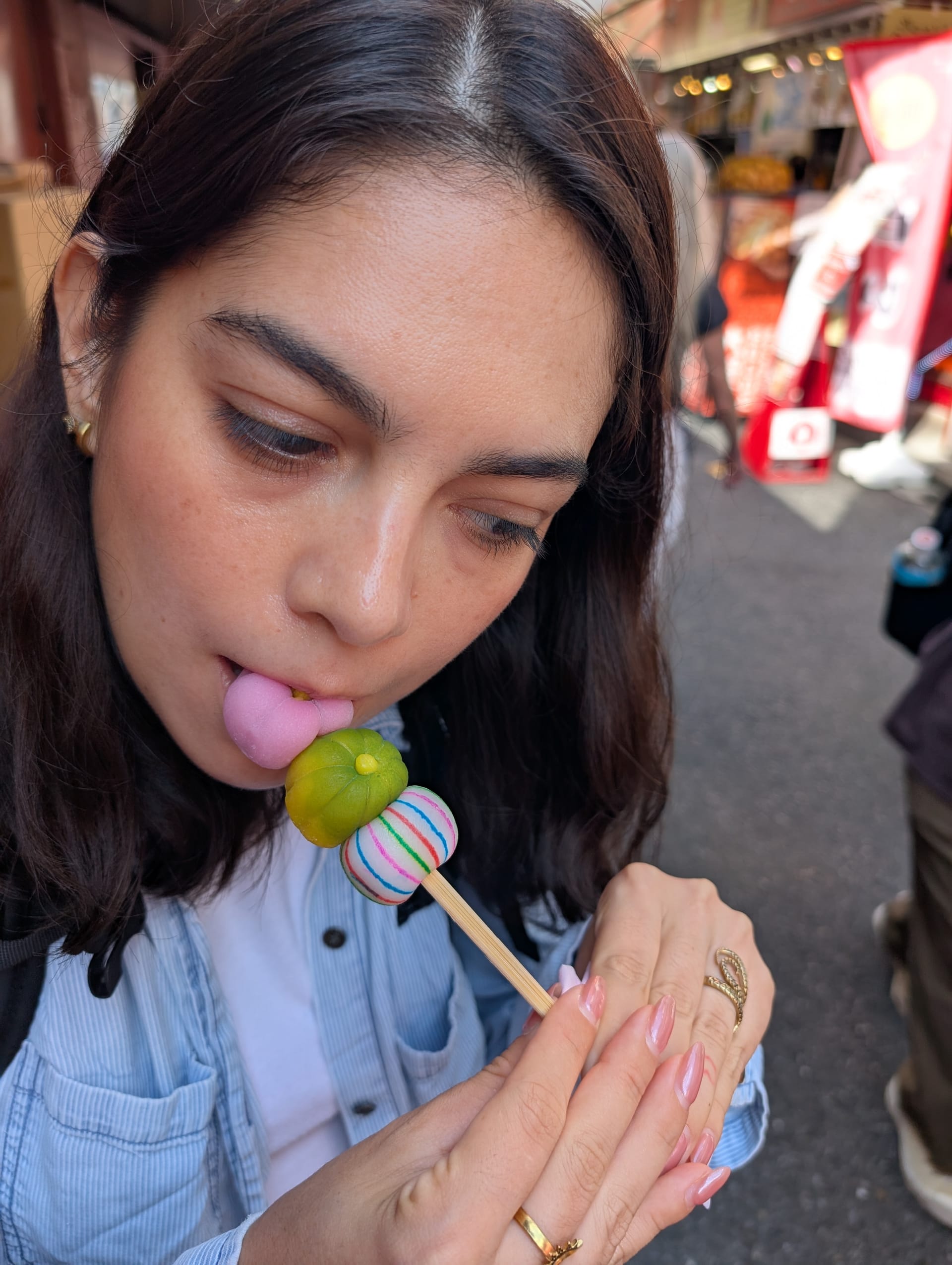
Along the shopping street, Lia discovered dango — mochi rice balls on skewers, pink and green and striped — and ate hers with the focused attention of someone conducting important research.
That evening we took the Ginza Line — five minutes, a hundred and eighty yen — to Ueno and plunged into Ameyoko Market, which was nothing like the orderly Japan I had imagined and everything like the chaotic markets I know from Mexico and Southeast Asia. Narrow alleys, vendors shouting prices, fresh fish on ice, dried squid hanging from hooks, and a sensory density that felt like a challenge: keep up. We found an izakaya near the market — I cannot remember the name, only the plastic food models in the window that drew us in — and ordered yakitori and draft beer by pointing at photographs. The skewers arrived on wooden plates, each one different — chicken thigh, cartilage, heart, skin — and each one was extraordinary. I said oishii to the cook. He smiled. We stayed for two hours.
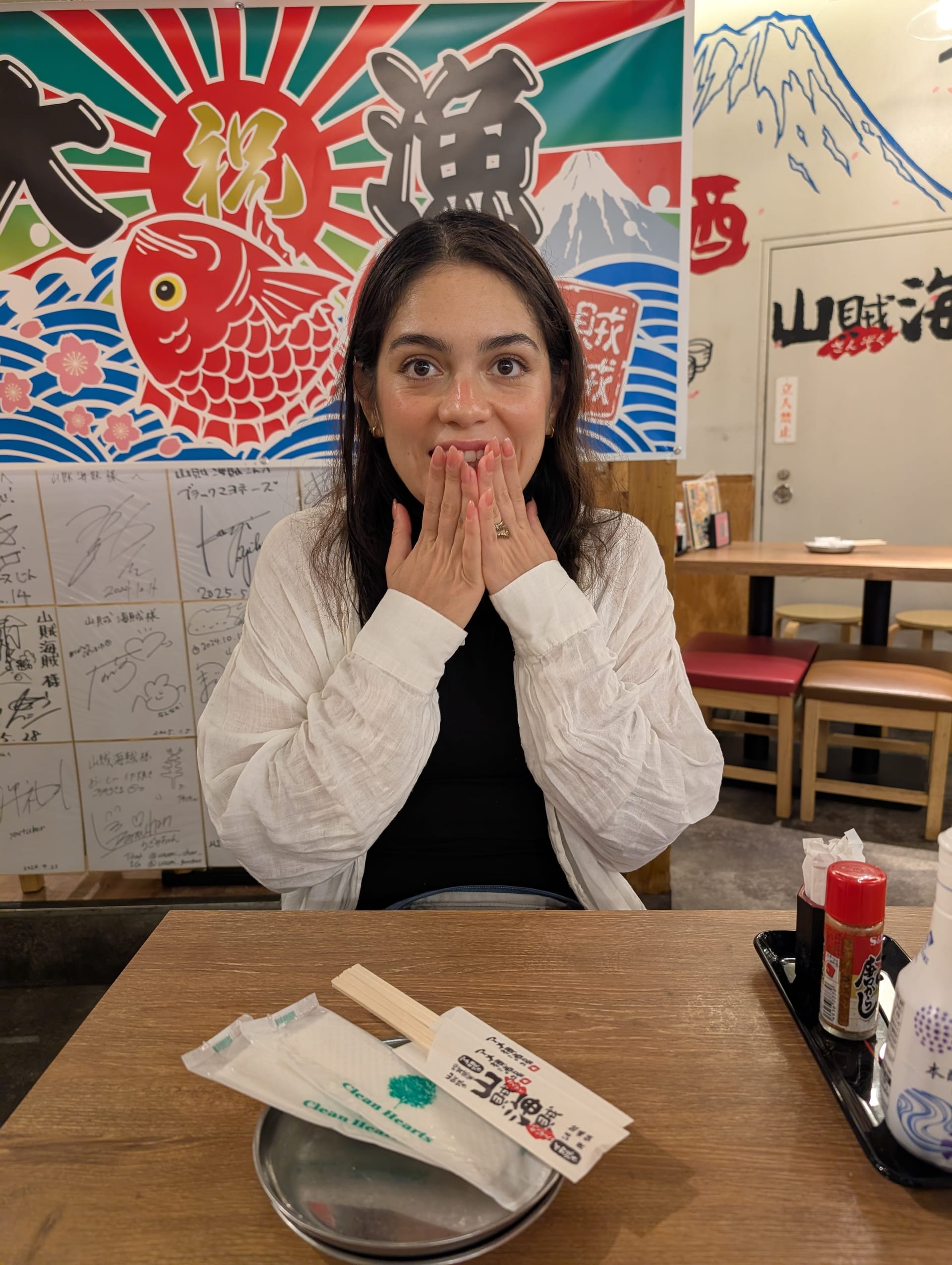
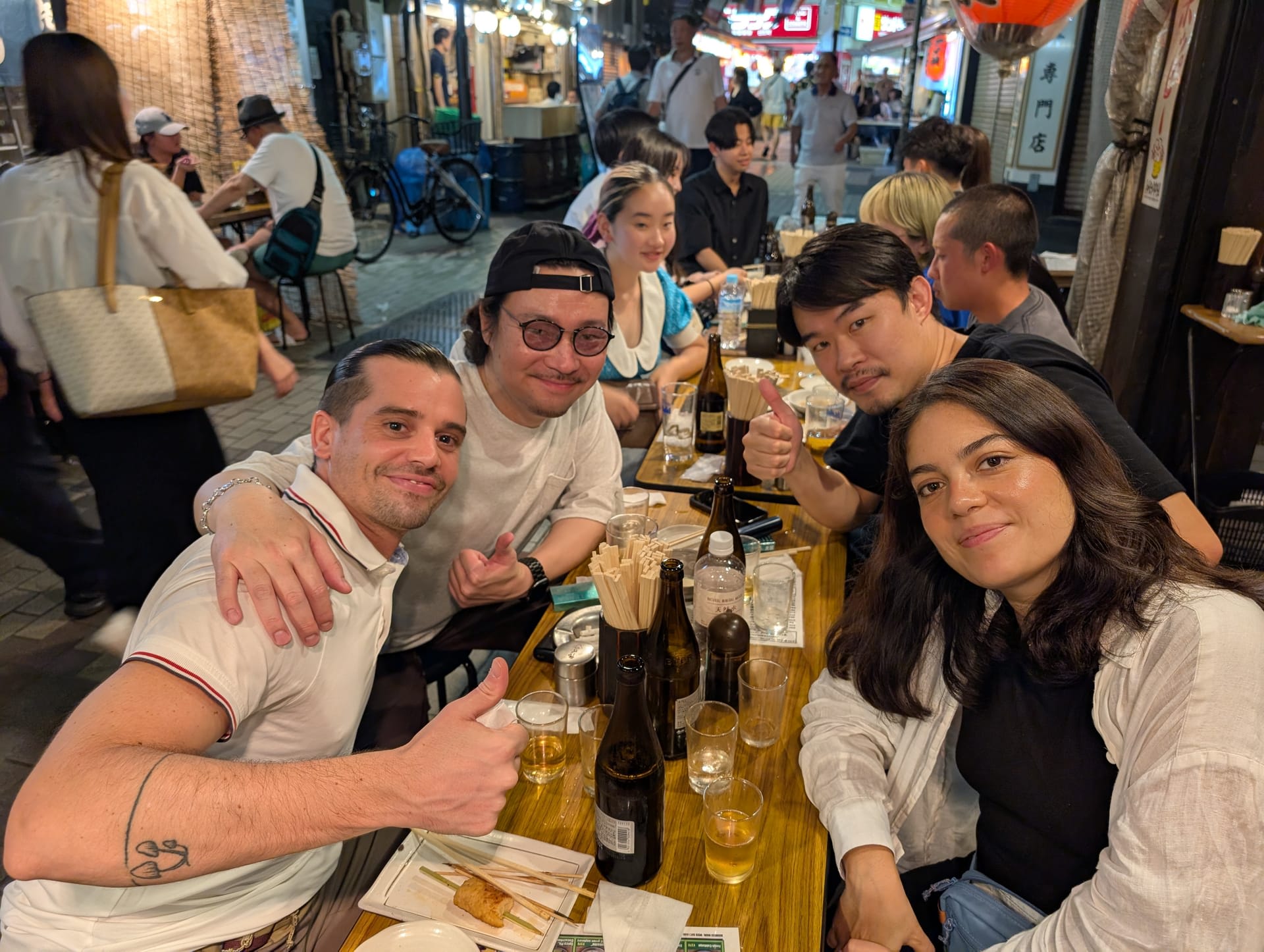
A couple of hours later, we found ourselves at an outdoor izakaya on a side street. A Mexican guy who had been living in Japan for three years. A Japanese couple who spoke no English and communicated through toasts and thumbs-up. By midnight we were all friends.
Day 2 — Akihabara, Shinjuku, and the Night
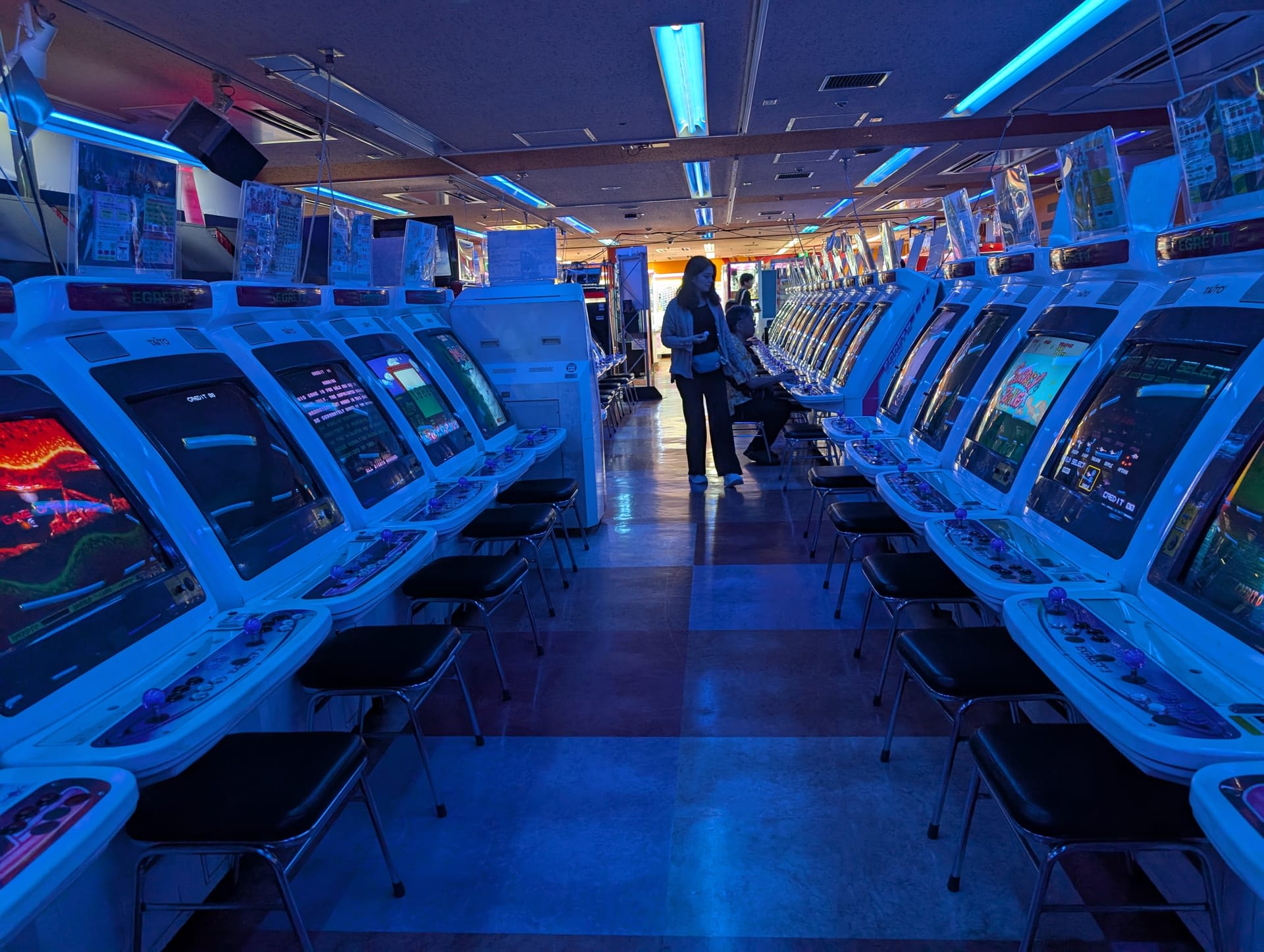
We checked out of Asakusa and moved to Shinjuku, which would be our base for the next four nights. But first: Akihabara. The Electric Town. I had been warned that it was overwhelming, and the warning was accurate — six floors of anime figurines, retro video games, flashing pachinko parlours, maid cafés, and a density of neon that made Times Square feel subdued. I lost an hour in Super Potato, a retro gaming store where every console I had ever owned as a child was displayed like a museum artefact. Lia disappeared into Mandarake and emerged with a bag of things she refused to show me until we were on the train.
Lunch was at Kanda Yabu Soba, a restaurant that has been serving the same zaru soba since 1880. The building is traditional — dark wood, paper screens, the sound of slurping as a form of compliment. The noodles were cold, the dipping sauce was concentrated, and the ritual of eating them — pick up a small bundle with chopsticks, dip briefly, slurp — was meditative in a way I had not expected from a plate of noodles. Fifteen hundred yen. One of the best meals of the trip, and it was lunch on day two.
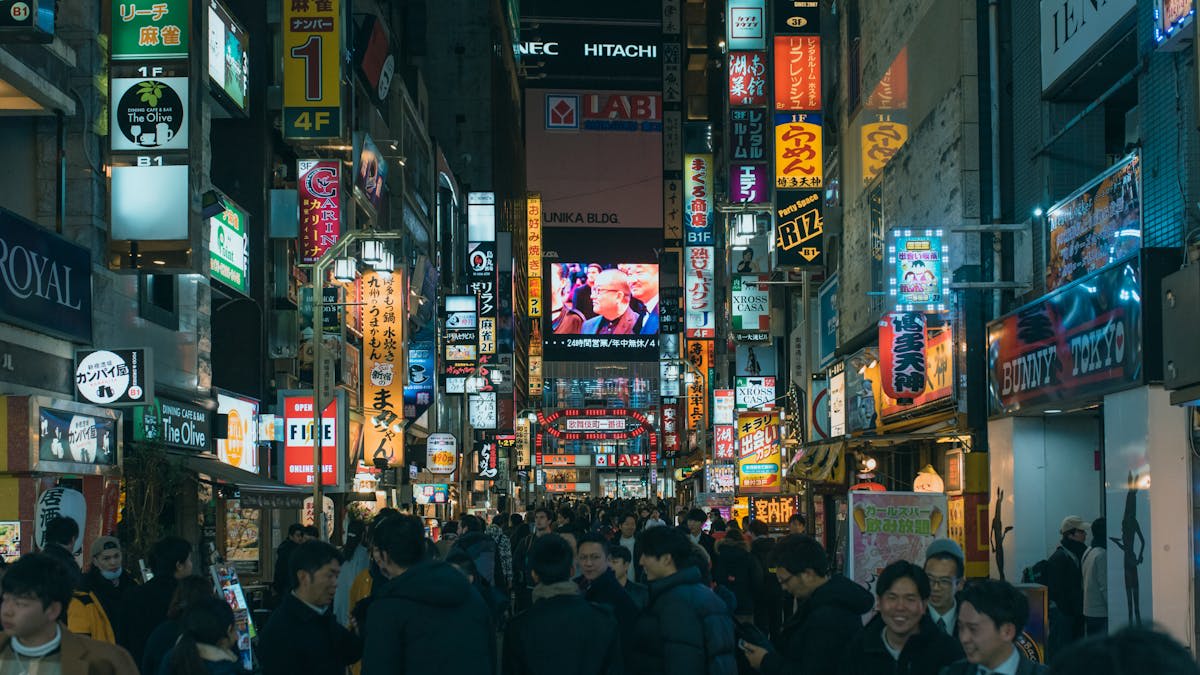
Shinjuku in the evening is a different city from Shinjuku in the afternoon. We went to the observation decks at the Tokyo Metropolitan Government Building first — free, which seemed impossible for a view that good — and watched the city lights come on from forty-five floors up. Then Shinjuku Gyoen, the garden, which closes at 4:30 and offers the kind of green, sculpted silence that Tokyo hides behind its concrete. And then night fell and we entered a different world.
Golden Gai is six alleys containing roughly two hundred bars, each the size of a closet, each with its own rules and personality. Some do not welcome foreigners. Some do not welcome first-timers. Some welcome everyone and charge you a couple thousand yen for the privilege of sitting on a stool and drinking whisky poured by a bartender who has been here every night for thirty years. We went to Bar Albatross, which was cash-only, tiny, warm, and presided over by a man who communicated through gestures, smiles, and the quality of his drinks. We stayed until the alleys filled with smoke and laughter and the particular kind of intimacy that comes from drinking in a space where your knees touch the person next to you.
Afterward: Omoide Yokocho. Memory Lane. Piss Alley. Whatever you call it, it is a row of yakitori stalls under a tangle of lanterns near Shinjuku Station’s west exit that looks like it was transported from 1950s Tokyo and deposited, intact, in the middle of the modern city. Smoke rising between the buildings. Plastic stools. Skewers and beer. An elderly couple next to us ordered for us when they saw us struggling with the menu. The chicken hearts were their recommendation. They were right.
Day 3 — Tsukiji, Shibuya, Meiji Jingu
We went to Tsukiji Outer Market at nine in the morning and ate our way from one end to the other: tamagoyaki (the sweet grilled omelette), seafood skewers grilled in front of us, a nigiri set at Sushi Zanmai that cost three thousand five hundred yen and contained fish so fresh it tasted like the sea had arranged it on the plate personally.
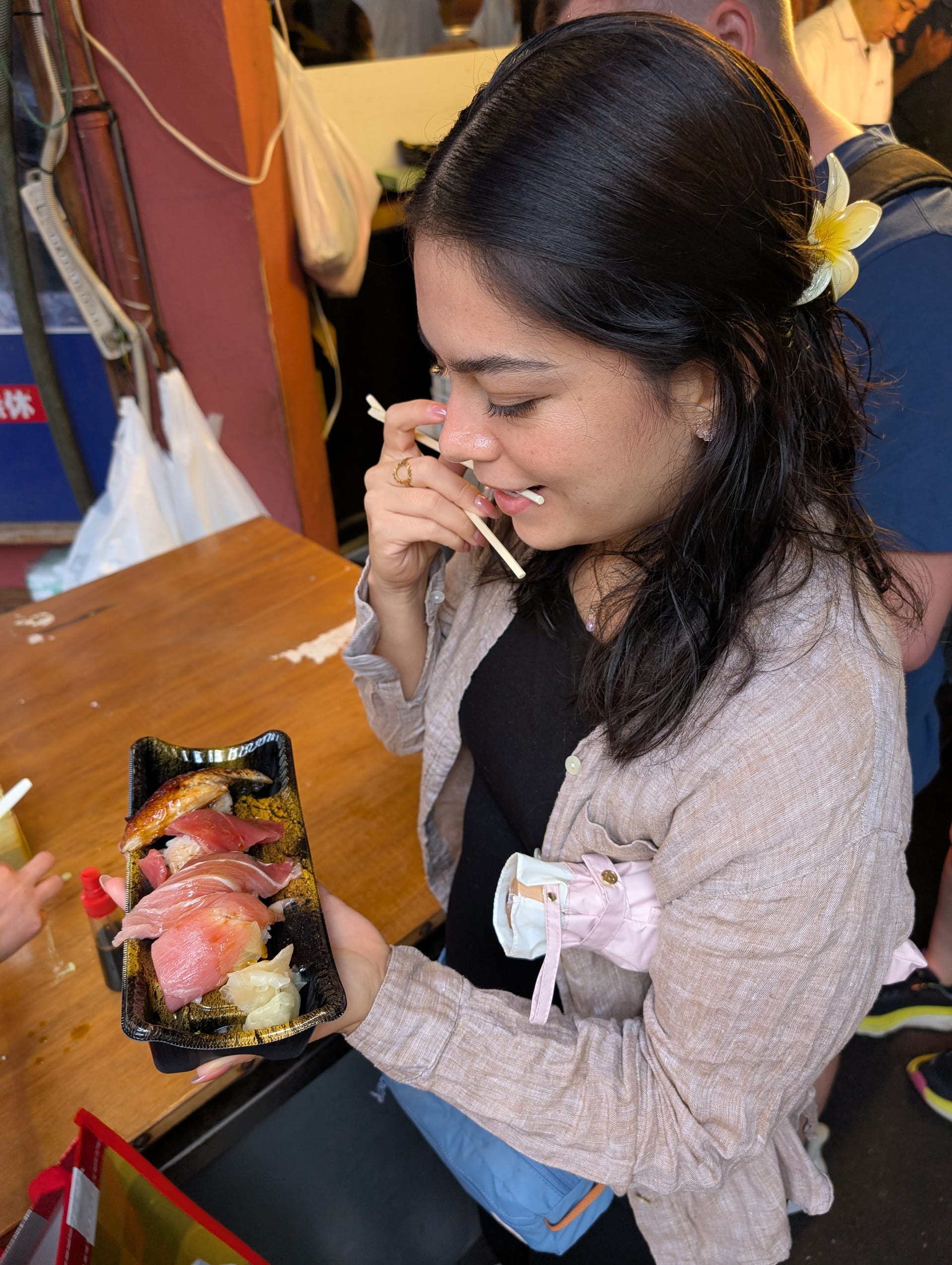 The market is not the old wholesale fish market — that moved to Toyosu — but the outer market remains, and it is glorious: crowded, steaming, loud, and utterly devoted to the proposition that the best food in the world does not require a reservation.
Shibuya in the afternoon. The crossing is famous, and it is impressive — a thousand people moving in every direction at once, a choreography of umbrellas and purpose — but the neighbourhood around it is more interesting. We had tsukemen at Dogenzaka Manmosu — thick, chewy noodles dipped in a rich broth — and I am still thinking about it. I will probably think about it until I die or go back, whichever comes first.
From Shibuya we walked to Meiji Jingu, and the city disappeared. The shrine is set in a forest that was planted a century ago and now feels primeval — massive torii gates, gravel paths, the sound of nothing. We wrote our wishes on wooden ema tablets. Lia wished for something she would not tell me. I wished for more trips like this one. Then we walked into Yoyogi Park, which was full of people picnicking, playing music, and doing the thing that Tokyo does better than any city I know: existing in public space with a combination of energy and courtesy that makes you want to sit down and stay forever.
The evening: Nonbei Yokocho in Shibuya — a quieter, more intimate version of Golden Gai, two thousand yen and cash-only — followed by the train back to Shinjuku and the particular kind of exhaustion that comes from a day lived at full intensity.
Day 4 — Kawaguchiko and the Mountain
I almost did not go. The itinerary was full. But Lia insisted, and Lia is smarter than I am about these things. We took the highway bus from Shinjuku — two hours, booked online the night before because they sell out — and arrived at Kawaguchiko Station in a completely different Japan. The city was gone. The air was cool and clear. The lake was right there, and above it, hiding behind a scarf of cloud, was the mountain.
We took the Fujikyuko Line to Shimoyoshida and walked to the base of Arakurayama Sengen Park, where the Chureito Pagoda sits at the top of four hundred steps. I counted them. My calves counted them. But the view from the top — the five-storey pagoda in the foreground, Fuji appearing between clouds, the valley below — was one of those moments where the world looks exactly like the photograph you have seen a thousand times, except it is real and you are standing in it and your girlfriend is laughing at the expression on your face.
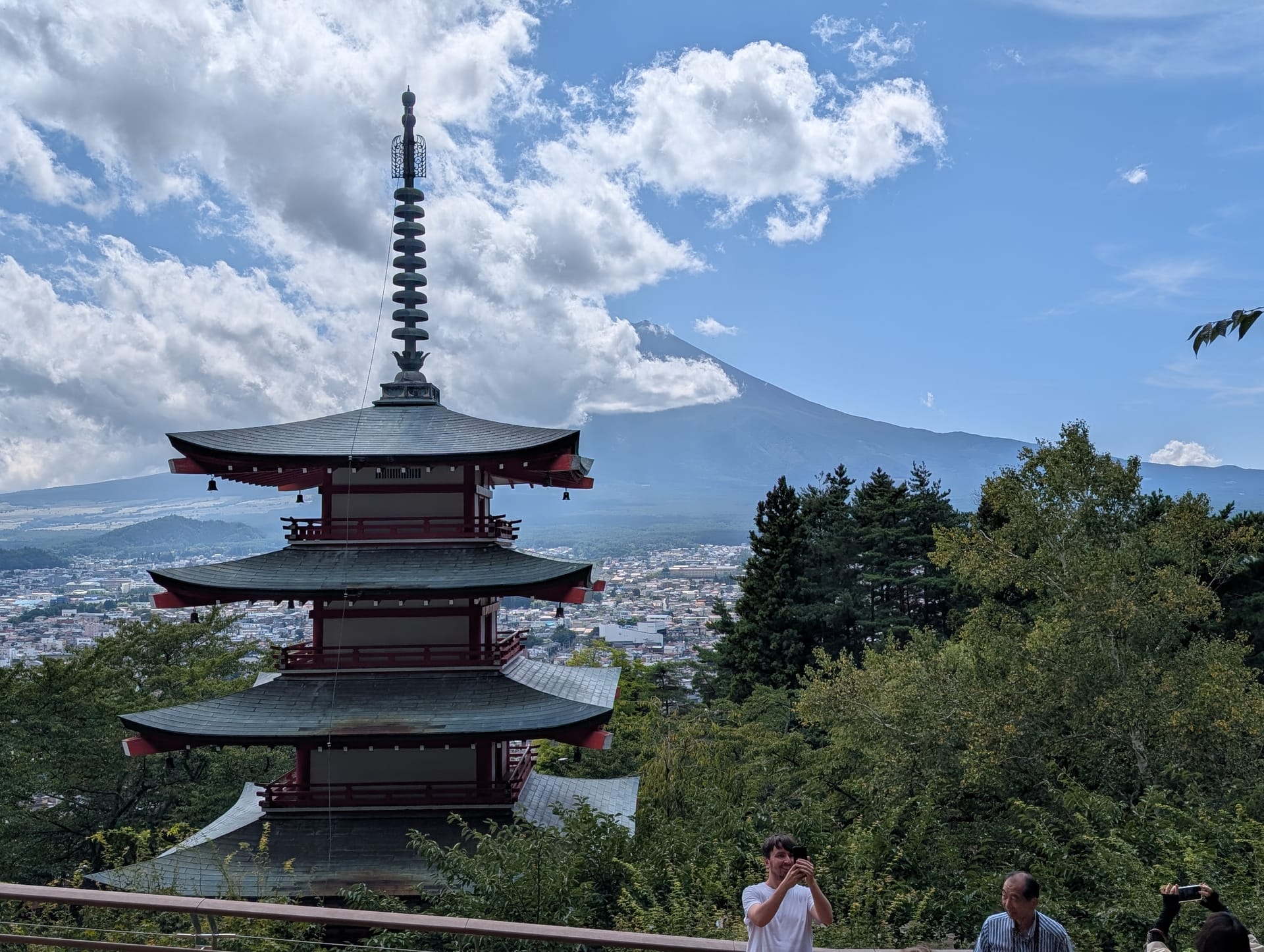
We stayed at Hotel Kasuitei Ohya on the lake. The onsen — the hot spring bath — was the highlight. I sat in the outdoor bath as the light faded over the water, the mountains darkening against the sky, my muscles dissolving into the heat, and decided that Japan could end right here and I would have been satisfied. For dinner, we had hoto noodles — thick, flat, in a miso broth with pumpkin and vegetables, served boiling hot in an iron pot. It is mountain food, designed for cold evenings and tired bodies, and it was exactly right.
Days 5–6 — Roppongi, teamLab, Odaiba
Back in Tokyo for the final stretch. We explored Ginza — polished, expensive, the kind of shopping district that makes you walk more carefully — and the Imperial Palace East Garden, which is free and beautiful and somehow not crowded. Ramen Street in the basement of Tokyo Station for lunch: a bowl of tsukemen that was slightly less life-changing than Dogenzaka Manmosu but still better than any ramen I have eaten outside Japan.
teamLab Planets in Toyosu was one of the highlights of the entire trip. You enter barefoot. You walk through rooms of light and water and digital art that responds to your movement. In one exhibit, koi made of light swim around your ankles as you wade through knee-deep water. In another, you lie on the floor and the ceiling becomes a galaxy. It sounds like an Instagram gimmick. It is not. It is one of the most beautiful sensory experiences I have had in any museum, any country, and I say this as someone who is constitutionally skeptical of anything that involves taking off his shoes. Book tickets in advance. It sells out.
We moved to the Grand Nikko Tokyo Daiba in Odaiba for the Disney days, and the view from the room — the Rainbow Bridge lit up at night, the city reflected in the bay — was the kind of thing you stare at in silence and then quietly adjust your expectations for every hotel room you will ever stay in again.
Days 7–8 — Disney
I was not planning to write about Disney. I am a thirty-four-year-old man who travels for temples and street food and the kind of experiences that look good in literary essays. But we spent two days at Tokyo Disney Resort and both were extraordinary, and pretending otherwise would be dishonest.
Tokyo Disneyland is Disney done with Japanese precision — which means the queues are orderly, the food is inventive (gyoza dogs, matcha churros, popcorn in flavours that have no right to exist), and the park is maintained with a level of care that makes you wonder whether they repaint the buildings every night. The parades are spectacular. The fireworks made Lia cry. I pretended they did not make me cry. We both knew.
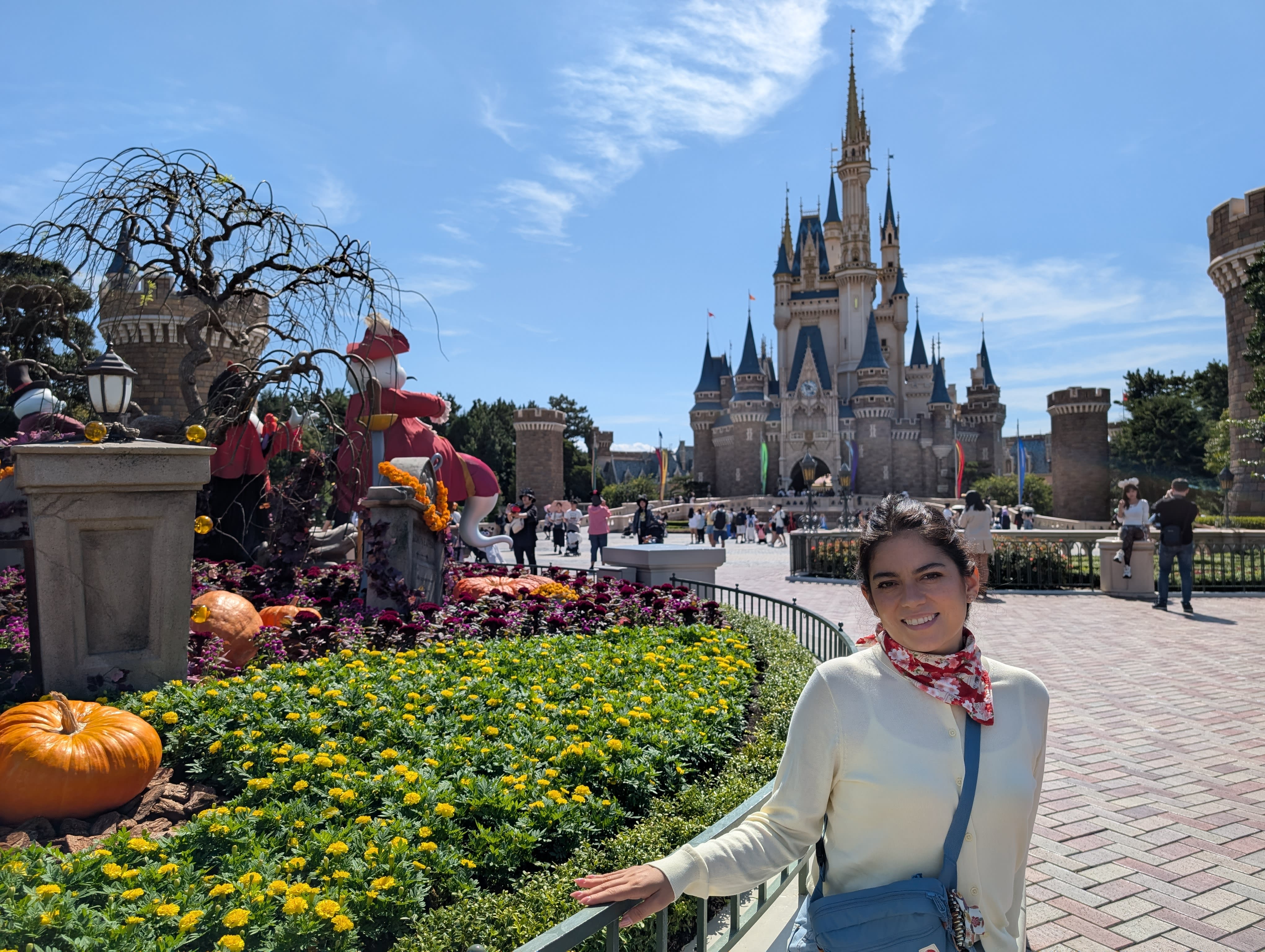
Tokyo DisneySea is something else entirely. It is not a theme park. It is an immersive world — Venetian canals, an Art Deco New York waterfront, a volcanic fortress, a Mediterranean harbour — designed with the obsessive attention to detail that only Japan would apply to an amusement park.
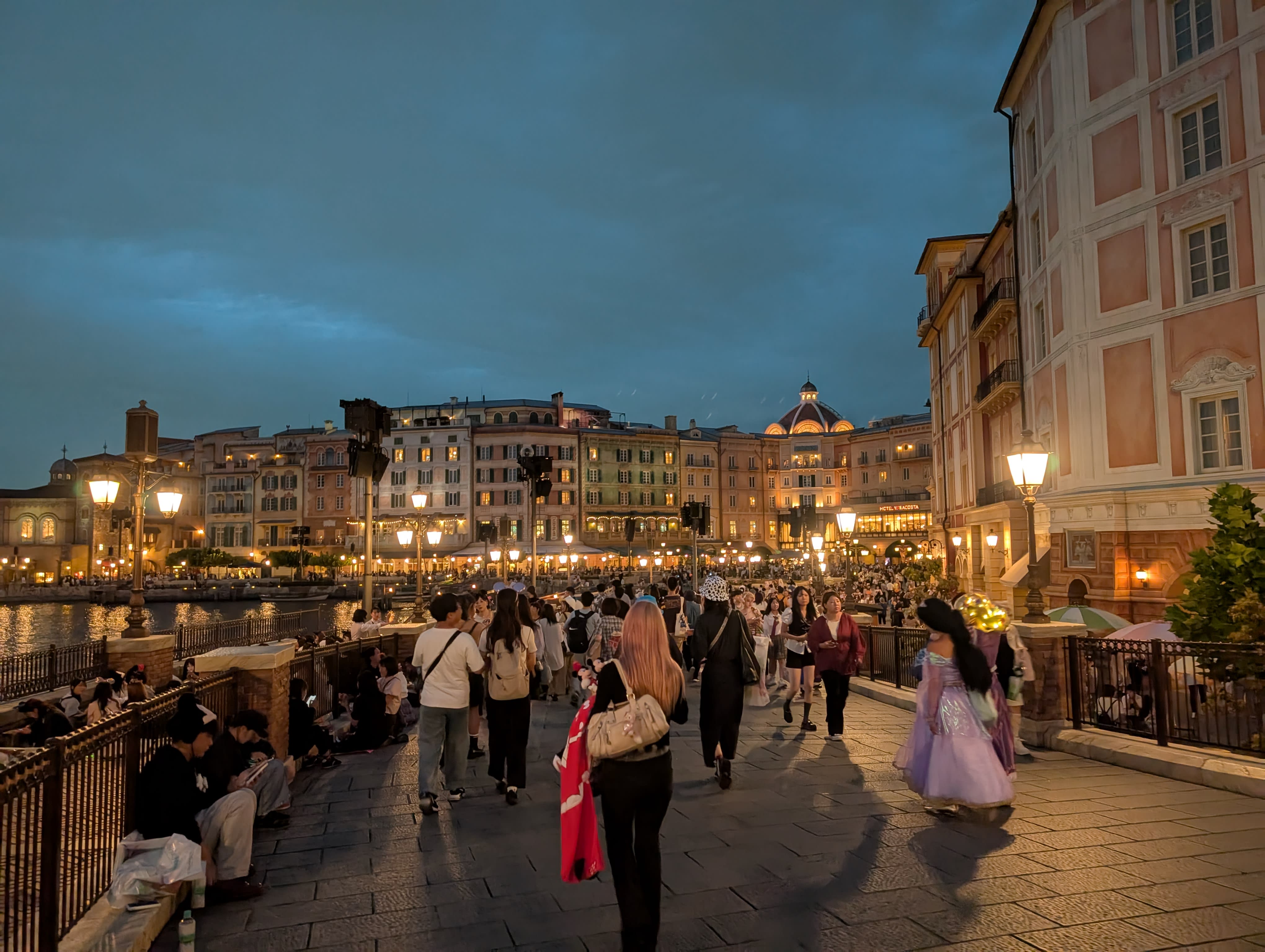
The evening harbour show, watched from a spot we staked out forty-five minutes early, was one of the most visually spectacular things I have seen, and I have seen Fuji from the pagoda. If you are going to Japan with someone you love, give DisneySea a day. You will not regret it.
Part Two: Kyoto (Days 9–13)
Day 9 — The Bullet Train and the First Evening
The shinkansen from Shinagawa to Kyoto takes two hours and fifteen minutes at 285 kilometres per hour. We bought ekiben — station bento boxes — and ate them watching the landscape blur past. Lia had booked the right side of the train, and somewhere around Shizuoka the clouds parted and Fuji appeared in the window, snow-capped and perfect and gone within a minute. I grabbed my phone too late. It did not matter. Some things are for the eyes only.
We took a taxi from Kyoto Station to Hotel The West Japan Kyoto Kiyomizu, which sits on the hill leading up to Kiyomizu-dera temple. The location was everything. We dropped our bags, walked out the door, and let gravity take us downhill through Sannenzaka and Ninenzaka — the stone-paved, preserved lanes that are the most beautiful streets in Japan. Late afternoon, late September, the light going gold, the crowds thinning, the wooden shopfronts selling ceramics and incense and sweets wrapped in paper so beautiful you do not want to open them. The Yasaka Pagoda appeared between the rooftops, and Lia stopped walking. I stopped too. We stood there for a while.
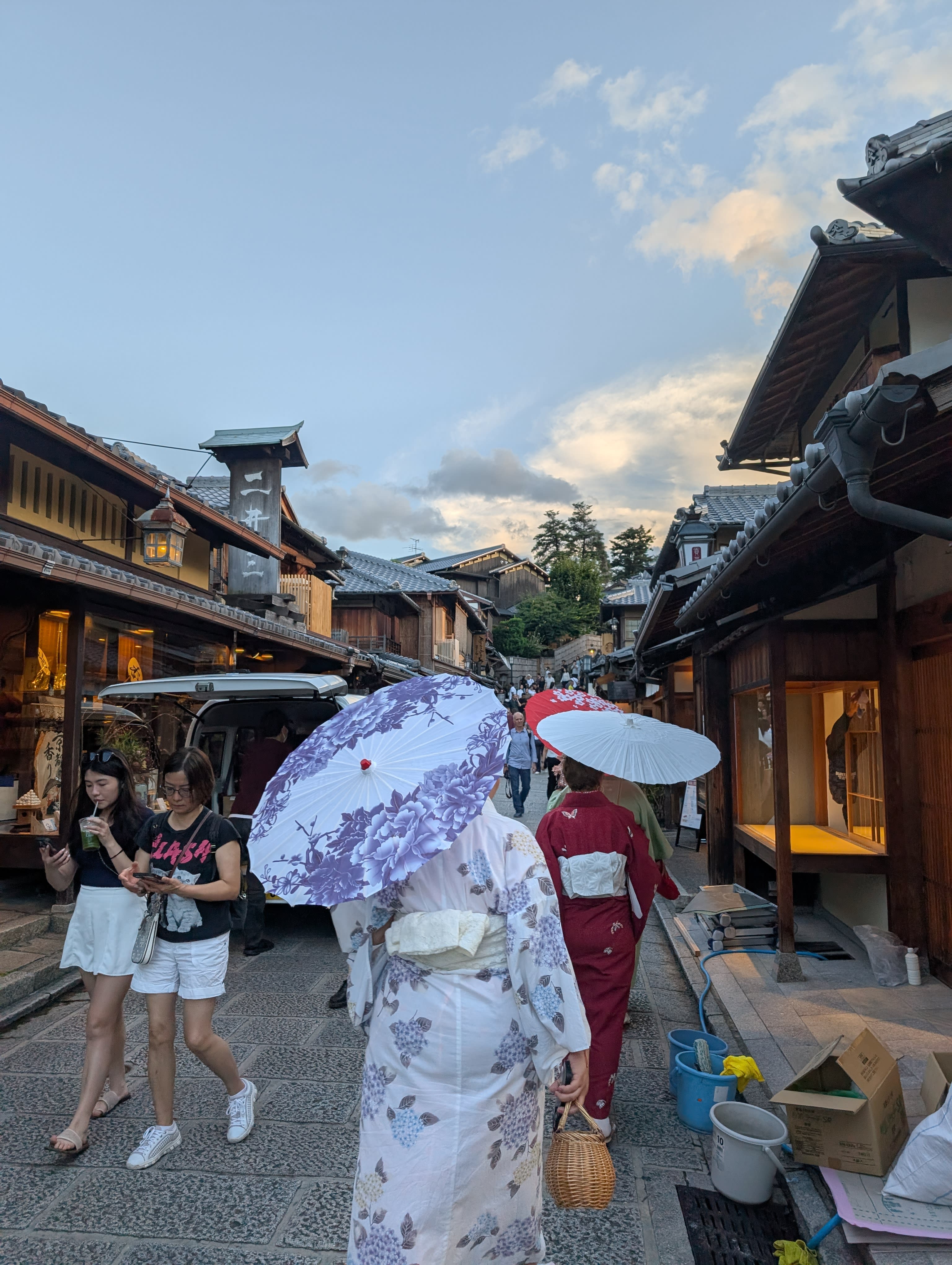
We passed through Yasaka Shrine as day became evening — the massive vermillion gate illuminated against the night sky — and then we were in Gion, where the possibility of spotting a geiko or maiko on Hanamikoji Street gives the early evening a particular electricity.
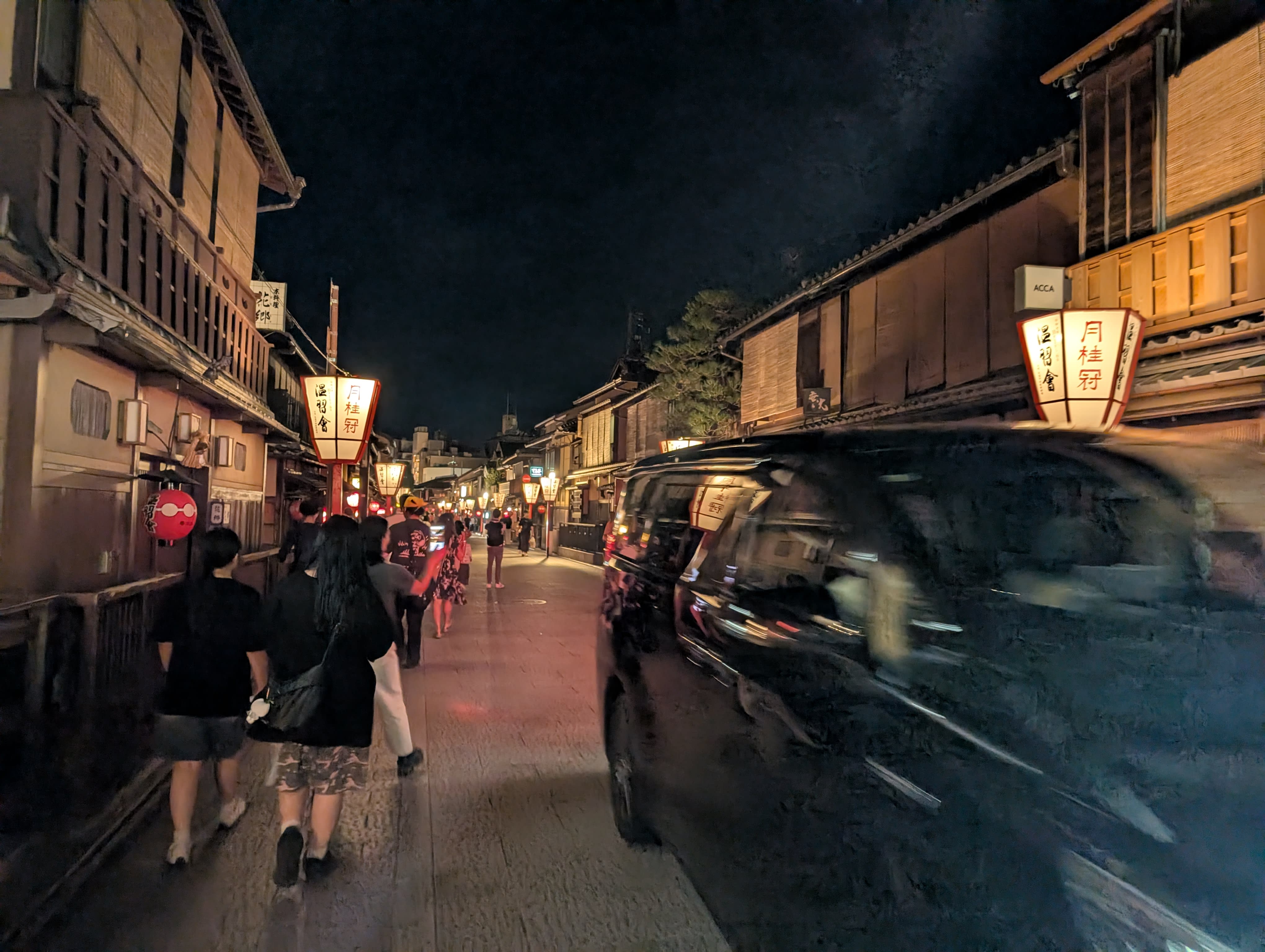
We crossed the Kamo River to Pontocho Alley — a narrow lane of restaurants and lanterns running parallel to the water — and had dinner on a terrace overlooking the river. I do not remember what we ordered. I remember the light on the water and the sound of the city settling into night and the feeling that Kyoto had been waiting for us.
Day 10 — Kiyomizu-dera and the Tea Ceremony
Early morning, uphill, to Kiyomizu-dera — the wooden temple on the cliff, built without a single nail, overlooking the city from a height that makes everything below look both ancient and infinite. We arrived at nine and it was manageable. The wooden stage juts out over the hillside, and the view from it — Kyoto spread below, the temple roofs and the distant mountains — made me understand why this place has been drawing pilgrims for twelve hundred years. Below the stage, we drank from the Otowa Waterfall — three streams, three blessings: health, longevity, success in studies. I drank from all three. Lia drank from two and refused to tell me which one she skipped.
The walk back down through Sannenzaka was different in the morning light — softer, the shops open, the smell of matcha and fresh mochi drifting from doorways. We visited Kodai-ji Temple and its zen garden, which had the kind of silence that is not empty but full — full of intent, full of centuries of monks raking gravel into patterns that mean something I am not yet equipped to understand.
That evening: the kimono tea ceremony in Gion. I had been skeptical. It sounded like a tourist experience. It was not. Putting on the kimono changed how I moved — smaller steps, straighter back, a sudden awareness of my body in space.
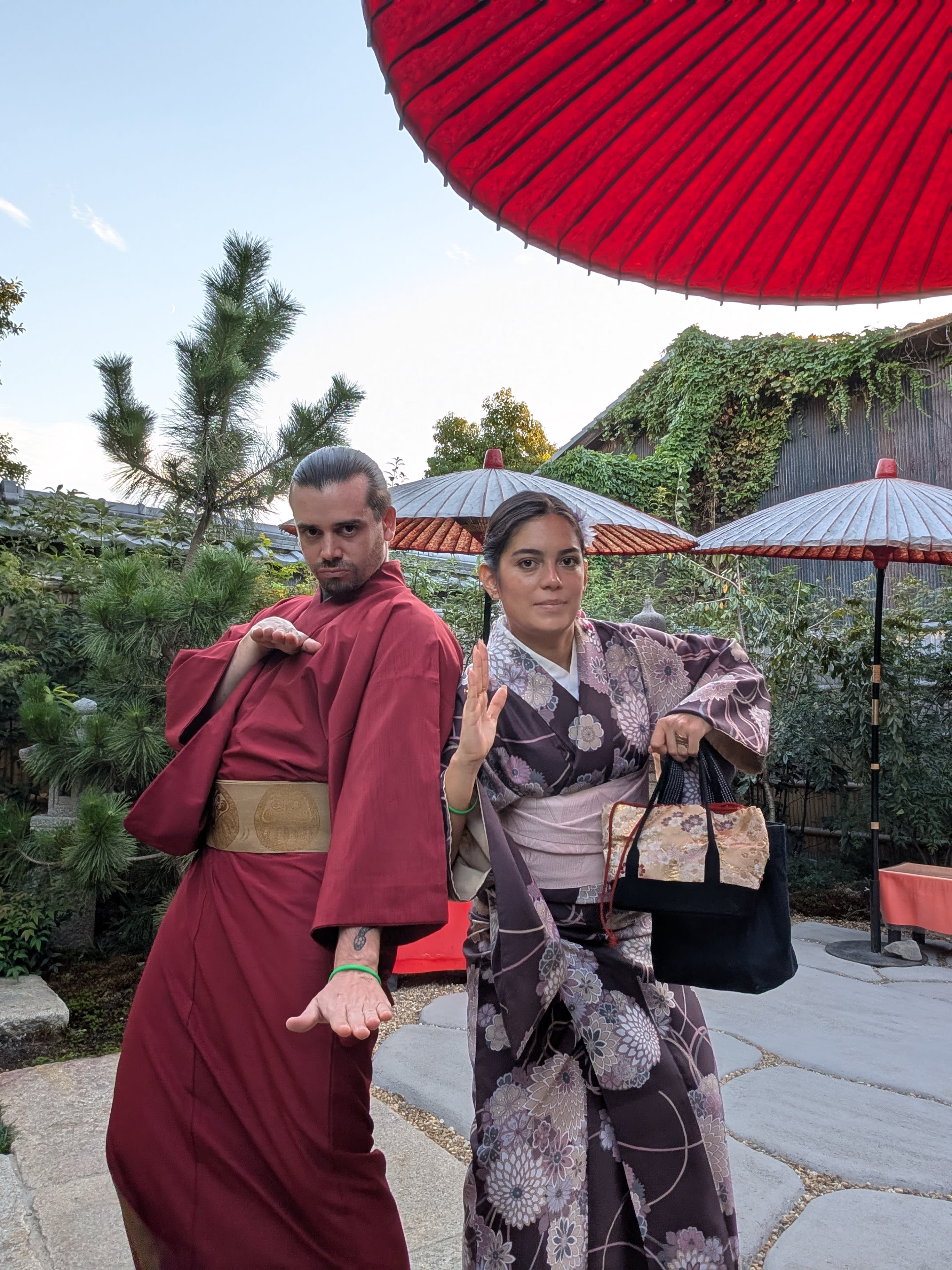
The ceremony itself was slow and precise, every gesture intentional, the matcha whisked in a bowl that was probably older than my grandmother. Ninety minutes. No phones.
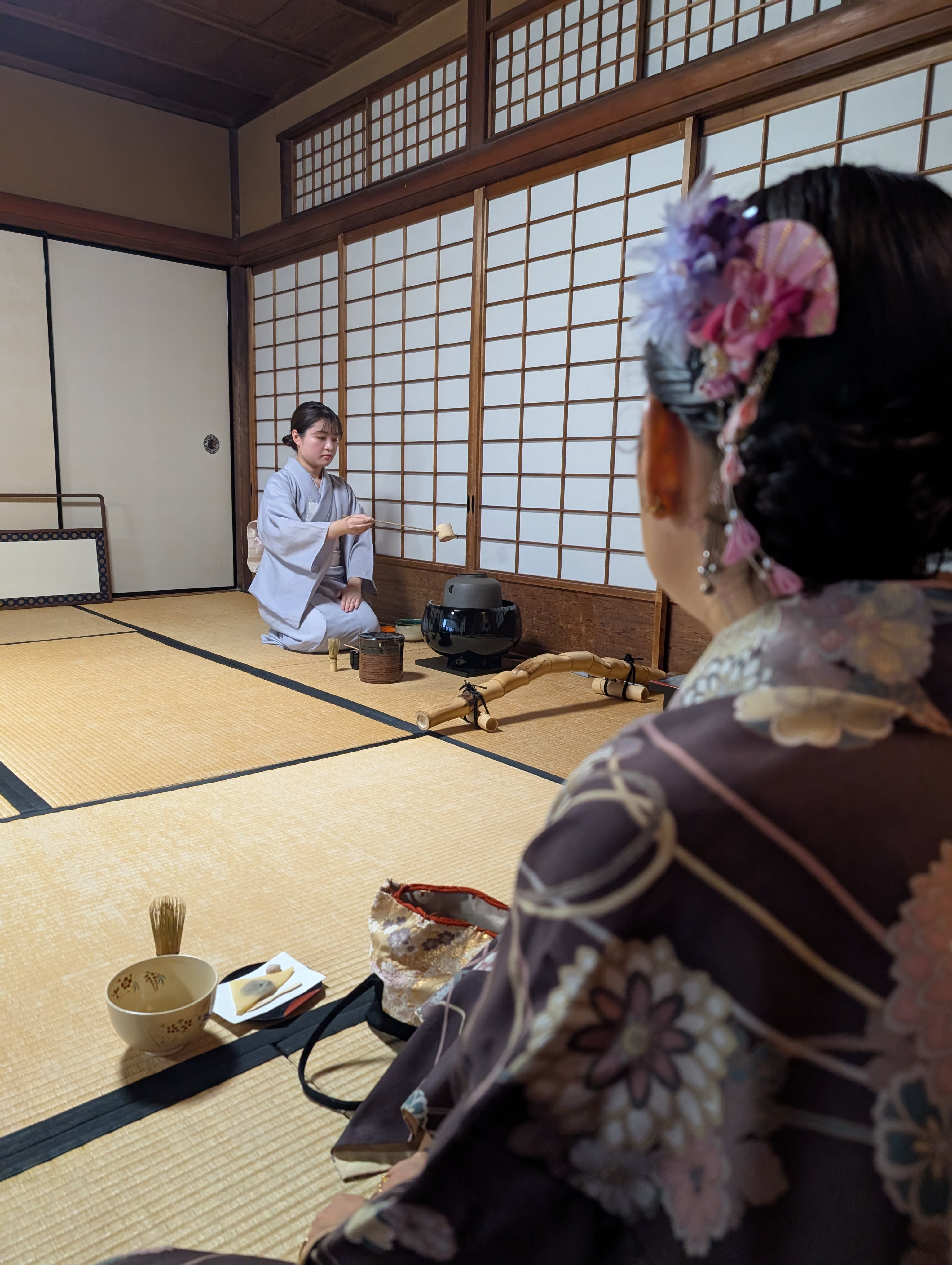
Lia and I walked out into the Gion evening in our kimonos, and the streets were lit with lanterns, and for a few minutes this was not a city we were visiting but a world we had been admitted into. I do not use the word “magical” often. I am using it now.
Day 11 — Ten Thousand Red Gates
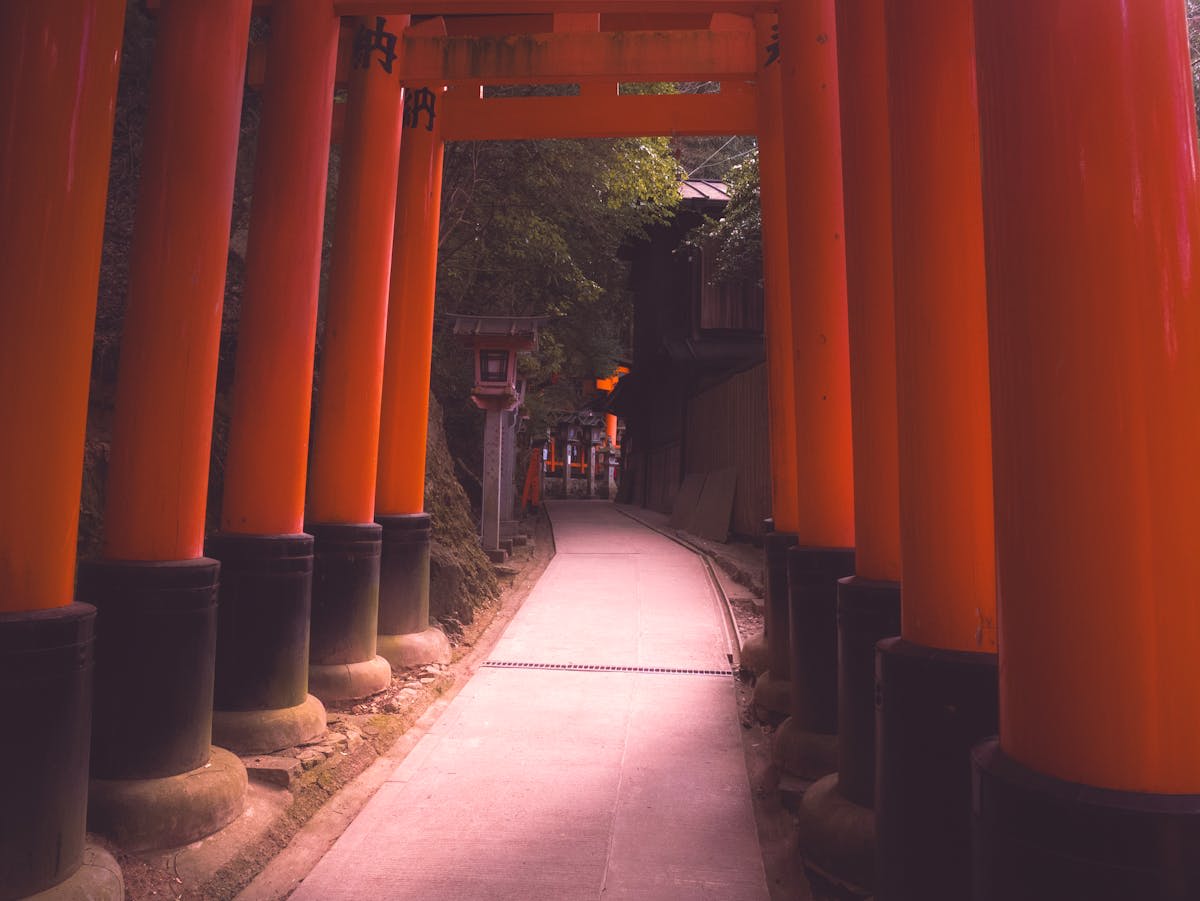
We took the JR Nara Line to Inari Station, arriving at eight in the morning, and walked through the entrance of Fushimi Inari Taisha into the famous tunnel of vermillion torii gates. At that hour, the lower paths were nearly empty, and the effect was extraordinary — gate after gate after gate, the light filtering through in orange streaks, the forest on either side dark and cool, our footsteps the only sound. The gates are so close together that they form a corridor, and walking through them feels like moving through a passage between worlds. Which, according to the Shinto tradition, is exactly what they are.
We hiked the full loop to the summit — two hours of climbing through increasingly quiet forest, with shrines and fox statues and small stone altars at every turn. Near the top, we sat at a clearing overlooking the city — Kyoto laid out below in the haze — and ate rice balls we had bought at a convenience store that morning. I have eaten in Michelin-starred restaurants. That rice ball, on that bench, after that climb, was better.
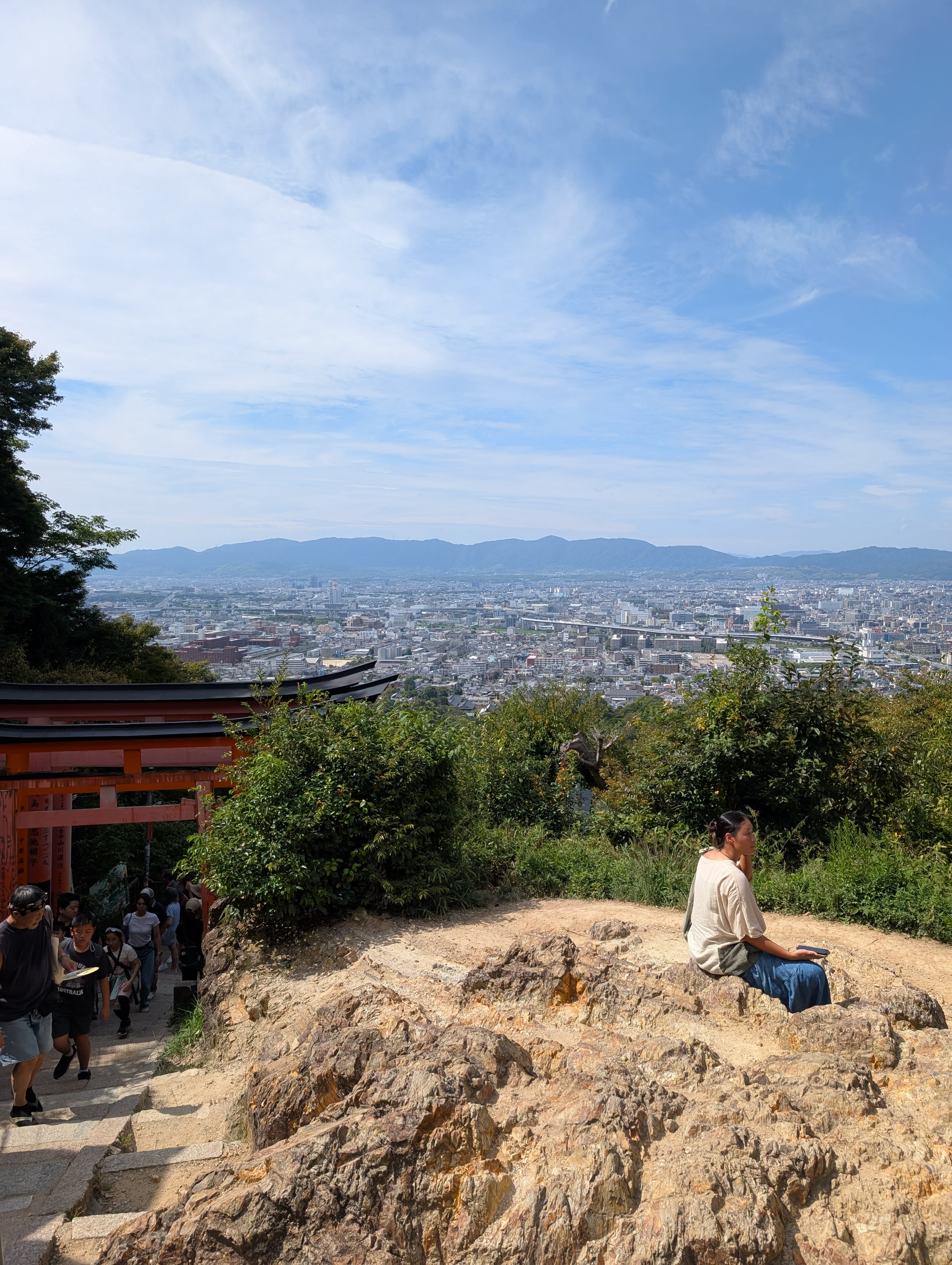
By the time we came back down, the crowds had arrived and the lower gates were packed. The lesson is simple: go early or do not go.
The afternoon: the Fushimi Sake District, ten minutes from the shrine. One of Japan’s most important sake-producing areas, built along willow-lined canals that make you feel like you have walked into a woodblock print. We visited the Gekkeikan Okura Sake Museum, learned the history, tasted three varieties, and bought a bottle of junmai daiginjo that we drank on the hotel terrace that night while watching the lights of Higashiyama come on.
Day 12 — Over the Mountain to Kibune
My favourite day. Not just of the trip — possibly of the year.
We took the Eizan Railway from Demachi-Yanagi Station, a small scenic train that climbs into the mountains north of Kyoto, the city disappearing behind us in minutes. At Kurama Station, we began the ascent to Kurama-dera — a temple complex built into the mountainside, surrounded by cedar trees so old and so large they have their own names. The atmosphere changed immediately. The air was cooler, the light was green, and the sound of the city was replaced by birdsong and the creak of wood.
The temple halls are carved into the mountain at different levels, connected by stone stairways. At the main hall, we looked out over the valley below and the canopy above and the whole scene had a stillness that I have felt in very few places — the Alentejo coast, the cenotes of the Yucatán, and here, on a mountainside north of Kyoto. Some places do not just look sacred. They feel it.
From Kurama’s main hall, we took the hiking trail over the mountain to Kibune — ninety minutes through a forest of ancient cedars, the trunks rising straight and enormous, the canopy filtering the light into something green and cathedral-like. The trail climbs, crosses a saddle, and descends into the Kibune valley, ending at the serene Kibune Shrine, dedicated to the god of water. Moss on every surface. A stream running through the shrine grounds. The kind of quiet that takes a full minute to notice.
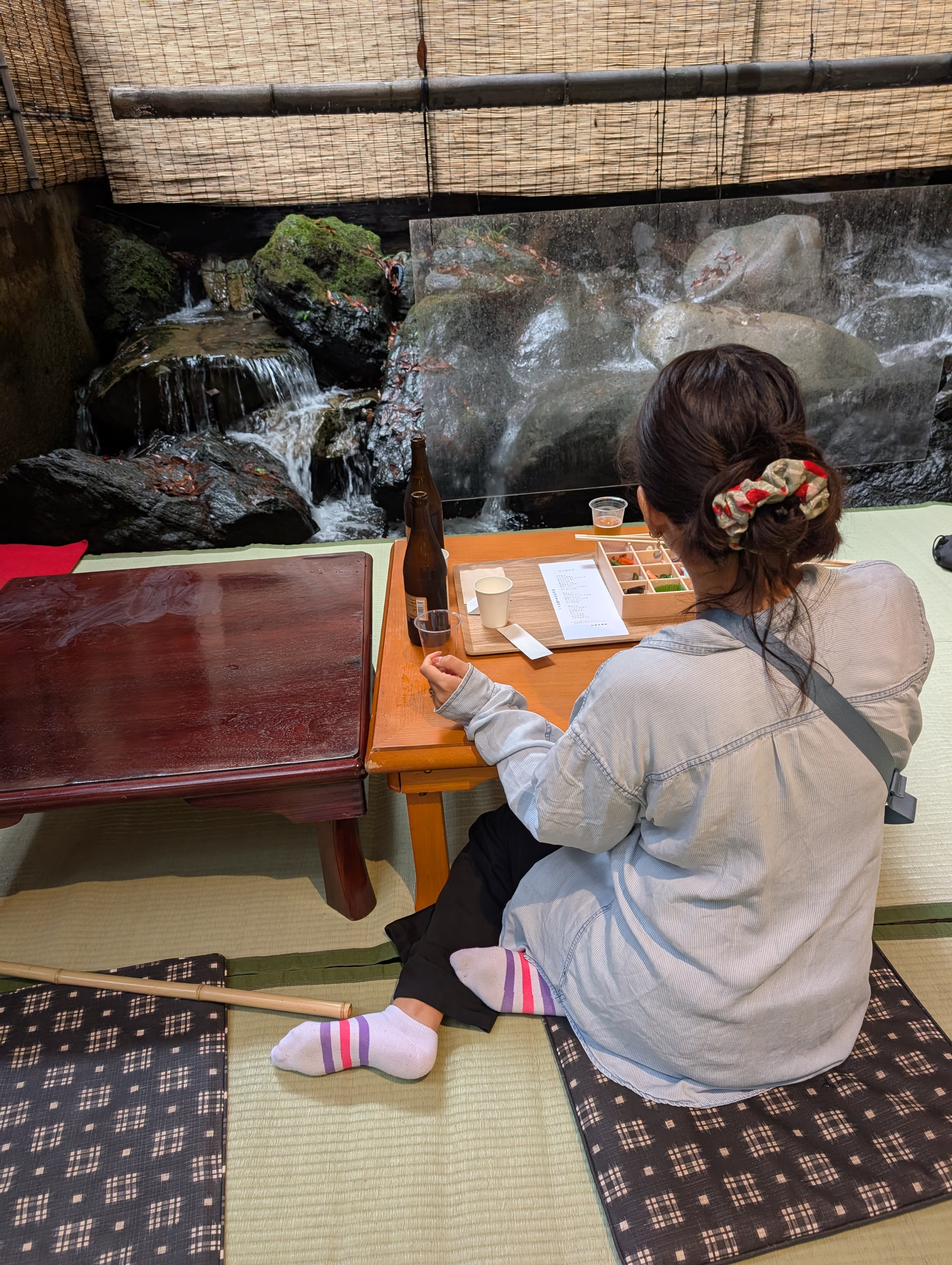
And then lunch. The kawadoko restaurants of Kibune build wooden platforms directly over the river, so you eat seated on tatami above the flowing water, the sound of it beneath you, the cool air rising from the current. Lia ordered tempura. I ordered whatever the set menu dictated, which turned out to be a succession of small, perfect plates — grilled river fish, pickled vegetables, tofu, rice, miso. The water ran beneath our feet. The cedars towered above. I have eaten in many beautiful settings. This was the most beautiful.
Day 13 — Bamboo and Monkeys
Our last full day in Kyoto. We took the JR Sagano Line to Saga-Arashiyama and walked into the Bamboo Grove at 8:30am. The bamboo towers above you — fifteen, twenty meters — and the stalks move in the wind, creating a sound that is somewhere between a whisper and a creak, a sound that recording technology has never adequately captured. For ten minutes, we had the grove nearly to ourselves. Then the groups arrived and the spell changed — still beautiful, but different. Those ten minutes were worth every early alarm of the trip.
From the grove we entered Tenryu-ji, a UNESCO temple whose landscape garden uses the surrounding Arashiyama mountains as “borrowed scenery” — a technique that erases the boundary between the garden and the landscape, making the whole mountain feel like an extension of the raked gravel. Lia sat on the veranda for twenty minutes and did not speak. I sat beside her and did the same.
The afternoon: the Togetsukyo Bridge crossing, then up the hill to the Iwatayama Monkey Park, where Japanese macaques roam free on a hillside overlooking the city. The monkeys are wild, unbothered by humans, and occasionally hilarious — one stole a hat from a tourist and wore it with the confidence of someone who knew exactly what he was doing.
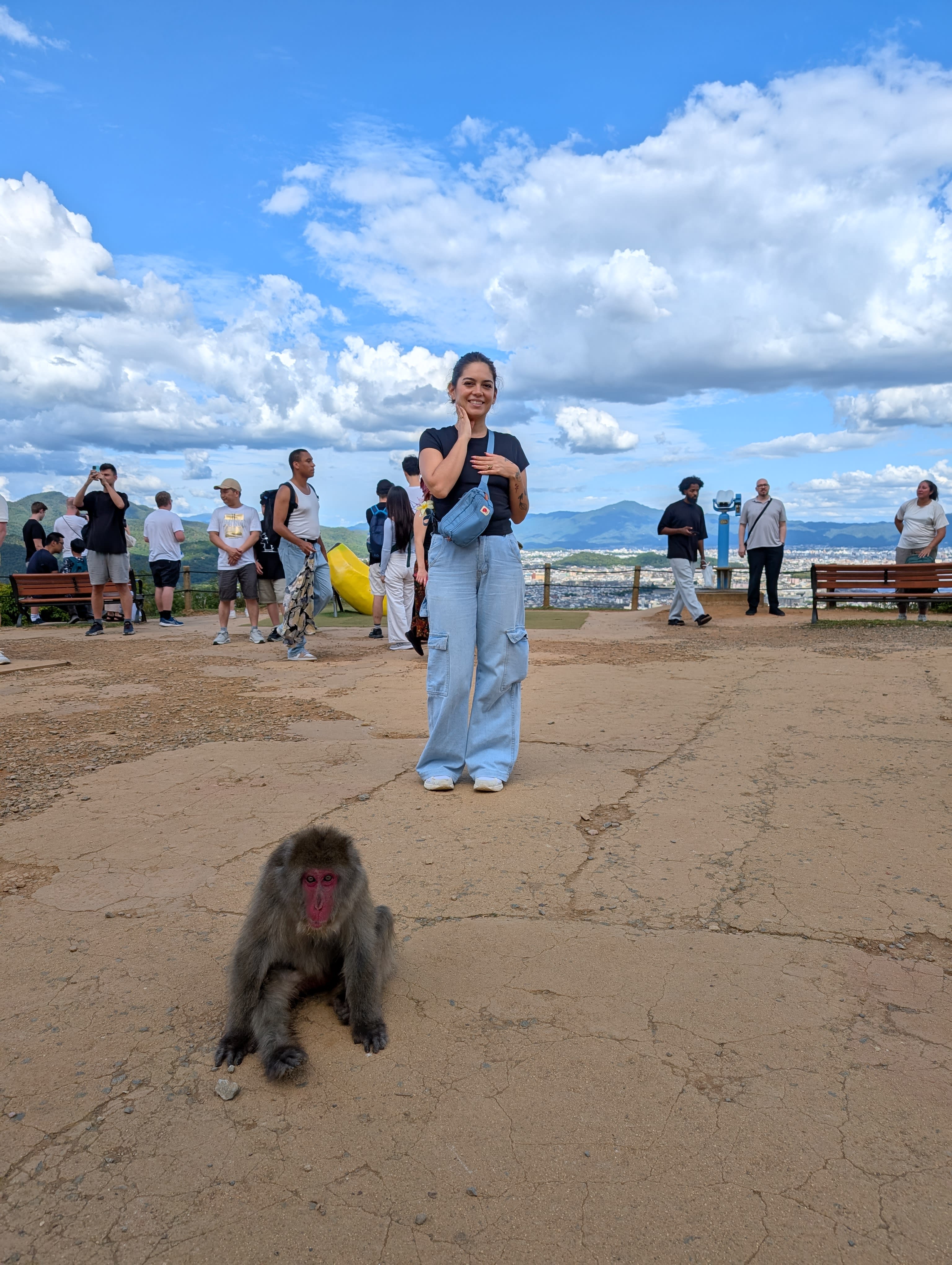 We bought monkey food for two hundred yen and fed them through a fence, their small hands reaching through with a delicacy that seemed designed to make you forget they would steal your lunch without hesitation.
The Kimono Forest at the Randen tram station — hundreds of illuminated fabric cylinders lining the platform — was our last stop. We walked through them as the light faded, the colours glowing in the dusk, and I felt the particular sadness of leaving a place you have fallen in love with. We had dinner in Pontocho for the last time, on a terrace over the river. I ordered sake. Lia ordered sake. We clinked glasses and did not say much, because some endings do not need commentary.
Part Three: Osaka (Days 14–20)
The Arrival
The JR Special Rapid from Kyoto to Osaka takes thirty minutes and costs five hundred and eighty yen. In that time, Japan changes completely. Where Kyoto is restrained, considered, wrapped in ceremony, Osaka hits you like a wall of noise and neon and the smell of frying batter. The city’s motto is kuidaore — eat until you drop — and from the moment we arrived in Namba, I understood that this was not a philosophy but a civic mandate.
We checked into our hotel — Namba, centre of everything — and stepped out for our first Osaka meal: kitsune udon, thick noodles with sweet fried tofu in a delicate broth, a dish that originated here and that no other city has managed to replicate. Fifteen minutes in Osaka and the food was already better than most entire countries.
Dotonbori — The Heart
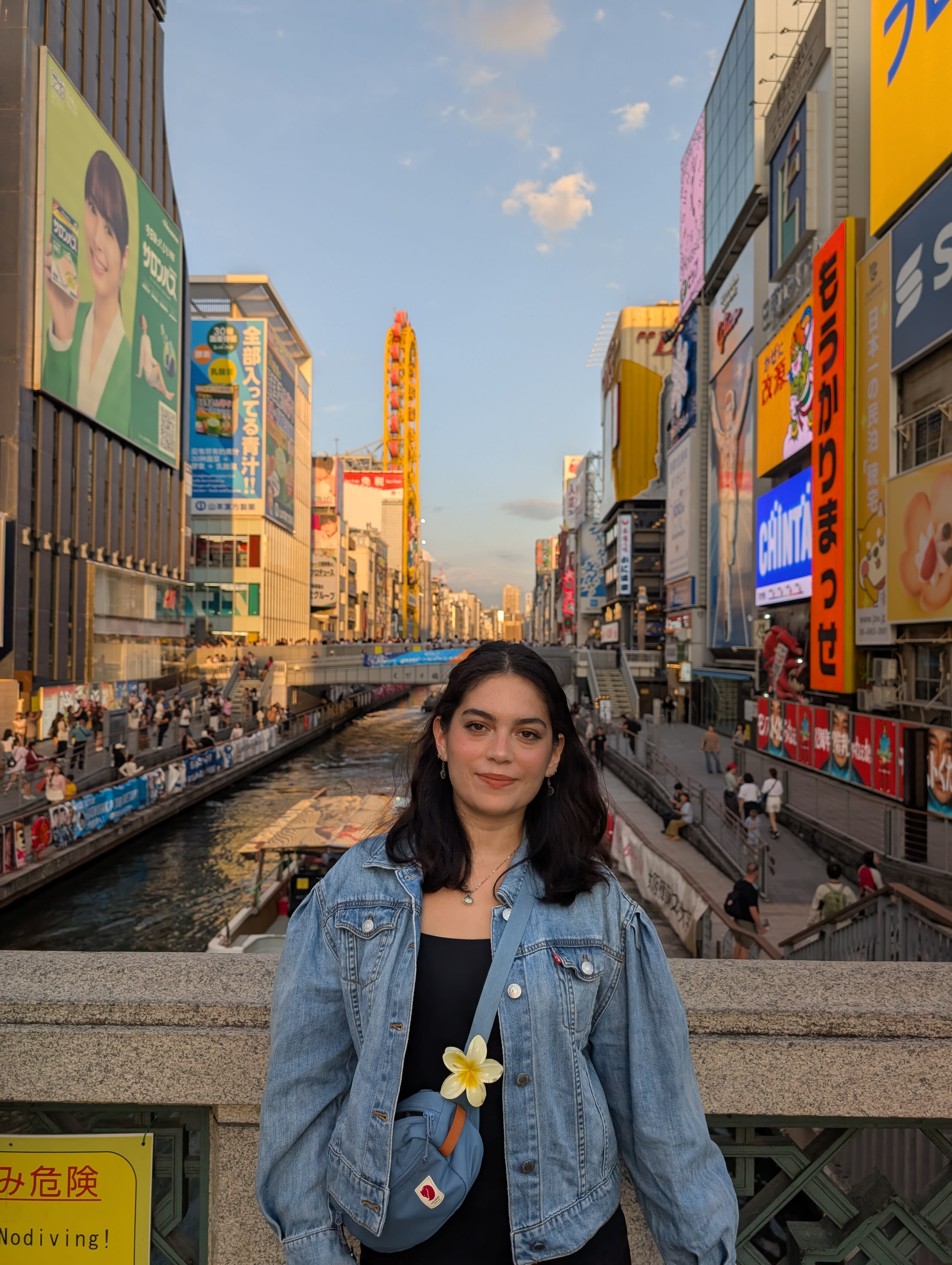
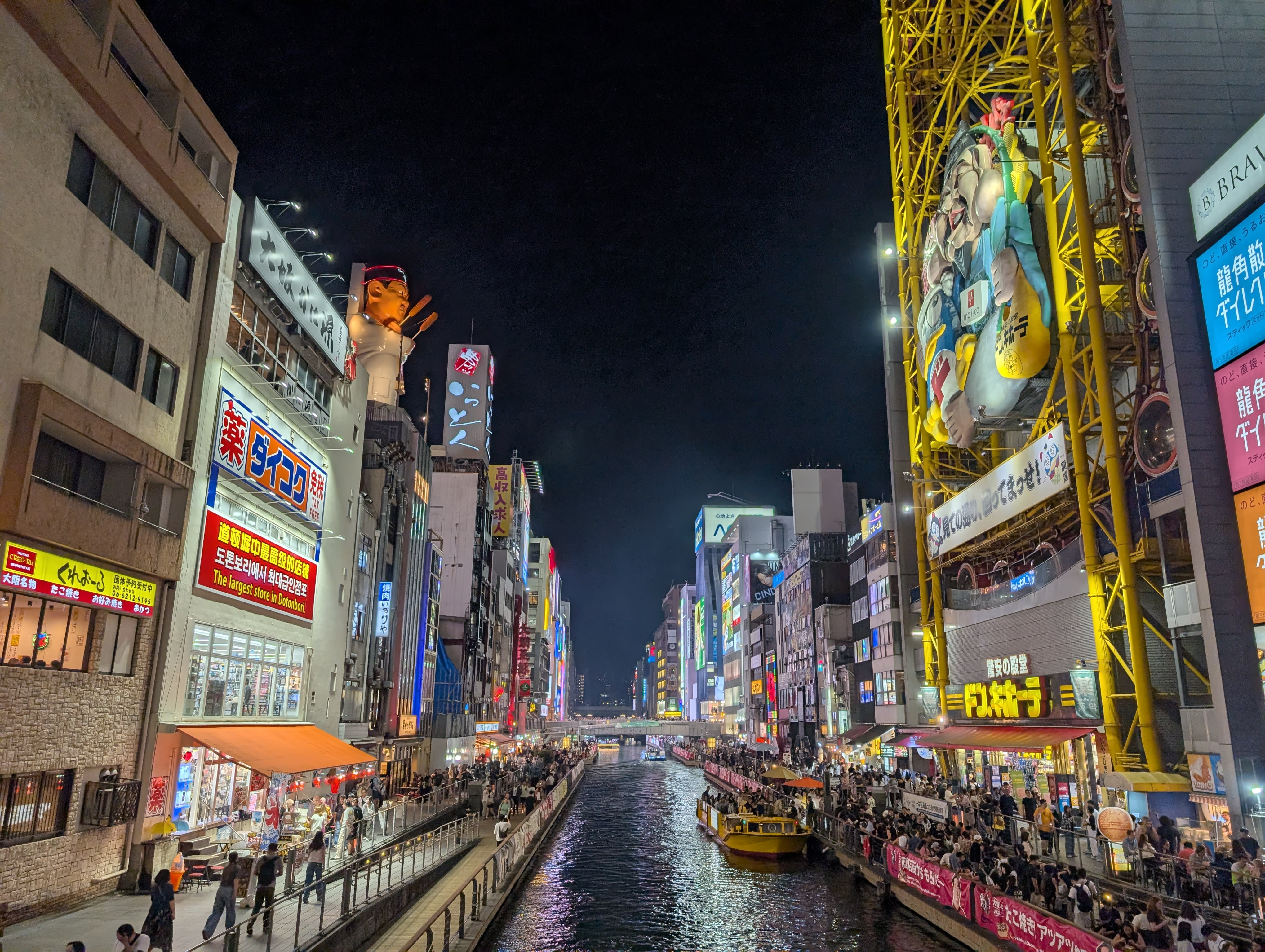
Dotonbori at night is sensory overload in the best possible sense. The canal glows with neon — the giant Glico Running Man, the enormous mechanical crab above a restaurant, signs in every colour, every size, every degree of insistence. The crowds move slowly because everyone is eating. Takoyaki from a street stand — crispy shell, molten octopus inside, sauce and mayo and bonito flakes — eaten standing by the canal while the reflections of the signs ripple in the water. Okonomiyaki from a griddle restaurant where the cook assembled the savoury pancake in front of us with the concentration of a surgeon. Kushikatsu at a counter in a narrow alley, the skewers arriving one at a time — pork, prawn, lotus root, asparagus, cheese — each battered and fried to a crispness that should not have been possible and each dipped exactly once in the communal sauce, because that is the rule, and in Osaka the rules about food are sacred.
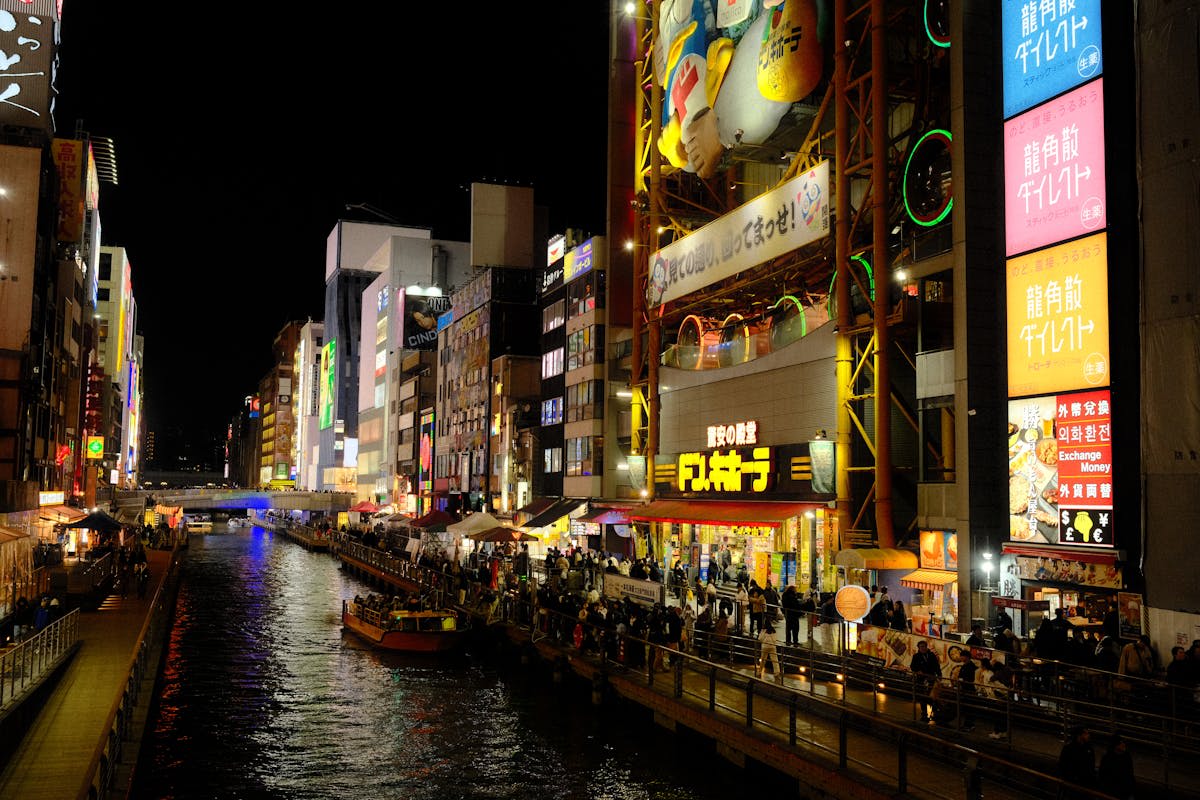
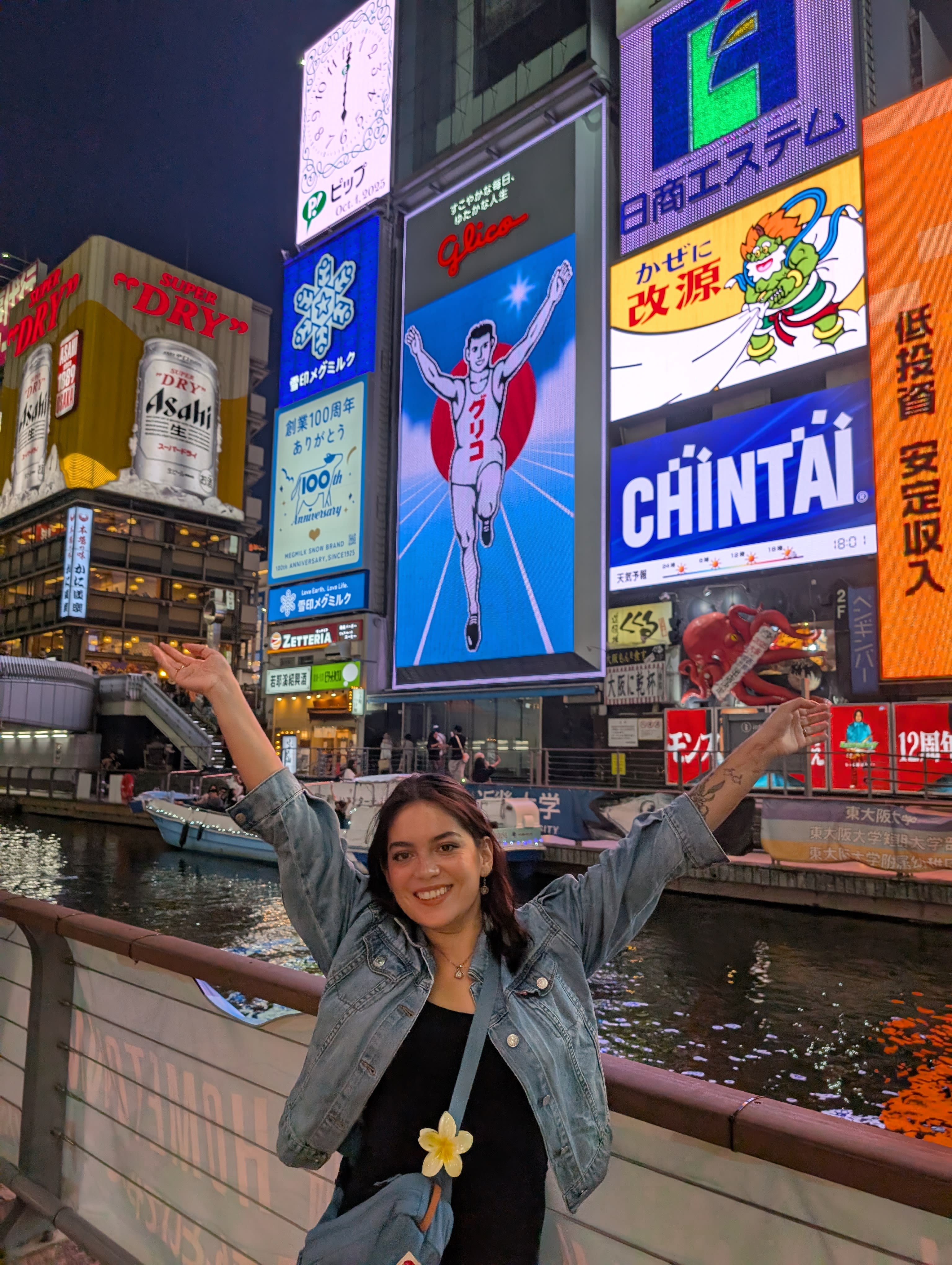
We went to Dotonbori every night. It never got old. By the third evening, the takoyaki vendor recognised us and gave us an extra piece. By the fifth, he waved us over before we had decided to stop. Osaka adopts you quickly.
Kuromon Market, Osaka Castle, Shinsekai
Kuromon Ichiba Market is where Osaka feeds itself. We went at nine in the morning and grazed from one end to the other — grilled scallops, sea urchin scooped straight from the shell, wagyu beef skewers seared on a tabletop grill, tuna sashimi that cost less than a sandwich in Paris and tasted like the ocean had personally composed it. The market is crowded and loud and smells like the sea and grilling meat and the particular confidence of a city that knows its food is the best in the country.
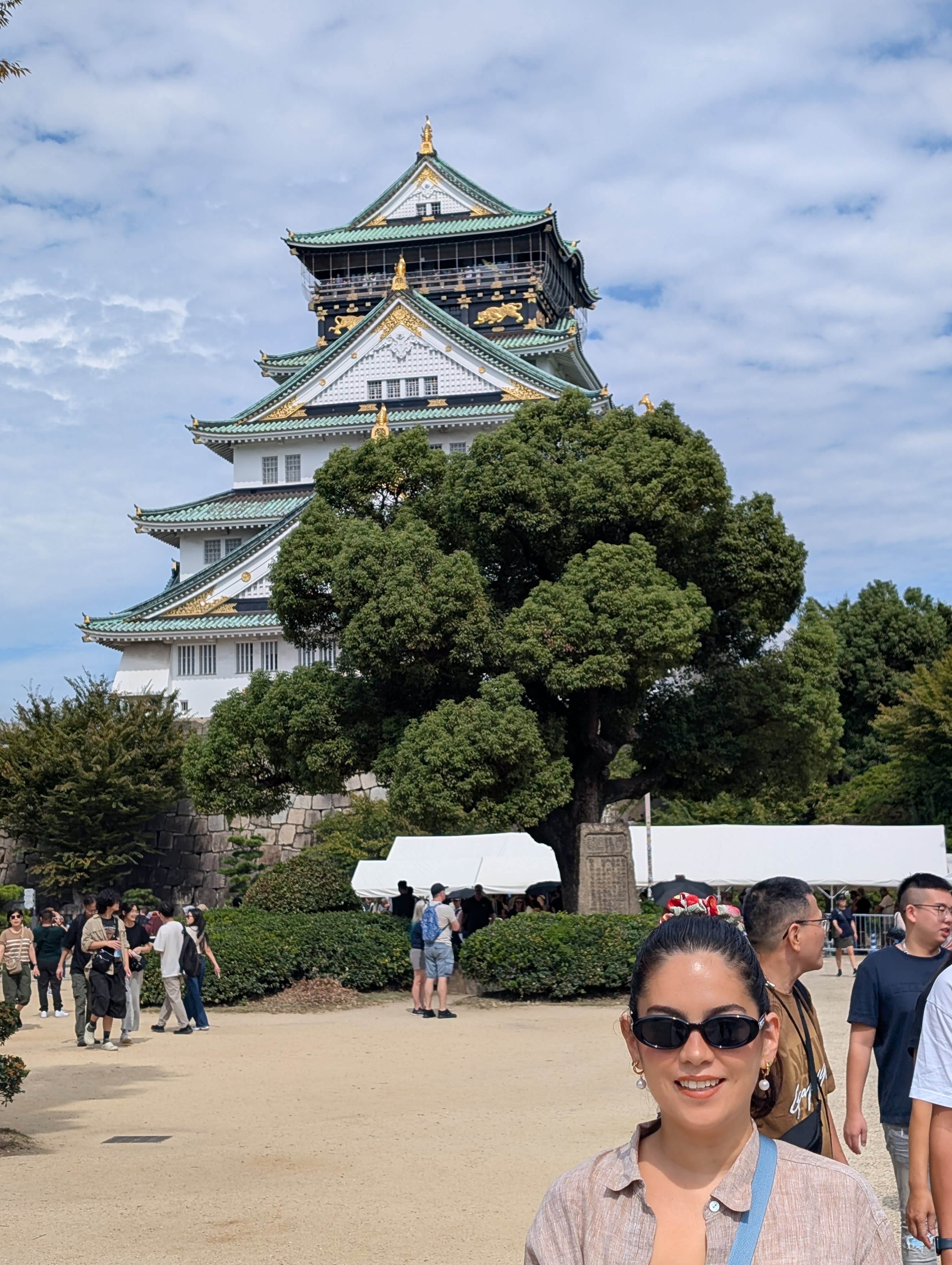
Osaka Castle sits in a park so large it has its own weather. We spent an afternoon walking the grounds, crossing the moat, climbing to the observation deck for a view that stretched to the mountains. The castle itself is a reconstruction, but the park is real and beautiful, and the golden light of late afternoon turned the stone walls and the water and the autumn-touched trees into something I kept trying to photograph and kept failing to capture. Some beauty refuses to be flattened.
Shinsekai was Lia’s favourite. A neighbourhood built a century ago as a futuristic entertainment district — modelled on Paris and New York — that now looks like a retro arcade crossed with a carnival. Tsutenkaku Tower presides over streets of kushikatsu joints and pachinko parlours and an atmosphere that is somewhere between nostalgic and joyfully absurd. We ate kushikatsu standing at a counter, watching the cook drop skewers into oil with practised precision. It was four in the afternoon. Nobody cared. In Osaka, there is no wrong time to eat.
Universal Studios — The Day I Wore Slytherin Robes
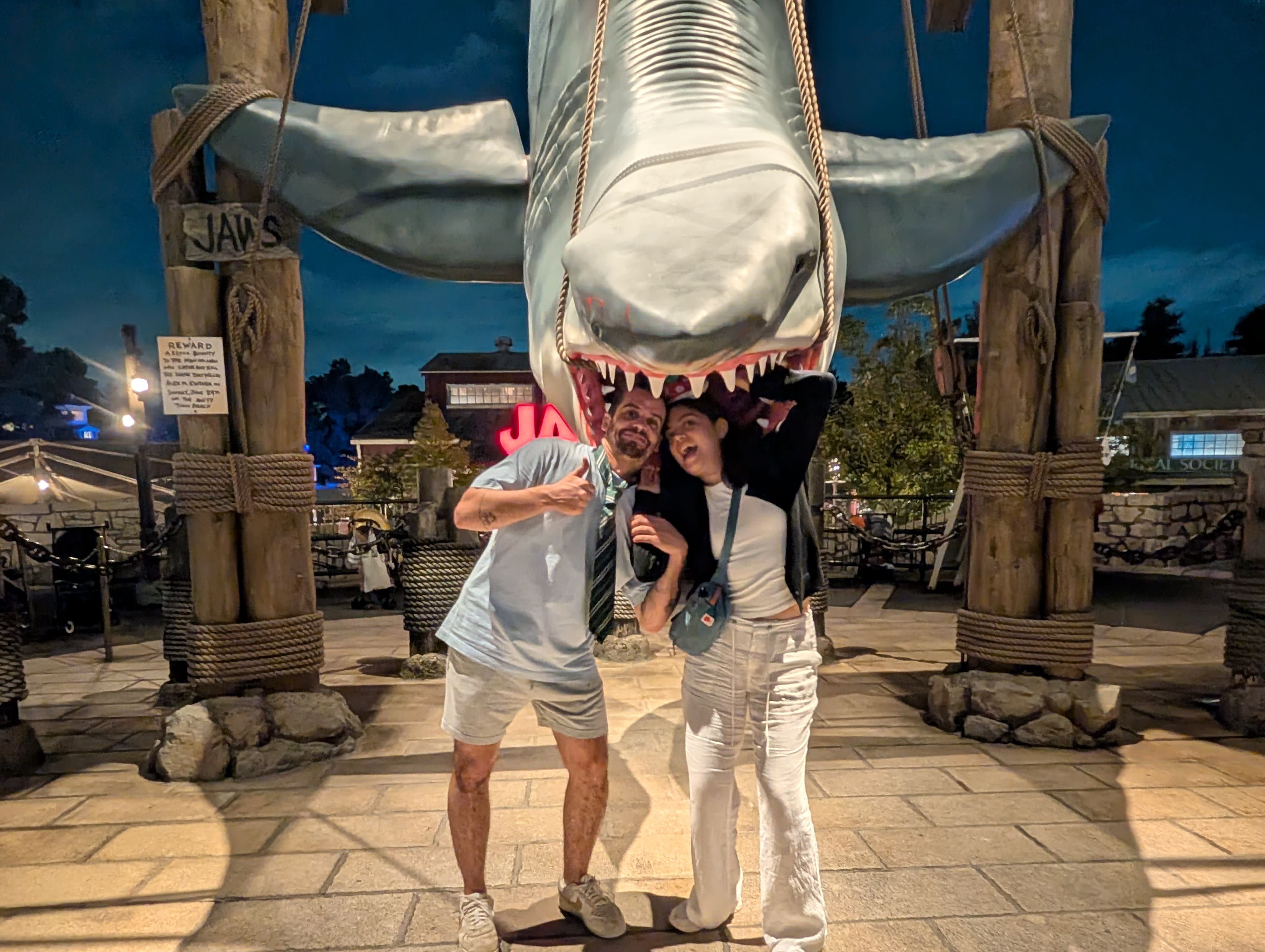
One day we went to Universal Studios Japan, and I need to be honest: it was one of the best days of the trip. I bought a Slytherin robe at the first Harry Potter shop. Lia wore a Piranha Plant hat. We rode Mario Kart with AR helmets, screamed through the Jurassic Park rollercoaster, ate butterbeer at the Three Broomsticks, and posed under the Jaws shark at closing time. I am a thirty-four-year-old man who writes about temples and food markets. I regret nothing.
Namba and the Nights
Namba was our home base, and it is where Osaka feels most like itself — dense, energetic, lit up at all hours. The Shinsaibashi-suji shopping arcade is a covered street that runs for six hundred metres and contains everything: fashion, electronics, street food, and the kind of sensory density that would exhaust you if it were not also thrilling. The depachika — the basement food halls of the department stores — became our late-night ritual: bento boxes, sushi, tempura, wagashi sweets, fruit so perfect it comes in individual boxes and costs twenty dollars and is worth every yen.
Our last night in Osaka — our last night in Japan — we went back to Dotonbori. We ate takoyaki from the vendor who knew us. We drank beer on the canal. The neon reflected in the water. Lia said something about how she was not ready to leave, and I said I was not either, and neither of us said anything else for a while, because we were watching the lights and eating octopus balls and sitting inside one of those moments that you know, even as it is happening, you will remember for the rest of your life.
What Japan Taught Me
I came to Japan expecting precision, beauty, and culture shock. I got all three. I did not expect the warmth — the elderly couple in Omoide Yokocho who ordered for us, the shrine maiden at Fushimi Inari who adjusted my ema because I had written it wrong, the ryokan owner at Kawaguchiko who brought us extra mochi because she heard us say oishii, the takoyaki vendor who remembered our faces. Japan’s reputation for formality is earned, but it obscures something more important: a generosity of spirit that expresses itself not through grand gestures but through small, perfect acts of care.
I came as a couple. The trip deepened something between Lia and me that I do not have the vocabulary to describe — something about sharing silence in a bamboo grove and laughter in a monkey park and the kind of vulnerability that comes from being lost together in a country where you cannot read the signs. If you are thinking about taking this trip with someone you love, stop thinking and book the flights.
Twenty days. Four cities. A hundred meals. One country that I went into as a visitor and left feeling like an apprentice. Japan does not give itself to you. It lets you earn it, one temple, one bowl of ramen, one early morning at a time.
I am already planning the return.
A Note on Logistics
Buy a Suica or Pasmo card at the airport — it works on every train, bus, and convenience store in the country. For the Tokyo-Kyoto shinkansen, book the Nozomi (the fastest option, not covered by the JR Pass). Rent a pocket WiFi rather than buying a SIM; the coverage is better and you can share it. Learn three phrases: sumimasen (excuse me), oishii (delicious), and arigatou gozaimasu (thank you). The Japanese notice when you try, and it matters more than you think.
Voyagez avec intention
Guides sélectionnés, destinations paisibles et récits qui valent la peine d'être lus — envoyés quand nous avons quelque chose qui mérite d'être partagé.
Pas de spam. Désabonnement à tout moment.