The Bosphorus — Where Two Continents Share a Cup of Tea
The Ferry at Dusk
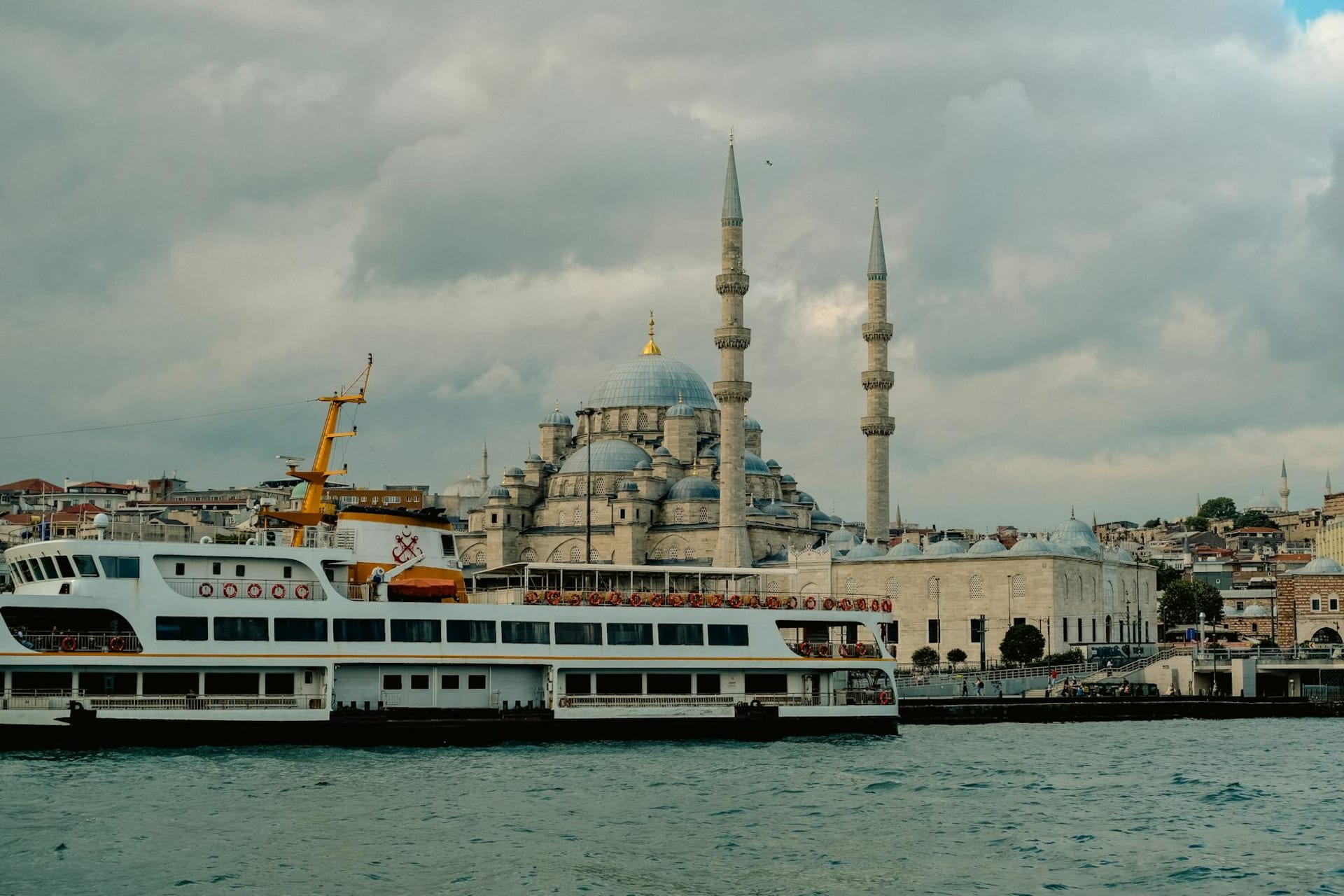
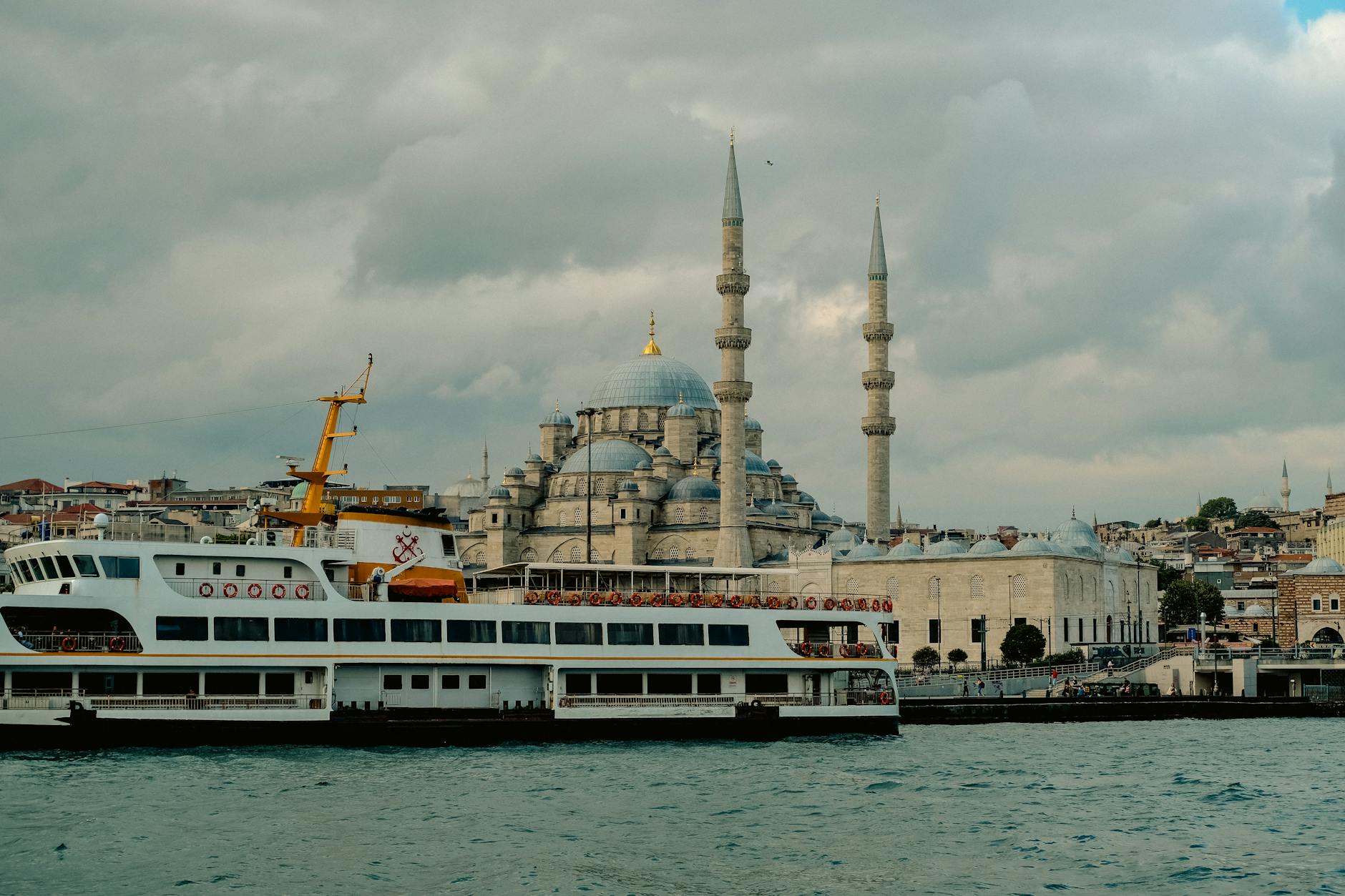
I have taken ferries in dozens of cities — the vaporetto in Venice, the Star Ferry in Hong Kong, the bateau-mouche on the Seine that I rode as a child and that taught me, before I had words for it, that a city seen from the water is a different city than the one seen from the street. But no ferry ride I have taken compares to the Eminonu-Kadikoy crossing in Istanbul at dusk.
The boat leaves from the European side, from a terminal wedged between the Galata Bridge and the Spice Bazaar, and as it pulls away the skyline of Sultanahmet assembles itself behind you — the dome of the Hagia Sophia, the six minarets of the Blue Mosque, the slender pencil of the Galata Tower across the Golden Horn — in a composition so improbable, so layered with history and light and the smoke from the simit vendors on the shore, that you understand why every empire that held this city considered it the center of the world. Because from the water, in that light, it is.
The crossing takes twenty minutes. The Bosphorus is busy — container ships sliding south toward the Sea of Marmara, fishing boats trailing nets, speedboats carrying commuters who treat this intercontinental commute with the same nonchalance that Parisians treat the Metro. A man on the upper deck is drinking tea from a tulip-shaped glass. A woman beside him is reading a newspaper. They are crossing from one continent to another and it is, for them, a Tuesday. I found this combination of the monumental and the mundane — the most historically significant waterway in the Western world, treated as a bus route — deeply moving. This is what it means to live in a city that has been important for so long that importance itself has become ordinary.
The Tea Economy
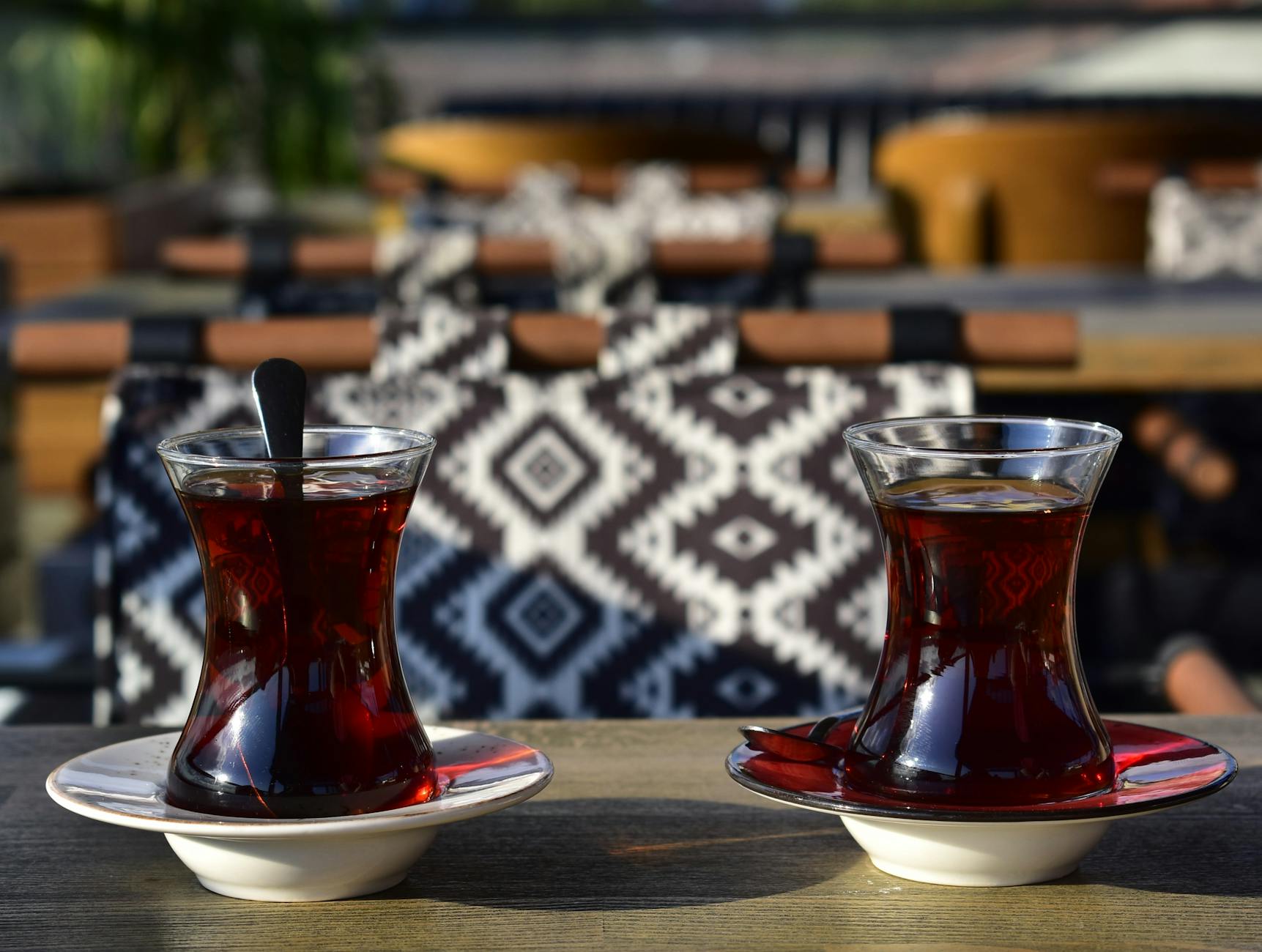
You cannot understand Istanbul without understanding tea. Not coffee — Turkey invented the coffeehouse, but the country runs on cay, black tea grown on the steep hills of the Black Sea coast near Rize and served in tulip-shaped glasses that hold roughly four ounces of liquid the color of dark amber. Tea is offered everywhere: in shops, in banks, in carpet stores, in taxi stands, at the mechanic, at the barber, at the real estate office, at the point of negotiation when the price has been discussed and a pause is needed. Accepting tea is a social contract. Refusing it is not rude exactly, but it creates a distance that the Turkish social fabric is designed to prevent.
I drank tea with a lamp seller in the Grand Bazaar who had been in the same stall for forty years. I drank tea with a fisherman on the Galata Bridge who caught nothing all afternoon and did not seem to mind. I drank tea with the owner of a secondhand bookshop in Beyoglu who spoke four languages and had opinions about French literature that were more interesting than anything I had read about French literature in French. The tea was always the same — strong, served with two sugar cubes on the saucer, the glass too hot to hold by the rim — and the conversations were always different, and the city revealed itself through both.
The Asian Side
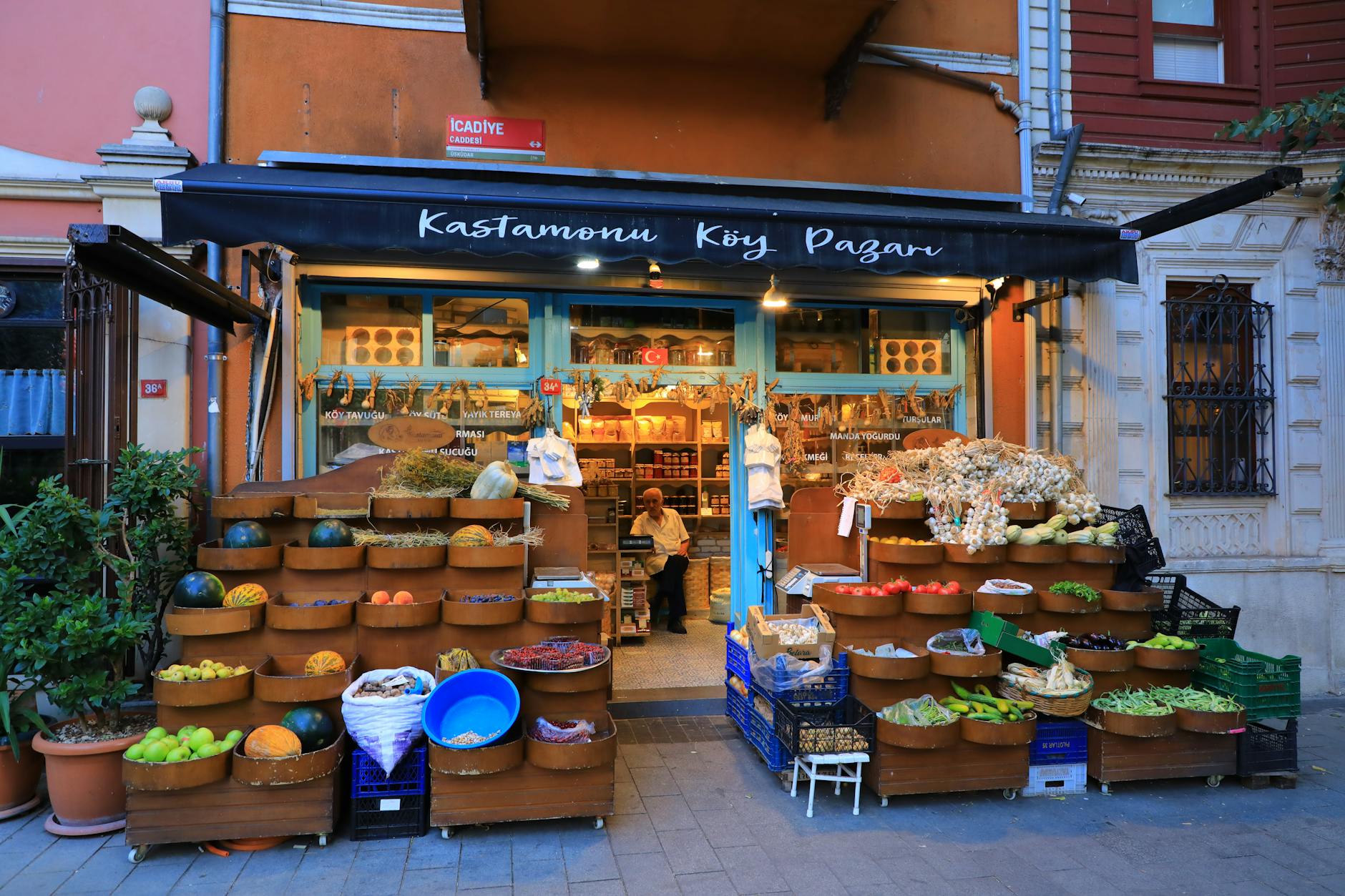
The mistake most visitors make with Istanbul is treating it as a European city with an Asian appendage. Kadikoy, on the Asian shore, is not the B-side. It is where Istanbul goes to be itself. The ferry deposits you at a waterfront that smells of grilled fish and fresh bread, and the market streets behind it — Gunesli Bahce Sokak, the produce lanes, the fish stalls — have an energy that is commercial rather than touristic, functional rather than performative. People are buying their dinner here, not their souvenirs.
I spent an afternoon wandering Moda, the neighborhood south of Kadikoy where Art Nouveau buildings house third-wave coffee roasters and the waterfront park offers a view back toward the European skyline that is, I am convinced, the best free show in Istanbul. The Princes’ Islands are visible to the south — car-free archipelago where Ottoman-era wooden mansions line the waterfront and the only transport is horse-drawn carriages and bicycles. I took the ferry to Buyukada on my last day and rode a bicycle around the island in two hours, past pine forests and abandoned Greek orphanages and a hilltop monastery where the view stretched from Europe to Asia and the only sound was the wind in the pines and the distant horn of a Bosphorus ferry.
The Food, Always the Food
What I remember most about Istanbul is not the Hagia Sophia, though it is extraordinary. It is not the Blue Mosque or the Topkapi Palace or the underground cistern with its Medusa-head columns. It is the food. It is the balik ekmek — grilled fish sandwich — eaten on the Galata Bridge at ten in the morning while the fishermen above cast their lines and the ferries below churn the Golden Horn into white water. It is the lahmacun at a hole-in-the-wall in Fatih, thin as paper, topped with spiced lamb and squeezed lemon and rolled like a cigarette. It is the manti at a restaurant in Besiktas where the dumplings were no bigger than a fingernail and the yogurt was so fresh it tasted like a meadow.
It is the breakfast — kahvalti — at a place in Kadikoy where the table disappeared under thirty small plates: cheeses, olives, honey, clotted cream, tomatoes, cucumbers, eggs scrambled with sucuk sausage, pastries filled with potato, preserves made from rose petals and sour cherries and quince, and bread that was still warm. I ate for an hour and a half. The bill was the equivalent of eight euros. I walked out into the sunlight and thought: this country understands something about feeding people that the rest of the world is still trying to learn.
The Bosphorus at Night
On my last evening, I took the long Bosphorus cruise — the one that goes north past the yali mansions and the Rumeli Hisari fortress and turns around at the second bridge. The city looked different from the water at night. The mosques were illuminated, the minarets bright against the dark, the bridges strung with lights that reflected in the water like a second city beneath the surface. The Asian shore glowed with the warm light of apartment buildings and restaurants. The European shore glowed with the cooler light of monuments and hotels. Between them, the Bosphorus carried its traffic of ferries and fishing boats and cargo ships, the current moving south toward the Mediterranean as it has moved since before the city existed, since before anyone thought to build on these hills and call the result civilization.
A man on the upper deck was playing a saz — a long-necked Turkish lute — and the sound carried across the water, mixing with the hum of the engine and the distant call to prayer from a mosque on the shore. I stood at the railing and watched the city slide past and thought about all the people who have stood on this water and watched these shores — the Byzantines, the Ottomans, the Greeks, the Venetians, the Genoese, the British, the millions of migrants and traders and soldiers and poets who have crossed this strait in one direction or another over the last three thousand years. The Bosphorus does not care about any of them. It flows. The city, built on both its banks, is the argument that staying is better than passing through. After a week, I was inclined to agree.
Viaja con intención
Guías curadas, destinos tranquilos e historias que vale la pena leer — enviadas cuando tenemos algo que merece ser compartido.
Sin spam. Cancela cuando quieras.