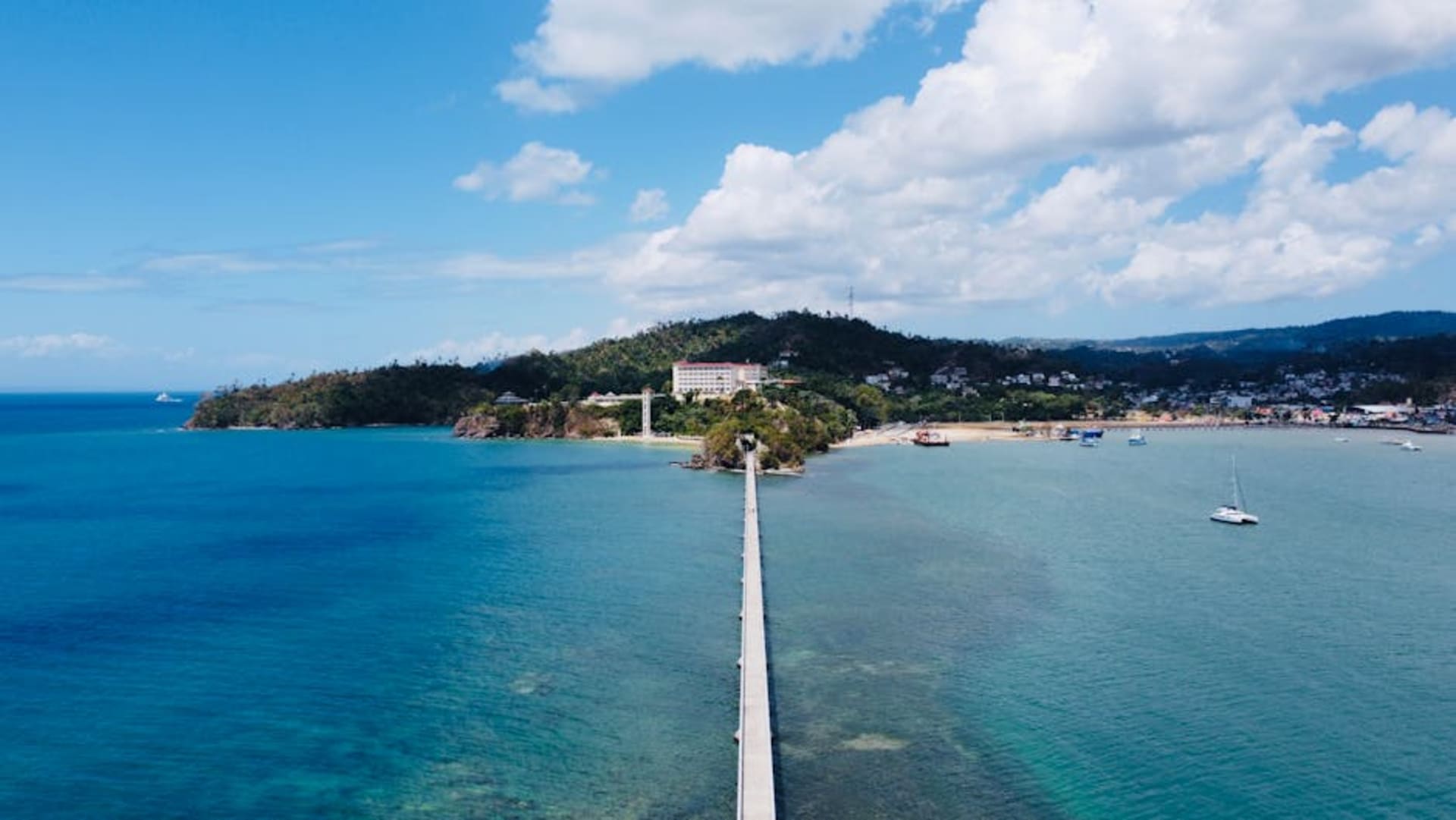
The Samana Peninsula — Whales, Waterfalls, and the End of the Road
The Road to the End
The drive from Santo Domingo to the Samana Peninsula takes about three hours on a highway that starts as proper motorway and gradually devolves into something more personal. Past the toll booths and the billboards, the road narrows and the landscape shifts — flat sugarcane fields give way to rolling hills, coconut palms appear in clusters, and the light takes on that particular quality you only find near the sea. By the time you reach the peninsula, the road has become a single lane winding through jungle, and the GPS has started making suggestions you are no longer sure about.
I had been told about Samana by a Dominican friend in Mexico City — one of those conversations that starts with “you have to go” and ends three hours later with a hand-drawn map on a napkin and the kind of enthusiasm that makes you book a flight the next morning. He said it was the most beautiful place in his country, and that most Dominicans from Santo Domingo treated it the way Parisians treat Corsica — a distant paradise they talked about more than they visited. He was not wrong about the beauty. He might have been wrong about the distance, though. Three hours is not far. It just feels far because the world changes so completely between the capital and the peninsula.
Las Galeras sits at the very tip of the Samana Peninsula, where the paved road gives up and becomes dirt, and the village is arranged along a single street that ends at a beach. There is nowhere else to go from here. That is the point.
The Whales
The humpback whales arrive in Samana Bay every January and stay through March, migrating from the North Atlantic to breed in the warm, shallow waters between the peninsula and the mainland. The numbers are staggering — estimates suggest up to two thousand whales pass through the bay during peak season, making it one of the largest breeding concentrations in the world. We went out on a boat on a Tuesday morning in February, from the small harbour in Santa Barbara de Samana.
Within fifteen minutes of leaving the dock, we saw the first spout — a column of mist rising from the flat water about three hundred metres ahead. The captain cut the engine and we drifted. Then the whale surfaced, a mother, her back glistening dark against the turquoise water, and behind her a calf — impossibly small, impossibly close, rolling at the surface like a dog learning to swim. The boat was silent. Nobody spoke. The mother exhaled with a sound like a sigh amplified through a cathedral, and the mist drifted across the bow and settled on our skin.
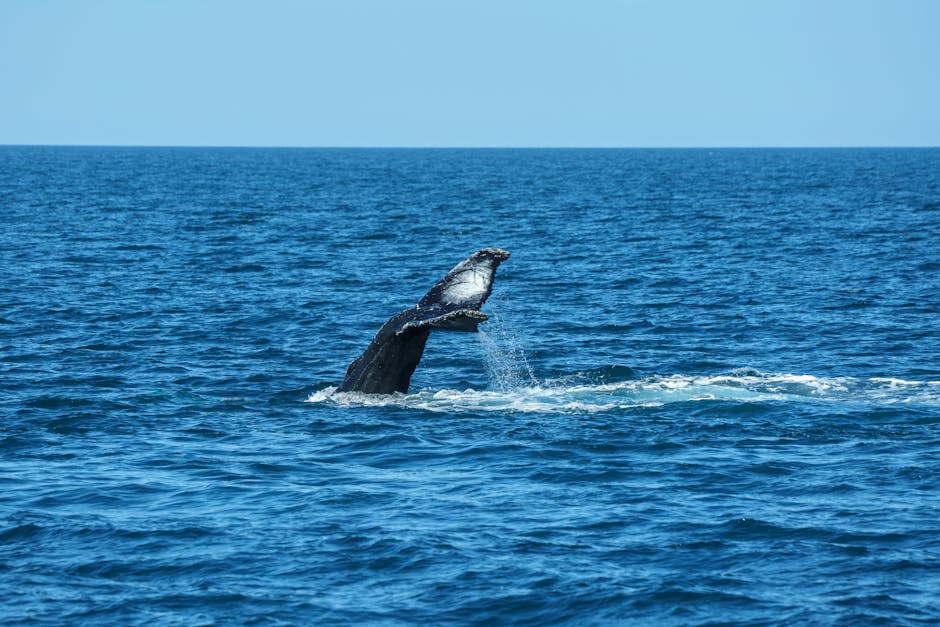
Over the next two hours, we saw breaches — the full-body launch, forty tons of animal suspended for a moment against the sky before crashing back into the water with an impact you feel in your chest. We saw tail slaps, pectoral fin waves, and at one point a male performed a head rise so close to the boat that we could see the barnacles on his chin and the eye — small, dark, seemingly aware — looking back at us. The guides play hydrophones underwater, and we listened to the whale song — a low, resonant sound that seems to come from everywhere at once, as if the ocean itself were singing.
I have seen whales before — greys in Baja California, orcas in Norway — but the Samana experience is different. The concentration of animals, the warmth of the water, the proximity to shore, and the breeding behaviour (which is more dramatic and surface-visible than feeding behaviour) combine to create something extraordinary. The boat was back at the dock by noon. I could have stayed all day.
The Waterfall
El Limon is the peninsula’s most famous waterfall, and reaching it is half the experience. You can hike or ride a horse — we chose horses, and spent forty-five minutes on muddy trails through jungle so dense the canopy closed above us like a green ceiling. The horses were small, surefooted, and entirely indifferent to the terrain that was making me grip the saddle with white knuckles. The guide led us across streams, through mud that reached the horses’ bellies, and past cacao trees whose pods hung from the trunks like strange lanterns.
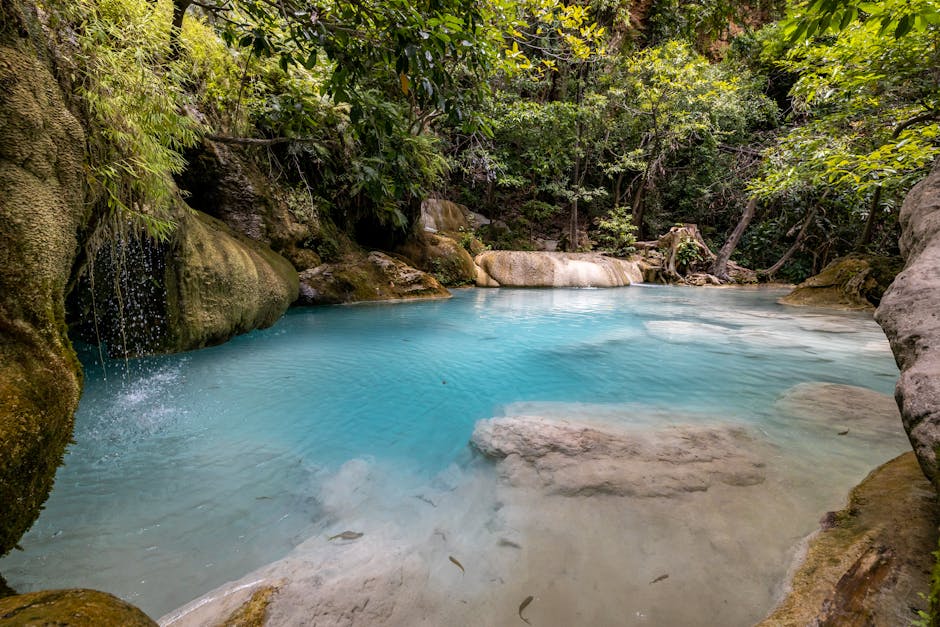
The waterfall appears suddenly — the trail opens and there it is, fifty metres of white water falling into a pool surrounded by moss-covered rock and jungle. The pool is deep enough to swim and cold enough to make you reconsider, but the heat of the ride makes the cold feel like a reward rather than a punishment. We swam to the base of the falls and stood in the mist, looking up at the water pouring over the lip of rock above, and for a few minutes the sound was so loud that thinking was impossible. Just the falls, the cold, the green, the sky.
The ride back was easier — the horses knew the way and the mud had been broken by the morning’s passage. We tipped the guide generously, because anyone who leads tourists through that jungle on horseback several times a day deserves whatever you can give them.
The Beach at the End
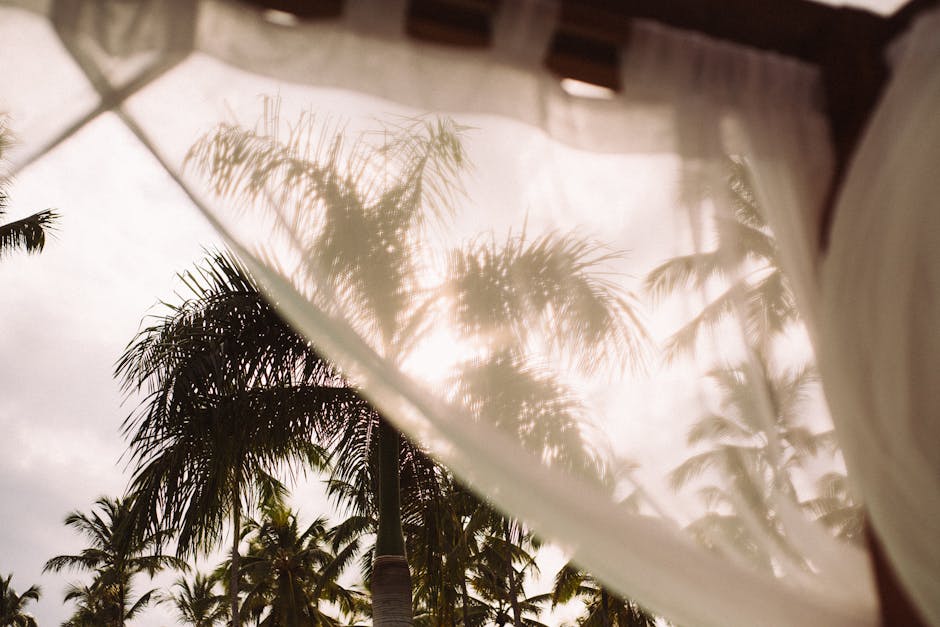
Playa Rincon is accessible from Las Galeras by boat — a twenty-minute ride around the headland — or by a dirt road that requires a vehicle with clearance and a driver with optimism. We took the boat. The beach appeared around a point of rock and palm, and even from the water it was clear why it consistently appears on lists of the Caribbean’s best. A kilometre of white sand, backed by coconut palms that lean toward the water at angles that seem structurally unsound, with mountains rising behind in a wall of green. The water moved through shades of blue and green that I suspect a paint manufacturer would need a committee to name.
We were dropped at the western end, where a few Dominican women run cooking stations under palm-thatch shelters. One of them grilled red snapper over coconut husks — the fish had been caught that morning by her husband, and she served it with tostones, a simple salad, and a hot sauce made from Dominican peppers that cleared every sinus I possess. We ate with our feet in the sand, watching pelicans dive for fish in the shallows. The meal cost less than a cocktail at a Punta Cana resort. The experience was incomparably better.
The afternoon was for swimming and the particular luxury of having almost no one around. Playa Rincon does not have sunbed rentals, jet ski operators, or music. It has sand, sea, palms, and the mountains behind. The simplicity is deliberate — the beach is technically within a protected area, and development has been kept to a minimum. On a weekday in November, we shared the entire kilometre with perhaps ten other people. I swam until my skin pruned, read a book in the shade, and thought about the French concept of doing nothing — which the French call the art of living and which the Dominican Republic practices with the same commitment but considerably better weather.
What Samana Teaches You
The Samana Peninsula is not a destination for people who need entertainment. There are no nightclubs, no shopping malls, no attractions in the theme-park sense. What there is, instead, is a landscape so beautiful and so relatively untouched that it recalibrates your sense of what the Caribbean can be. The all-inclusive model — which dominates the Dominican Republic’s tourism industry and has made Punta Cana a household name — is built on the premise that the Caribbean is a beach with a bar attached. Samana proposes something different. The Caribbean is also a jungle with a waterfall at the end. A bay where whales breed in water warm enough to swim in. A fishing village where the road ends and the ocean begins and nobody is in a hurry to build a road that goes further.
I left Samana thinking about the Dominican friend who had told me to go. He was right — it is the most beautiful part of his country. But more than that, it is the part that makes you understand what the country is actually about, underneath the resort brochures and the merengue compilations and the cigar-box imagery. It is about a relationship with landscape that is intimate rather than transactional. The beach is not a product. The waterfall is not an attraction. The whales are not a show. They are simply there, as they have always been, and the best thing you can do is show up quietly and pay attention.
Viaja con intención
Guías curadas, destinos tranquilos e historias que vale la pena leer — enviadas cuando tenemos algo que merece ser compartido.
Sin spam. Cancela cuando quieras.