The Mountain That Requires Something From You
Chimanimani turns away the uncommitted. There is a road to the small town of Chimanimani in the Eastern Highlands, and there is a base camp at Mutekeswane, but the mountains themselves — the Chimanimani National Park, the quartzite massif that forms the border with Mozambique — are reached only on foot. There are no vehicles inside. There are no lodges. You carry everything in and everything out, and the mountains give or withhold themselves according to the weather and your attention.
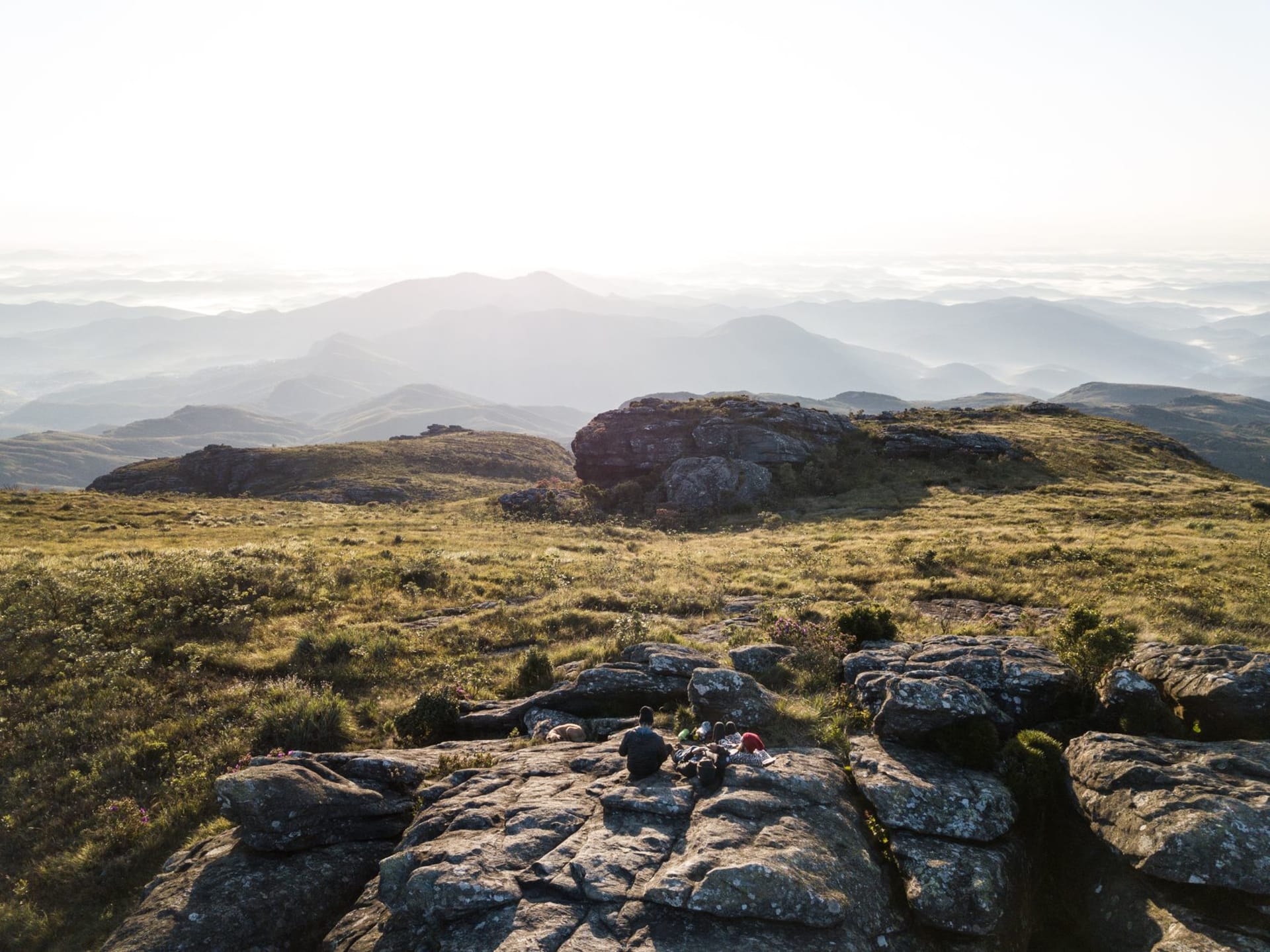
I went in with a porter-guide named Farai who had been working these trails since the 1990s and communicated largely in a series of specific silences and occasional comments in the direction of the landscape rather than at me. It took three hours to reach the mountain hut. The first hour is steep enough to make you negotiate privately with your own fitness. After that, the quartzite opens up into something extraordinary: white rock plateaus, the vegetation low and wind-stripped, patches of protea and helichrysum and plants that look like they belong somewhere much colder and wetter.
Water Everywhere
The Chimanimani watershed feeds rivers in both Zimbabwe and Mozambique, and the result, in the wet season remnants, is water on every face of the mountain. Streams run clear over quartzite, cold enough to genuinely shock when you put your hand in. There are pools below some of the falls deep enough to swim — the one Farai showed me required a small scramble down a rock face and an act of commitment to enter, because the cold takes your breath on contact.
The streams also mean butterflies. I have never cared much about butterflies in the abstract, but the swallowtails and various nymphalids that work the watercourse vegetation in Chimanimani are large and numerous enough to register as a physical phenomenon — flashes of color at every pool, settled on wet rocks, rising in loose clouds when you disturb them.
The Border and Beyond
The eastern edge of the park is the international border, and some trails cross into Mozambique without ceremony or formality. Farai indicated this with a slight head gesture at some point on day two: “Mozambique.” We’d been walking in both countries without it feeling like much of an event, which seemed about right. The mountain doesn’t care about the line.
The overnight hut — the Martin Falls Hut, in the center of the plateau — is a stone structure that sleeps twenty on wooden platforms and has a fireplace I was profoundly grateful for when the temperature dropped to something requiring serious contemplation after dark. Other groups arrive, disperse into their own corners, speak quietly. The hut has the atmosphere of shared adversity, which is not unpleasant.
The Town Below
Chimanimani town is small and has a guesthouse scene that reflects its position as a gateway for independent travelers and those who’ve been in the mountains for a few days: basic, genuinely welcoming, oriented toward hiking logistics. Cold beer after three days in the mountains achieves a clarity of purpose I recommend.
When to go: June and July offer the clearest skies and the most reliable conditions for the plateau. August and September remain good. March and April see Cyclone Idai’s 2019 damage legacy — landslides altered some trails, check current conditions before going. The wet season (November–February) brings lush vegetation and full waterfalls but afternoon thunderstorms on exposed quartzite demand respect.