The southeast trade winds hit Paje with such reliability that the kitesurfing schools here use the word “guaranteed” without apparent irony. I watched a dozen kites in the air simultaneously from where I was sitting in the shade of a casuarina tree, the kite lines crossing and uncrossing in a slow choreography that was either very skilled or very lucky. Possibly both.
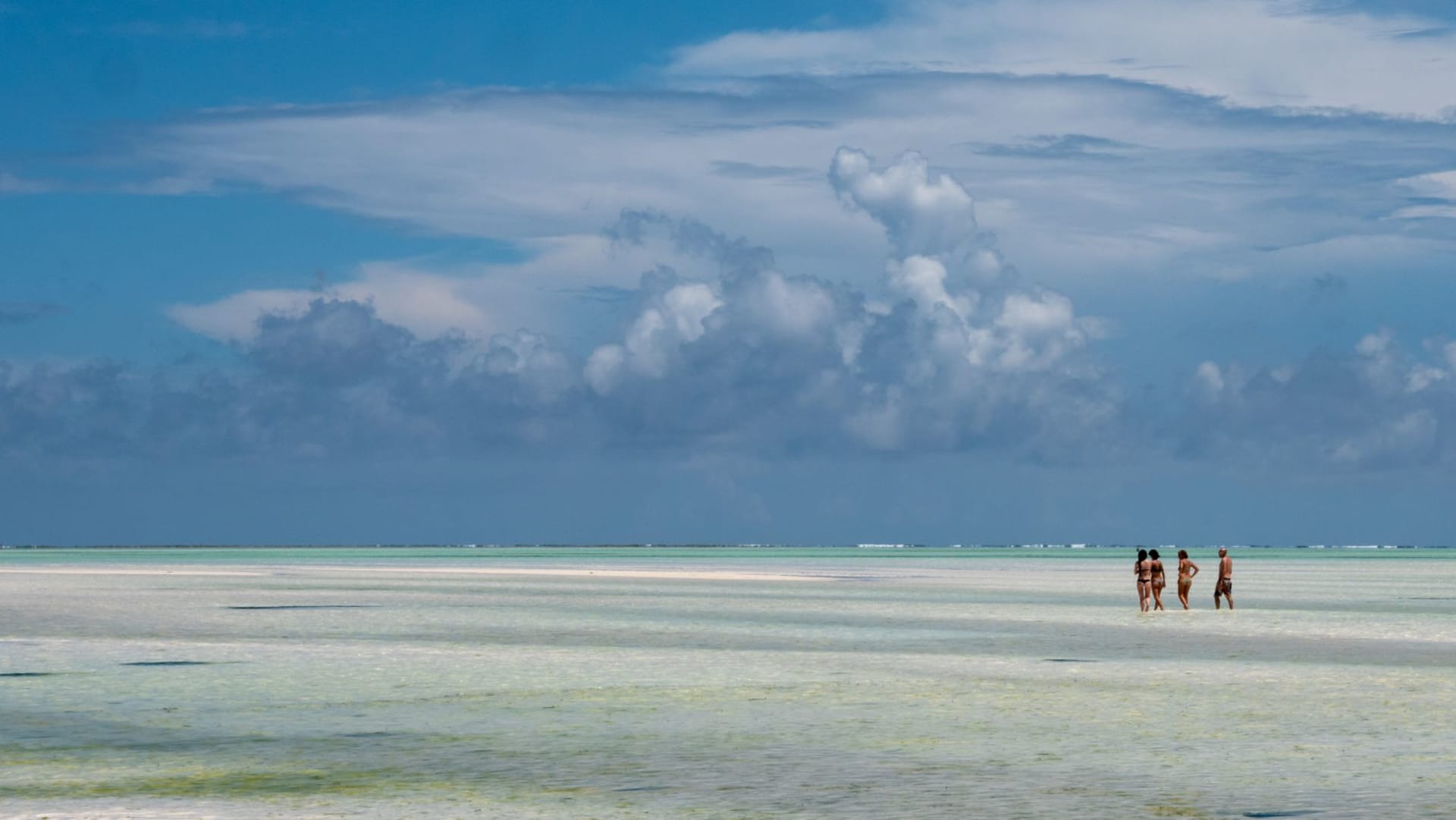
Paje is not the most beautiful beach in Zanzibar — that crown goes to places that don’t drain to mudflats at low tide. But it has something the postcard-perfect beaches lack: actual energy. The constant wind keeps the air from ever becoming oppressive. The tidal flats, when they appear, are a specific kind of strange — a mirror of water a centimeter deep stretching for five hundred meters, reflecting the sky so perfectly you lose the horizon.
The Tidal Flats
At low tide, the sea retreats and leaves behind a shallow plain that looks like a flooded salt pan. Women from the village wade out in colored kangas, checking on the seaweed they cultivate on lines pegged to the bottom — the same variety used as a thickener in ice cream, yogurt, and cosmetics worldwide. Zanzibar is one of the world’s leading seaweed producers, and Paje is where you see the actual labor of it: bent backs, bare feet in warm silt, baskets being carried back to shore on heads while tourist drones hover overhead photographing what is someone else’s working day.
I thought about that for a while.
Learning to Kite
I had never kitesurfed before Paje. I did a two-day course with one of the schools along the beach. On day one I spent approximately four hours being dragged face-first through shallow water by a kite that had made a decision and was not interested in negotiating. On day two something clicked — the relationship between body weight and kite angle resolved into something I could actually control — and I stood up and went somewhere on purpose for the first time.
I was not good at it. But the feeling was unreasonable. The wind pulling through the lines into your hands, the board accelerating under your feet, the water spraying up and the shore sliding sideways — it’s physical information arriving too fast to process, which is the closest I’ve come to understanding why people do extreme sports for fun.
Nightlife and the Village
Paje has the most active night scene on the east coast. Several beach bars light up after dark and run music until late — a mix of Swahili hip-hop, Afrobeats, and some deeply committed reggae. The crowd is young, international, and heavily skewed toward people who’ve just spent six hours in the sun doing something athletic. The energy is uncomplicated.
The village itself, behind the beach strip, is quieter and more real. There’s a women’s cooperative making baskets and printed fabric; there’s a school where the children play football on a dirt pitch until the light fails. Walking through in the early morning, before the tourist infrastructure fully boots up, you get the sense that Paje exists on two separate schedules that overlap on the beach and diverge everywhere else.
The Walk to Bwejuu
A two-hour walk south along the beach leads to the village of Bwejuu — one of the great walks in Zanzibar, timed for low tide so you cover the flats. The palms lean over the sand at angles that look deliberate. Fishing boats sit at various angles on the silt. Occasionally a dhow moves in from the deeper channel and the sight is so composed it seems staged. Take water. Take no particular expectations.
When to go: June to September are the prime kite months, when the southeast trade winds blow consistently 15-25 knots and visibility is excellent. December to February also offers good conditions. April and May bring heavy rain and unreliable winds. If you’re not there for kiting, any dry month works fine — just come at high tide if swimming is the priority.