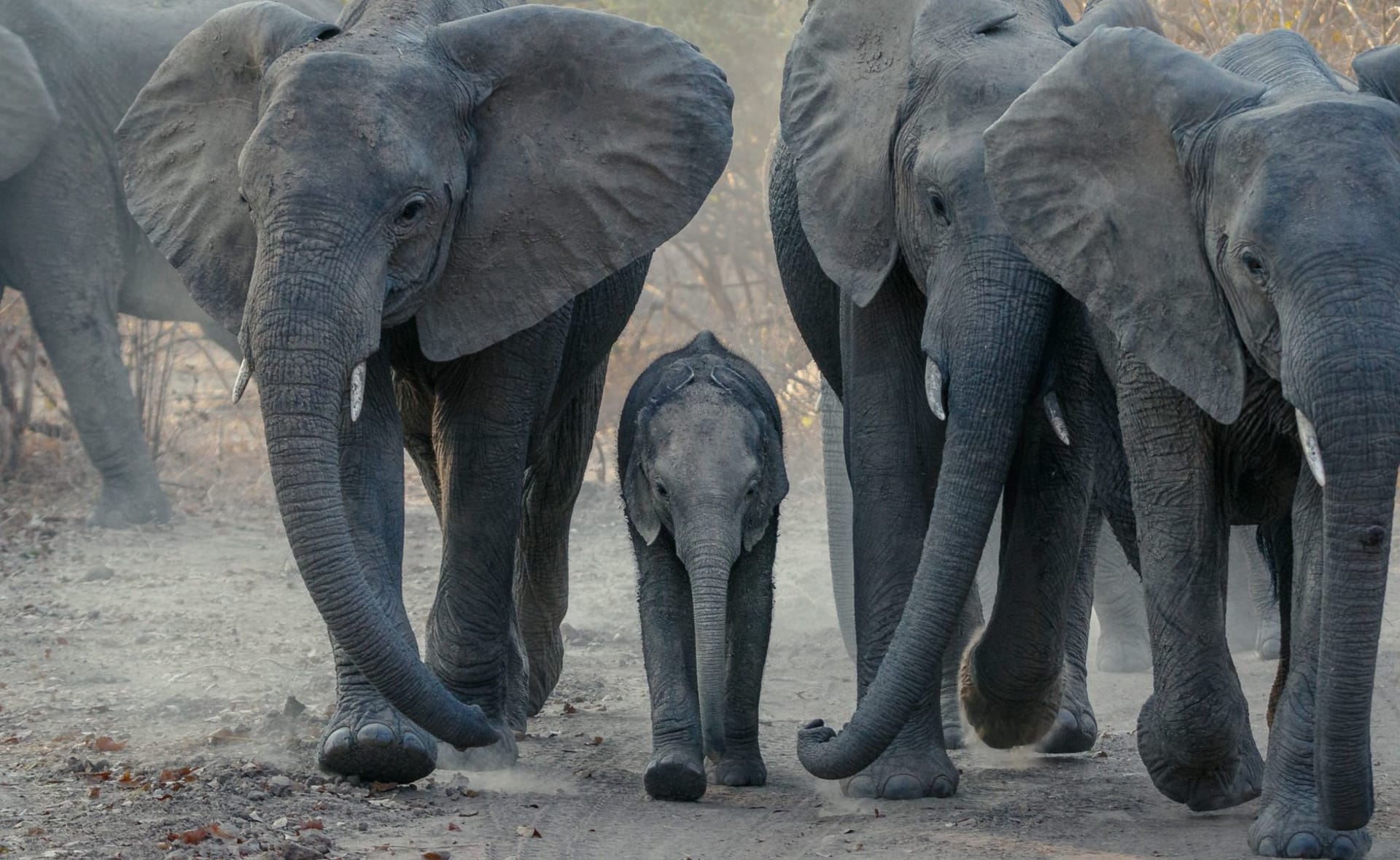
North Luangwa National Park is separated from its more famous southern neighbor by a stretch of communal land and a significant gap in tourist infrastructure. There are no roads for game drives. There are no lodges accessible by vehicle. You fly in to a dirt airstrip, walk to camp on the first day, and spend the next several days on foot with a professional guide and a rifle-bearer who is also reading the ground and the wind while you’re still processing what you saw five minutes ago.
This is not for everyone. It is absolutely for some people, and if you are one of those people, you already know it.
What Walking Here Means
In South Luangwa, a walking safari is one activity among several. In North Luangwa it is the only activity, which changes the experience completely. With no vehicle option, the camp’s entire rhythm is organized around walking: early morning walks when the air is cool and the animals are active, a rest through the midday heat, an afternoon walk to cover different terrain. You spend perhaps six to eight hours a day on your feet over three to five days. You become, slowly, attuned to the bush in a way that a vehicle never permits.
The guides here are among the most experienced in Zambia — the north’s isolation and its exclusively foot-based model have attracted a particular type of person to work here, and their knowledge of the Luangwa Valley ecosystem is correspondingly deep. I walked with a guide who had been in North Luangwa for fourteen years and knew individual buffalo bulls by sight. He was also, very quietly, one of the funniest people I’ve encountered on a trip anywhere.
The Wildlife Without the Crowds
The buffalo herds in North Luangwa are exceptional — enormous breeding aggregations that move through the woodland in ways that change the texture of the bush as they approach. Lions follow the buffalo and are reliably sighted by patient guides who know the pride territories. Leopards exist here but are shyer than in the south where decades of vehicle-based viewing have habituated them to large machines.
The absence of roads means no dust, no engine noise, no diesel smell. The experience of approaching wildlife on foot, at the animal’s own altitude, changes the encounter fundamentally. Animals that would ignore a Land Cruiser will watch a walking line of humans with more active attention — not necessarily alarm, but recognition of something unusual in their environment. The dynamic is different.
Camp Life in the Wilderness
The camps in North Luangwa are small — typically four to six guests maximum — and simple in their construction because everything had to be carried in. The meals are surprisingly good given the logistics; camp cooks in the Luangwa Valley have developed a repertoire for cooking exceptional food on minimal equipment. Evenings are lantern-lit and quiet and end early, because the morning starts before the light and you want to be ready for it.
Getting there requires a flight from Mfuwe (the gateway town for South Luangwa) or Lusaka to one of the park airstrips. No overland access exists in any practical sense.
When to go: June to October, dry season only. The park is inaccessible in the wet season and most camps close from November through May. September and October offer the best game viewing. July and August are the most comfortable in terms of temperature.