Africa
Zambia
"The falls hit you before you see them — that sound is the whole country."
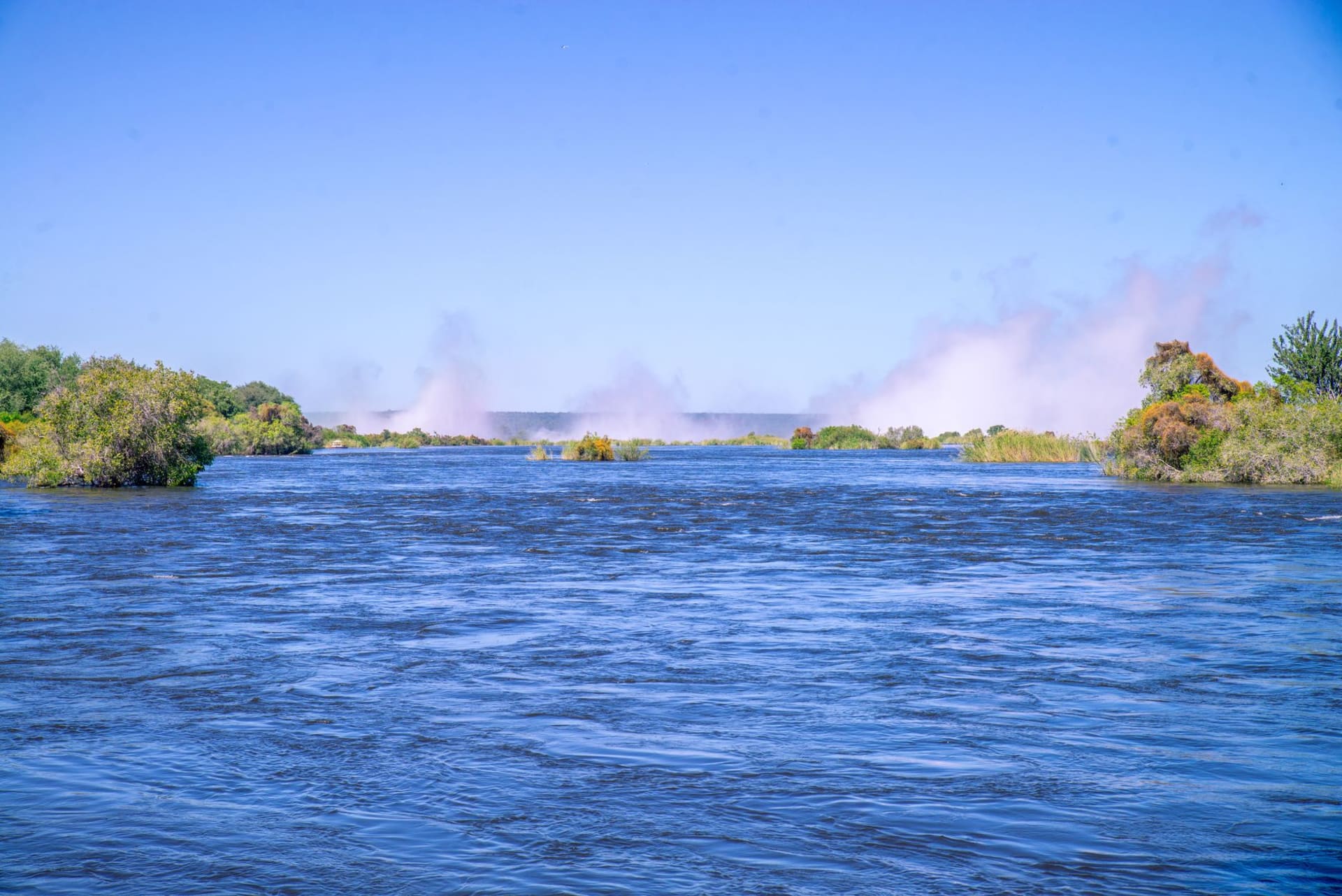
I heard Victoria Falls before I reached the lookout. That low, constant thunder, like a storm deciding not to move on. By the time I was close enough to see the mist rising above the gorge — a white column visible from kilometers away — my shirt was already damp and I had stopped talking mid-sentence. That is what the Zambezi does. It doesn’t build to a dramatic reveal. It announces itself with sound first, then spray, then the impossible fact of a curtain of water nearly two kilometers wide dropping into a basalt chasm. I had seen photos. They had prepared me for nothing.
What I wasn’t expecting was how much of Zambia exists beyond that moment. The country has an interior — vast miombo woodland, river floodplains that flood and recede with seasonal precision, national parks where the logistics of access mean genuinely thin crowds. South Luangwa stopped me completely. The camp I stayed at sat on a bend of the river; at dusk, the hippos surfaced and the elephants came down in columns and the cooking fire smoke mixed with the smell of river mud. No fence. No barrier between camp and bush. The guides here track leopards on foot, reading compressed grass and the behavior of impalas. It is a different register of safari — quieter, less choreographed, more honest about what wildlife actually is.
Livingstone, the town built around the falls, has a worn colonial-era grid and guesthouses run out of family homes and local restaurants where nshima — the thick maize porridge that anchors every Zambian meal — arrives in a communal pot alongside okra stew and dried fish. I ate at a place with plastic chairs and a generator that cut out twice, and it was the best meal I had in a week. Zambia is not glamorous in the way some neighboring countries brand themselves. That, it turns out, is its most honest quality.
When to go: May to October for the dry season — the best wildlife visibility, cooler temperatures, and the falls at their most accessible from the Zambian side. June and July for peak water flow that creates the most dramatic spray. November to April is the green season: fewer visitors, lower prices, lush landscapes, but heavy rain can limit bush access and the falls will drench you thoroughly.
What most guides get wrong: They frame Zambia as Victoria Falls plus an optional safari detour, which is almost exactly backwards. The falls are extraordinary but they take half a day. South Luangwa, Lower Zambezi, Kafue — these parks are what Zambia is actually built around, and they reward slow travel in a way that the falls, however spectacular, cannot. The other thing guides miss: Zambia is one of the safest and most politically stable countries on the continent, yet it rarely gets credit for it. People arrive with the wrong kind of caution and leave having understood that the country was never the obstacle they imagined.