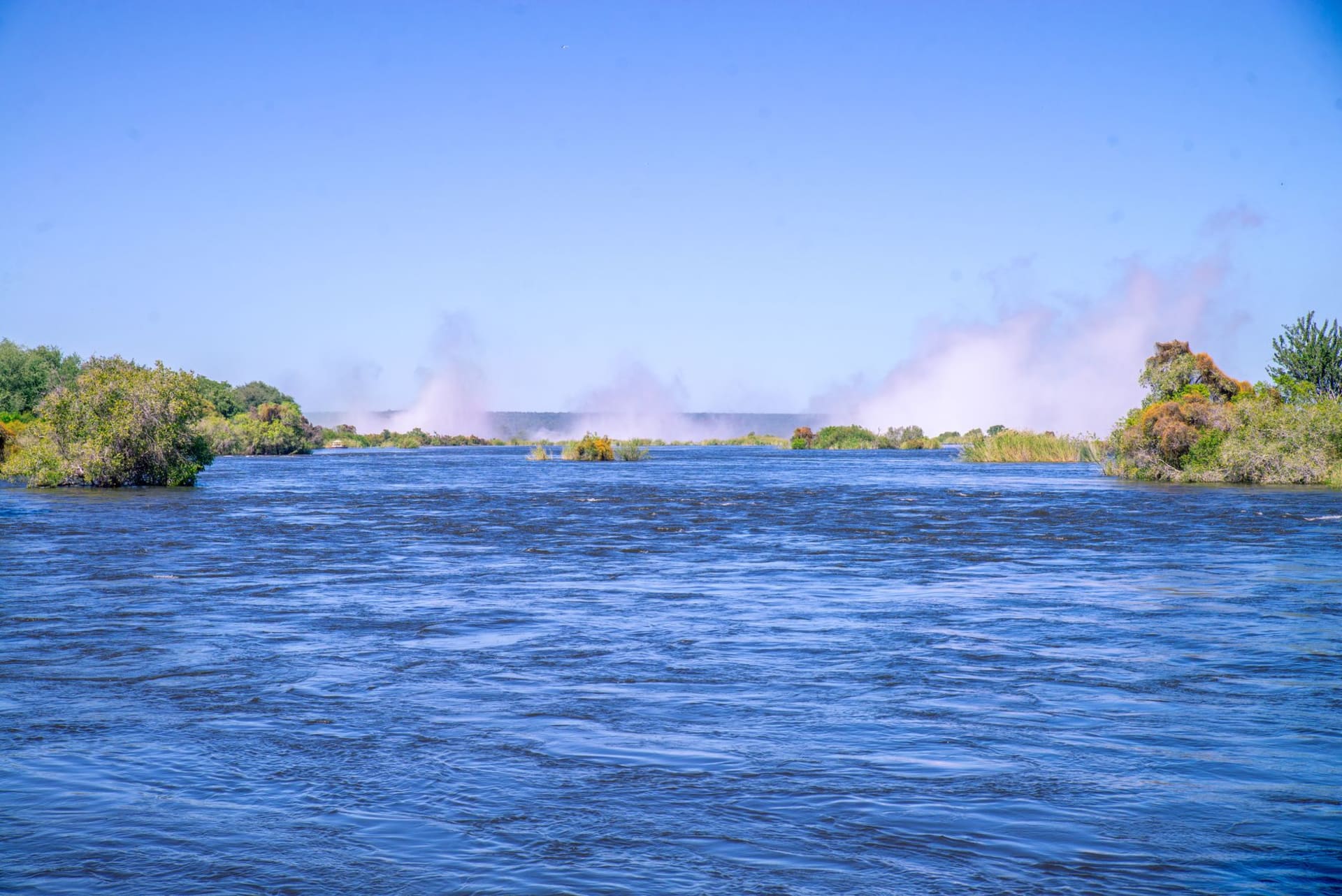
Lower Zambezi
"The elephant looked at the canoe. The canoe looked at the elephant. Nobody moved for a very long time."
The Lower Zambezi National Park occupies the valley floor along the river’s southern bank, a corridor of riverine forest and open floodplain pressed between the Zambezi and the steep escarpment above. It’s one of the least visited major parks in southern Africa — the road in is appalling and the lodge prices keep the numbers manageable — and that inaccessibility is, of course, the whole point.
What the park offers that almost nowhere else does: canoe safaris. You spend time on the river itself, at water level, reading the bank from the perspective of whatever is watching you.
The Logic of the Canoe
A vehicle announces itself — engine noise, exhaust smell, visual bulk. A canoe announces nothing. You paddle quietly and the animals on the bank treat you as river furniture, something that floats and causes no trouble. I’ve watched hippo pods from two meters without incident, passed within earshot of a pride of lions drinking at dusk, drifted alongside a breeding herd of elephants that crossed upstream and then walked past us, chest-deep in the current, close enough that I could hear the water streaming off their legs.
The guide handles the stern paddle and knows the river’s moods. The Zambezi runs wide and deceptively calm here — it looks placid and it isn’t, particularly around the hippo pods. You learn to read the water. A barely visible ear, a sudden surge on the surface: the guide’s paddle is already shifting direction before you’ve processed what you’ve seen.
Fishing at the Edge of the Park
The Lower Zambezi is one of southern Africa’s premier tiger fishing destinations, which means a particular type of visitor comes here alongside the wildlife watchers — people who wake at dawn and spend the day casting into eddies with an intensity that looks like meditation. I tried it for half a morning. The tigerfish struck exactly once, stripped line off the reel in a way that felt unreasonably violent for something that size, and then threw the hook. The guide looked sympathetic. He’d seen this before.
The camps sit along the riverbank and operate a strict lights-out-early culture. Not a policy decision — elephants routinely walk through the camp footprint and at midnight the last thing anyone needs is a confused elephant and a tourist with a phone flashlight.
What the Escarpment Does
The escarpment wall behind the park changes the quality of the light. The valley floor catches the first sun early and holds the last light late — long golden hours at each end of the day, the escarpment going from black to purple to green as the morning progresses. From the river at dawn, looking south toward Zimbabwe, the opposite escarpment reflects in the water and the whole scene has a symmetry that feels too composed to be accidental.
It’s the kind of landscape that makes you suspicious of your own perception. I kept checking it from different angles to confirm it was real.
When to go: May to October, dry season. The park is largely inaccessible in the wet months — the roads flood and many camps close. September and October offer the best game viewing with water levels at their lowest, though heat is serious. June through August is more comfortable and still excellent.