Tulum
"The ruins are genuinely extraordinary. The town around them is a separate conversation."
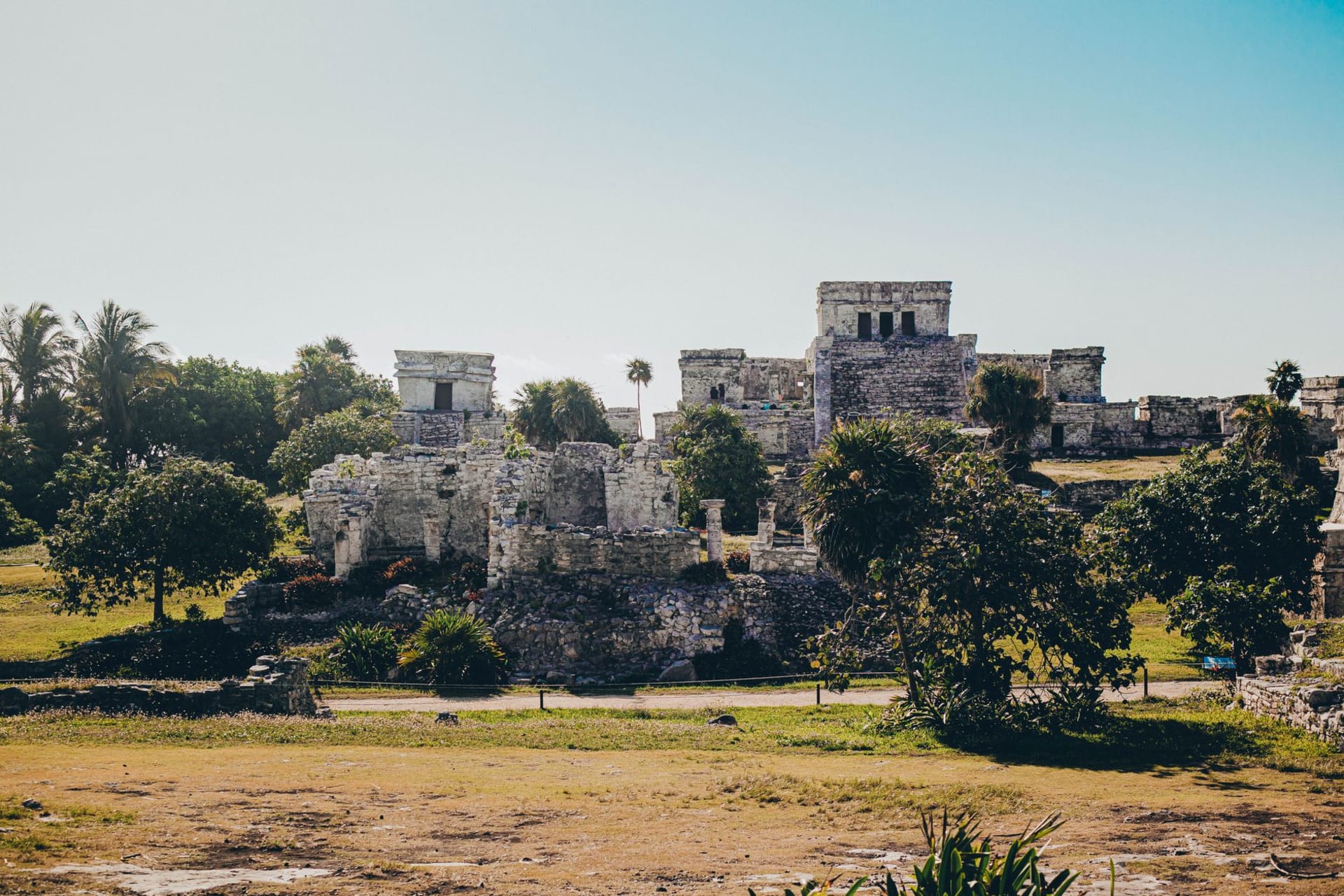
A clifftop Maya ruin overlooking the Caribbean and a town below that has transformed itself, for better and worse, into Mexico's most photographed bohemian beach destination.

Let me be honest about Tulum before I say anything else: the version you’ve seen on Instagram — the one where someone in white linen yoga pants stands between two cenote columns with the light falling just so — is real and also completely misleading. The light is genuinely that good. The cenotes are genuinely that blue. And the infrastructure to hold that image up is a construction site, a traffic problem, and a water management crisis all compressing together on a two-kilometer strip of road between jungle and sea.
None of this means you shouldn’t go. It means you should go with your eyes open.
The Archaeological Zone
The Maya ruins at the north end of the hotel zone are what most people come for, at least nominally, and they’ve earned their reputation. Built on a limestone cliff above the Caribbean, El Castillo — the main temple — sits at the edge of a drop to turquoise water so photogenic it looks fabricated. The site is small compared to Chichén Itzá or Uxmal, but the setting is singular. No other major Maya site sits on a coastline like this.
Go at 8 a.m. when it opens. By 10 the cruise ship excursions arrive in force and the narrow site becomes a flow management problem. In the early light, with the wind coming off the water and the iguanas motionless on the warm stone, it’s one of the more quietly powerful ruins I’ve visited in Mexico.
The Cenotes
The stretch of jungle between Tulum and Cobá is riddled with cenotes, and this is where Tulum earns its more private reputation. Gran Cenote, about 4 kilometers west of town, is the most accessible: a partially open cavern with stalactites and startlingly clear water. I went early and had about 40 minutes before the guided tours arrived. The water is cold in a way that feels mineral, substantive, like it’s been filtered through limestone for ten thousand years — because it has been.
Dos Ojos, a cave diving system nearby, goes deeper if you’re certified. For snorkelers and casual swimmers, Gran Cenote does everything you need.
The Beach and the Road
The beach here is legitimately beautiful — white sand, Caribbean turquoise, palms — and the hotel zone beach clubs that have colonized it charge accordingly. Between 400 and 600 pesos for a day bed is common. Alternatively, there are a few public beach access points on the north end of the zone, which require persistence to find but are worth the effort if you want to actually swim rather than perform the act of being on a beach.
Lia and I rented bikes one morning and rode the full length of the hotel zone road. It’s flat enough to be manageable even in the heat, and on two wheels you see things a car misses — the taco stand behind a cenote, the stretch where the jungle comes right to the road, the moment when the Caribbean appears between two beach clubs like a reminder of what’s actually there.
Tulum Town
The town itself, a couple kilometers inland from the zona hotelera, is where the food budget goes further and the pace is slower. There are genuinely good tacos at stands around the ADO station, a busy market, and a growing cluster of restaurants that aren’t billing themselves at “conscious lifestyle” prices. If you’re staying more than a couple days, basing yourself in town and making beach trips makes more financial sense.
When to go: December through April for dry season and reliable blue skies. November is increasingly good — quieter than high season, still dry. July and August bring humidity, afternoon rains, and higher jellyfish numbers in the water. Easter week (Semana Santa) is the most crowded period of the year.
Keep exploring
More from Yucatán Peninsula
 yucatan-peninsula
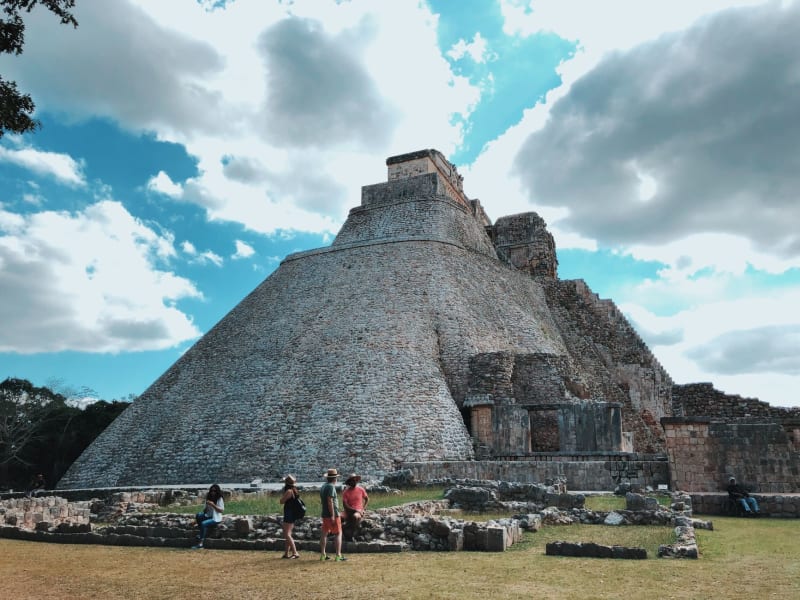
 Uxmal
A Puuc Maya city of extraordinary stone mosaic facades, built without cenotes on a ridge in the dry hill country southwest of Mérida, less visited than Chichén Itzá and more architecturally refined.
Explore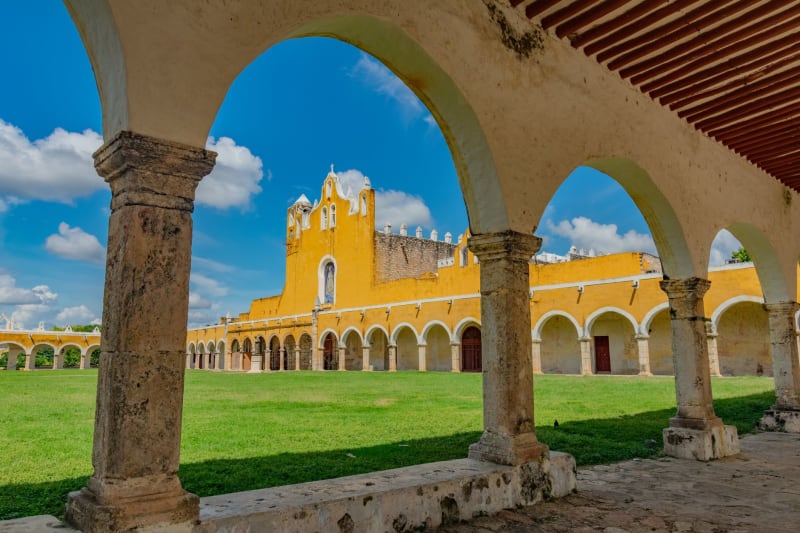 yucatan-peninsula
 Valladolid
A colonial town of faded pastels and quiet cenotes midway between Mérida and Cancún, where the Yucatan's slower rhythms survive at the intersection of every major highway.
Explore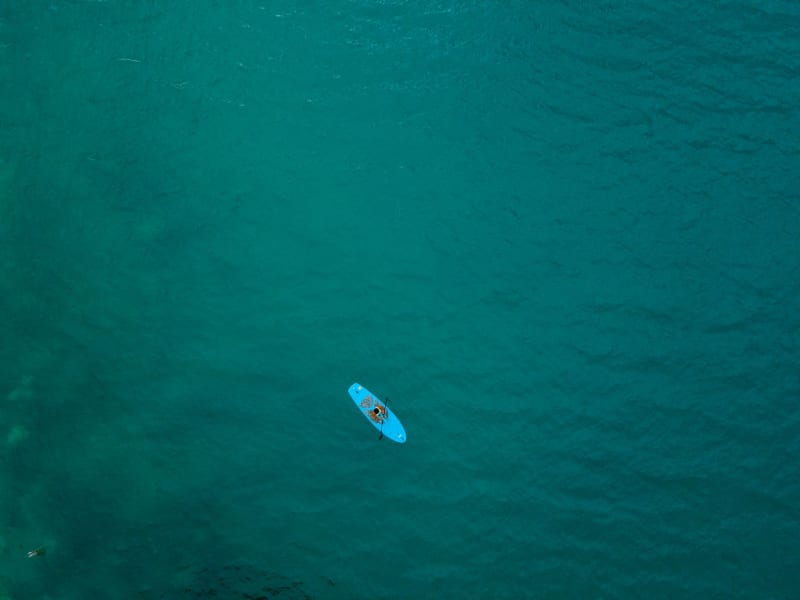 yucatan-peninsula
 Bacalar
A long, shallow lake of seven color bands that graduates from translucent turquoise to deep indigo, in a small town that Tulum's overflow crowd is discovering with predictable results.
Explore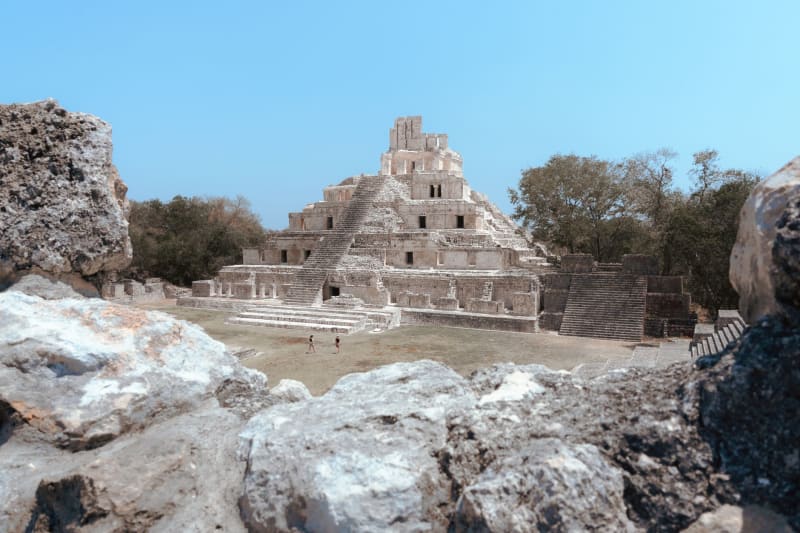 yucatan-peninsula
 Campeche
A fortified port city of painted colonial facades and intact 17th-century walls, where the Gulf of Mexico turns rose-gold at sunset and the tourist infrastructure hasn't caught up to the beauty.
Explore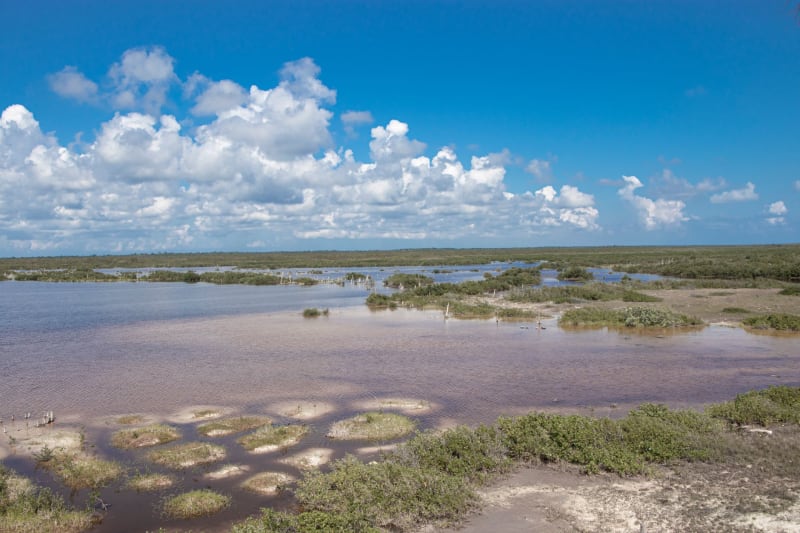 yucatan-peninsula
 Celestún
A fishing village at the edge of a flamingo biosphere reserve on the Gulf of Mexico's western shore, where pink birds wade in the estuary and the seafood arrives so fresh it still tastes like the sea.
Explore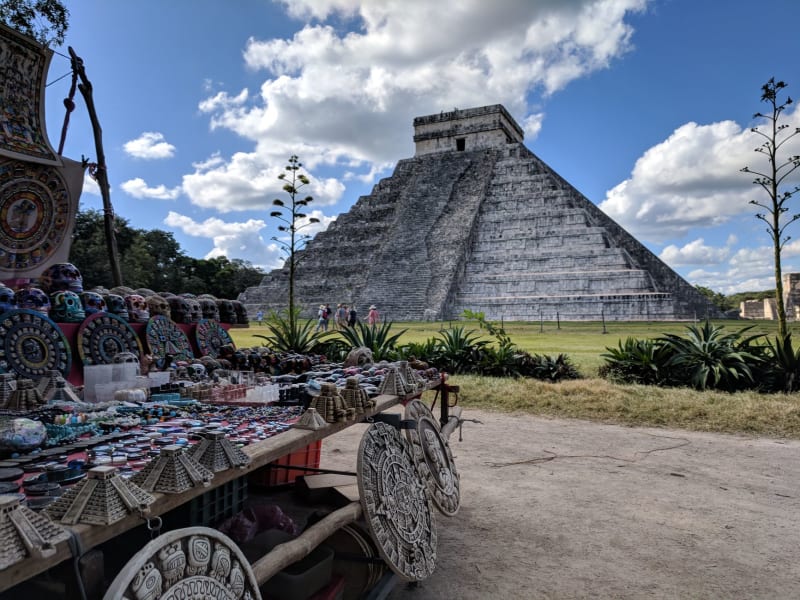 yucatan-peninsula
 Chichén Itzá
The most visited Maya site on the peninsula, where El Castillo pyramid rises from the scrub with an authority that no amount of tourist infrastructure can diminish.
Explore