Haworth
"The moor behind the parsonage is exactly what you imagine. That's either a failure of imagination or a success of the novels."
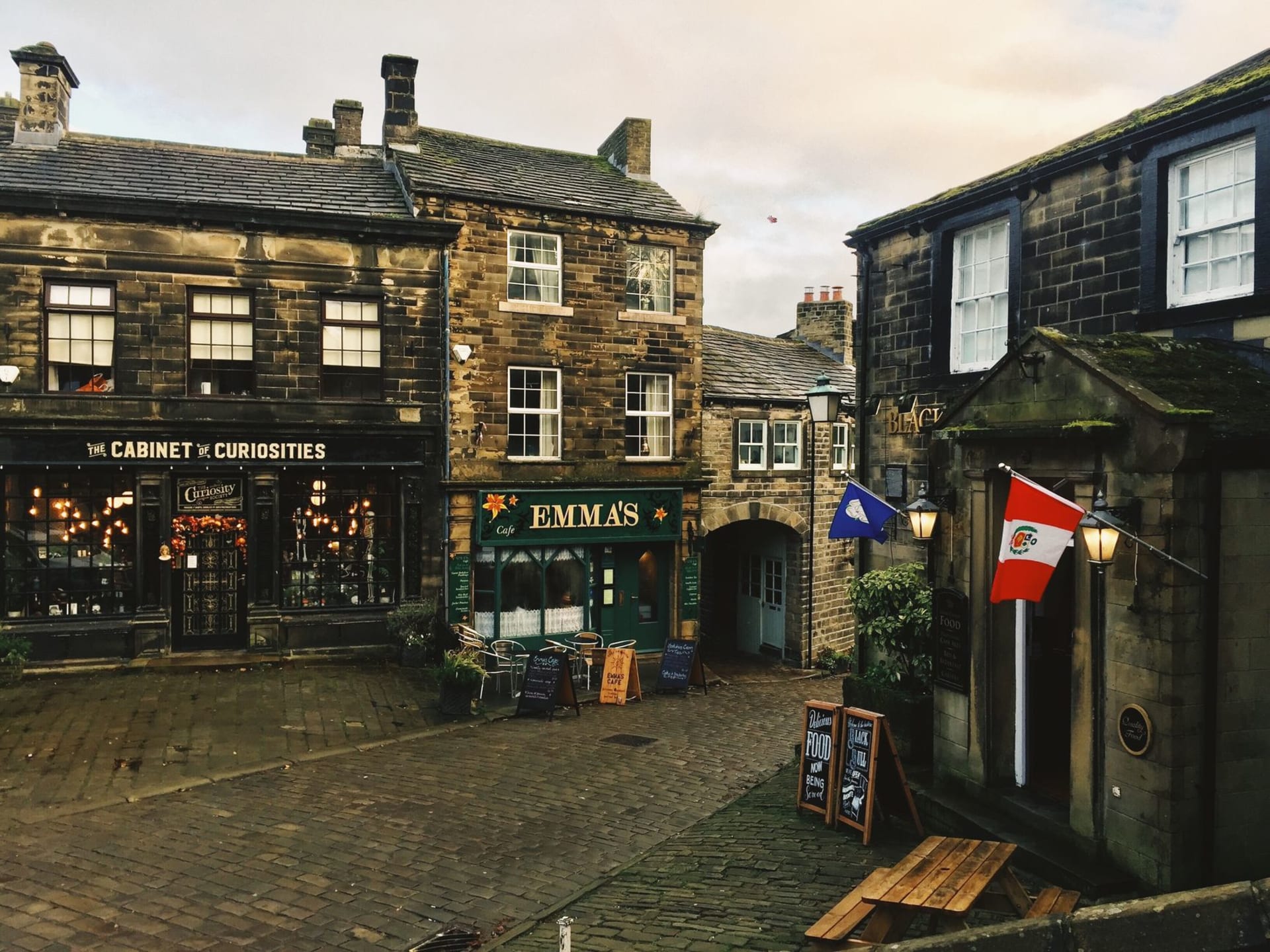
I went to Haworth expecting to be underwhelmed. Literary pilgrimage sites have a habit of producing nothing but the gap between what you’ve imagined and what exists — a small house, a few display cases, a gift shop. Haworth surprised me. The village itself is so thoroughly unchanged in its bones — millstone grit buildings, steep cobbled street, the parsonage sitting directly at the top of the churchyard — that the atmosphere the Brontës described in their letters and their fiction is essentially still present. You just have to arrive early, before the coaches.
I got there at half past eight on a weekday morning in October. The main street was empty. The cobbles were wet from overnight rain and shining darkly. The church clock struck nine just as I reached the lychgate.
The Parsonage
The Brontë Parsonage Museum is modest in scale and overwhelming in content. The house was the Brontës’ home from 1820 until the death of Patrick Brontë in 1861. The rooms have been arranged as they were in the family’s time, and the effect — Charlotte’s narrow writing desk angled toward the window, the dining room table where the sisters read their drafts to each other by firelight — is quieter and more affecting than I expected.
The museum holds manuscripts, first editions, Charlotte’s tiny handwritten books from childhood (produced in a script so small that you need a magnifying glass), and Anne’s collection of pressed flowers. What the collection does well is communicate the daily texture of the Brontës’ lives rather than just the mythology of their genius. They were working writers in a cold, damp parsonage in an industrial mill town, writing by firelight, walking on the moors when they could.
The Moor
The moor is accessed directly from the parsonage garden, through a gate, and within five minutes you are on open heather. The path to Top Withens — the ruined farmhouse usually identified as the inspiration for Wuthering Heights, though historians argue about this — is about four miles each way, across open moorland that becomes genuinely dramatic in wind and low cloud, which is the default condition for perhaps seven months of the year.
I walked it in a horizontal drizzle that reduced visibility to about a hundred meters. Top Withens is less impressive as a ruin than as a location: a few broken walls on a hilltop with absolutely nothing between them and the wind for miles. The Brontë connection is probably exaggerated, but standing there in that weather, it was easy enough to understand why the association developed.
The Village
Haworth’s main street climbs steeply and is almost entirely tourist economy now — tea shops, Brontë-themed gift shops, a bookshop, B&Bs. It could be annoying, and in August it probably is. The rest of the year, particularly mid-week, it settles into something more bearable. There’s a good pie shop near the church that has nothing to do with literature and everything to do with the fact that it was cold and I’d walked four miles.
The Keighley and Worth Valley Railway terminates at Haworth station on the valley floor below the village. It’s a preserved steam railway that runs between Keighley and Oxenhope through the mill valley, and the station at Haworth itself was used as a filming location for Edith Nesbit’s The Railway Children, which adds another layer of literary pilgrimage to the visit for those so inclined.
Timing the Crowds
Haworth is on every English literature tour itinerary and the parsonage queue can extend outside in July and August. The village absorbs a lot of visitors because it’s small and they all want the same views. The solution is architectural: arrive before ten, leave by noon, return after four.
When to go: September through November for atmospheric moorland conditions and minimal crowds — the heather on the moor behind the parsonage blooms in August. Avoid the school summer holidays entirely. The parsonage is closed on Tuesdays in winter; check ahead.