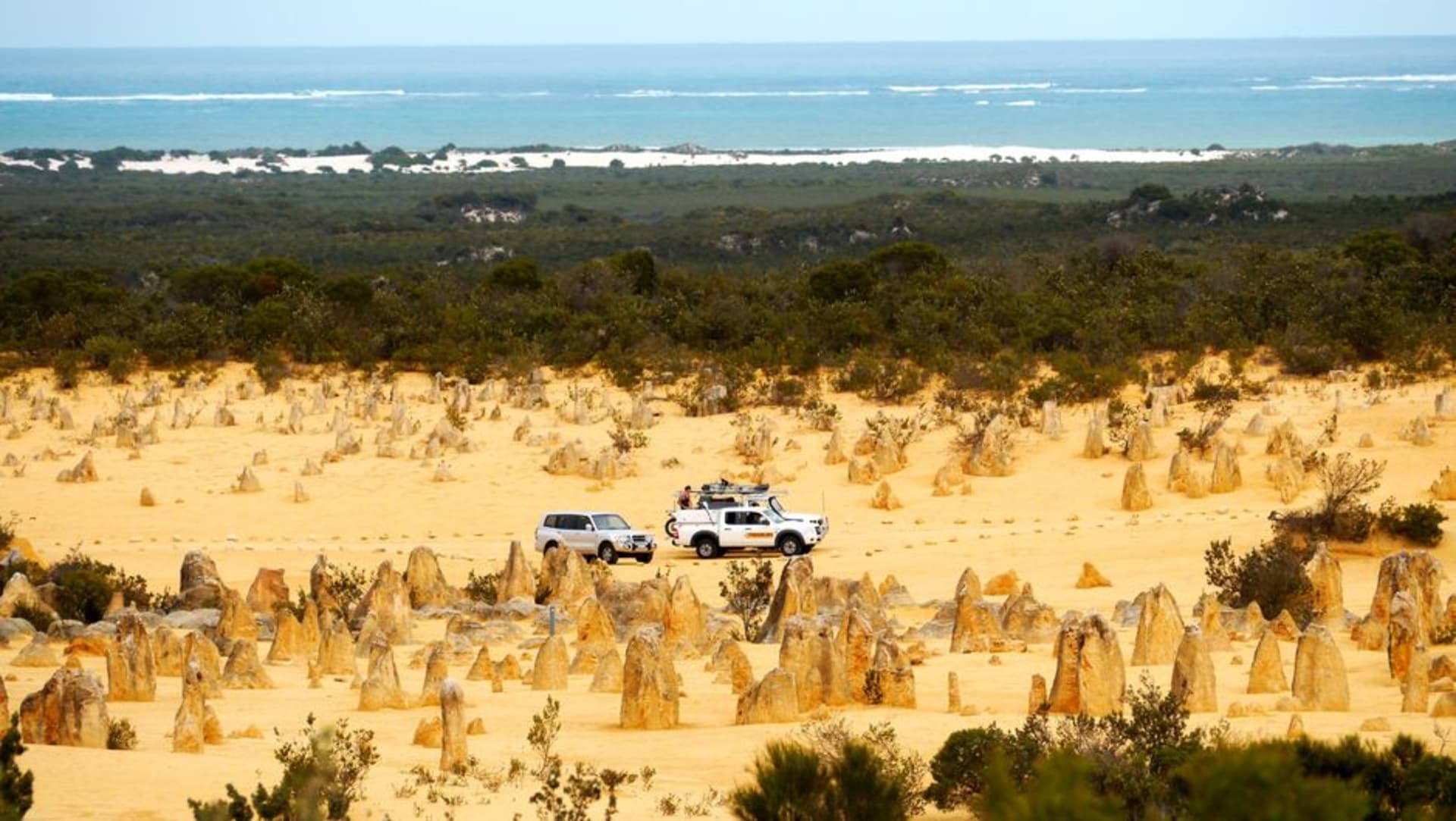
Nambung National Park
"I'd seen the photo online and assumed it was staged. It is not staged. It's just there."
Thousands of limestone spires rise out of yellow desert sand two hours north of Perth, looking less like a national park than a movie set nobody struck.
I mentioned in my first days in Western Australia that I needed to know if the Pinnacles were real, and that need is what took me to Nambung National Park before I’d even unpacked properly in Perth. Two hours up the Indian Ocean Drive, past Lancelin’s dunes, and suddenly the bush opens into a stretch of pale yellow desert studded with thousands of limestone spires, some knee-high, some taller than a person, scattered across several square kilometres like something got interrupted mid-construction.
I arrived just before dawn, deliberately, because everyone told me the light does something to the limestone that’s worth losing sleep for. They were right. The spires went from grey to a warm ochre-gold as the sun cleared the dunes, and the shadows they threw stretched long and thin across the sand, turning the whole formation into something closer to a sculpture garden than a geological site. I’d read the theories about how they formed — leached seashell sand, ancient tree roots, ten thousand years of wind — and standing among them, none of the explanations felt sufficient. It’s one of those landscapes that makes you distrust your own eyes a little.
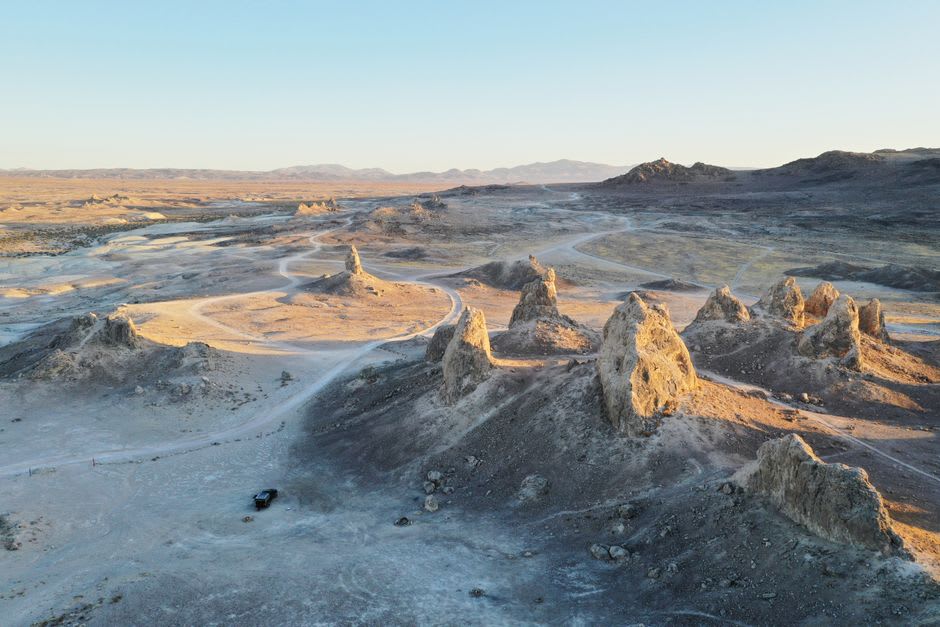
The loop drive through the Pinnacles Desert is only about four kilometres and most people do it from the car, stopping at the marked bays to walk out among the formations. I parked twice and just wandered for an hour each time, no real destination, letting the spires block the horizon and then reveal it again as I moved between them. Kangaroos and emus move through the desert margins in the cooler hours, and there’s a colony of small reptiles that dart between the pinnacle bases fast enough that you mostly catch movement rather than the animal itself.
What surprised me most was how quiet it was despite being one of the most photographed sites in the state. I went on a weekday morning and had entire sections of the desert to myself, just wind noise and the crunch of sand underfoot. Nearby Cervantes is worth a stop for a crayfish lunch afterward — the town runs almost entirely on the western rock lobster industry, and the fish and chip shop by the harbour does a version with lobster meat that I still think about.
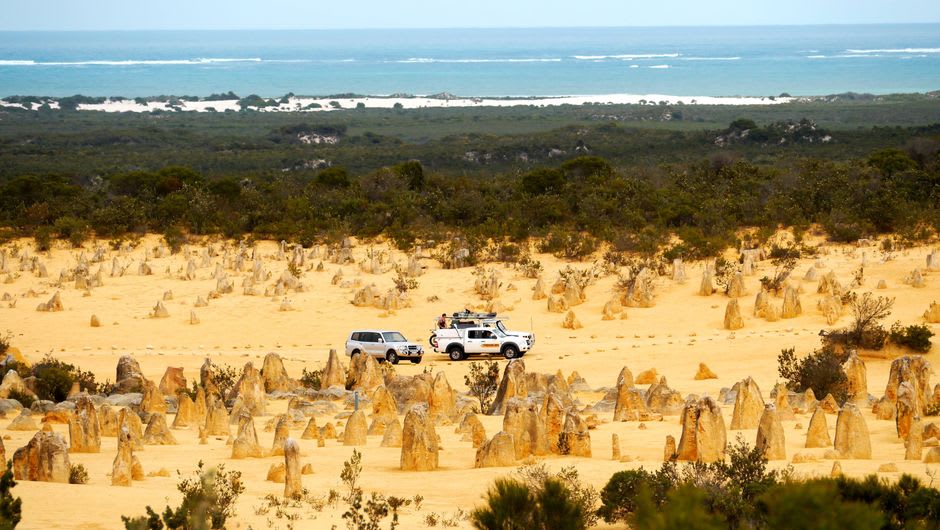
When to go: Sunrise or sunset for the best light and cooler temperatures — midday sun on pale sand gets brutally bright. Spring (September–October) brings wildflowers to the surrounding heath and mild days, making it the most comfortable season overall.