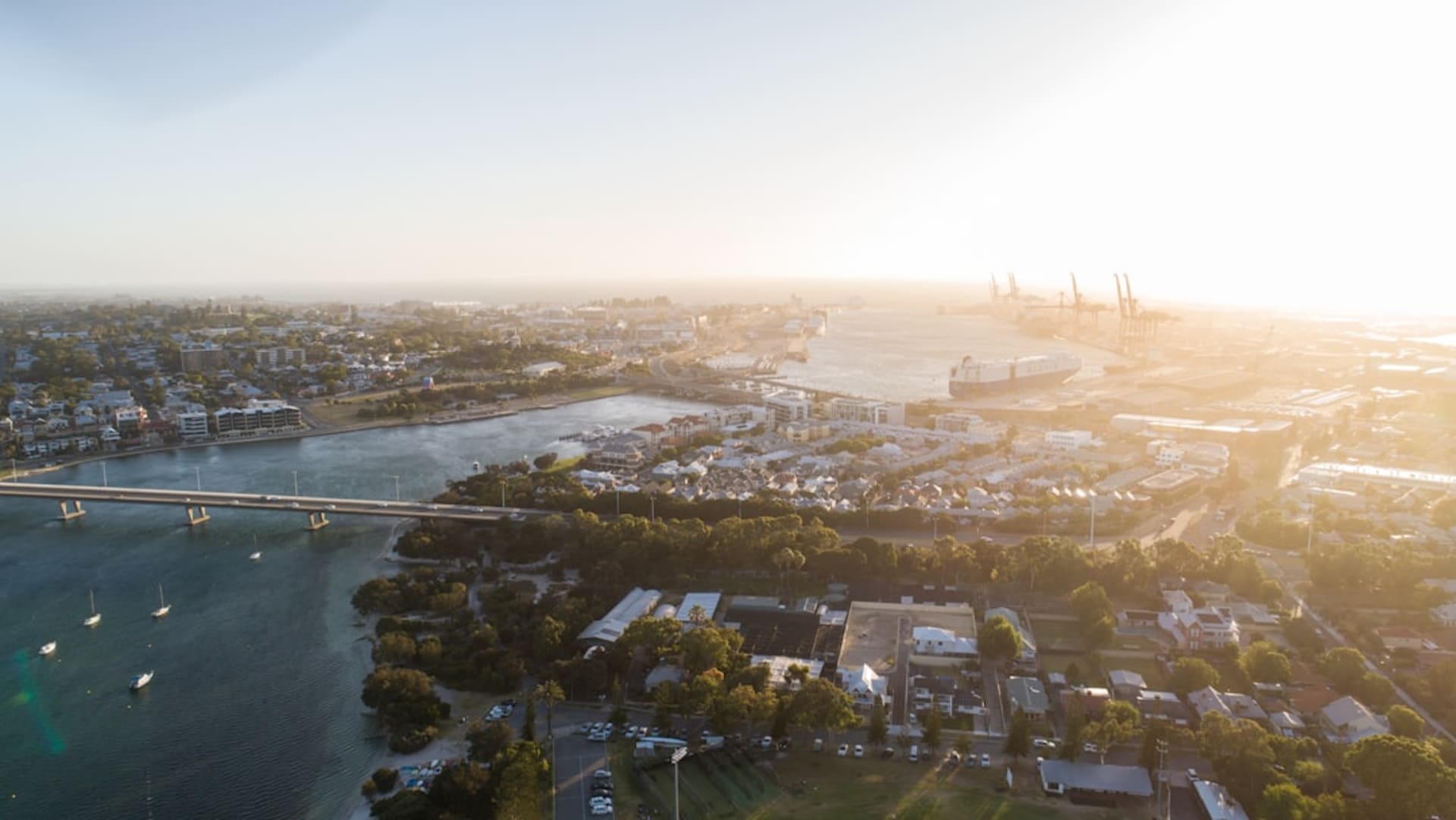
Fremantle
"Fremantle is the city Perth keeps at arm's length and secretly prefers."
Fremantle exists in a slightly antagonistic relationship with Perth, twenty kilometers north, in the way that port towns often exist in relationship to the capital that grew up after them. Fremantle was founded first. It was always the working place, the arrival point, the location of the prison and the fish market and the Italian fishermen’s coffee shops that have been operating since the postwar migration brought Sicilian and Calabrian families to the harbor. Perth got the glass towers and the river views. Fremantle got the character, and Fremantle is reasonably comfortable with this arrangement.
The Architecture and the Prison
The limestone that came out of the harbor construction in the nineteenth century went directly into building Fremantle, which is why the town looks unlike any other Australian city of its scale — warm cream-colored buildings with arched windows and decorative ironwork, Victorian civic grandeur in a climate that shouldn’t support it, the whole thing bleached slightly further by a century of sun into a color that works perfectly against the Indian Ocean blue.
Fremantle Prison operated from 1855 to 1991 and is now a UNESCO World Heritage Site and the kind of tourist attraction that is actually worth it. The torchlight tours after dark, when the cell blocks are lit only by lanterns and the guide tells you about the forty-four executions that happened on the grounds, are genuinely unsettling. In a good way. I did the daytime history tour and came away with a weight of specific information — the water torture, the solitary confinement cells, the escapes that failed and the one that didn’t — that prison museums usually flatten into abstraction. Here it stayed concrete.
The Cappuccino Strip
South Terrace is the cappuccino strip, a stretch of cafes with outdoor tables that traces its current identity to the 1980s but its coffee culture to the 1950s when Italian migrants opened places that stayed open late and served espresso in proper cups. The formula hasn’t changed much. The coffee is strong. The seating spills onto the pavement. People sit for a long time over very small cups and seem neither hurried nor particularly purposeful. I had three coffees in two hours at different establishments, comparing acidity, and Lia threatened to walk to the markets alone.
The Fremantle Markets are a Victorian-era building filled on weekends with stalls selling local produce, secondhand books, crafts, and the whole range of things that market visitors actually want (food, the good kind of junk) alongside the things markets often oversupply (massage chairs, tourist keychains). The produce section is the reason to arrive early — olive oil from the southwest, handmade cheese, fresh fruit from the Swan Valley.
The Fishing Boat Harbour
The working harbor sits below the main town and is where the actual fishing fleet ties up alongside restaurants that have been serving the same function — fresh fish, simple preparation, large portions — for decades. The fish and chip shops have long queues on weekends and the wait is worth it. Grilled barramundi, fresh prawns from local boats, the particular Western Australian blue manna crab steamed and served with a pot of butter — eating here has the specific pleasure of eating exactly what you are where you are rather than what has been imported and improved upon.
Getting from Perth
The Fremantle train from Perth’s Central Station is one of Australia’s most pleasant short rail journeys: it runs along the river before turning south toward the coast, and on a clear afternoon the water to the west catches the sun and the whole passage feels like a gentle prologue. The train takes about thirty minutes and deposits you a five-minute walk from everything worth seeing.
When to go: Year-round — Fremantle is a town, not a beach destination, and its markets, restaurants, and architecture don’t require sunshine. October through April is warmest and the outdoor tables are in heaviest use. The Perth Festival (February) brings events to Fremantle venues. The Fremantle Street Arts Festival in April takes over the town center.