The Red Sand Dunes
"The sand is the color of rust. In the right light, it's the color of something burning."
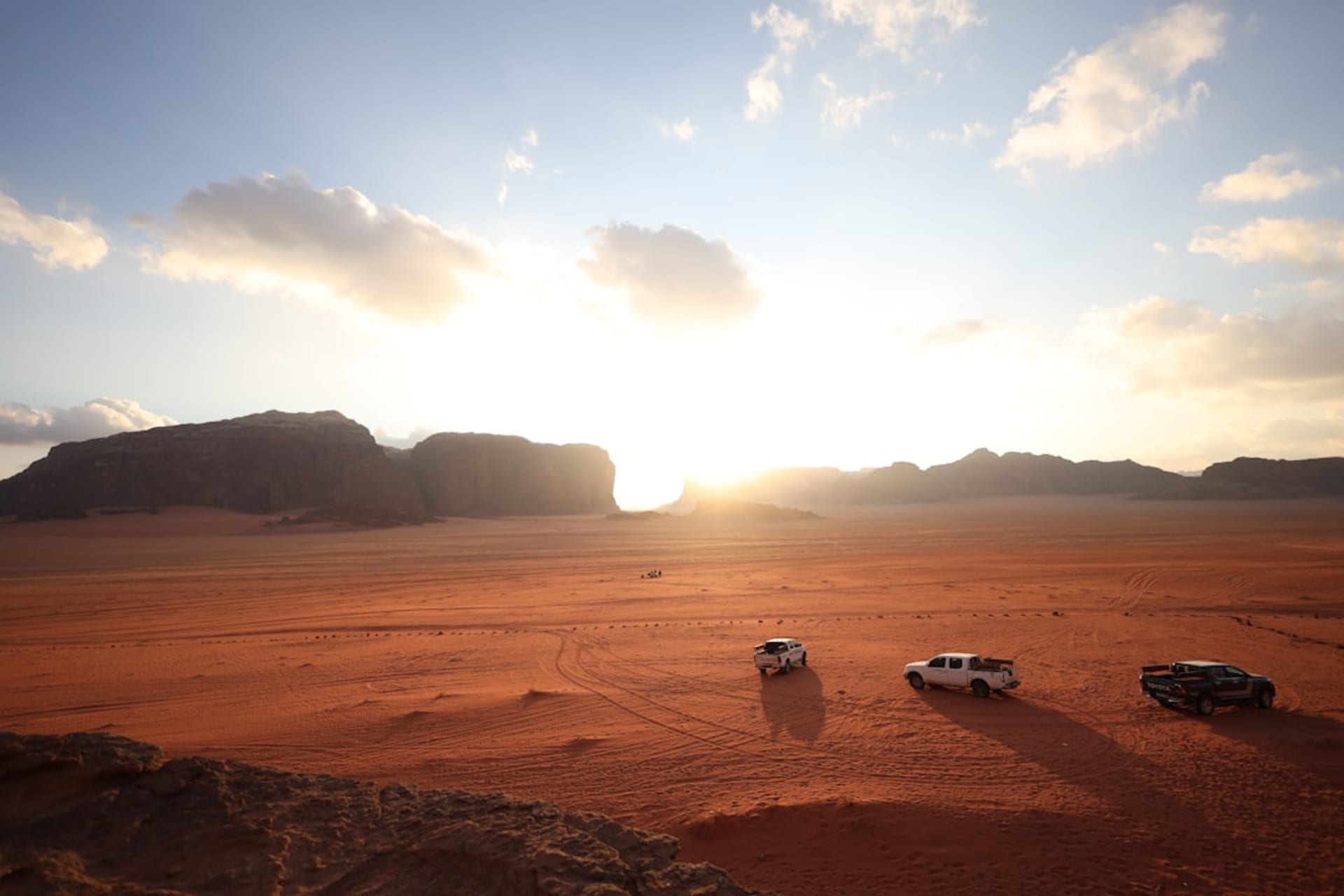
The sand in Wadi Rum is not the blond or white sand of coastal dunes. It’s red — a deep, saturated iron-oxide red that reads as orange in midday sun and turns toward crimson in the hour before dark. The color comes from the sandstone cliffs eroding slowly over millennia, the iron in the rock oxidizing as it breaks down into grains. The dunes are, in a literal sense, dissolved mountains.
The main dune field sits near the center of the protected area, piled against the base of a long sandstone escarpment where the prevailing wind has deposited what it carried. The dunes aren’t enormous by Saharan standards — maybe 30 meters at their highest — but in the context of Wadi Rum’s flat valley floors, they feel significant. Alien, almost, in the way that softness feels out of place among all this rock.
The Physical Experience of Sand
I walked up the nearest dune barefoot, which was the right choice. The sand on the surface was warm from the sun but the deeper layers, displaced by each step, were cooler. The texture was finer than beach sand, more like powder, and it squeaked faintly underfoot in a way that registered as sound before I quite processed what was making it.
From the crest of the dune, looking back down: the jeep tracks in the valley floor, Lia leaning against the bumper taking a photo of the sky rather than the dunes, the cliffs on the opposite side of the valley so large they seemed closer than they were. The perspective from sand level is strange — the dunes eliminate all the rock and leave you momentarily in a landscape that could be anywhere in the Sahara.
Color and Light
The dunes are functional at any time of day, but they’re spectacular in the late afternoon specifically. Around 4:30pm in autumn, the sun gets low enough that it’s throwing horizontal light across the dune faces, and the color shifts from orange to something that feels more like heat than hue. The shadows are long and precise, every ripple on the dune surface casting its own small shadow, the whole field becoming a texture map of itself.
I’ve been to dune landscapes in Mexico and Morocco, and Wadi Rum’s red dunes are genuinely different — not just in color but in atmosphere, surrounded on all sides by the sandstone cliffs that give the valley its sense of enclosure. You don’t feel you’re in an open desert here. You feel you’re inside something.
Practical Realities
Sandboarding is available through most camps and guides — someone will appear with a board almost automatically when they see tourists near the dunes. I tried it once: it’s harder than it looks, more of a controlled slide than actual surfing, and the sand in your clothes afterward takes days to fully excavate. Worth it for approximately ten minutes; less so as a sustained activity.
Bring a lens cloth if you’re carrying a camera. The sand here is fine enough to find its way into everything.
When to go: Sunset visits are essential — arrive at the dunes no later than an hour before dark to catch the full color shift. Spring (March–April) and autumn (September–November) offer the best combination of comfortable temperatures and dramatic light. Summer sunsets are beautiful but the preceding hours are genuinely oppressive.