A five-kilometer corridor of red and gold sandstone where the desert narrows into silence and the walking finally slows you down.
Our Bedouin guide, Odai, warned us before we even got out of the jeep: “Barrah is longer than Khazali. Most people don’t bother.” That was exactly why Lia and I wanted it. We’d already done the postcard version of Wadi Rum the day before — the dunes, the arch, the crowd of jeeps kicking up dust at sunset — and I wanted something quieter. Barrah delivered that almost immediately. We stepped into the canyon mouth and the wind noise just dropped away, replaced by our own footsteps on sand.
The canyon runs about five kilometers through the Barrah Massif, and it took us close to two hours to walk it end to end, stopping constantly because the walls kept changing. One stretch would be pure soft sand, forgiving underfoot, then suddenly narrow into a rock passage where I had to turn sideways with my daypack. Lia kept pointing out the color bands in the cliffs — rust red bleeding into orange, then into a pale gold near the top — all iron oxide staining, Odai told us, the same slow chemistry that’s colored this whole protected area for millennia.
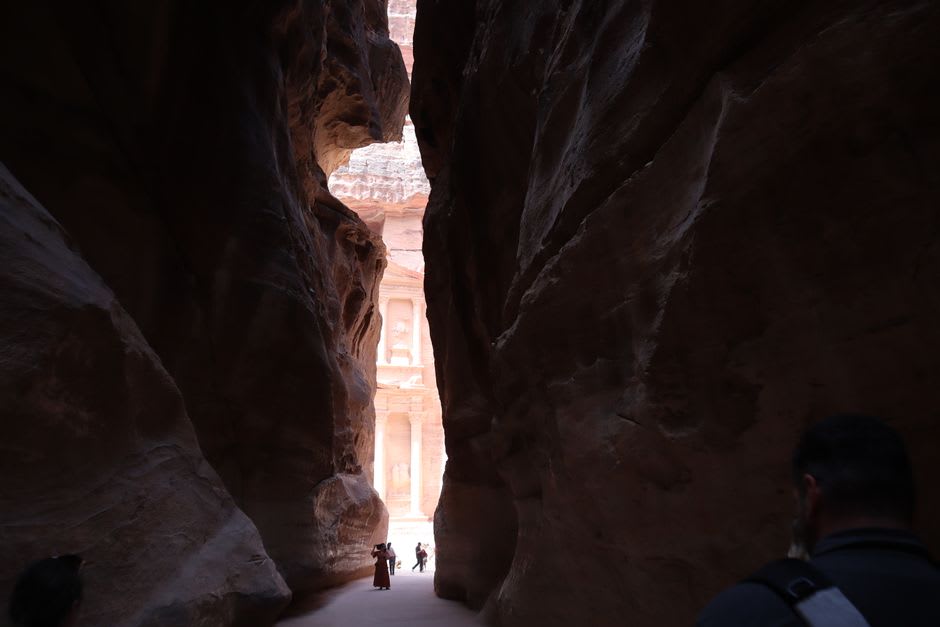
What got me wasn’t just the geology, though. Wadi Rum carries over 12,000 years of rock art and inscriptions, and part of what earned it UNESCO status in 2011 is that human record layered onto the wind-and-flood-carved stone. Odai pointed out faint scratches on one wall that he said were old enough that no one’s fully certain who made them. I crouched there for a long minute, Lia’s hand on my shoulder, both of us just quiet. It’s a strange feeling, standing in a place shaped by water that hasn’t run there in who knows how long, next to marks left by people who walked the exact same sand.
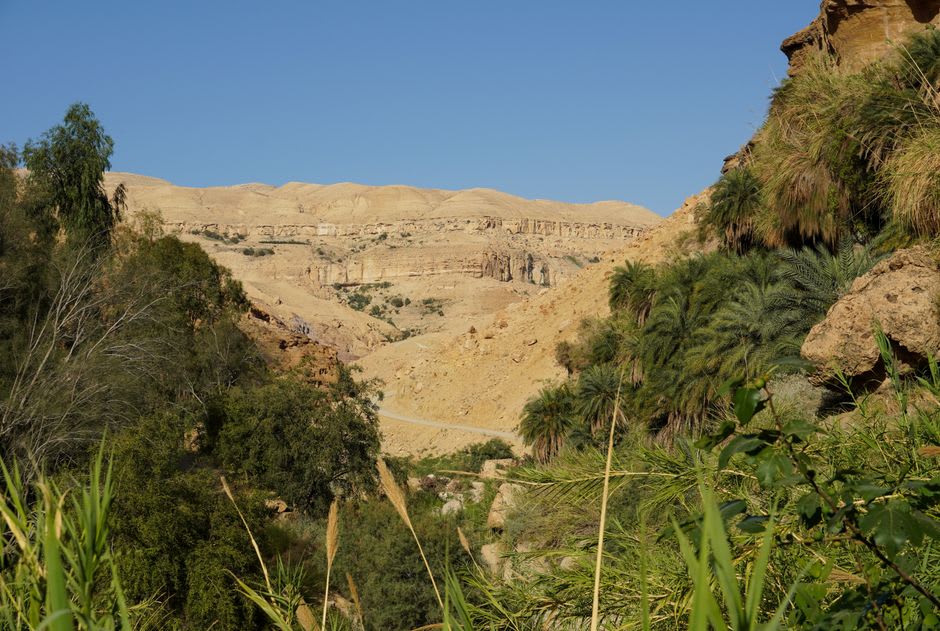
We finished the trek sweaty and a little sunburned despite the hats, and Odai brewed sage tea on a small fire right at the canyon’s far end while the jeep caught up to us. Sitting there with the tin cup burning my fingers, I remember thinking this was the version of Wadi Rum I’d actually remember — not the dunes, but the walk.
When to go: Aim for October through April, since the summer heat here turns a two-hour walk into something punishing fast — and get an early start if you can, because the canyon is at its most beautiful, and coolest, in that first hour or two of morning light.
Keep exploring
More from Wadi Rum
 wadi-rum
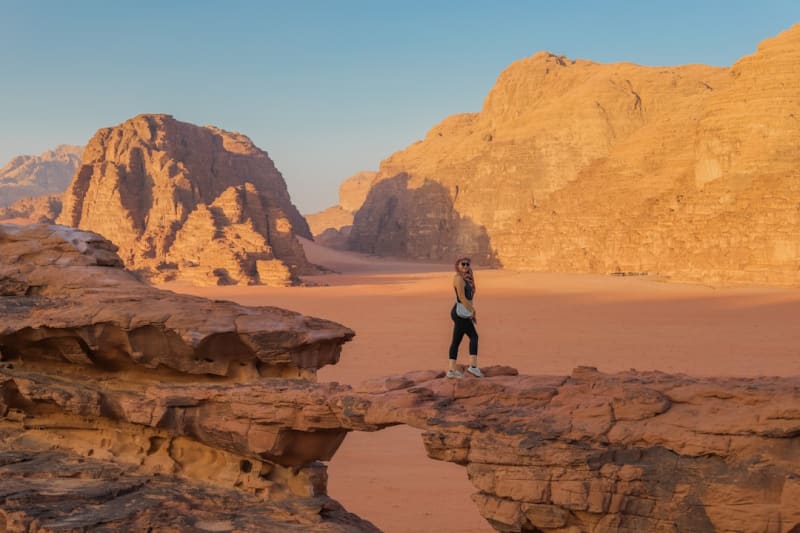
 Burdah Rock Bridge
The highest natural rock arch in Wadi Rum spans forty meters above the desert floor, and the only way to see it properly is to climb up and stand on it.
Explore wadi-rum
 Jebel Qatar
A remote sandstone massif in the northern sector of Wadi Rum where the tourist circuits thin out and the landscape gives you the silence the more-visited areas promise but can't always deliver.
Explore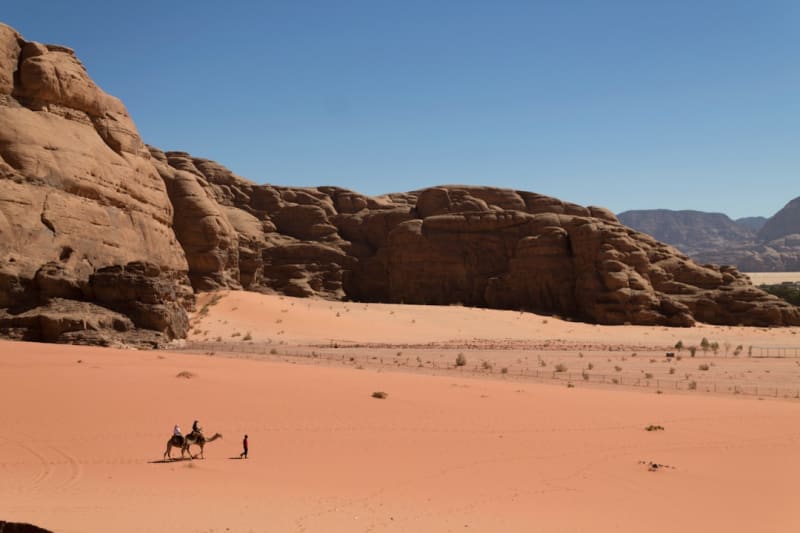 wadi-rum
 Jebel Umm Adaami
Jordan's highest peak sits at 1,832 meters on the Saudi border, a long red ridge where the horizon opens into three countries and the silence is absolute.
Explore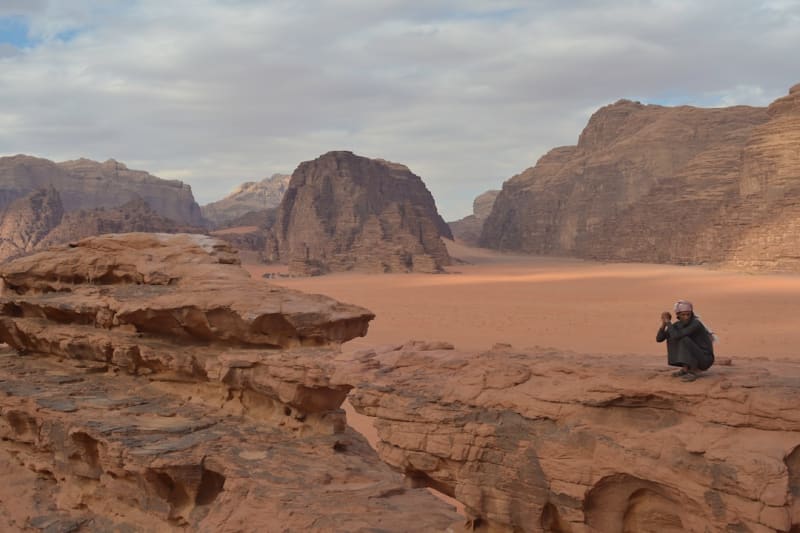 wadi-rum
 Khazali Canyon
A narrow siq that splits Jebel Khazali open just wide enough for one person, its walls layered with two thousand years of carved names, camels, and gods.
Explore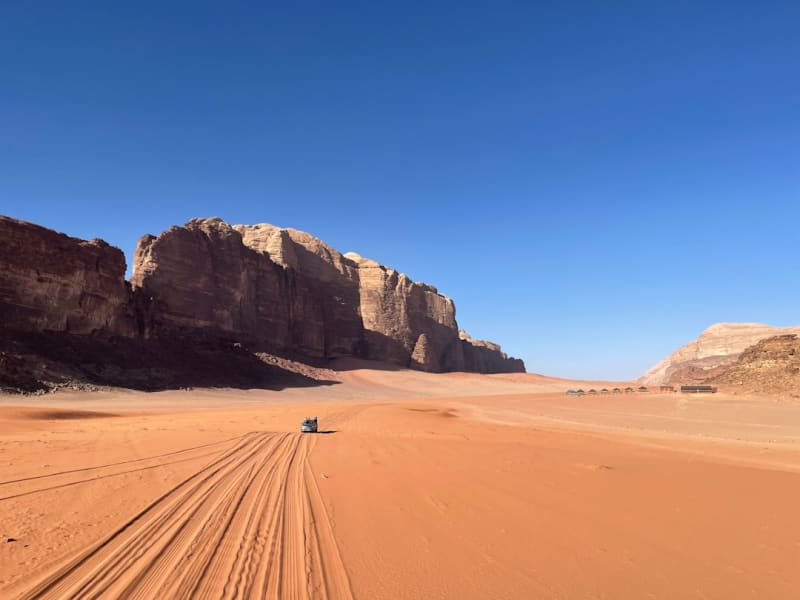 wadi-rum
 Lawrence's Spring
A hidden cleft in the sandstone where cold water seeps from the rock and wild fig trees grow in a place that has no business being green.
Explore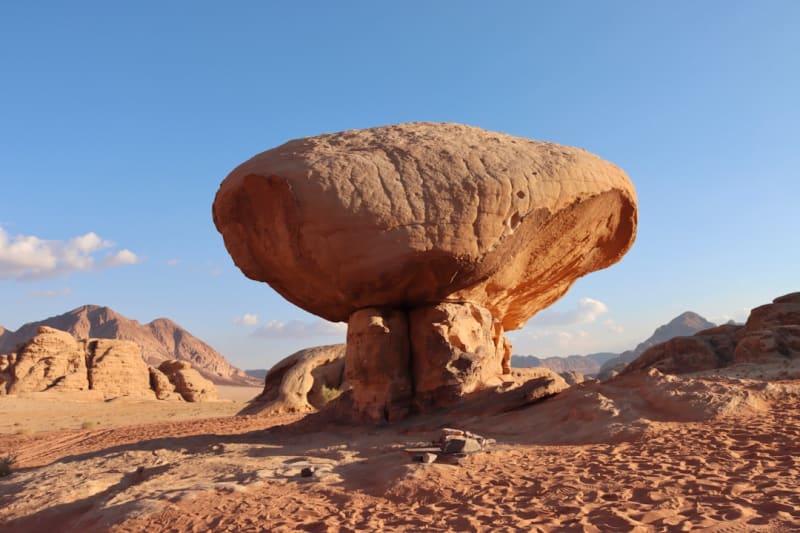 wadi-rum
 Mushroom Rock
Wind has spent millions of years sculpting this sandstone formation into a perfect stem and cap, a monument to erosion that manages to look both accidental and deliberate.
Explore