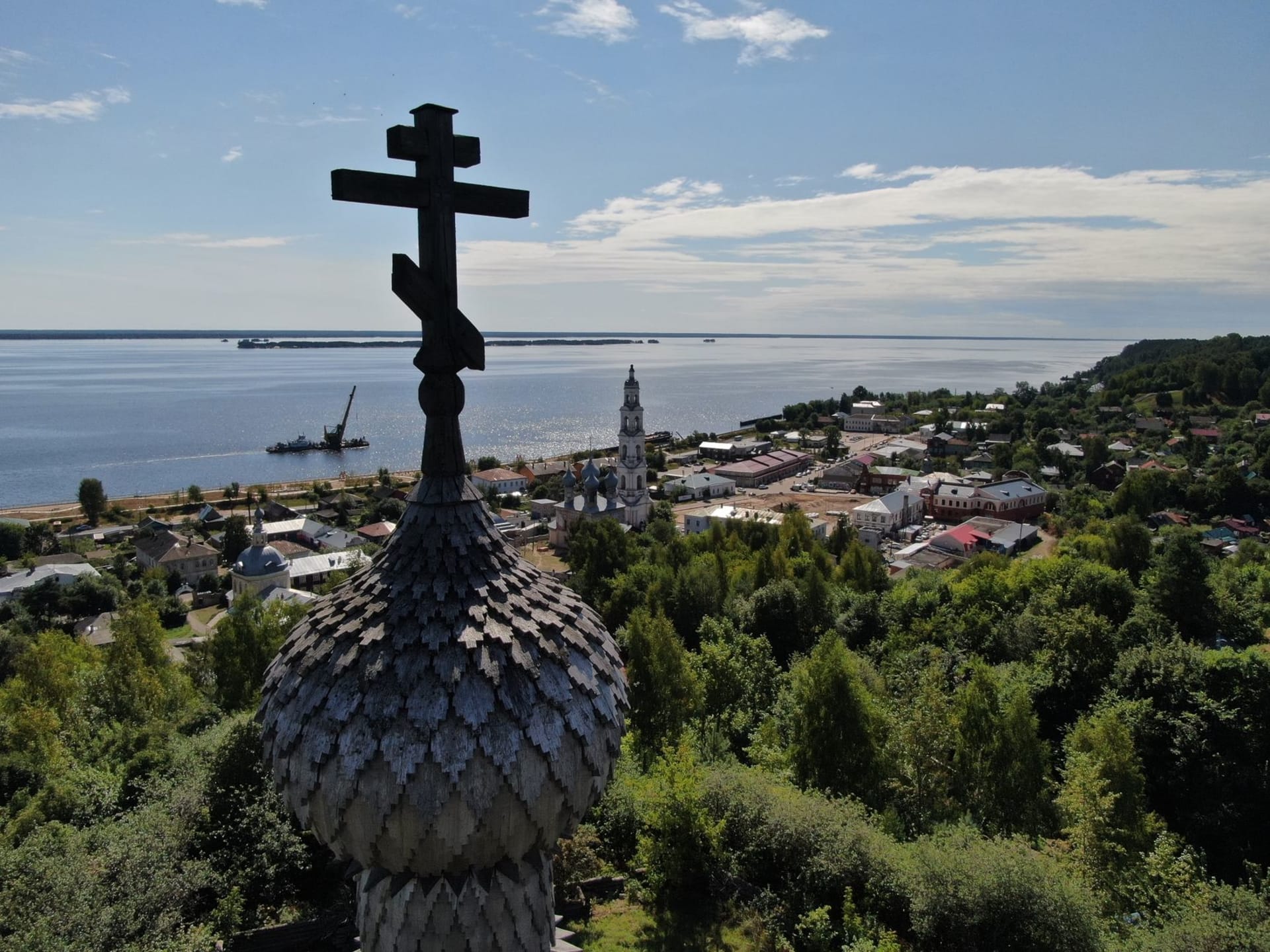
The Volga is, for most of its length, a river of the plains. It runs through flat country — steppe, forest-steppe, agricultural lowland — with the occasional bluff city above its banks, but nothing that interrupts the fundamental horizontality of the landscape. Then, about 900 kilometers from its mouth, it encounters the Zhiguli Hills, a Carboniferous limestone ridge that the river cannot cross, and bends in a great arc — the Samara Bend — around a peninsula that the hills protect. The bend is 200 kilometers around; the direct distance across the neck of the peninsula is 25 kilometers.
This accident of geology created one of the most ecologically distinct places in the Volga basin.
The Samara Bend National Park
The Samara Bend peninsula and the Zhiguli Mountains within it are protected as a national park and, at the higher-value core, as the Zhiguli State Nature Reserve — one of the oldest in Russia, established in 1927. The reserve itself is strictly access-controlled, requiring permits arranged in advance through Samara, but the national park surrounding it is open, and the hiking within it is what draws people who know about this place.
The hills reach only 381 meters at their highest point, which is modest by any mountain standard, but the limestone cliffs that face the Volga rise directly from the water at some points, and the views from the ridgeline take in the full arc of the Samara Bend in a way that photographs consistently fail to capture. The river below is vast. The far bank is flat. The contrast is the point.
The Plants and the Light
The Zhiguli Hills are botanically unusual. The limestone geology supports a relic steppe flora — plant species more typical of the steppes to the south that survived the last ice age on the warm south-facing limestone slopes. Endemic species of Zhiguli spurge, steppe peony, and feathergrass that exist nowhere else grow here among the pines and oaks. In May and June the south-facing slopes have wildflowers in quantities that feel improbable at this latitude.
The light quality in the Zhiguli Hills in June is specific: long evenings, the limestone going gold at angles that shift every fifteen minutes, the Volga surface below alternating between mirror and matte depending on whether a cloud is passing. I hiked the ridge trail from Zhigulyovsk in the late afternoon and timed it badly and arrived at the viewpoint at the exact moment everything went completely right.
Getting There and Staying
The practical access point is Zhigulyovsk, a small industrial town on the western edge of the hills, reachable from Samara by road. Day trips from Samara are common and reasonable. The ferry from Samara city crosses to Zolnoye on the peninsula’s eastern shore, which gives you the experience of arriving from the water and watching the cliffs grow as you approach.
Accommodation within the park is limited to a few campsites and a small number of guesthouses in the villages on the peninsula. This is not a resort. There are no restaurants in the park. You bring your food, arrange your permit if visiting the reserve core, and negotiate your own relationship with the landscape.
The Volga Breezes
One effect of the hills that nobody quite prepares you for is the thermal behavior they create. The limestone cliffs heat rapidly and cool slowly, and by late afternoon in summer the air rising off the south faces creates updrafts that the local raptor population — honey buzzards, ospreys, marsh harriers — uses with an effortlessness that makes watching them feel like watching something show off. I sat at a cliff edge for longer than any plan required and watched a honey buzzard make approximately forty circles without once appearing to do any work.
When to go: May and June for wildflowers and migrating raptors; late August and September for comfortable hiking temperatures and the beginning of autumn color. July is very hot on the south-facing limestone slopes. Day trips from Samara are easy year-round but snow makes some trails difficult November through March. Book any reserve permits at least two weeks in advance through the Zhiguli Reserve administration in Zhigulyovsk.