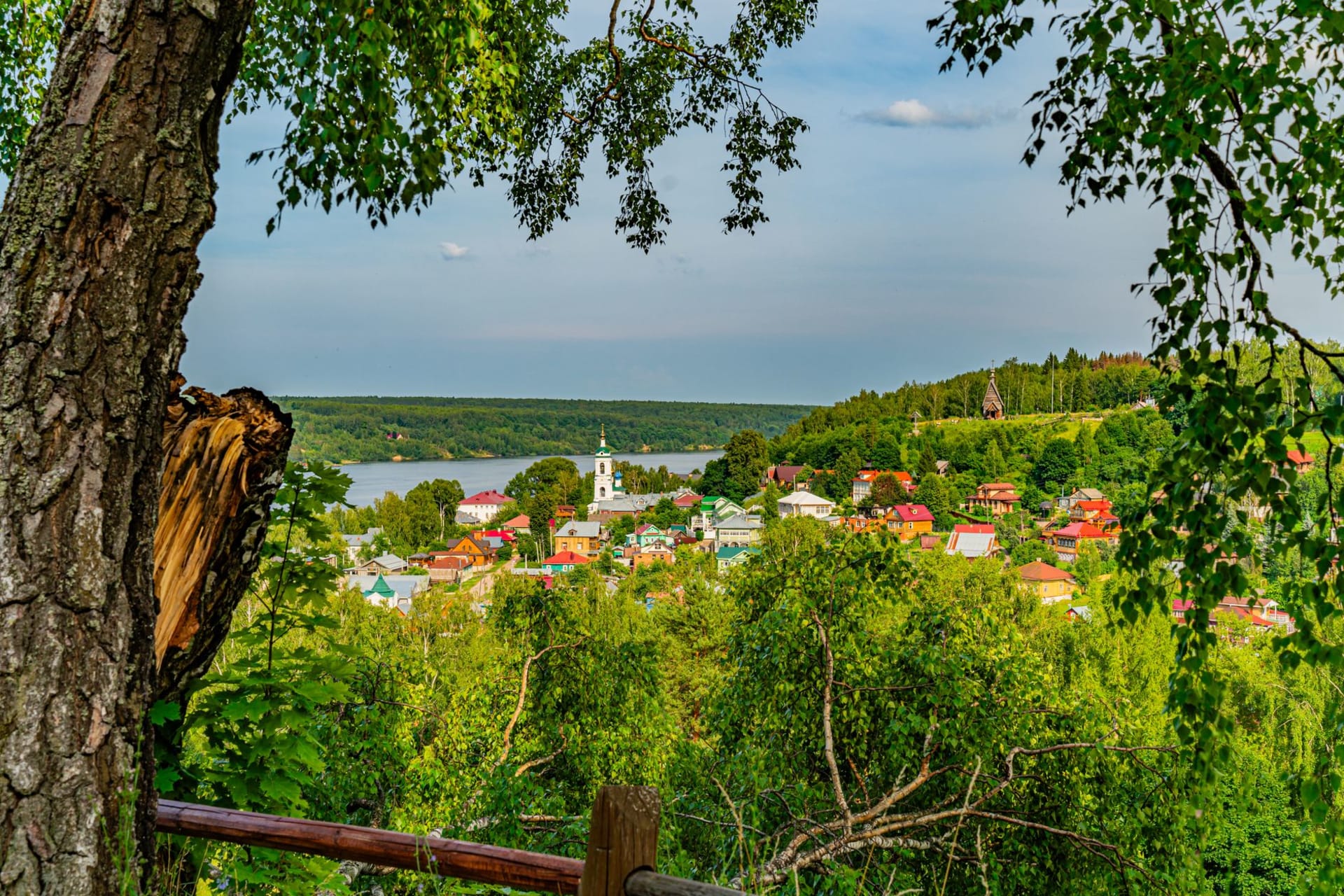
Bolgar
"A thousand years ago, a king here chose a religion for his people. The grass has been growing over the decision ever since."
About three hours south of Kazan, where the Volga widens into something closer to a freshwater sea, sit the ruins of a city most people outside Tatarstan have never heard of. Bolgar was the capital of Volga Bulgaria, a medieval Turkic state that controlled the great river trade routes, and in the year 922 its ruler formally adopted Islam — making this windswept patch of grassland, for Tatar Muslims, something close to a founding ground. I came not really knowing any of this. I left understanding why busloads of pilgrims make the trip.
The Ruins on the Bluff
What survives is scattered across a wide, flat, grassy plateau above the river: a tall ruined minaret you can climb, the remains of the Cathedral Mosque, several stone mausoleums, and the strange, beautiful Black Chamber, a 14th-century building whose original purpose nobody is quite sure of. We walked between them in a stiff Volga wind, the kind that never quite stops, and the openness of the site did something to the experience. There’s no city around the ruins anymore — just grass, sky, the enormous flat river, and these stubborn fragments of stone.
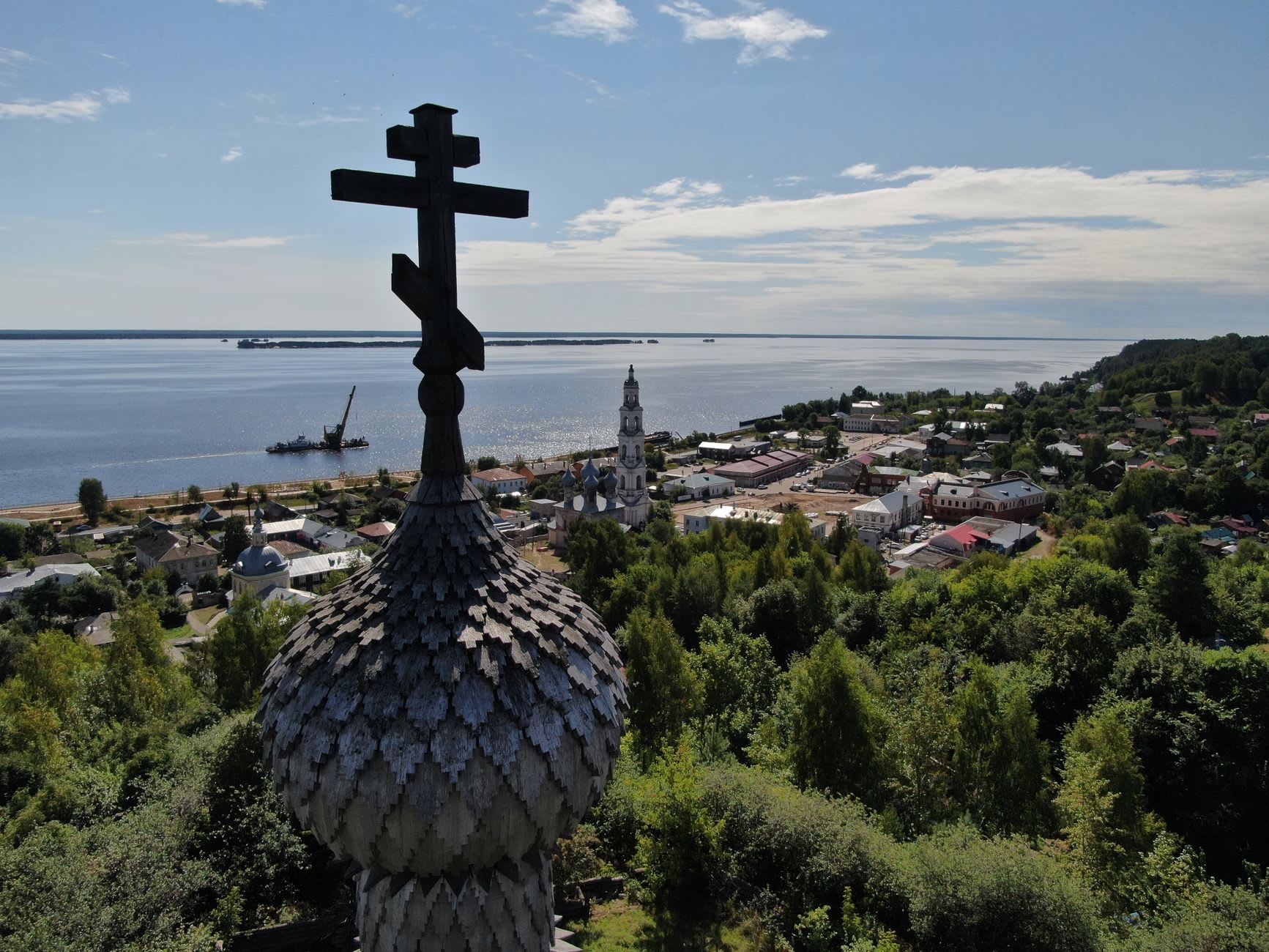
I climbed the big minaret, which is narrower and steeper inside than it looks, and from the top the scale of the Volga finally landed for me. It isn’t a river the way the Seine is a river. It’s a geographic fact, a horizon of water, and standing above it I understood why a trading civilization would plant its capital exactly here.
The White Mosque
Not everything at Bolgar is ancient. At the edge of the historic site stands the White Mosque, a modern building completed in 2012, all gleaming marble and twin minarets reflected in a long rectangular pool. I’m usually allergic to brand-new monuments built to look timeless — they tend to feel like theme parks. This one mostly won me over. At sunset, with the white stone going pink and the reflection perfectly still in the pool, it was genuinely beautiful, and the steady stream of Tatar families arriving to pray and photograph and simply sit made it feel alive rather than staged.
Lia got into a long, gesture-heavy conversation with an older Tatar woman who spoke no English and was determined to explain something about the mosque’s symbolism anyway. Neither understood a word the other said. Both seemed entirely satisfied by the exchange. I’ve come to think this is one of the underrated joys of travel — the conversation that works perfectly while conveying almost no information.
A Quieter Kind of Sacred
What stayed with me about Bolgar was its restraint. This could easily have been overbuilt, paved, sold. Instead, most of it is left as grass and ruin and wind, with information that trusts you to do some of the imagining yourself. We ate a simple lunch of echpochmak — Tatar meat-and-potato pastries — at a café near the entrance, watched the pilgrims and the day-trippers mingle, and drove back toward Kazan in the long light. I’d come for a checklist ruin and left with something quieter: the sense of standing where a people decided who they were going to be.
When to go: May through September offers the warmest, driest weather and the easiest river access — boats run from Kazan in summer, which is by far the best way to arrive. Autumn is crisp and atmospheric. Winter is bitterly cold and exposed, with the plateau fully open to the wind, but the snow-covered ruins have a stark beauty if you’re prepared.