Halong Bay Kayak
"By kayak alone can you find the Halong that exists before the cruise boats arrive each morning."
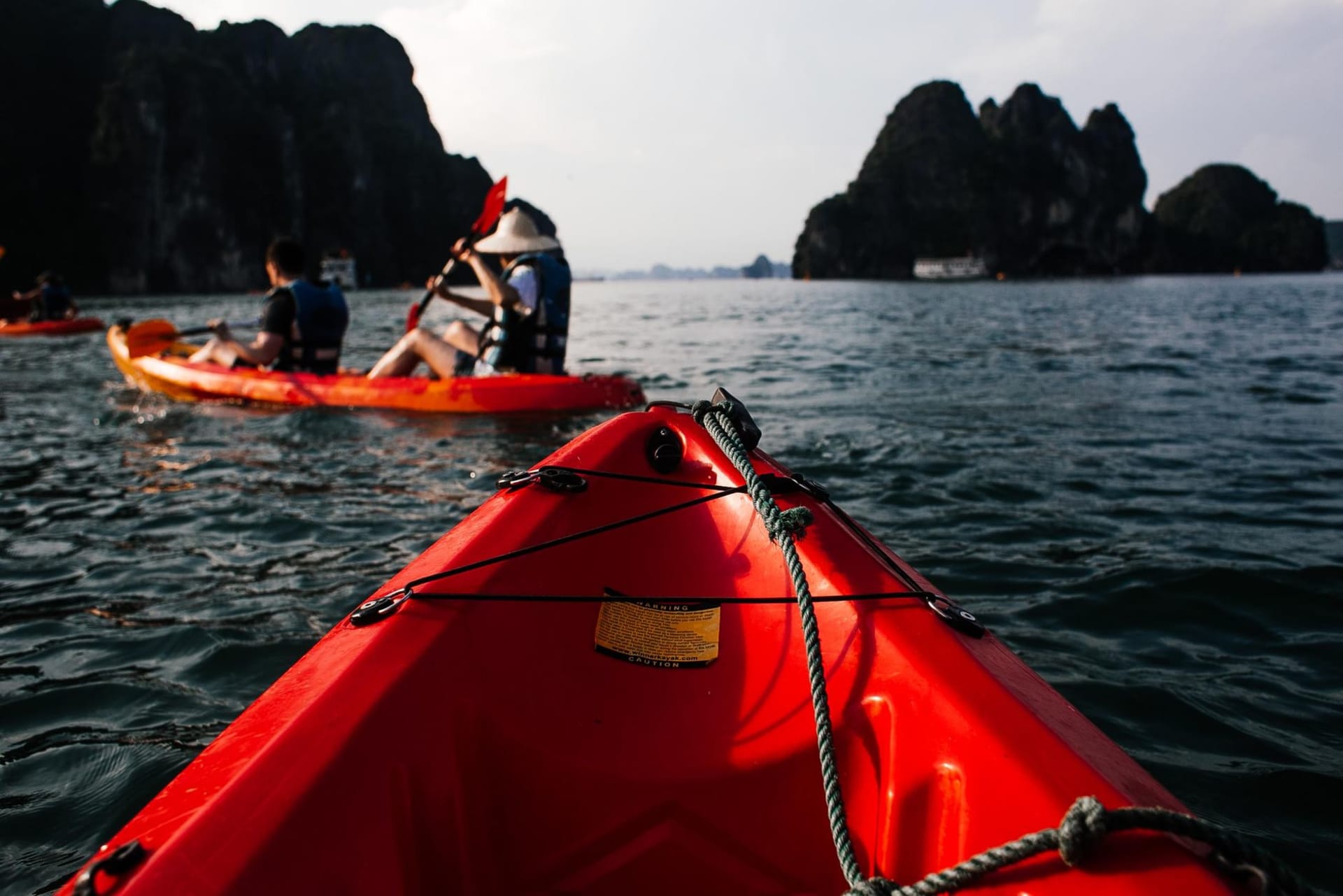
Paddle a kayak through hidden lagoons and sea caves accessible only at low tide inside the karst bay.
We left the junk boat at five-forty in the morning. The bay was still dark in the way that only water can be dark — the blackness of something that goes deep and doesn’t give things back. Our guide, a man named Hung who wore a faded Hanoi FC cap and spoke in clipped, precise English, had our kayaks in the water before I’d finished my coffee.
Halong Bay at that hour is not the postcard. The karst towers are shapes without detail, silhouettes stacked against a sky that hasn’t decided on its color yet. The smell is brine and something older — the particular cold-mineral exhale of limestone that has been swallowed and released by the sea for four hundred million years.
Through the Cave at Low Tide
Hung pointed us toward what looked like solid cliff face. At six meters closer I understood: a low arch, the kind you’d miss entirely from any cruise deck, sat just above the waterline. The tide was out. He told us to lie back in the kayaks and pull ourselves through by the ceiling rock.
Inside was Hang Luon Lagoon, completely enclosed, ringed by vertical walls hung with ferns and the roots of trees I couldn’t name. A family of macaques watched us from a ledge ten meters up, entirely unbothered. Lia made a sound I’d only heard her make once before, standing in front of a painting in Lyon — a soft, involuntary exhale of recognition. Like meeting something you’d imagined correctly.
The water inside the lagoon is different from the bay water. Stiller, darker green, warm in patches from where the sun hits the walls. I trailed my hand over the side and it came up smelling of the sea floor.
The Hour Before the Crowds
We had the lagoon to ourselves for nearly forty minutes. Then the tour kayaks began arriving — groups of six and eight, guides calling instructions in four languages, GoPros strapped to every bow. We had come through the only passage small enough to block out the noise.
The thing nobody tells you about Halong Bay is that the scenery is not the point of arrival — it’s the permission structure. When you’re at water level, in a vessel that draws twenty centimeters, the karst landscape opens its internal geography. There are dozens of these hidden chambers scattered through the bay between Cat Ba Island and the main anchorage near Tuan Chau. Most are unnamed on maps. Hung knew them by the way the water moved near the cliff face.
We ate instant noodles on the junk for breakfast, paddled out again by nine, and spent the morning drifting between towers. By eleven, the bay was unrecognizable — a highway of cruise ships trailing white wakes, the air thick with diesel. But we had already had our Halong.
When to go: October through April offers calm seas and cleaner air, with March and April bringing a silver overcast light that makes the karst glow without harsh shadows. Avoid July and August — typhoon season and the highest tourist density make early-morning kayaking feel less like discovery, more like traffic.