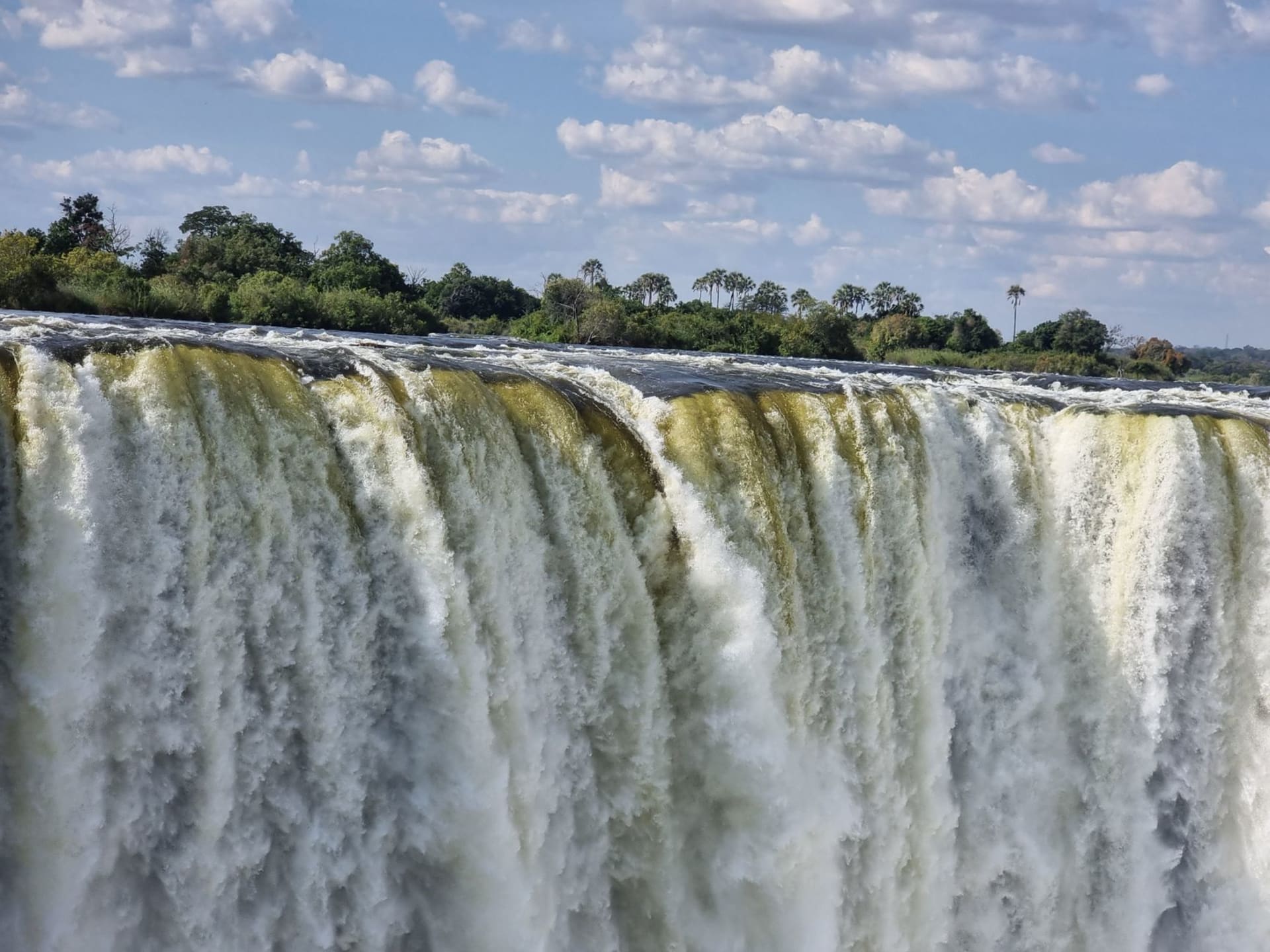
Zambezi National Park
"Six elephants crossed the road in front of our vehicle without slowing down, and the driver didn't either."
Zambezi National Park doesn’t announce itself. You leave Victoria Falls Town on the road that parallels the river heading northwest, and at some point you’re past the lodges and the town’s informal edge, and the bush closes in, and you’re in a national park that most visitors to the falls never quite locate. It runs 40 kilometers along the Zimbabwean bank of the upper Zambezi, a strip of riverine woodland and open floodplain that shelters a population of elephants that may be the most casually confident I’ve encountered anywhere in Africa.
Elephant Country
The elephants here behave like they own the place, which they do, technically. Morning game drives along the river roads produce encounters at distances that would be alarming if the animals weren’t so clearly uninterested in you. A large bull stood in the road ahead of our Land Cruiser for three minutes without any evident concern, then stepped off into the mopane woodland without looking back. The guide turned to me with an expression that said this happened every day, which it apparently does.
The park’s buffalo herds are also substantial — I counted over 200 in one open clearing near the river, moving in the slow collective way that large bovids move, a sound of hooves and the low percussion of horns. Sable antelope appear on the higher ground, which is rare enough elsewhere to feel significant here.
The River Roads
The tracks that follow the Zambezi’s edge are the best part of Zambezi National Park for self-drive visitors. They’re passable in a 4x4 during dry season and they put you within meters of the river, where hippos rise and sink with their balletic regularity and crocodiles appear as logs that occasionally rearrange themselves.
The light on these roads early morning is particular — filtered through the riverine canopy that lines the bank, dappled and shifting, making everything move even when nothing is. I drove one stretch in silence for twenty minutes and counted four different kingfisher species between me and the water. That’s the kind of detail that doesn’t make it into the highlight reel but is somehow what you remember.
Walking in the Park
Guided walks are available and offer the texture that game drives miss — the smell of the soil after elephant dung dries in the sun, which is surprisingly pleasant; the sound of a termite mound working at frequencies just below perception; the specific waxy resilience of mopane leaves, which elephants eat by the ton. My guide was from a village near the park’s southern boundary and had been leading walks here for twelve years. He narrated the bush the way a local narrates a neighborhood — this is where things happen, this is what the marks mean, this is why that tree is damaged.
Practical Reality
Zambezi National Park is accessible on a day trip from Victoria Falls Town — the entrance gate is 6 kilometers from town on the Kazungula road. Most visitors do game drives; walking safaris require advance booking through a licensed operator. Park fees are separate from the falls entrance and lower-traffic than the Zimbabwe falls viewpoints, which makes early mornings particularly worthwhile.
The park supports lions, leopards, and wild dogs, though sightings of these are less reliable than the elephant and buffalo encounters. Come with elephant expectations and any predator sighting is a bonus.
When to go: May through October for dry season game viewing, when animals concentrate near the river. July and August offer the densest wildlife at the water’s edge. Avoid the rainy season roads (November–April) unless you have a serious 4x4 and a flexible schedule; some tracks become impassable.