
Victoria Falls Bridge
"Cecil Rhodes wanted the train's passengers to feel the spray. He got his wish, and so did we."
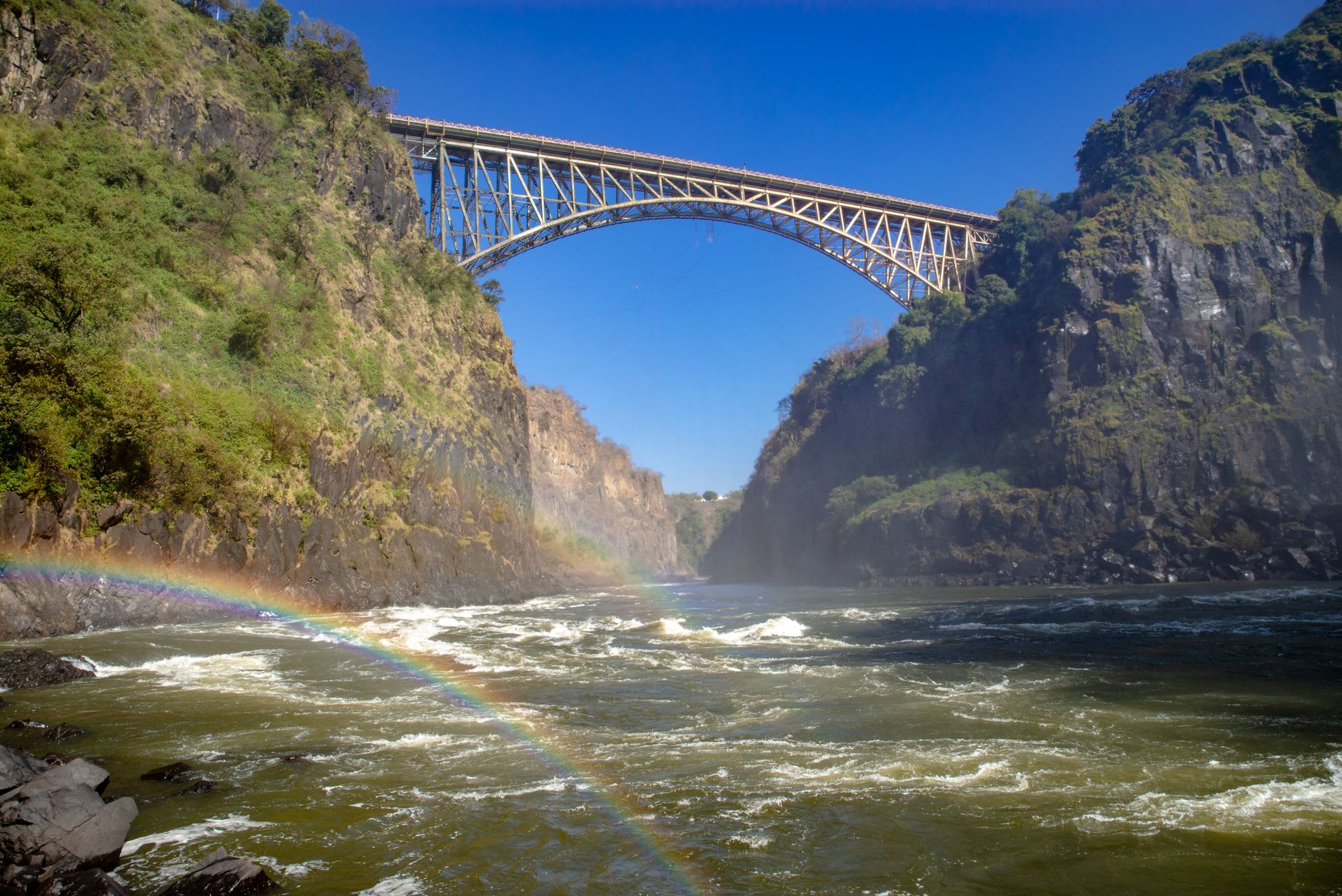
I have a complicated relationship with colonial-era engineering, and the Victoria Falls Bridge is exactly the kind of thing that makes me uneasy and impressed in the same breath. It was Cecil Rhodes who decreed that the railway crossing the Zambezi should be built close enough that the spray from the falls would fall on the passing trains — a piece of imperial theatre that he didn’t live to see completed in 1905. Standing on it now, with one foot technically in Zambia and the other in Zimbabwe, I felt the full strange weight of the place.
A Walk Between Two Countries
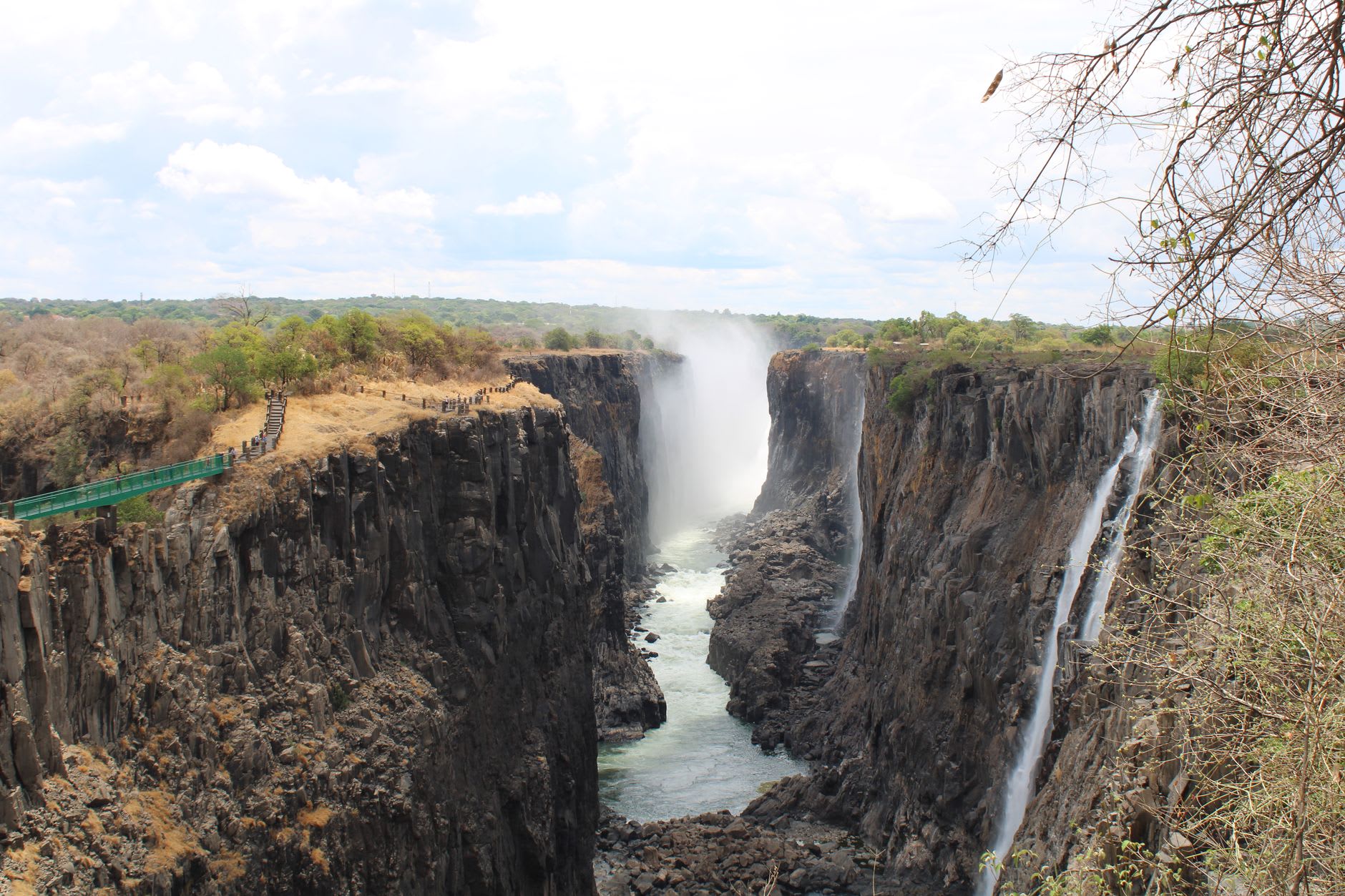
The bridge sits in a kind of no-man’s-land between border posts, which means you can walk out onto it without formally entering either country — a guide on the Zambian side pointed this out with the practiced patter of someone who’s explained it a thousand times. We walked the span on the pedestrian walkway, the gorge dropping away beneath us, the Zambezi a thin green ribbon a hundred-odd metres below, and the spray from the falls drifting over us in a fine, constant mist. On the bridge’s mid-point there’s a painted line marking the border. Lia stood astride it and made me take the obligatory photo. I obliged, against my better instincts, and it’s now one of my favorite pictures from the whole trip.
There’s also a small bridge tour that takes you down underneath the deck, onto the steel girders, where a guide explains how the whole arch was built outward from both banks until the two halves met in the middle. It’s genuinely impressive Victorian engineering, and the view back up at the falls from below the structure is one almost nobody bothers with.
The Jumpers
The bridge is now famous for a less dignified reason: it’s one of the great bungee jumping sites in the world, a 111-metre plunge straight off the middle of the span toward the river. I watched a steady procession of people get strapped up, shuffle to the edge, and either leap immediately or stand there negotiating with mortality for a deeply uncomfortable length of time. Lia, to my horror and admiration, did it. She came back up grinning and shaking and unable to form complete sentences for about ten minutes.
I did not jump. I want to be clear that this was a considered decision and not cowardice, though Lia disputes this characterization. I did, however, do the gorge swing, which is a slightly less terrifying pendulum off the same structure, and I will admit that the first three seconds of free-fall rearranged something in my chest that has not entirely settled since.
The Old Trains
If adrenaline isn’t your thing, there’s a quieter pleasure here. A restored steam locomotive sometimes runs out onto the bridge at sunset, and you can take a slow, faintly absurd tour that involves drinks and a stop in the middle of the span as the light goes orange over the gorge. We did it on our last evening. The train hissed, the gorge filled with golden haze, a fish eagle called somewhere below, and for once I let the colonial history sit quietly in the background and just watched the river do what it’s done for millions of years, indifferent to all our bridges.
When to go: The falls are at peak flow from February to May, but the spray can be so heavy then that the bridge view disappears into mist. For clearer views of the gorge and structure, come in the drier months of June to October. Bungee and swing operations run year-round, weather permitting.