Mornington Peninsula
"Every second person on the beach seemed to be from Melbourne, and all of them were visibly relaxing on purpose."
The Mornington Peninsula runs south from Frankston for about ninety kilometres, narrowing as it goes until it terminates at Point Nepean — a thin strip of land with Port Phillip Bay on one side, the open Bass Strait on the other, and a geography that has always made it feel both accessible and slightly separate from the mainland of ordinary life. Melburnians have been coming here for summers since the 1880s, and the peninsula has absorbed a century and a half of leisure time into its bones: beach shacks that became expensive properties, fishing villages that became restaurant destinations, holiday rhythms that are now fully institutionalised.
The Bay Side Beaches
Port Phillip Bay is calm and shallow and warm by Australian standards — nothing like the Southern Ocean beaches on the ocean side. The bathing boxes at Mt Martha and Portsea are among the most photographed subjects in the state: narrow wooden structures painted in combinations of primary colours, row upon row along the sand, sold for prices that have become a local joke. I counted forty-seven colours in one afternoon. Nobody at the beach seemed to find this unusual.
The water here is the colour of green glass in the morning, blue by midday, and turns pink-silver at dusk in a way that made me take the same photograph four times. I swam at Sorrento, where the beach curves around a headland and the water was warm enough that I stayed in longer than I intended and emerged slightly dazed.
The Ocean Side
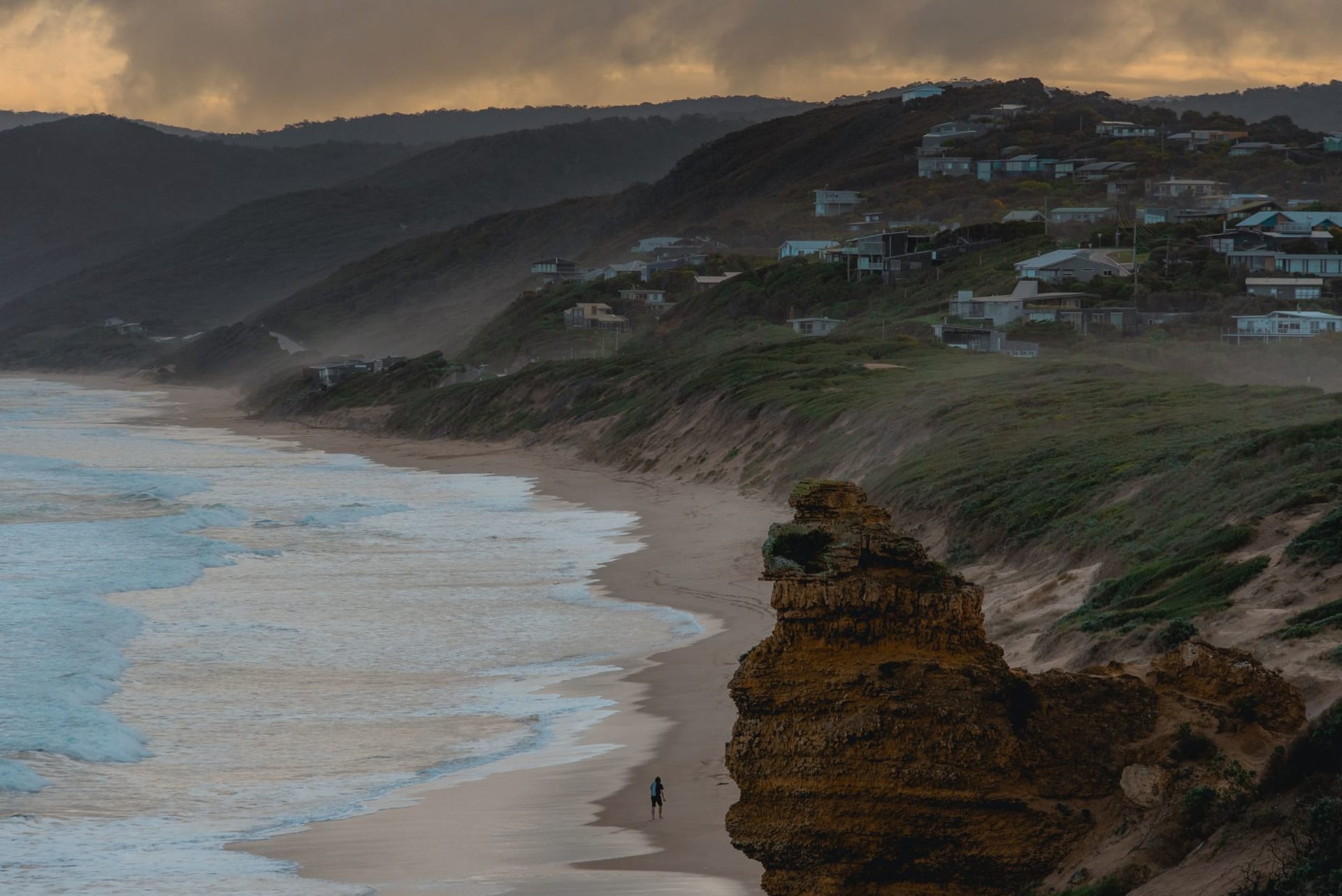
The ocean beaches on the Bass Strait side are a completely different proposition. Gunnamatta, Rye, St Andrews — these are surf beaches with proper rips and proper swells and flags you stay between, because the water is serious. The sand is the powdery white of a beach that doesn’t get warm enough to justify itself by temperature alone but justifies itself anyway by the light and the emptiness.
I walked the length of the beach at Gunnamatta late in the afternoon when it was nearly empty. The wind was offshore and the waves were clean and peeling and nobody was in the water. Two surfers sat on the sand watching. I asked why they weren’t going in. One of them said “too perfect” in a way that seemed to mean something else.
The Wineries
The peninsula’s cool maritime climate produces pinot noir and pinot gris that rival the Yarra Valley without the Yarra Valley’s reputation markup. Lia and I spent a full day working through cellar doors, starting early enough to get the winemakers talking before the lunch crowd arrived. The best wine I tasted all week was a single-vineyard pinot from a small producer near Red Hill, served at exactly the right temperature by a man who had made it himself and was clearly waiting to discuss it.
The peninsula has over fifty wineries. Some have restaurants, some have views, some have both, all have an opinion about maritime influence on tannin structure.
Point Nepean
At the very tip, Point Nepean National Park requires a walk or a bike hire — no cars beyond the park entry — and the trail passes through quarantine station buildings from the nineteenth century, gun emplacements from both world wars, and scrubby coastal teatree before opening onto the head itself: Bass Strait and Port Phillip Bay simultaneously visible, ships queuing to enter the bay, the water moving differently on each side of the narrow point.
When to go: December through February for beach season, though the peninsula is at its most crowded and most expensive. March–April offers warm water, fewer people, and harvest time at the wineries. June–August is quiet and moody — some cellar doors close, but the ones that stay open are worth the trip.