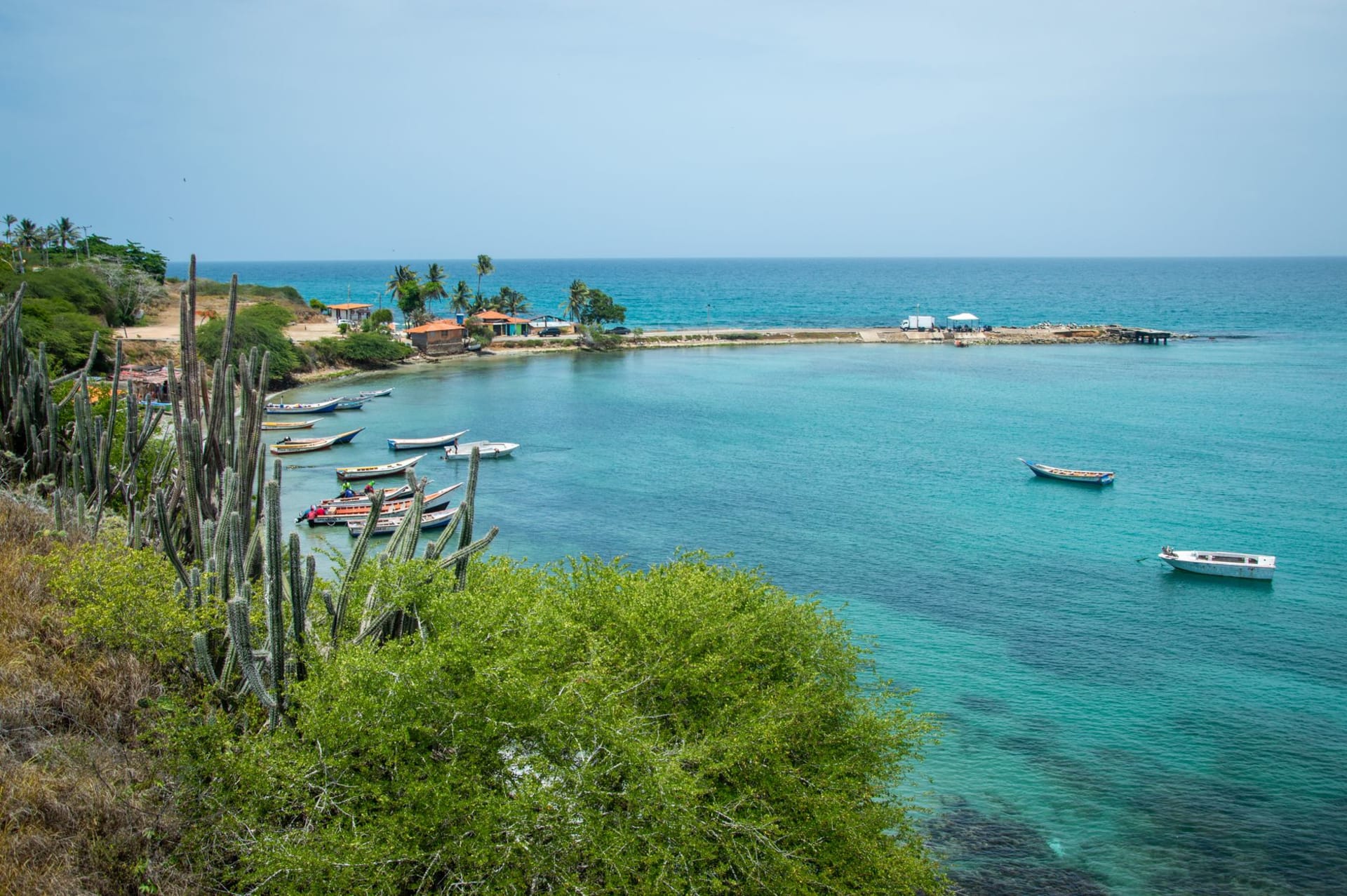
Margarita Island
"The wind here has opinions. It pushed me sideways across the beach and I thanked it."
Margarita was the pearl of the Caribbean long before it became a travel slogan — Spanish colonizers established pearl diving operations here in the early 1500s, making it one of the first permanently settled places in South America. The pearls are largely gone now, dredged out across several centuries, but the island retains something of that early colonial weight: a fortress above the sea, a cathedral that has survived multiple earthquakes, a pace of life that the 20th century tried and mostly failed to accelerate.
The island sits about 40 kilometers off the northeast Venezuelan coast and has two distinct zones connected by a narrow isthmus: the eastern half, where most of the towns and beaches are concentrated, and the western Macanao peninsula, drier and hillier and far less visited, where the roads turn to dirt and the landscape starts to look like the Baja peninsula.
El Yaque and the Wind
The southeastern end of the island funnels trade winds through a gap in the hills in a way that the global kitesurfing community discovered in the 1990s and never stopped talking about. El Yaque is now one of the better-known kite destinations in the Americas — reliable wind from December through August, a shallow bay suitable for learning, and a cluster of schools and guesthouses that have grown around the sport. You don’t need to kitesurf to enjoy the beach, but the spectacle of a hundred colorful kites overhead is its own entertainment.
The best time at El Yaque is late afternoon, when the light comes in at an angle and the kites cast long shadows across the water. Someone will inevitably offer you a beer from a cooler.
Asunción and the Colonial Interior
The capital of Nueva Esparta state doesn’t get much traveler attention, which makes it more interesting, not less. The colonial center around the Plaza Bolívar has been maintained without being renovated into sterility — the paint is peeling in places, the cathedral’s interior smells of candle wax and age. The Castillo de Santa Rosa sits on a hill above town with the authentic indifference of a fortification that was built for actual defense and not for tourist photographs.
The market near the plaza sells the local specialty: mariscos, specifically the smoked and dried fish that you smell before you see. Red snapper, kingfish, mojarra — the island’s fishing tradition is still very much active.
Playa El Agua and the North Coast
The north coast beaches are wider and more dramatic than the sheltered southern shores, and Playa El Agua is the most famous: a long arc of brown sand with reasonable surf and a row of open-air restaurants that serve grilled fish with plantains and cold Polar until well into the evening. At peak seasons this beach is packed; in the early morning it belongs entirely to the pelicans and whoever got up early enough.
The restaurant system here is wonderfully functional — you pick your fish from the cooler, indicate how you want it prepared, and eat it an hour later under a thatched roof with your feet approximately at sea level. The pargo (red snapper) is the standard order and the right call.
When to go: December through April for dry season and reliable trade winds — ideal for kitesurfing and beach weather. El Yaque’s wind season extends to August, making it suitable for kitesurfers later in the year. The island gets crowded with Venezuelan domestic tourists during Semana Santa, Carnival, and school holidays. For the quietest experience, avoid holiday periods and aim for January or February, when the weather is at its most reliably pleasant.