Champagne Beach
"I stood ankle-deep and felt the sand fizz against my skin, like the island had poured itself a drink."
A crescent of white sand on Espiritu Santo where volcanic bubbles fizz at your ankles like the ocean itself is celebrating.
Lia noticed it before I did. We’d only been standing in the shallows for a minute, still blinking at how blue the water was, when she grabbed my arm and said, “Pierre, my feet are tingling.” I thought she was joking until I felt it too — tiny bubbles pushing up through the sand around our ankles, cold and ticklish, like the seafloor was breathing. That’s the whole reason this stretch of coast on Espiritu Santo carries the name it does: volcanic gas seeping up through the white sand at the waterline, fizzing exactly like the bottom of a glass of champagne. I’d read about it before we came, but reading about it and standing in it are two very different things.
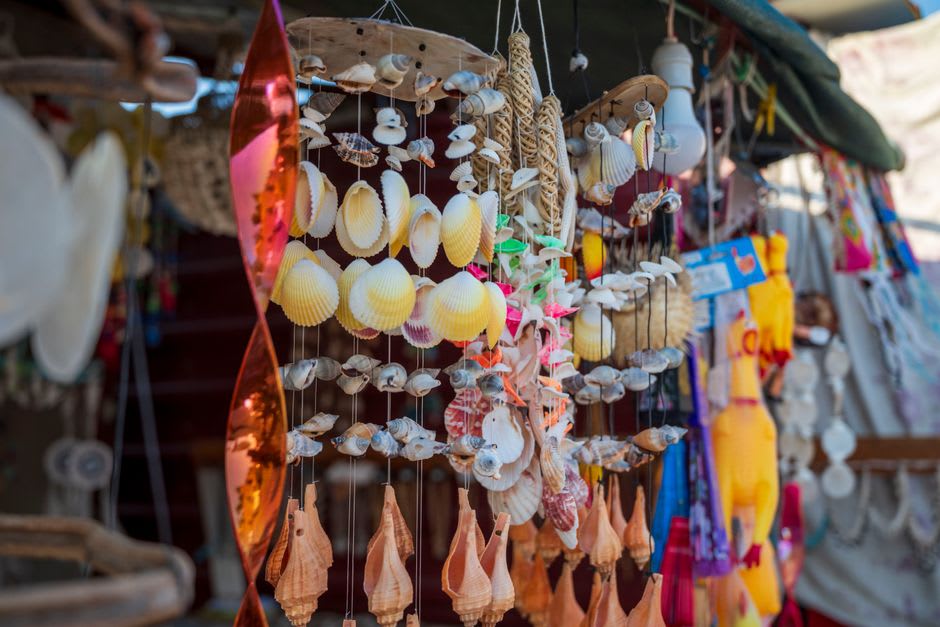
We’d taken a bus and then a shared truck out from Luganville that morning, winding along the northeastern coast until the road opened up onto this perfect bay — a crescent of fine white sand pinched between limestone cliffs on one side and a wall of leaning coconut palms on the other. A cruise ship was anchored offshore, and a line of tenders was ferrying passengers in for a few hours, which explained the handful of stalls set up near the tree line where women from the local landowning villages were selling woven baskets, carved wood, and grilled fish wrapped in leaves. We bought two skewers and ate them sitting on driftwood, watching kids from the village dive off a rock ledge into water so clear you could count the fish beneath them.
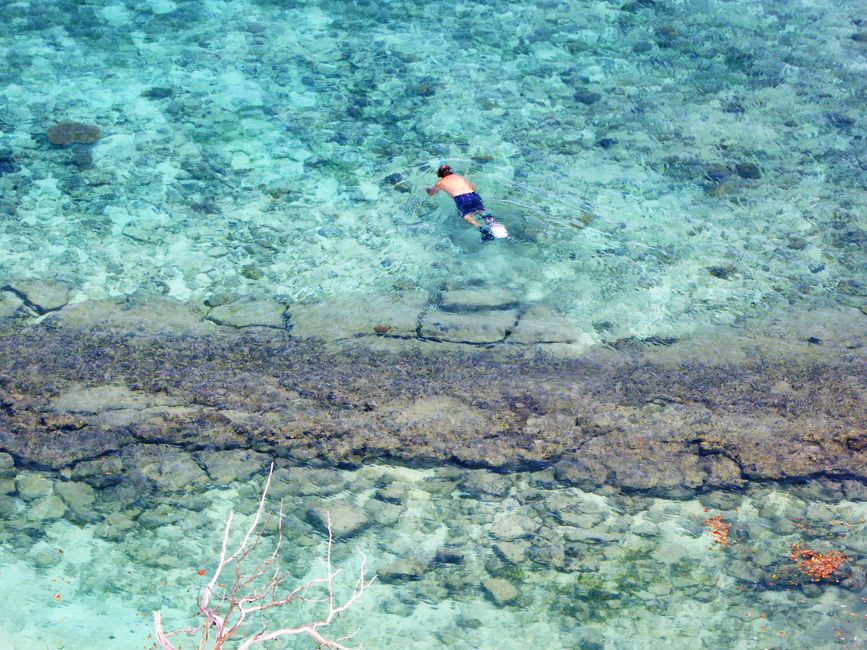
There’s no resort here, no bar, nothing permanent beyond those stalls and a few thatched shelters for shade — and that’s exactly what makes it feel unclaimed, even with a cruise ship parked in the bay. We snorkeled for over an hour, following the reef along the cliff base where the water stayed glassy and calm, and I kept drifting back toward the fizzing patches just to feel it again. Lia joked that it was the closest thing to a free spa treatment either of us had ever had. Later, a guide mentioned almost in passing that not far south, around Luganville, divers were exploring wartime wrecks like the SS President Coolidge and the old seaplane ramps — a reminder that this whole coastline carries a heavier history under its postcard surface, even if Champagne Beach itself felt purely, simply beautiful.
We stayed until the tenders started shuttling the last cruise passengers back out, and the beach slowly emptied into something quieter — just us, a few village kids, and the sound of water fizzing softly at the shore.
When to go: Aim for the dry season between May and October, when the sea stays calm and clear — ideal for snorkeling, and the same window that keeps the cruise ships coming in steadily, so expect company but also the best conditions of the year.
Keep exploring
More from Vanuatu
 vanuatu
 Efate Island
The island that wraps around Port Vila's harbor offers an entire circuit of village life, blue holes, and untouched coast once you leave the capital behind.
Explore vanuatu
 Espiritu Santo
Vanuatu's largest island balances WWII wreckage rusting on the seabed with beaches so white and water so blue they look technically impossible.
Explore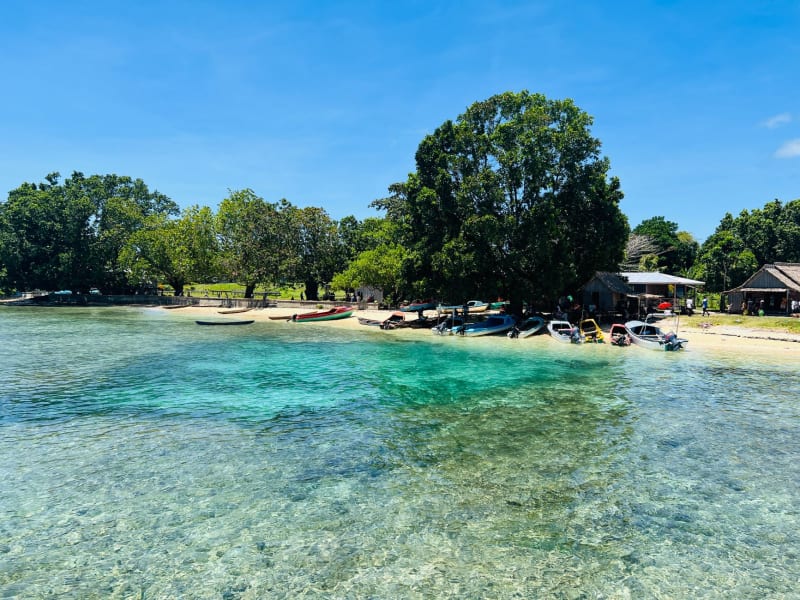 vanuatu
 Luganville
A WWII boomtown that never quite boomed again, sitting on the edge of some of the best wreck diving in the Pacific with a comfortable, unperformed ease.
Explore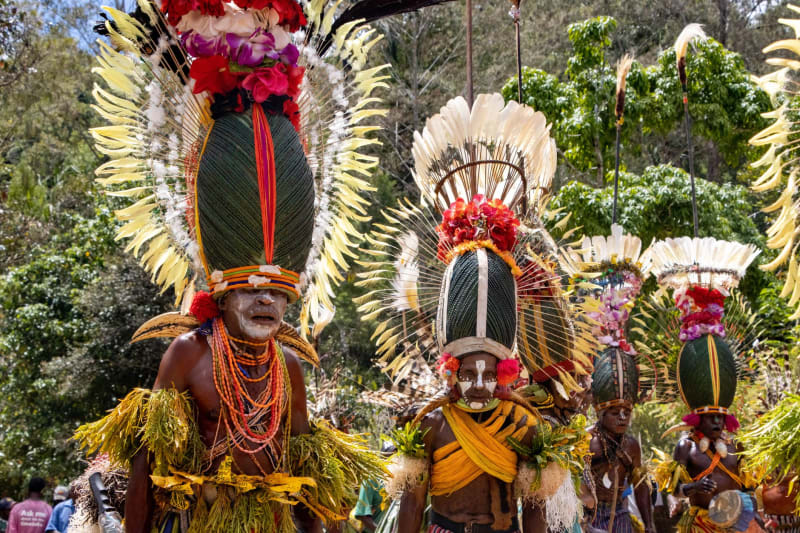 vanuatu
 Malekula
Vanuatu's second-largest island holds more languages and cultural traditions per square kilometer than almost anywhere else on earth, most of them still quietly functioning.
Explore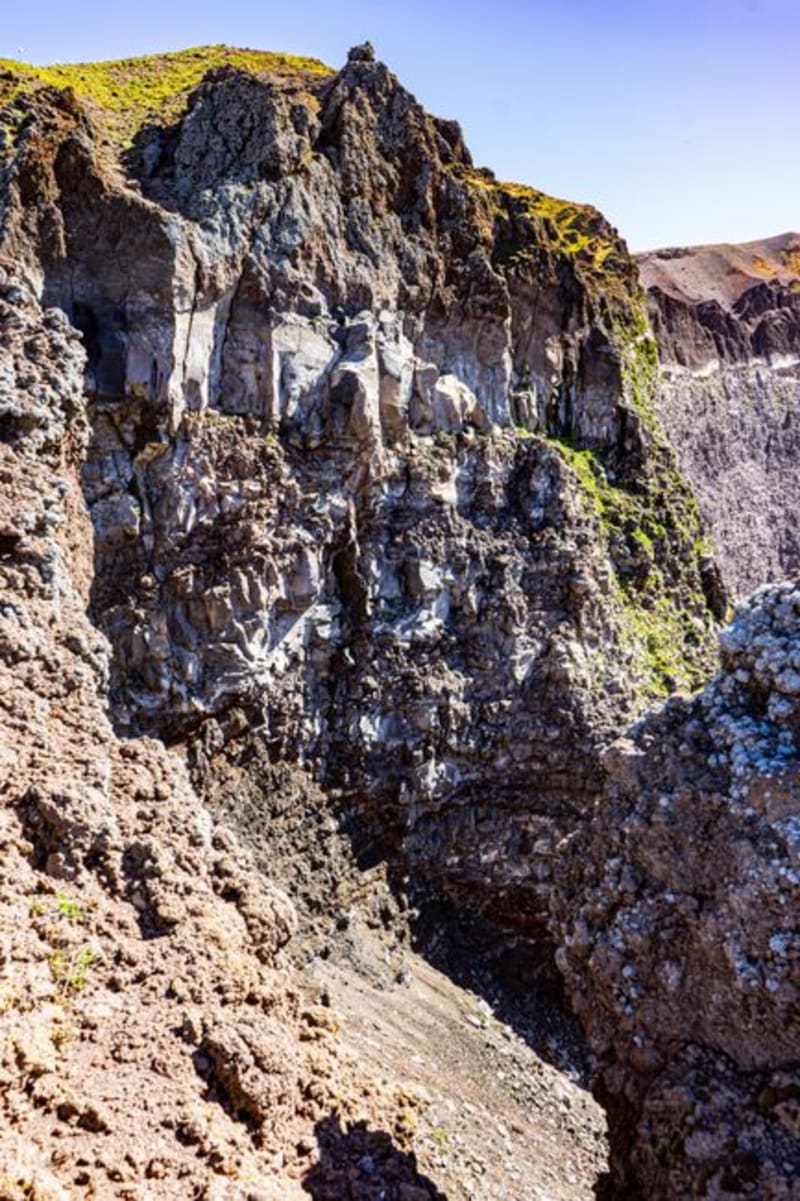 vanuatu
 Mount Yasur
Hiking to the smoking rim of one of the world's most accessible active volcanoes, where the earth breathes fire in full view.
Explore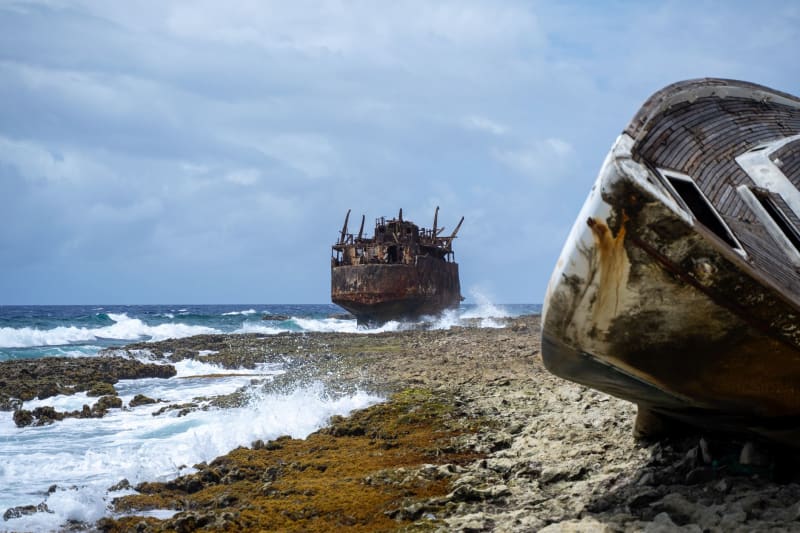 vanuatu
 Mystery Island
A tiny uninhabited coral island off Aneityum's coast where the water is clear enough to read the bottom through six meters of it, and the silence is a physical thing.
Explore