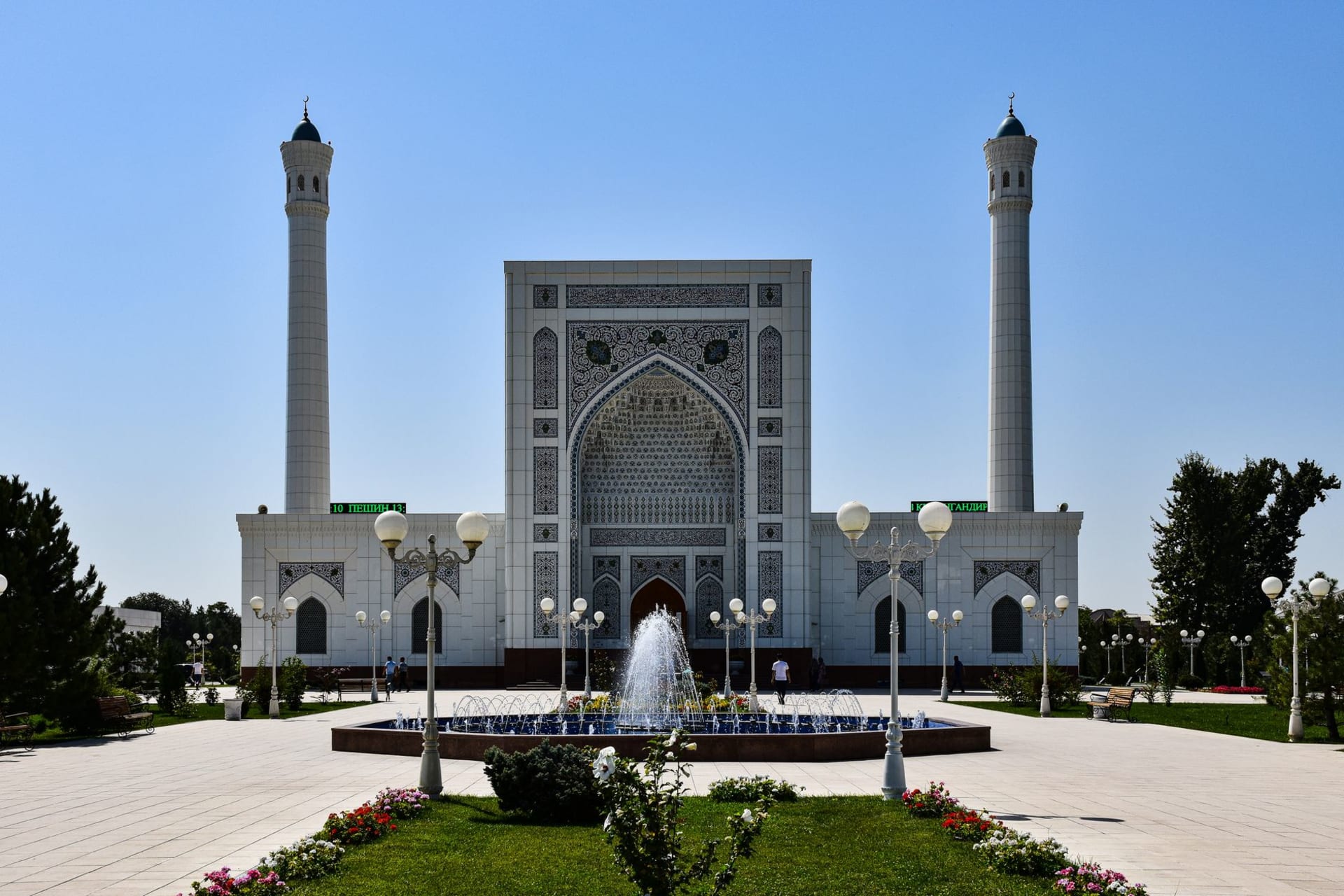
Tashkent
"I came to Tashkent expecting a stopover city and left having eaten one of the best meals of the year."
Most people treat Tashkent as a logistics hub — the airport you fly into before heading to Samarkand, the city you pass through rather than the city you go to. I had two days before a morning train and no particular plan, which is usually when a place has a chance to show you something it doesn’t have ready for people with plans.
The city that Timur and the medieval Silk Road built was leveled by a 7.5 earthquake in 1966. The Soviet Union rebuilt it in two years, which tells you something about the era’s ambitions and methods. What they built was a wide-boulevarded, metro-connected, heavily monumentalized city with parks the size of neighborhoods. It is strange and occasionally magnificent.
The Metro as the Real Destination
Tashkent’s metro opened in 1977 and was built, in the Soviet tradition, as a palace for the people. Each station has a distinct theme. Kosmonavtlar is dedicated to space exploration — the walls are covered in mosaic portraits of cosmonauts and geometric celestial patterns in gold and burgundy. Alisher Navoiy station quotes the fifteenth-century Uzbek poet in ornamental script. Paxtakor, named for a football club and for cotton, has a ceiling of white tile flowers that turns the platform into something botanical.
I rode the entire network twice. The trains are punctual and the stations genuinely beautiful in an overwrought, undeniable way. Nobody underground seemed to find them remarkable — which is its own kind of remarkable.
Chorsu Bazaar and the Art of the Pile
The Chorsu bazaar sits under a Soviet-era dome and spills well beyond it onto open streets. It is the real-food antidote to the tourist-facing crafts shops near the monuments. The dried fruit section alone — mounds of apricots in at least four varieties, raisins ranging from green to nearly black, figs pressed flat, mulberries silvery-white — took me twenty minutes to walk through properly. I bought a bag of dried persimmon and ate it on a bench outside while watching a man with a cart of watermelons negotiate with another man who had a cart of watermelons.
The meat section is not for the hesitant. The spice vendors will let you smell everything, which after an hour leaves you slightly confused about what things actually smell like. I bought black cumin and a small bag of dried barberries because I didn’t know what they were and the woman selling them was so decisive about thrusting them at me that refusal felt rude.
Plov and the Protocol of Lunch
Uzbek plov — rice cooked in lamb fat with carrots, onion, and chickpeas — is the national dish and Tashkent has specialist restaurants that open only for lunch and close when the plov runs out. The protocol is simple: arrive before noon. At Besh Qozon, a legendary institution in the old city, the plov is ladled from enormous black kazan cauldrons, served on a communal dish if you eat with strangers, accompanied by a salad of tomato and raw onion and a pot of green tea. The rice has a quality I kept trying to identify: each grain separate, slightly glazed, carrying the fat without being greasy. I ate more than I needed to. I went back the next morning to eat it again.
When to go: April through June is ideal — the city is green, the air mild, and the bazaars full of spring produce. September is excellent for stone fruit. Tashkent works year-round better than the desert cities; winters are cold but manageable, and summer heat, while real, is easier to escape here than in Khiva or Bukhara.