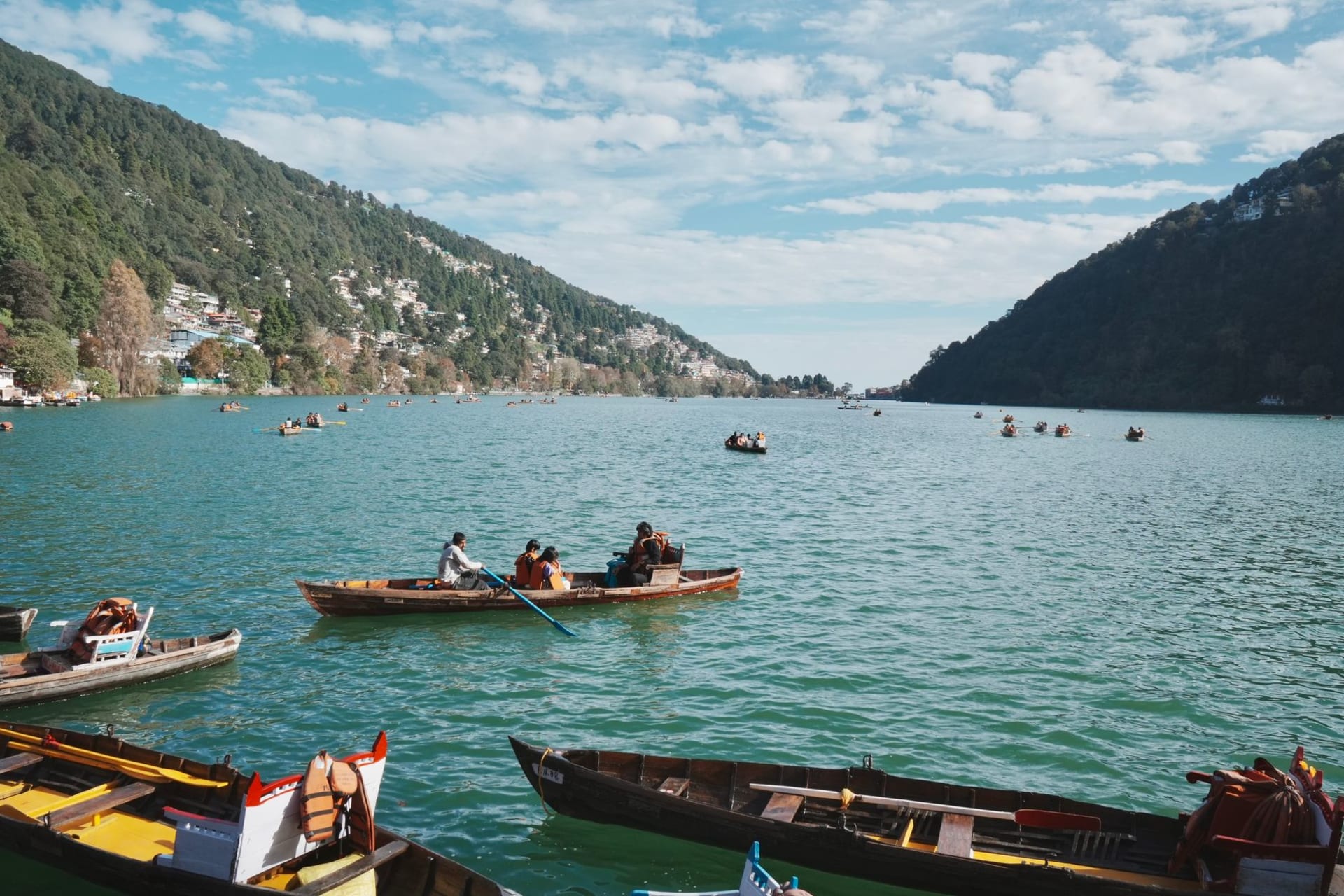
Nainital is built into a bowl in the Kumaon Hills, with the Naini Lake occupying the bottom and the town climbing the surrounding ridges in layers. The shape is almost improbably theatrical: from the Tiffin Top viewpoint on the north ridge, the lake below you is perfectly oval, the boats on it reduced to small colored points, the bazaar along the south bank a ribbon of noise and color. Every view in Nainital is a view toward or across the lake. The town has organized itself to take advantage of this for over a century and a half and it shows.
This is a place that has been a resort for a long time. The British discovered the lake in 1841 and built around it with colonial ambition — clubs, churches, schools, boathouses. Jim Corbett was born here. The schools are still running, still producing a peculiar Anglo-Indian institutional culture that surfaces in the bakeries selling cheese straws and the cricket grounds tucked into improbable hillside clearings. It coexists without apparent friction with the Kumaoni town below and the enormous volume of Indian tourism that arrives from April through June.
The Lake at Different Hours
Rowing on Naini Lake is the activity everyone does and also, unexpectedly, one of the genuinely good ones. You rent a boat from the Tallital end of the Flats, choose a direction, and find very quickly that the morning light on the water and the surrounding ridgeline is doing something worth looking at. The lake is small enough to cross in fifteen minutes but we spent an hour simply drifting, watching the light change on the Naina Devi temple reflected in the north bank’s water. The boatman, who had been doing this for thirty years, offered exactly the right amount of commentary: very little.
Walking the Ridges
The road around the lake — Mall Road — is fine but busy. The better Nainital is accessed by the ridge paths above the town. The Cheena Peak path (also called China Peak, at 2,611 meters) climbs through dense oak and rhododendron forest and takes about three hours return from the lake. I went early on a clear March morning and found the Himalayan panorama — a wide white wall that included Nanda Devi and the Pindari group — perfectly visible above the clouds that were already building in the valley. By the time I came down, those clouds had filled the bowl below the ridge and Nainital had disappeared into white.
The Kumaoni Kitchen
Nainital’s food is better than the tourist town status would suggest, particularly if you leave the Mall Road restaurants for the lanes above the bazaar. Bhatt ki churkani — a fermented black soybean curry specific to Kumaon — appeared on menus here in a way it didn’t elsewhere and I ordered it twice. Dense, slightly sour, served with mandua (finger millet) roti, it tasted like the hills themselves: complex, slightly austere, not for everyone. Also worth finding: singal (a fried buckwheat bread) with aloo gutuk, the mustard-spiced Kumaoni potato preparation that appears on every table as though it’s compulsory.
Crowds and Timing
Nainital at peak season is a genuinely crowded place and the access roads from Kathgodam can back up for hours on long weekends. The town has long since reached an accommodation with this — the infrastructure exists, the boats go out regardless — but it does change the experience considerably. The version of Nainital I prefer is the October one: the monsoon gone, the air clear, the tourists mostly returned to Delhi.
When to go: October through November and February through March for the best combination of clear skies, manageable crowds, and comfortable temperatures. April through June is the busiest period but still pleasant before mid-May heat arrives. December and January are cold and quiet — lake views at their most atmospheric, town at its most local.