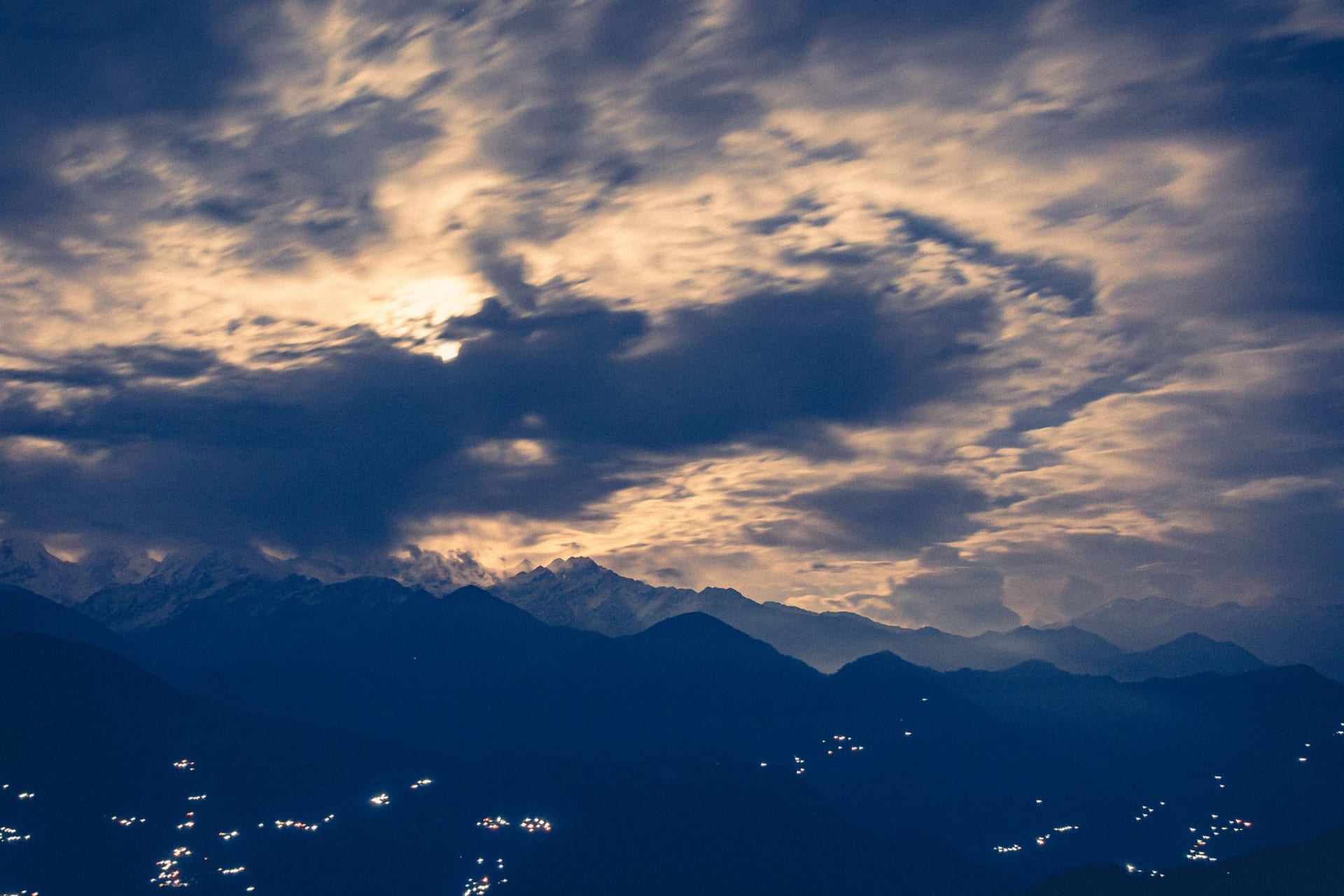
Munsiyari
"After two days of mountain roads I opened the curtains and five enormous snow peaks were simply standing there, waiting."
Munsiyari is not on the way to anywhere. That’s the first thing to understand about it, and probably the best thing. It sits in the far eastern corner of Kumaon, close to the borders with Nepal and Tibet, at the end of a long, winding, occasionally terrifying mountain road that takes most of a day from anywhere worth measuring from. People don’t pass through Munsiyari. They make a decision to go there, and then they have to mean it.
We meant it. The drive up from Almora is a slow accumulation of altitude and nerve — single-track sections clinging to the hillside, the valley dropping away below, the driver leaning on the horn at blind corners with a faith I did not share. By the time we rolled into the village in the late afternoon, the peaks were already behind cloud and I was beginning to wonder, in the way you do after a hard journey, whether the destination could possibly justify the getting there.
The morning that justified it
It did. I woke before dawn — the cold does that to you up here — and pulled back the thin curtain of our guesthouse room, and there they were: the Panchachuli. Five snow peaks in a ragged line directly across the valley, catching the first pink light while the village below them was still in shadow. The name means “five cooking fires,” and the legend ties them to the Pandava brothers of the Mahabharata, who are said to have cooked their last meal on these summits before their final ascent. I’m not a man given to gasping at scenery before coffee. I gasped.

Lia and I sat on the cold balcony wrapped in a shared blanket and watched the light work its way down the faces of the mountains for the better part of an hour. The whole village seemed to be doing the same thing — you could hear doors opening, the clink of tea glasses, the occasional cough carrying in the still air, everyone quietly attending to the same daily miracle. There are places where the mountain view is a backdrop. In Munsiyari it’s clearly the main inhabitant, and the humans are guests.
The village and the walks
Munsiyari itself is a strung-out hill settlement of slate-roofed houses, a small bazaar, and a population that belongs largely to the Bhotiya community — traditionally traders who moved goods over the high passes into Tibet before the border closed in 1962. There’s a tiny, lovingly maintained tribal heritage museum run by a local schoolteacher, crammed with the tools, textiles and instruments of that vanished trade. He talked to us for an hour with the intensity of a man worried his world will be forgotten, and he may be right to worry.
The walking here is superb and largely undeveloped. We did a half-day hike toward Khaliya Top, a high meadow above the village, climbing through rhododendron forest until the trees gave out and the whole Panchachuli range stood revealed across the valley with nothing in the way. We met two local women coming down with enormous bundles of fodder on their backs, who found our slow, panting progress quietly hilarious.

Why bother coming this far
Because Munsiyari is what a lot of Himalayan towns were before they got famous. There’s no resort sprawl, no traffic of jeeps, no one selling you a paragliding package. It is cold, remote, slightly inconvenient and absolutely unhurried, and the mountains are right there, enormous and close, every clear morning. We came planning two nights and stayed four. I’d defend that decision to anyone.
When to go: April to June for clear skies and rhododendron bloom, or September to November after the monsoon for the sharpest mountain views. Winter brings snow and serious cold, and the access road can close — beautiful, but only for the committed.