Lansdowne
"This is what hill stations were supposed to feel like, before everyone found out about them."
I found Lansdowne by a process of elimination. I’d already been to Mussoorie and Nainital and was looking for something quieter when someone in Rishikesh mentioned it with the particular tone of voice people use when they’re describing something they’re not sure they should be sharing. Regimental headquarters of the Garhwal Rifles since 1887, still an active military cantonment, and by the standards of Uttarakhand’s hill towns almost completely undiscovered by mass tourism. The main reasons for this appear to be: it’s out of the way, it has no famous attraction, and it requires a degree of intention to reach that filters for people who actually want to be there.
The town sits on a ridge covered in oak and pine, with a mall road that is perhaps five hundred meters long and has perhaps six shops, a church, and a war memorial. The regimental museum — the Garhwal Rifles Regimental War Memorial Museum — is the main formal attraction and turns out to be genuinely interesting if you have any interest in regimental history, which I do not particularly, and I stayed an hour.
The Forest Walks
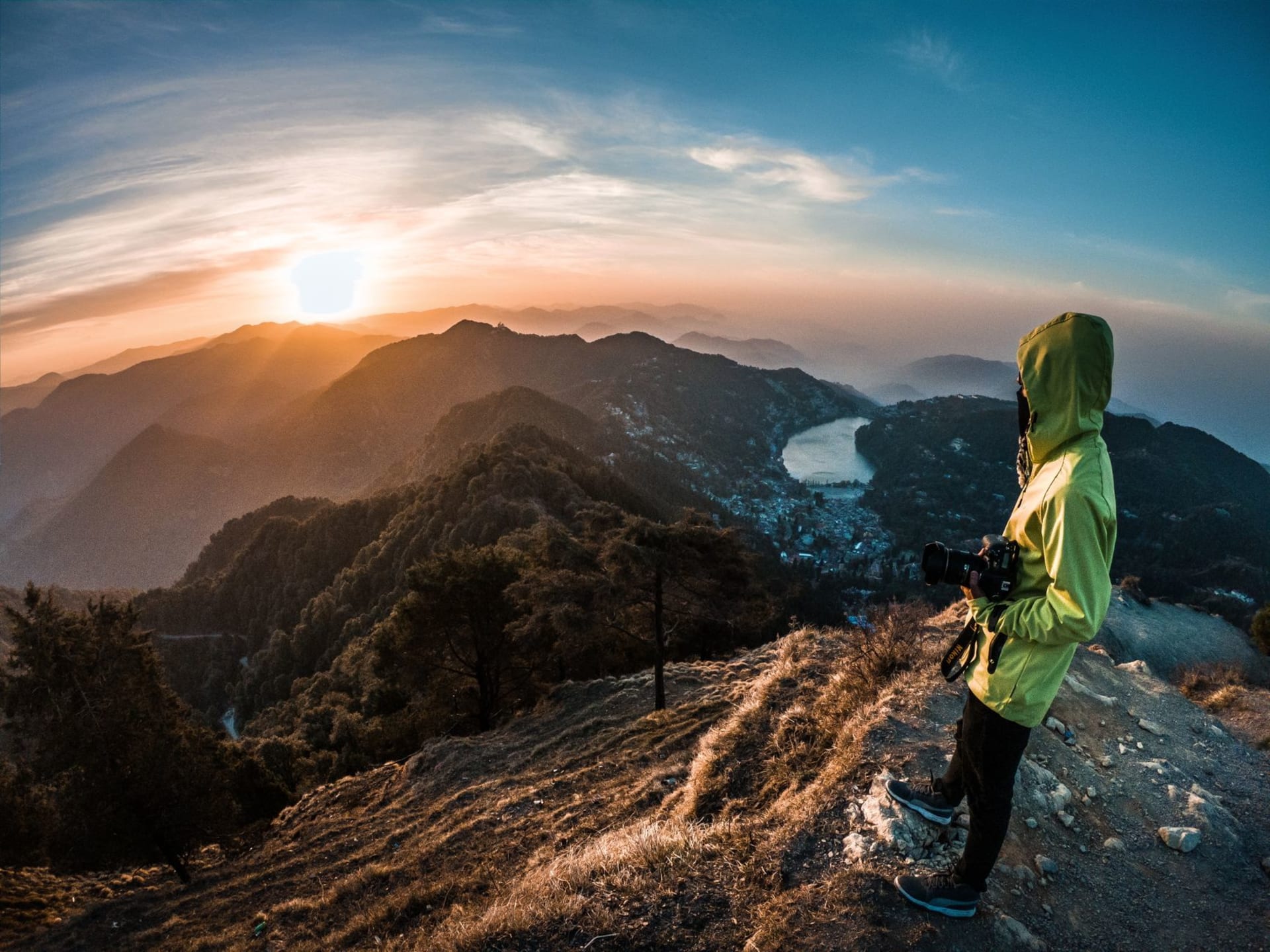
The best thing in Lansdowne is its forest, and the best thing about its forest is that you can walk in it without seeing many other people. The Tip-in-Top viewpoint, about two kilometers from the town center, requires a walk through oak forest thick enough that it blocks the wind completely and reduces the light to the kind of filtered green that makes everything feel slightly suspended. The view at the top is across forested ridges, with a long edge of the Himalaya visible on clear days: not the dramatic ice-wall of the high Garhwal, but a white horizon line that contextualizes the gentler landscape below it.
The Tarkeshwar Mahadev temple, about two kilometers further, sits in a forest clearing that functions as a kind of sanctuary — old trees, no development, a small spring. It has the quality of places that have been considered sacred long enough that the feeling has become self-reinforcing.
The Cantonment Atmosphere
Lansdowne’s active cantonment status means parts of the town retain a military orderliness that feels strange in the best way. The church — St. Mary’s, built in 1896 — sits in grounds that are maintained with a precision that would embarrass most botanical gardens. The roads have actual signage. The general quality of infrastructure is noticeably higher than in comparable hill towns, because someone has been maintaining it consistently for a hundred and thirty years. I walked through the old cantonment area in the morning mist and felt like I’d accidentally accessed a time that doesn’t exist anymore.
Bhim Pakora
No one comes to Lansdowne for the food. That said, the bhim pakora viewpoint — named for a naturally balanced boulder — has chai stalls that serve the most straightforward tea I drank in Uttarakhand: dark, sweet, milky, at exactly the temperature that required two hands wrapped around the glass. Simple pleasures are sometimes the entire point.
How to Get There
Kotdwar is the nearest railhead, about forty kilometers below by road. From Rishikesh it’s about two and a half hours by shared taxi or private car through pleasant lower-Garhwal scenery. There is no airport. There is no direct bus from anywhere particularly convenient. The difficulty of getting there is, in the end, part of the product.
When to go: October through March for cool weather and extraordinary quiet — the town is genuinely peaceful in these months. April through June for warmer temperatures and the slight increase in visitors that still falls far short of crowd. Avoid July–August monsoon rains which can make the road from Kotdwar unreliable. Winter mornings (December–January) can be foggy in a way that is either atmospheric or visibility-limiting, depending on your disposition.