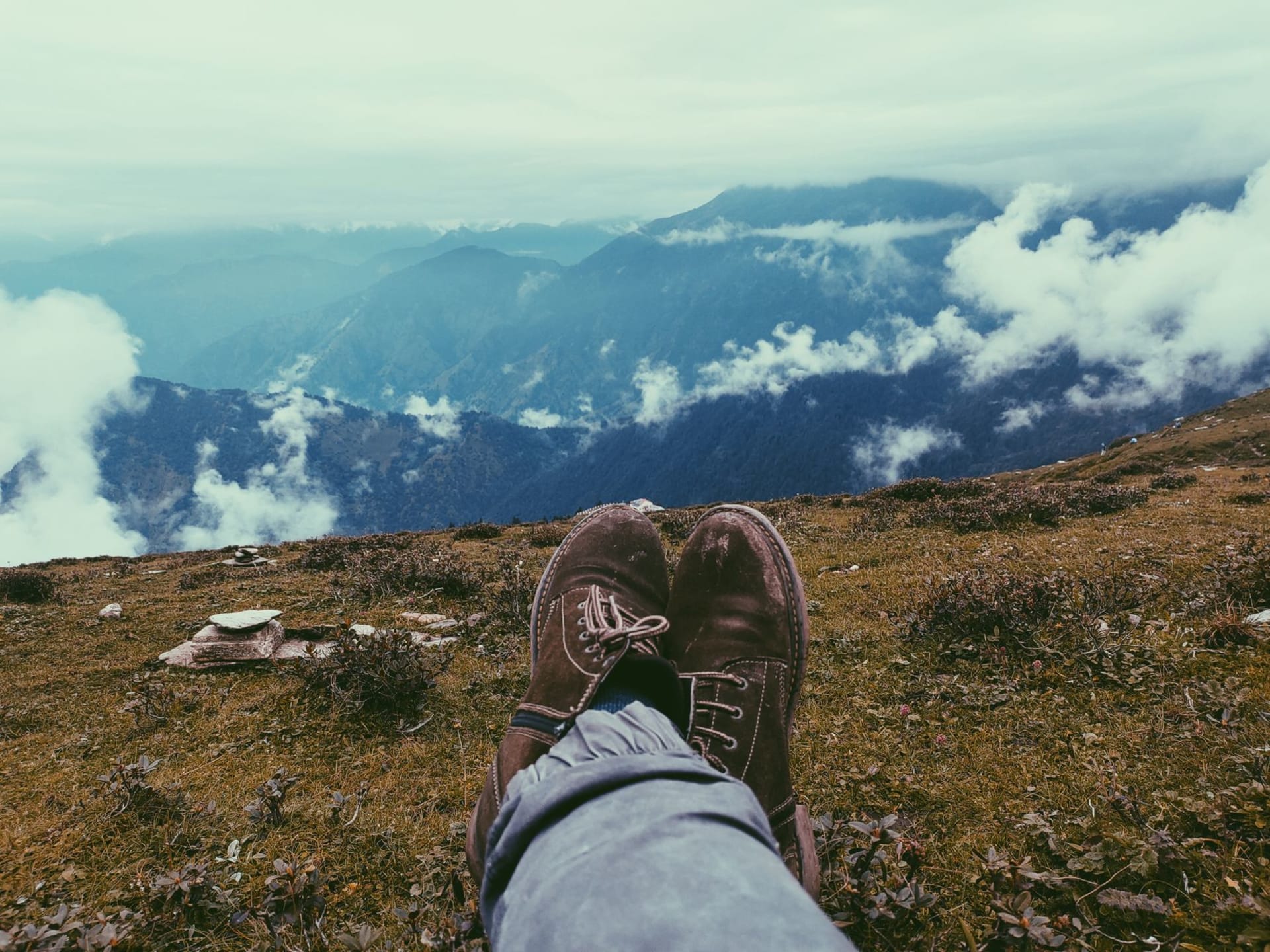
Chopta is easy to underestimate on arrival. It’s essentially a strip of small guesthouses and dhabas on a mountain road, with a few tents pitched in clearings and the kind of infrastructure that suggests a place still figuring out whether it wants to be discovered. What makes it extraordinary is what surrounds it: Kedarnath Wildlife Sanctuary spreads across the slopes below, rhododendrons cover the ridges above, and the trail to Tungnath temple starts at the upper edge of the settlement and climbs three kilometers through forest that in April is the specific red-pink-white of rhododendrons at maximum bloom.
I came in May, a week after the peak rhododendron season, and the trees were still holding color at the higher elevations. The trail to Tungnath was cold and clear. A couple from Pune were the only other people going up when I started at seven in the morning, and by the time I reached the temple at 3,680 meters — the world’s highest Shiva temple — I had the stone courtyard essentially to myself for twenty minutes before the first pilgrim groups arrived.
The Trail to Tungnath
The path climbs through oak and rhododendron forest before breaking into open meadow as the treeline drops away. The Himalayan panorama from the upper section includes Kedarnath, Chaukhamba, Neelkanth, and Trishul — a wall of peaks arranged as though positioned for maximum effect. The temple itself is compact, ancient-feeling in its dark stone, with a small inner sanctum and a priest who seemed pleasantly surprised by non-pilgrims making the effort. From Tungnath, a further kilometer of trail climbs to Chandrashila peak at 4,130 meters, where the view expands to include the Bandarpunch massif and, on very clear days, a white line that might be the Nepal Himalaya.
Wildlife Sanctuary Birding
Kedarnath Wildlife Sanctuary is one of the better places in Uttarakhand to look for high-altitude Himalayan birds. The Monal pheasant — iridescent green and blue, the size of a small turkey, the state bird of Uttarakhand — appears in the rhododendron forest above Chopta at dawn. I watched a male walk slowly across the trail ten meters ahead of me on the second morning, apparently unconcerned, his plumage catching the early light in a way that felt almost indecent. Also present: koklass pheasant, blood pheasant, various laughingthrushes, the Himalayan woodpecker working a dead trunk near the trail.
Deoriatal Lake
Five kilometers from Chopta by road, and then a two-kilometer walk uphill, Deoriatal is a small lake at 2,438 meters that reflects the Chaukhamba massif in its surface on clear mornings. I arrived at five-thirty in the morning — earlier than I wanted to be awake — and found the reflection almost perfectly still in the pre-dawn cold. The lake is inside the sanctuary; camping is permitted on the upper bank and a handful of tent camps operate there for exactly this purpose.
The Character of the Place
Chopta remains genuinely undeveloped compared to what it will probably become. The guesthouses are basic, the meals run to dal-rice-sabzi, the electricity occasionally asserts its own schedule. I found this completely fine and actually preferred it. There’s a version of Chopta that gets a functioning hotel and proper restaurant and loses something invisible but real. Visit before that happens.
When to go: April to June for rhododendron bloom and pre-monsoon clear skies — the best overall window. November to March offers snow conditions and silence; the trail to Tungnath can be done on snowshoes with a guide, and the sanctuary is hauntingly empty. The monsoon (July–September) brings leeches, reduced visibility, and some trail hazards but also extraordinary green.