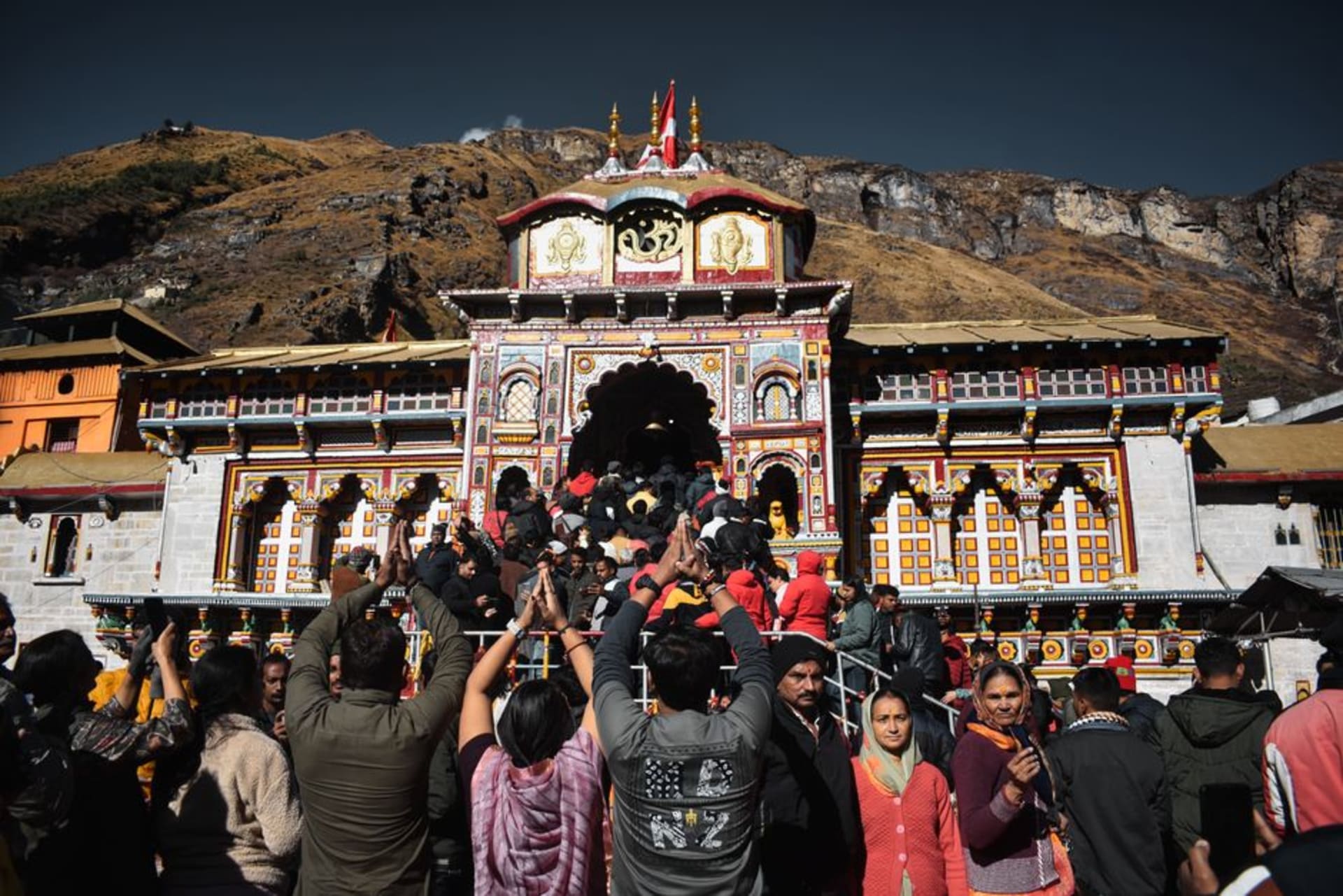
A high-altitude temple town on the Alaknanda where the mountains, the pilgrims, and the steam off a hot spring all feel like part of the same ritual.
We got to Badrinath in the late afternoon, when the light was already turning that flat, cold gold you only get above 3,000 meters, and the first thing I noticed wasn’t the temple at all — it was the sound. Bells, running water, wind funneling down off the ridgeline, and under all of it the low murmur of people who had clearly traveled much further, and with much more at stake, than Lia and I had. We’d come up the Garhwal road over two long days, ears popping, watching the forest thin out into bare rock, and by the time the temple’s painted facade came into view beside the Alaknanda River I understood why this is one of the four sites of the Char Dham — it has the kind of setting that makes belief feel almost involuntary.

The temple itself is not ancient in the way I’d assumed — most of what stands today was rebuilt in the 19th century after avalanches and earthquakes took earlier structures apart, a fact that somehow made it more moving rather than less. Sanctity here doesn’t seem to live in the stones so much as in the continuity: locals told us the site’s importance goes back to the 8th-century philosopher Adi Shankaracharya, who is credited with establishing worship here, and every rebuilding since has just been people insisting on keeping the thread unbroken. Before going in, we did what everyone does and dipped our hands and feet into the Tapt Kund, the hot spring right beside the temple that’s supposed to have healing properties. The water was genuinely, almost absurdly hot against air that was near freezing, and Lia laughed at how fast we both went from complaining about the cold to complaining about being scalded.

The next morning we walked out toward Mana, the village a few kilometers on that people here call the last one before Tibet, and it changed the whole register of the trip. Badrinath itself is dense with pilgrims, vendors, and noise; Mana is quiet, stone-walled, and thin-aired in a way that made every step up the last incline feel deliberate. Standing there looking north, with the Alaknanda still audible behind us, I had one of those rare travel moments where the geography and the spirituality of a place stop feeling like separate subjects. We ate a simple thali of rajma and rice in a tin-roofed dhaba on the walk back, hands still cold, and didn’t say much — some places don’t really need commentary.
Badrinath closes for around six months every winter, once the snow makes the passes impossible, and the deity is carried down to Joshimath until the roads reopen. Knowing that gave our visit a strange edge of urgency even in a season when the temple was fully open — this is a place that literally shuts its doors to the world for half the year.
When to go: Aim for May to June or September to October, when the temple is open and the high passes are clear; between roughly November and April heavy snow closes everything down and the deity itself relocates to Joshimath, so check the opening dates before you plan around it.