
The easternmost point of U.S. territory, where a stainless-steel sundial marks the first American sunrise over a dry, cactus-studded hillside.
We left our guesthouse near Christiansted before dawn, coffee still burning the roof of my mouth, because someone at the bar the night before had told us that St. Croix’s East End was where you go to watch the United States wake up. I didn’t fully believe it until we were on it — that winding paved road threading through a landscape that felt like it belonged to a different island entirely. Everywhere else on St. Croix had been green and heavy with rain-fed growth, but out here the hills turned dry and scrubby, cactus and thorn instead of palm, the road climbing and dipping past nothing but rock and low brush until the sea opened up on both sides.
Point Udall sits at the literal edge of American soil, the easternmost spot the country claims, named for Stewart Udall, a former Interior Secretary I’ll admit I had to look up afterward. What’s impossible to miss when you arrive is the Millennium Monument, a stainless-steel sundial erected right at the turn of the millennium, built specifically so its shadow would fall true when the first rays of an American sunrise struck it. Lia climbed onto the low wall beside it and just stood there, arms wrapped around her knees, watching the metal go from dull gray to lit gold as the sun cleared the horizon.

Apparently St. Thomas has a spot with a nearly identical name making the same claim, and locals there will argue with you about which point really sees the sun first — a rivalry I found more charming than annoying, the kind of dispute two islands keep alive because it gives people something to be proud of. Standing on that hillside, though, whoever’s technically right seemed beside the point. What struck me more was how alone we felt up there, just the two of us and the sundial and a hawk riding the thermals below, with the whole Caribbean Sea laid out under that hard morning light.
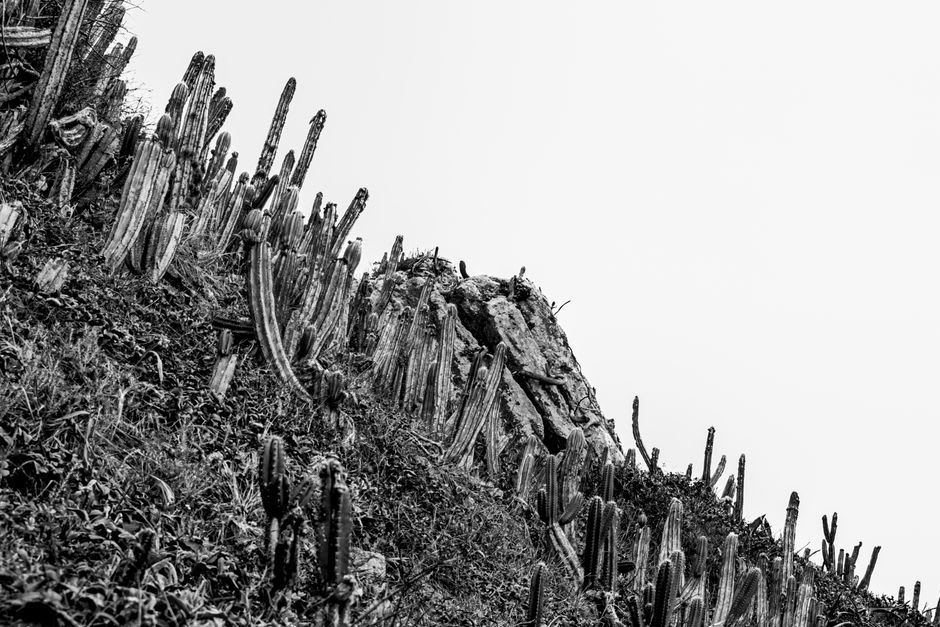
The whole area falls inside the East End Marine Park, and even without getting in the water you can tell the coastline is protected — the reef breaks visible as pale streaks offshore, no boats crowding in, nothing built along the point except that one sundial. We sat for a long while after the sun was fully up, not saying much, letting the wind do the talking. It’s the kind of place that doesn’t need much explaining once you’re standing in it.
When to go: Aim for sunrise if you can manage the early start, and try to time your trip between December and April — the dry season keeps the skies clear enough that the point actually delivers on its promise, instead of leaving you staring at clouds over an empty horizon.