
Midtown Manhattan
"Broadway does not do subtle. It does spectacle, and it does it with complete conviction, and that turns out to be enough."
Broadway's beating heart — where you walk north from downtown into a different city entirely, and a night at the theatre becomes the kind of evening New York was built to produce.
We left the hotel at seven in the evening, which in New York terms means leaving early. The alley was quiet at that hour — the bars not yet filling, the cobblestones damp from an earlier rain, the graffiti walls doing what they always do, which is exist with total indifference to the time of day or the plans of the people walking past them.
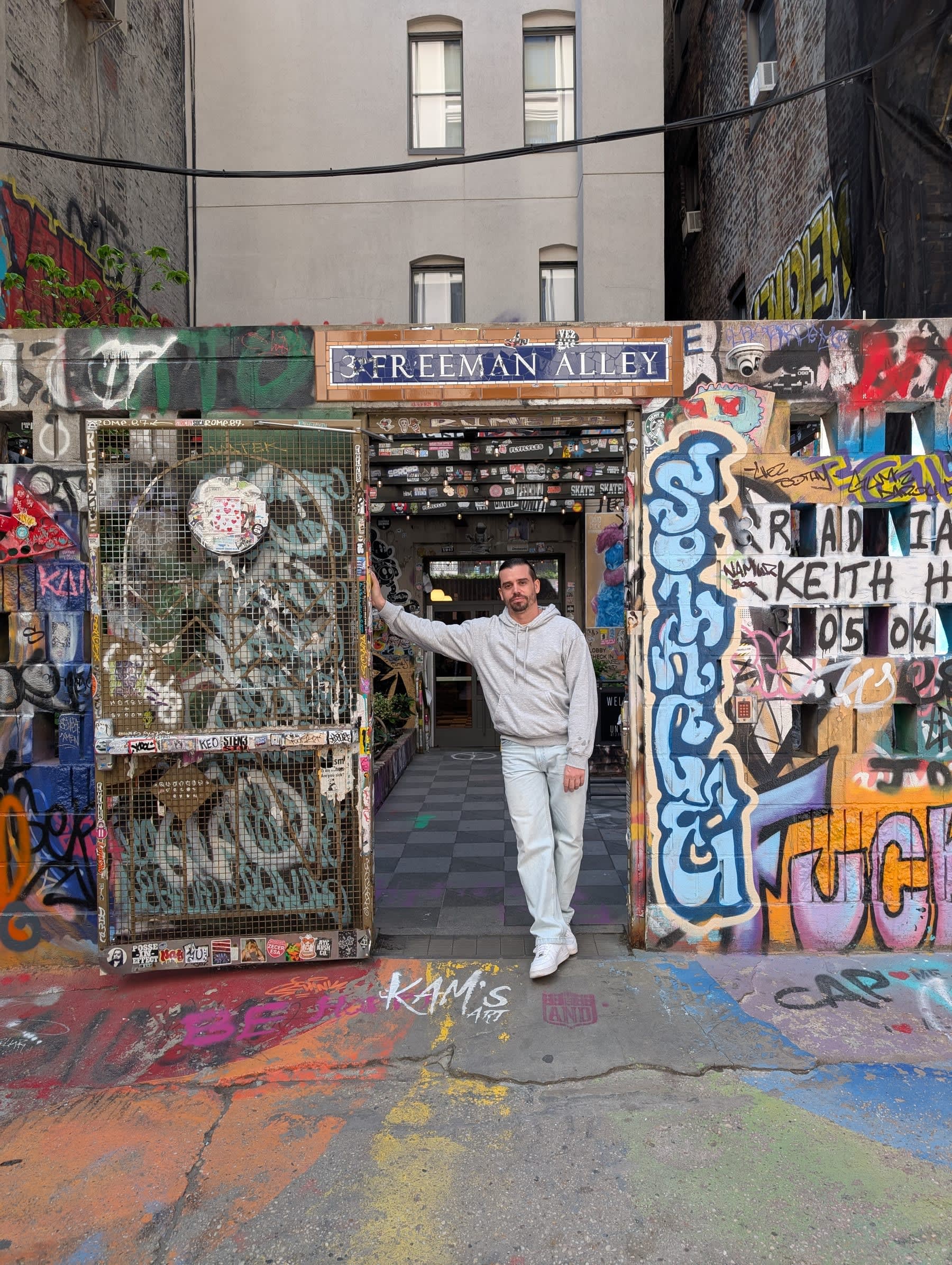
The plan was Broadway. Specifically, Stranger Things: The First Shadow at the Marquis Theatre on 45th Street. It had arrived on Broadway from London’s West End the previous year, and I had been told by people whose opinions I respect that it was one of the best things currently playing in New York. I am a thirty-four-year-old Frenchman who watches more television than theatre and was prepared to be pleasantly surprised. I was not prepared for what it actually was. But that comes later.
The Walk North
New York changes as you move uptown. The Lower East Side gives way to the East Village, which gives way to Gramercy, which gives way to midtown, and with each neighbourhood the character shifts — the buildings get taller, the streets get wider, the energy compresses differently. By the time you reach the forties, the city is operating at a register that has no equivalent elsewhere. This is not a metaphor. The density is physical. The number of people per square metre on a midtown sidewalk at nine in the evening is something a European city would reserve for a national holiday.
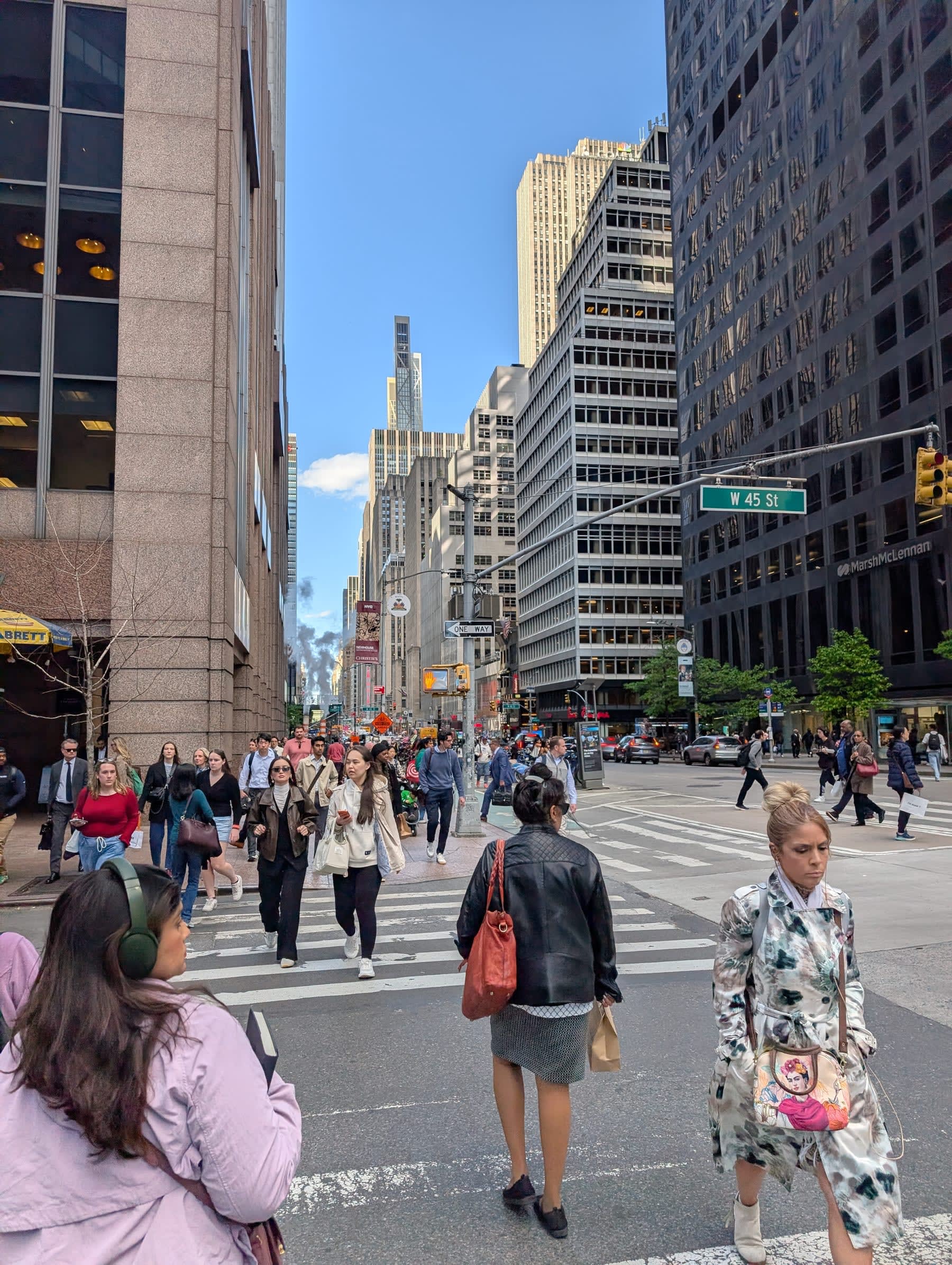
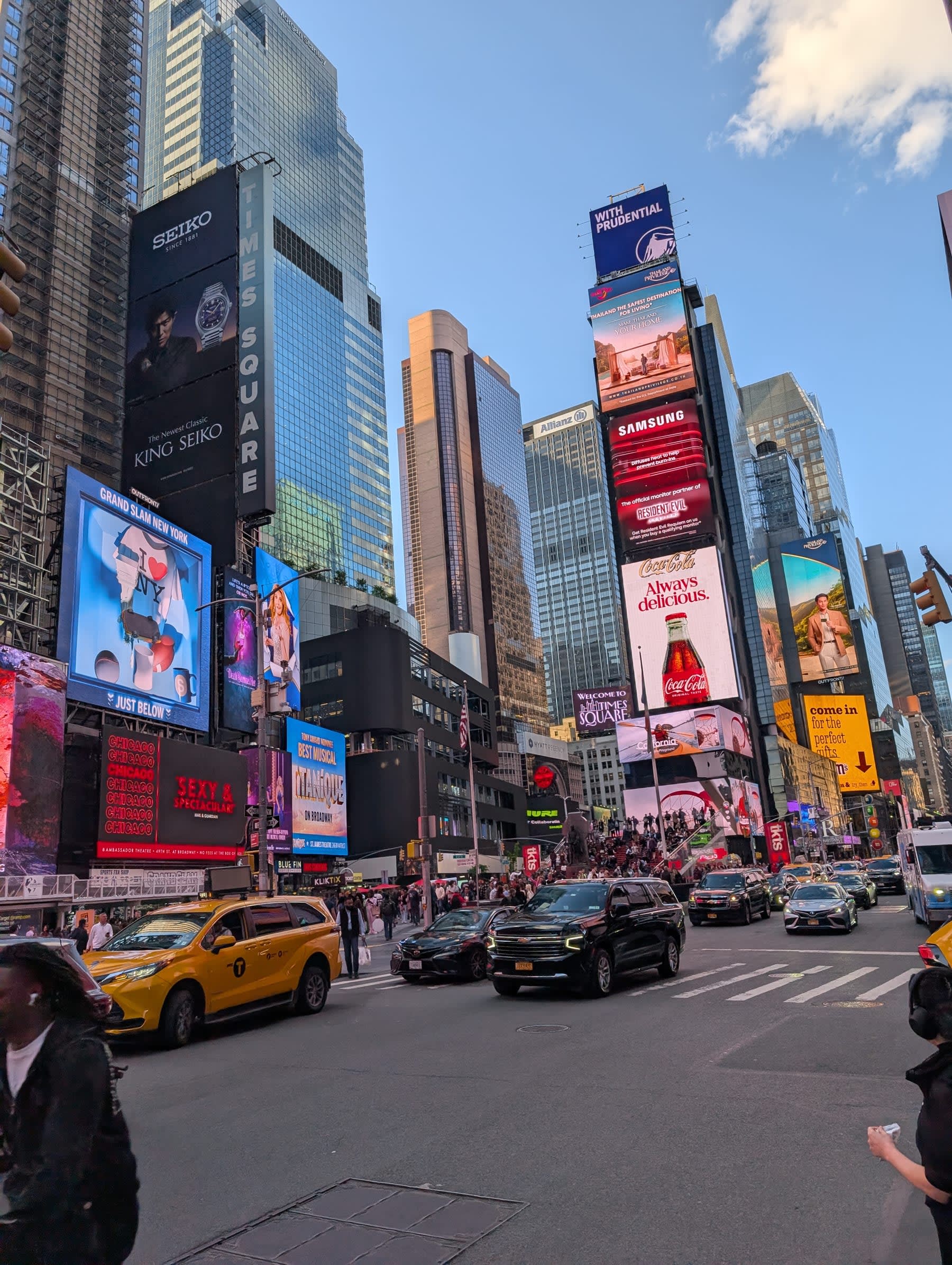
We surfaced into midtown via the subway and walked west toward Times Square, which is the geographic and theatrical centre of everything happening in this part of the city. The first sight of it, even on a weeknight in May, even for someone who has seen it in photographs ten thousand times, produces a specific sensory overwhelm that I have not managed to become immune to across multiple visits. The screens are too large. There are too many of them. The light is at a frequency that bypasses reason and lands directly in the part of the brain responsible for alertness. You are awake. You are very awake.
The Marquis Theatre
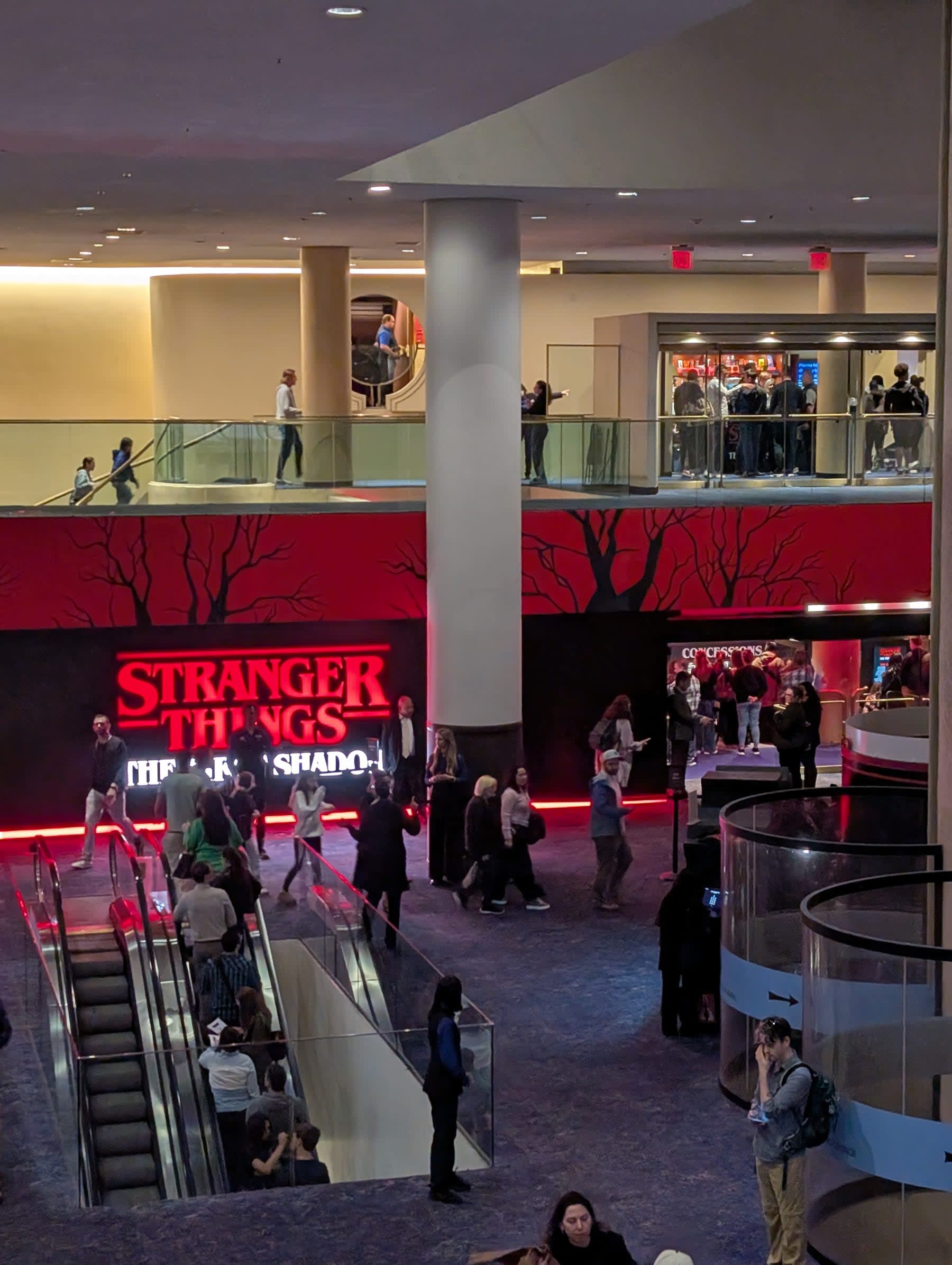
The Marquis is a Broadway house inside the Marriott Marquis hotel tower on 45th Street, which sounds like it should be a compromise and is in fact a full-scale, serious theatre seating nearly seventeen hundred people across orchestra, mezzanine, and balcony levels. The lobby wraps around two floors and was, on this evening, transformed entirely into Hawkins, Indiana circa 1959. Black walls. Red neon. Bare winter trees painted on every surface. The Stranger Things logo burning in the specific red that the show has made its own.
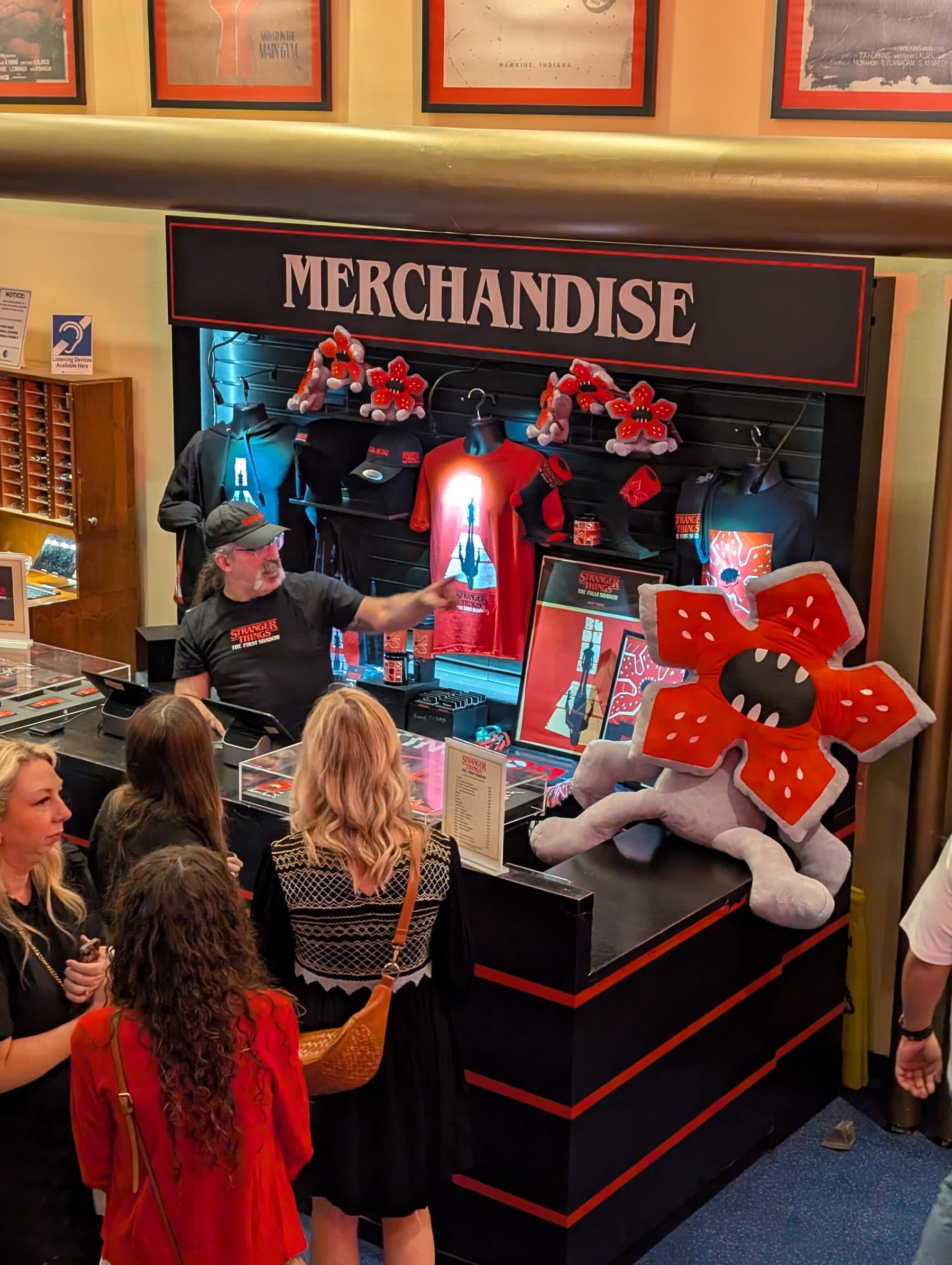
The merchandise stand was doing serious business. The Demogorgon plush toy — about the size of a medium dog, red and monstrous, grinning with a ring of teeth — was displayed at the front of the counter with the confidence of a product that knows its audience. Lia considered it. I photographed it. We moved on.
From the mezzanine level, the lobby resolved into something worth looking at properly: the full Stranger Things: The First Shadow signage spread across the back wall, the escalators descending into the ground floor, audience members arriving and filling the space with the particular energy of a crowd that has been looking forward to something and is now, finally, here.
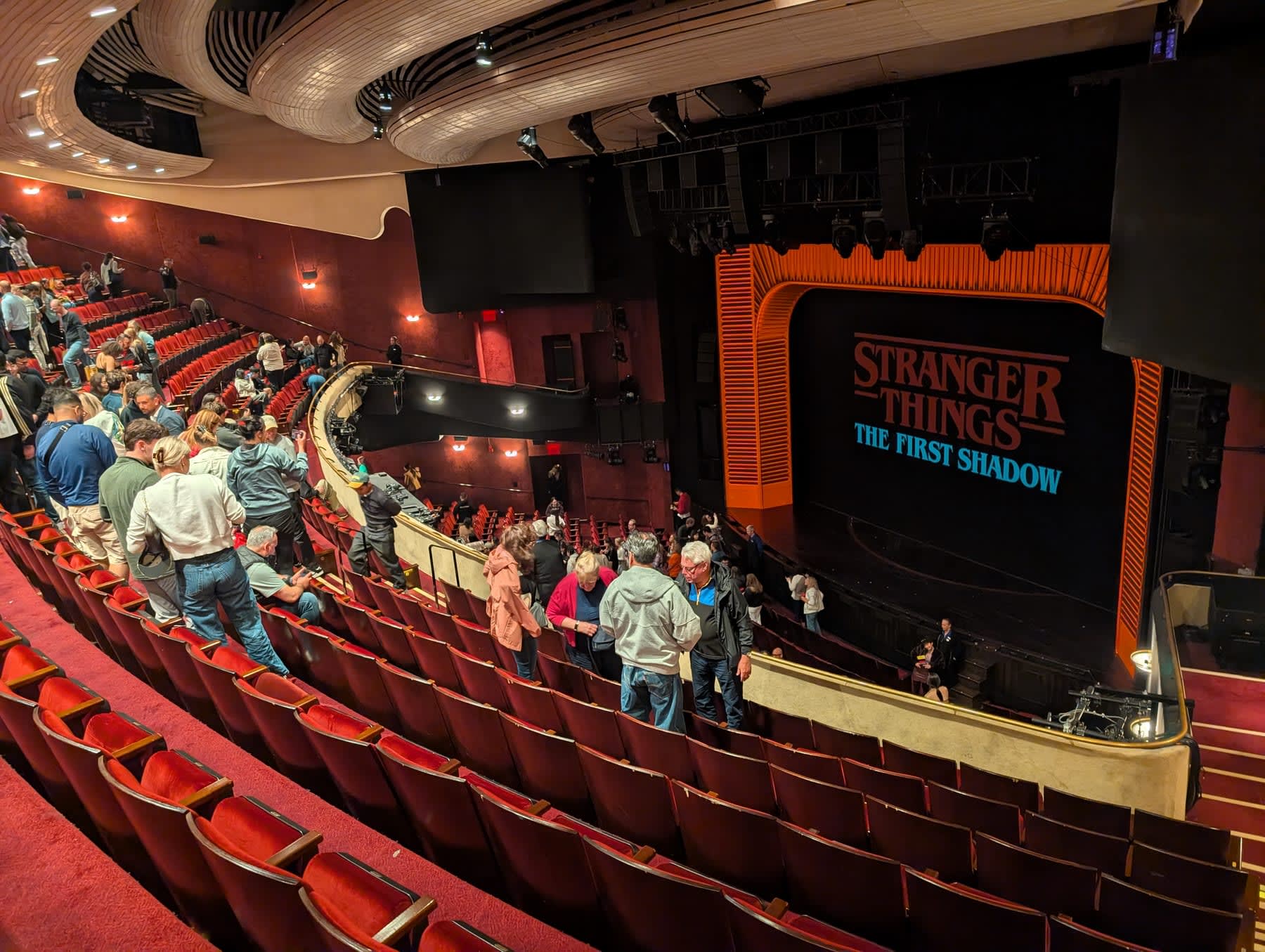
We found our seats in the mezzanine. The theatre opened up below us — the curved balconies, the warm house lighting, the stage just visible at the far end of the auditorium. The pre-show screen displayed a retro broadcast from WBOB, Hawkins’s fictional radio station, and people were still filing in, settling, consulting their programmes. The room had the quality that good theatres always have before a performance: slightly too much anticipation to contain.

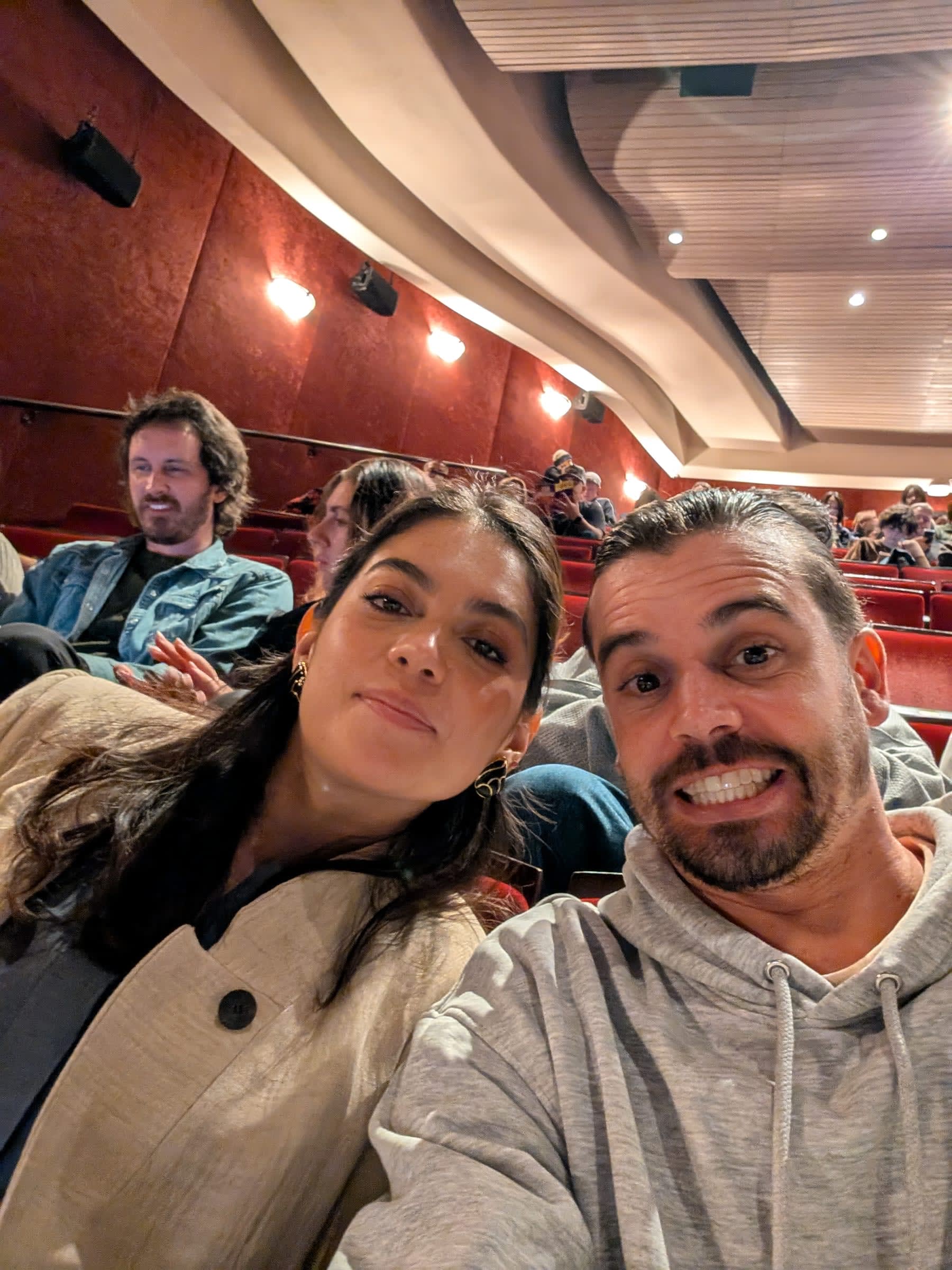
The First Shadow
I am not going to describe the show in detail, partly because it is not that kind of piece of writing, and partly because the production earned its surprises and you should have them intact. What I will say is this:
Stranger Things: The First Shadow is a prequel — it tells the story of Henry Creel, the original Hawkins anomaly, in 1959, before the events of the television series. It was created by the Duffer Brothers and Kate Trefry and ran in London before transferring to Broadway, and what it does — what Broadway at its best always does — is take a world that exists in one medium and find what the stage can do that the screen cannot. The answer, it turns out, is scale. Physical scale. The kind of stagecraft that produces an audible reaction from an audience of seventeen hundred people simultaneously, not because of a jump scare but because of an achievement — because someone solved a technical problem in a way that makes the word impossible feel briefly relevant.
The story does what prequels are supposed to do but rarely manage: it makes the original feel richer in retrospect. It fills in a gap you did not know existed and closes it in a way that feels inevitable. Lia, who had watched the series less recently than I had, leaned over during the interval and said, quietly but with complete conviction: this is incredible. She was right. It was incredible.
After the Show
The show ran nearly three hours including the interval. We came out onto 45th Street at close to two in the morning.

The corridor leading out of the theatre was still dressed in the show’s visual identity — the red-lit floor, the title sign burning against the black wall. It is the correct way to leave a production: gradually, through spaces that are still inside the world before depositing you back in the one you arrived from.
Outside, on 45th Street, the theatre facade blazed. The marquee read STRANGER THINGS: THE FIRST SHADOW, the lettering in the show’s red, the neighbouring marquees of other theatres visible down the block — Bond, neon blue, and the others stretching away toward Times Square. At two in the morning the theatre district is still fully operational. Other shows had just ended. Other audiences were spilling out of other doors. The street was alive with the specific energy of a large number of people who have just experienced something together and are not yet ready to stop feeling it.

Times Square at Two in the Morning
Times Square at two in the morning is a different place from Times Square at seven in the evening. At seven, it is a destination — people are going somewhere, toward a show or a restaurant or a hotel. At two, it has become the destination itself, the place where the evening ends or refuses to end, populated by people who have nowhere specific to be and are treating the light and the noise as sufficient reason to remain.
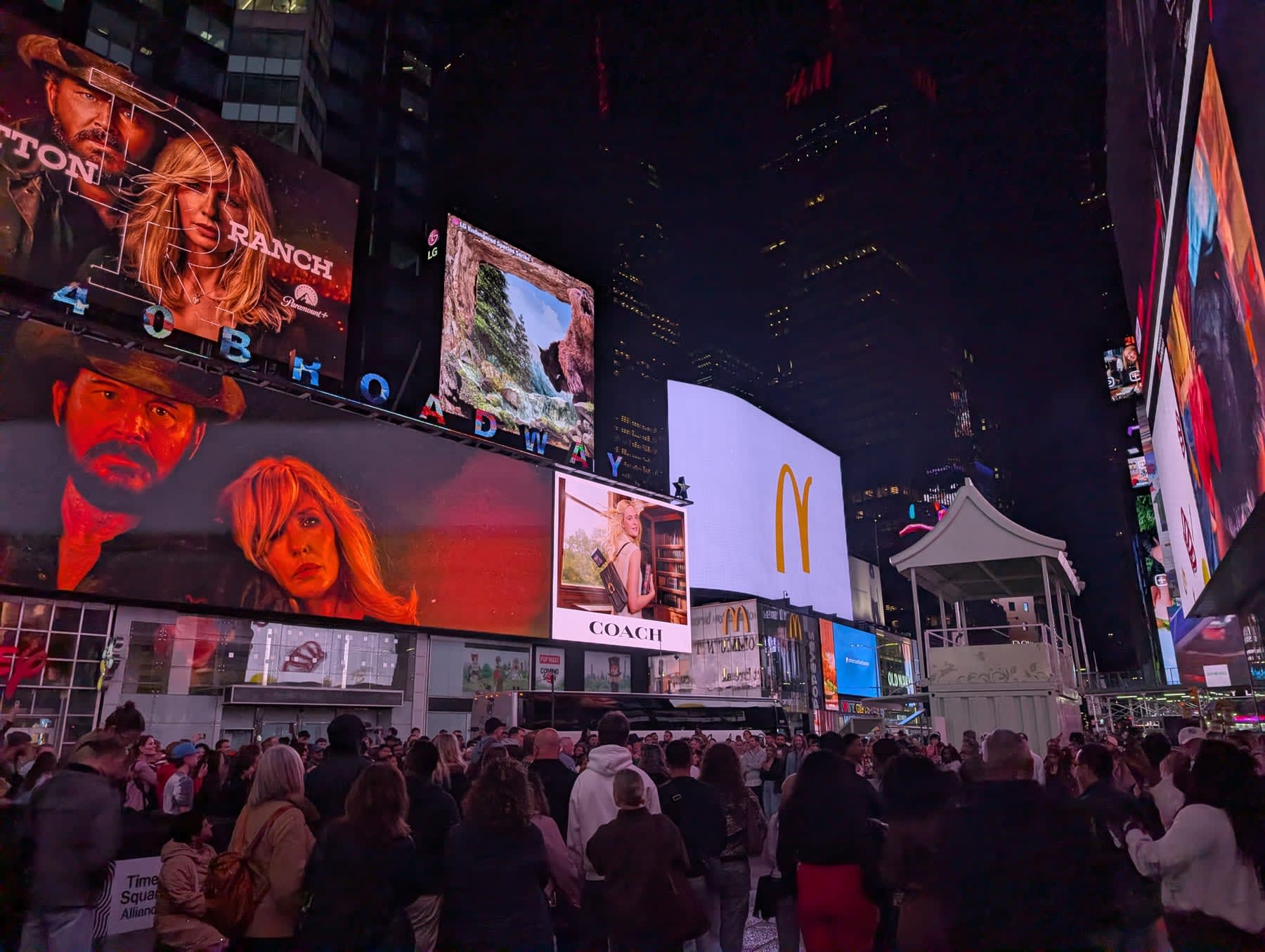
The screens at this hour show the same advertisements they show at noon, which is part of the strangeness of Times Square — it does not have a night mode. The Coca-Cola sign. The McDonald’s arch. The rotating billboards for streaming shows that exist in a perpetual now, unconnected to any particular time of day. I stood in the middle of it with my arms folded and thought, not for the first time in this city, that I was somewhere designed to be experienced rather than understood.
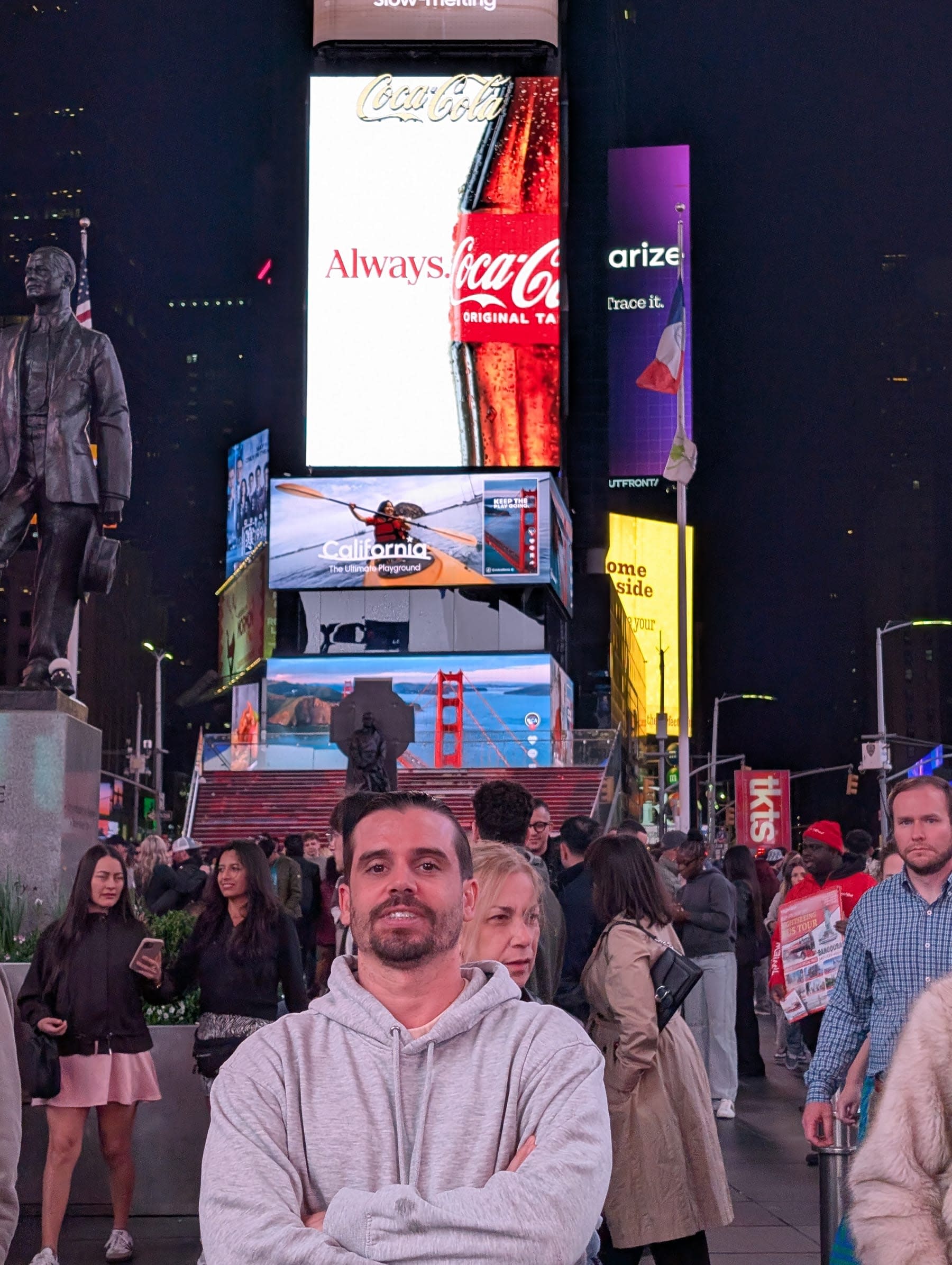
We walked south through the theatre district and then downtown, back toward the Lower East Side, which required about forty minutes and felt like crossing several different cities layered on top of one another. By the time we reached Freeman Alley the square was already receding — the light, the noise, the particular frequency of it — replaced by the cobblestones and the graffiti and the dark quiet of a neighbourhood that goes to sleep later than most but does, eventually, go to sleep.
The show stayed with us, the way good theatre does, past the moment of leaving it.
When to go: Stranger Things: The First Shadow runs at the Marquis Theatre on 45th Street — book well in advance, the mezzanine offers the best sightlines for the stage effects. Times Square is best at two hours after every show in the district has ended: the crowds thin just enough to make the scale comprehensible. Walk from the theatre district south through the Garment District and Flatiron on the way back — the city at midnight between midtown and downtown is the city at its most legible.
Keep exploring
More of New York