Hawaii Volcanoes
"We stood at the crater's edge at night and watched the ground breathe orange."
On the Big Island the earth is still being made. Steam rises from cracks in the ground, hardened lava spreads in black rivers to the sea, and the glow of Kilauea at night is the closest thing to watching creation happen in real time.
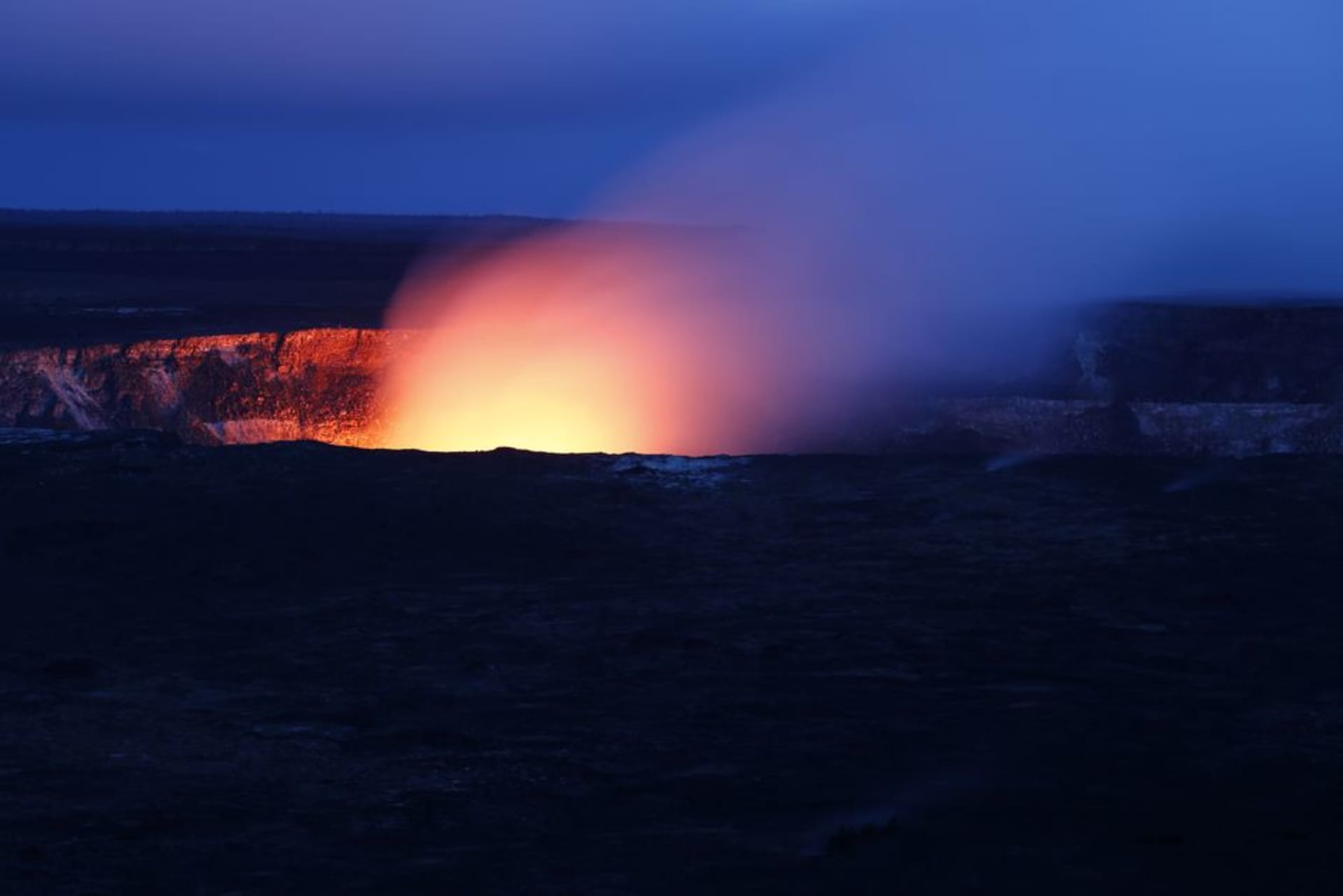
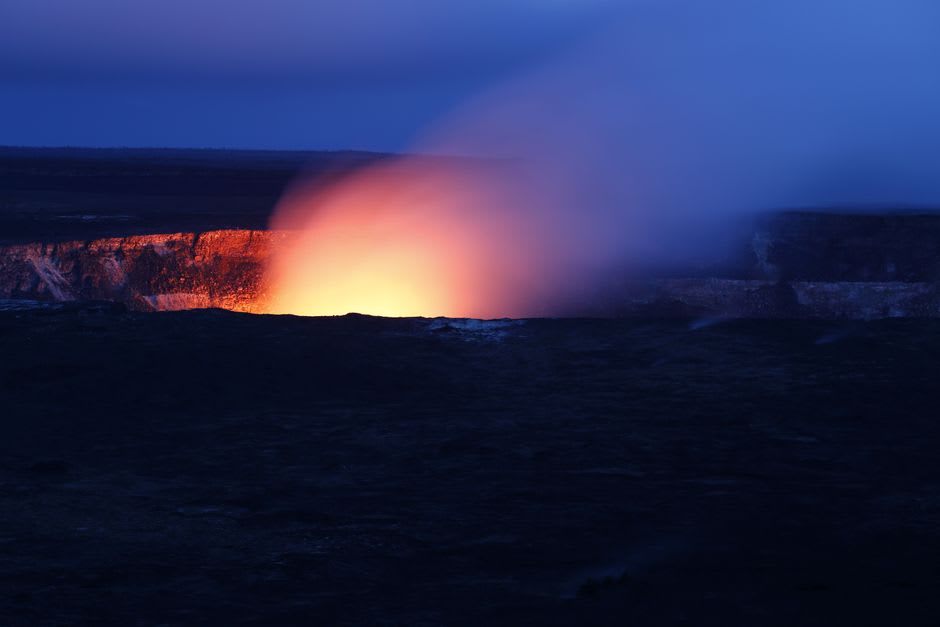
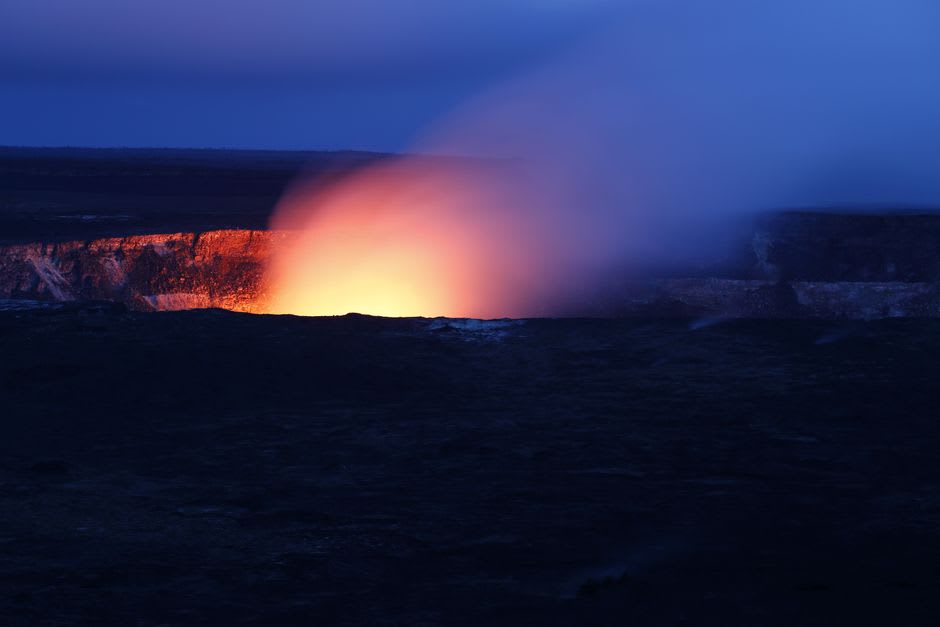
The first thing that got me was the smell — sulfur, faint and eggy, drifting across the parking lot at the Kilauea Overlook. Lia wrinkled her nose and I laughed, because it was proof we’d arrived somewhere genuinely alive. We’d flown to the Big Island half-expecting the volcano to be a distant, roped-off spectacle, and instead we found steam curling up through cracks right beside the footpath, warm to the hand when you held it near. That evening we came back after dark, and the caldera of Halemaumau glowed a deep, restless orange against the black sky, and I finally understood why Hawaiians speak of Pele as a living presence and not a geological event.
The Crater Rim
We spent our first full day driving Crater Rim Drive and walking the sections of trail that skirt the vast summit caldera of Kilauea. Steam vents hiss along the path, and the overlooks give you the whole sunken bowl of it — a landscape that looks less like a mountain and more like a wound in the world that never quite closes. At the Steam Vents you can stand in the warm, wet plumes rising from rainwater hitting hot rock below. Lia stood in one with her eyes closed like it was a spa, and honestly, on a cool morning at elevation, it nearly was. The scale of the place doesn’t photograph well; you have to feel the ground’s heat to believe it.
Walking on Lava
The next morning we hiked out across the Kilauea Iki crater, descending through rainforest onto a solidified lava lake that erupted in 1959. Walking across that flat black floor, still steaming faintly in places, is one of the strangest things I’ve ever done — the crust crunches, cairns mark the route, and the walls of the crater rise green and dripping all around you. Later we drove the Chain of Craters Road down to where old lava flows have buried the highway entirely and poured into the ocean. Standing where black rock meets blue Pacific, with ohia trees somehow already sprouting red blossoms from the cracks, I felt the whole cycle of destruction and rebirth in a single glance.
The Glow After Dark
Everyone told us to come back at night, and everyone was right. When the sun goes down, the Halemaumau crater — when it’s active — throws a molten glow onto the underside of the clouds, a slow pulse of orange and red that shifts as you watch. We joined a hushed crowd at the overlook near the Volcano House, all of us leaning on the railing in the cold, saying nothing. Lia, who is not easily moved by tourist attractions, went completely quiet. There is something ancient and humbling about watching the planet glow from the inside, and we stayed far longer than we’d planned, reluctant to turn our backs on it.
Getting There
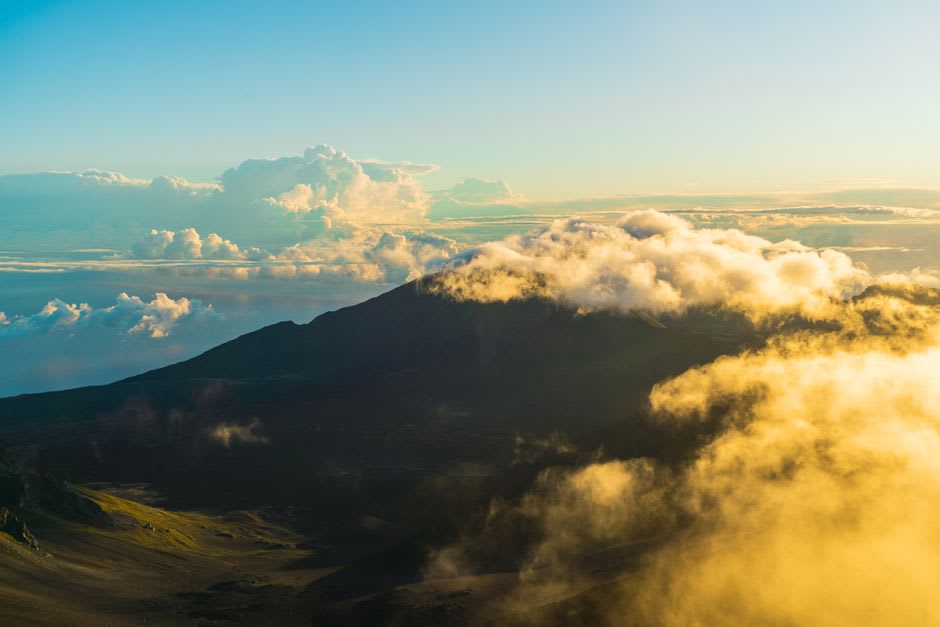
Hawaii Volcanoes National Park is on the southeast side of the Big Island, about a 45-minute drive from Hilo or roughly two and a half hours from Kona. Renting a car is essential; the park is huge and its roads reward slow exploration. Check the park service updates before you go, since volcanic activity and the night glow come and go — an active eruption is unforgettable, but conditions change constantly. Bring layers for the cool, damp summit elevation, sturdy shoes for lava terrain, and plenty of water. The Volcano House and nearby Volcano village make a good base for catching the crater both at dusk and after dark.
Keep exploring
More of Hawaii